
Getting older has so many perks–grandkids, retirement, senior discounts (!). But the biggest benefit? Wisdom. Years of life experience add up. There’s a reason young people look to their elders for life advice and guidance. Plain and simple–they’ve lived it. And with age comes confidence in identity and what truly matters–without sweating the small stuff.

Thankfully, that sage advice has been freely given freely to younger generations who seek it. Here are 27 of the best responses from older people to the question, “What things do you care less about as you age?”

1. “Other people’s opinions about me.” – recoveredcrush

aging wisdom, things older people donu2019t care about, life lessons from seniors, letting go with age, social media fatigue, aging gracefully, senior life advice, mindset shifts with age, aging and priorities
A therapist takes notes while a patient talks via Canva

2. “Impressing others.” – orangedustt

3. “So grateful I grew up without social media. I just want to be a good person, the rest is silliness.” – SuperCookie22

4. “Everything but the weather.” – NANNYNEGLEY

5. “My clothes, buying more stuff, arguing, holding grudges, stress, none of it I care about or think about anymore.” – AvocadoSoggy9854

6. “Having toxic people in my life. If they disturb my peace, they’re gone. Idgaf if they’re related to me or not.” – Pepperjones808

7. “Anyone else’s opinion.” – typhoidmarry

8. “New cars.” – Artimusjones88

9. “I’m in a ‘prestigious’ job, having to wear suits daily. Make a decent amount of money. 85% of my clothes in my closet are from Walmart. I will always choose comfort and price over brand.” – Few-Truth7307

aging wisdom, things older people donu2019t care about, life lessons from seniors, letting go with age, social media fatigue, aging gracefully, senior life advice, mindset shifts with age, aging and priorities
A collection of shirts on a rack via Canva

10. “Makeup. I just realized today that I don’t always wear it every day. If I’m going out to dinner, a meeting at school, lunch with a friend, date night with my husband or volunteering- Yes I’ll wear makeup. Grocery store or running errands and other random things? No. I still put on nice clothes, fix my hair and put jewelry on but depending on what I’m doing I only put some moisturizer on. My face feels so good not having anything on it. I was THAT girl who would put makeup on at the beach when I was a teen .” – JDRL320

11. “New technology. Currently redoing my kitchen. I do not want a microwave with some kind of flip out electronic control panel, it’s just one more thing to break. The fridge we liked had 3 cameras inside and required an app. You know what I don’t want people watching? Me half asleep, looking for a snack in my underwear. It seems like everything requires an app now.” – superthrust123

12. “(Celebrities.) The musicians I enjoyed are dying off, leaving only the ones that I have no idea who they are. I’m 65 and just found out in 2024 who the Kardashians are (yes, I’ve seen the name forever but never wanted/needed to know about them). Still not sure why anyone cares.” – JustMeInTN

13. “All of the things that used to eat away at me just don’t anymore. I’m three years away from sixty, and I don’t have time for all of the BS.” – EWH733

14. “I hit a point this January that I just don’t care about social media. It was like a light bulb being switched off. I’ll keep it around for some things, but I just don’t feel the need to post updates every day or even every week. Everyone is just arguing. No one is listening.” – elphaba00

aging wisdom, things older people donu2019t care about, life lessons from seniors, letting go with age, social media fatigue, aging gracefully, senior life advice, mindset shifts with age, aging and priorities
Login screen for Instagram on a cell phone via Canva

15. “Pleasing other people. At about 50 I learned to say ‘no’ without guilt or regrets. Now I really enjoy gatherings with friends and family because I only do the work I want to do.” – queenofmyhouses2

16. “Less about people – but I care more about their dogs – pet all dogs.” – the_Jockstrap

17. “Buying stuff. I really dialed back buying clothes, I do refresh the wardrobe but I give away / toss stuff at the same time. I don’t like opening closets and see clothes and shoes all piled up.” – ProStockJohnX18. “Being right.” – FogPetal

19. “I care less about trends and more about meaningful connections and experiences. Priorities just shift as we grow.” – StrongDifficulty4644
aging wisdom, things older people donu2019t care about, life lessons from seniors, letting go with age, social media fatigue, aging gracefully, senior life advice, mindset shifts with age, aging and priorities
A group of friends hike through the woods Canva

20. “Vanity, being palatable to EVERYONE in your life, hustling, trying to be cool/impressive to others.” – MaximumTrick2573

21. “If my career is ‘successful’ (I just want to pay the bills and be happy).” – Front-Rub-439

22. “Having a busy social calendar. Staying home and reading or watching TV is fine with me. The occasional dinner out with friends is enough socializing for me. And I try to avoid parties if I can. Elaborate vacations. Sitting on the beach is fine with me. I did the Europe thing when I was in my 20s.” – Ineffable7980x

aging wisdom, things older people donu2019t care about, life lessons from seniors, letting go with age, social media fatigue, aging gracefully, senior life advice, mindset shifts with age, aging and priorities
A woman lies on the floor while watching TV via Canva

23. “Buying almost anything new. I love thrift shopping.” – Dvanpat

24. “Accumulating more stuff! Downsizing is what I want most now.” – Audience_Either

25. “Keeping up with decorating trends for my house. I’m just happy to have a home full of useful appliances and sturdy furniture I inherited over the years.” – TXteachr2018

26. “Not knowing things. It used to drive me crazy, like the saying goes, ‘curiosity killed the cat but satisfaction brought him back’ but more and more I’m stressing less and less about the secrets others keep, what I don’t understand, and just being out of the loop in general.” – Carrollz

aging wisdom, things older people donu2019t care about, life lessons from seniors, letting go with age, social media fatigue, aging gracefully, senior life advice, mindset shifts with age, aging and priorities
A young woman thinks in class Canva

27. “Relationships that aren’t reciprocal.” – Optimal_Guitar8921

This article originally appeared earlier this year.
  • Voice actor explains why Americans instantly trust people with British accents, even if they’re lying
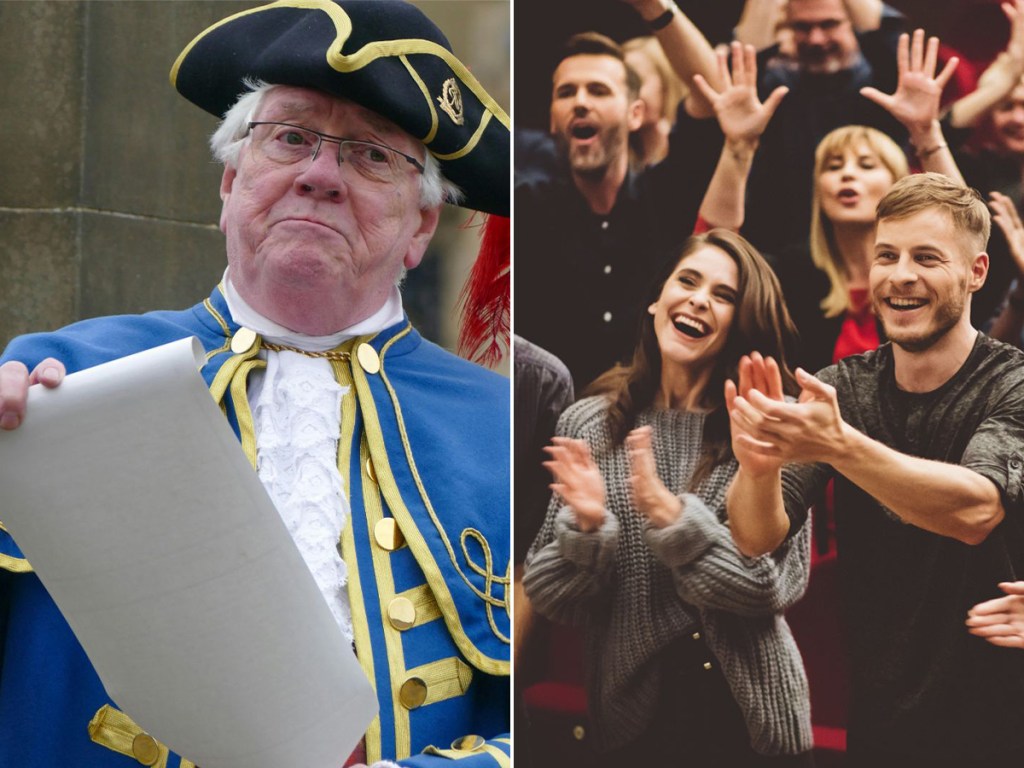
    Photo credit: CanvaA traditional town crier, left, and a happy, applauding audience, right.

    Americans have this strange love of British accents—so much so that even when someone is speaking absolute gibberish, we find ourselves transfixed and absurdly trusting them.

    Tawny Platis, a professional voice actor and content creator, expertly captured the phenomenon in her YouTube video, “Why Americans Love This Accent.” In the video, she analyzes why Americans find Billy Butcher’s voice so compelling despite the character’s violent and morally chaotic behavior on the TV show The Boys.

    Americans trust and love rough, working-class British masculinity

    “So Karl Urban is a New Zealander doing a Cockney, working-class, East End London accent,” Platis explained. Regardless of how well the actor nails the accent for his character, Butcher, Americans buy right into it anyway. “That’s because working-class English masculinity is coded in American media as authenticity,” she added.

    She goes on to give examples to help substantiate her point: “Every Guy Ritchie movie, British gangster film, and working-class antihero from Michael Caine to Tom Hardy has trained American audiences to hear that voice as unfiltered and honest.”

    A 2024 study published in SAGE Journals found that listeners unconsciously form social biases based on accents. People rapidly make assumptions about personality and identity.

    decision making, accents, familiarity, credibility
    A young businessman speaks into a microphone.
    Photo credit: Canva

    Make ordinary information sound important

    The accent becomes a shortcut the brain uses to make immediate decisions about intelligence, honesty, confidence, warmth, and even competence. When it comes to characters like Butcher, the key detail isn’t so much the “Britishness” itself—it’s the association.

    “Butcher is using the working-class Brit voice to showcase honesty,” Platis said. “Butcher is a liar who manipulates Hughie, hides things from his team, and is willing to take out children. But the audience keeps forgiving him because his voice sounds like a man who’s earned the right to do all that, when he very much hasn’t.”

    Psychologists believe part of this effect comes from something called “processing fluency.” A 2023 study published in Scientific Reports found that increased exposure to certain accents reduced listeners’ cognitive effort. As a result, people made more positive social judgments about the speaker.

    Accents that feel familiar after years of movies, television, and media unconsciously influence people. Audiences automatically attach credibility and trustworthiness to them. Simply put, people mistake familiarity for truth.

    A 2024 study found that Americans rate the standard British accent most positively, strongly associating it with traits like intelligence, status, and competence. The Northern English accent is viewed slightly less favorably. Scottish accents are considered strong and friendly. Meanwhile, the Welsh accent falls somewhere in the middle, depending on how well the listener recognizes it.

    factual, educated, casual interactions, performance
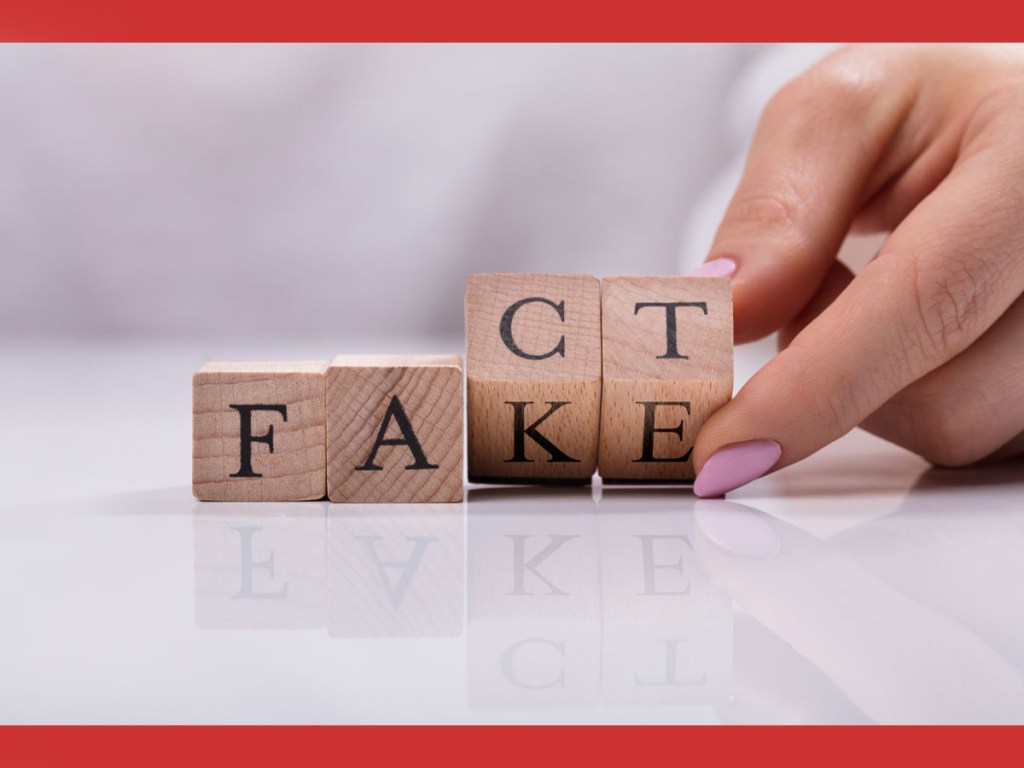
    Blocks spell out the words “fact” and “fake.”
    Photo credit: Canva

    Accent bias sways people’s opinions

    The same instinct that makes one accent sound “trustworthy” can also make another sound “unreliable.” In real-world interactions, working-class accents can be perceived as less intelligent or less educated. This can affect hiring decisions and even workplace promotions.

    A 2024 study focusing on “Americanness” found that accented speakers were perceived as “less American.” In simulated hiring scenarios, they were less likely to be hired, demonstrating that an accent can override other judgments.

    When a person speaks, people instantly begin building a story about who they are. Many decide whether a voice sounds trustworthy long before consciously realizing it. Platis points out that a lifetime of exposure to social media, movies, and television has shaped that perspective.

    “Butcher’s accent is the most effective because it’s the only one many viewers don’t even recognize as a performance,” Platis said. Which basically means somewhere out there right now, a confident British accent is talking nonsense that feels totally believable.

  • Italian man claims to be ‘human cheetah’ with lightning-fast reflexes
    Photo credit: CanvaA man with fast reflexes.

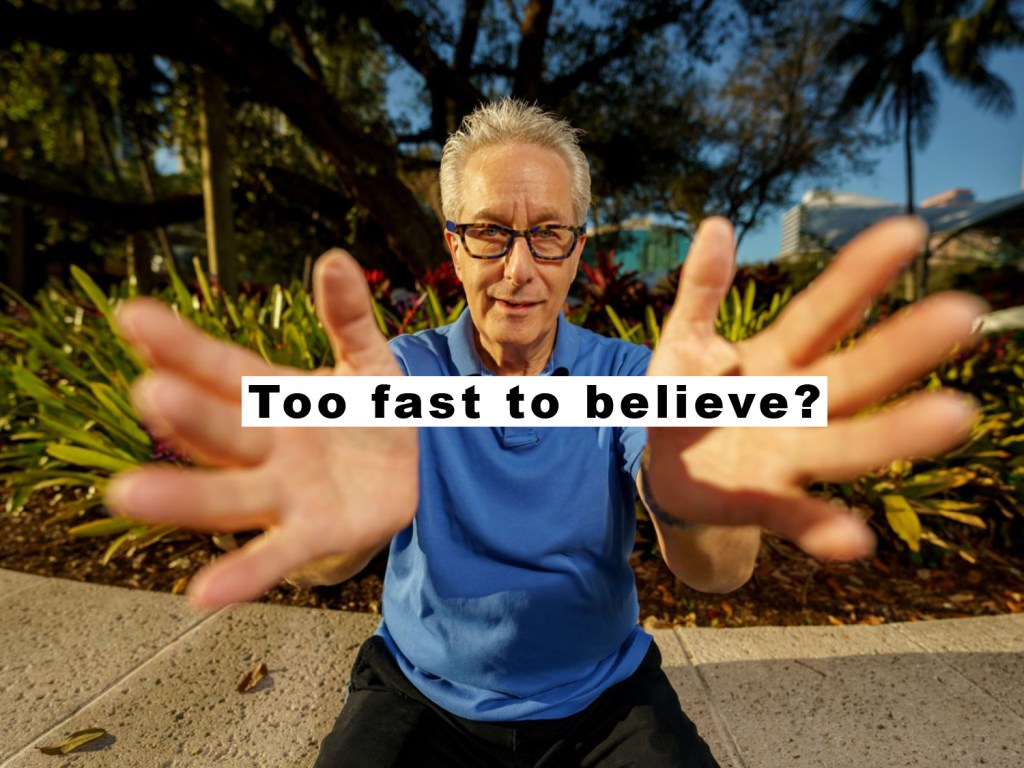
    At first glance, this probably looks like a camera trick. Ken Lee, an Italian content creator, has built a massive online following by doing something that doesn’t quite feel real. Viewers refer to him as the “human cheetah” because it appears he has near-instant reflexes.

    Grabbing objects out of the air with uncanny precision, flicking clothespins and lighters, and throwing a blur of punches and kicks at impossible speeds, it is easy to call him unbelievable. Half the audience thinks his viral speed videos are fake. The other half is just as convinced they are watching something incredibly rare.

    Hands so fast they blur time

    In the video above, a timer runs to confirm its authenticity. In what looks like half a second, he reaches out and snags the lighter from the table. To prove it is real, he does it twice.

    Having amassed millions of followers on his TikTok page, the identity behind the mysterious influencer remains largely unknown. Active since around 2022, with almost 100 million accumulated likes, Lee has cultivated a fandom around his self-proclaimed “Superhero per Hobby!”

    Do you believe it is real? Is this person the fastest human alive? Many followers cannot wait for the next video to be posted. Plenty of his fervent fans are Italian, so sifting through the remarks takes a bit of hunting. Here are some comments that sum up how much people enjoy the fun and the spectacle:

    “Ken lee the fastest and the best”

    “Most dangerous human”

    “Is this what the lighter sees before my homie steals it”

    “It was sped up during he grabbed the lighter, if u count up with the timer u would be off by like 0,5 seconds whenever he grabs the lighter.”

    “If the flash were human”

    “How is it possible to get such powers ?”

    “I blinked and I missed it”

    People love good entertainment

    The awe of peak performance attracts people to watch elite athletes, musicians, or even dancers. There is something that deeply satisfies all of us when a human appears to push a skill to its limit. Whether it is real or fake seems to matter less than the opportunity to chime in on some good entertainment.

    How far could any of us go by practicing and repeating a particular motion over and over until it is mastered? Beneath the flashy nickname and his viral speed videos, Lee’s content has a way of drawing people in. This is not a superpower. Just repetition. Focus. Obsession. And maybe some digital wizardry.

    Testing the science of speed

    If you wish to question the validity of Lee’s performances, maybe some basic science can help. Human reaction time is not just a reflex. A 2024 study found that the nervous system can fine-tune responses in real time. Practice can make movements appear almost automatic.

    It has been well established in research that the gap between seeing something and responding has a limit. A 2025 study concluded that the most elite extremes allow for reaction times of 100 milliseconds. At that speed, the human brain can barely process that something has happened.

    Science explains Lee is not necessarily moving as fast as we might perceive him to be. And therein lies all the fun of it. We cannot prove it is real, nor can we actually prove that it is fake.

    Maybe Lee is the “fastest man alive” or the so-called “human cheetah.” Or maybe he is just a remarkable entertainer. Either way, he has clearly tapped into something strange and fascinating: a blend of human ability and fantasy that people do not want to miss.

    To give context to Lee’s videos, watch this performance on Tú Sí Que Vales:

  • Despite all the likes, literallys and dropped g’s, English isn’t decaying before our eyes
    Photo credit: LisaStrachan/iStock via Getty Images Fear not: There isn’t anything that needs saving.

    As a linguistics professor, I’m often asked why English is decaying before our eyes, whether it’s “like” being used promiscuouslyt’s being dropped deleteriously or “literally” being deployed nonliterally.

    While these common gripes point to eccentric speech patterns, they don’t point to grammatical annihilation. English has weathered far worse.

    Let’s start with something we can all agree on: Old English, spoken from approximately A.D. 450 to 1100, is pretty unintelligible to us today. Anyone who’s had the pleasure of reading “Beowulf” in high school knows how different English back then used to sound. Word endings did a lot more grammatical work, and verbs followed more complicated patterns. Remnants of those rules fuel lingering debates today, such as when to use “whom” over “who,” and whether the past tense of “sneak” is “snuck” or “sneaked.”

    The language went on to experience centuries of tumult: Viking invasions, which introduced Old Norse influence; Anglo-Norman French rule, which shifted the language of the elite to French; and 18th-Century grammarians, who dictated norms with their elocution and grammar guides.

    In that time, English has lost almost all of the more complex linguistic trappings it was born with to become the language we know and – at least, sometimes – love today. And as I explain in my new book, “Why We Talk Funny: The Real Story Behind Our Accents,” it was all thanks to the way that language naturally evolves to meet the social needs of its speakers.

    From dropping the ‘l’ to dropping the ‘g’

    The things we tend to label as “bad” or sloppy English – for instance, the “g” that gets lost from our -ing endings or the deletion of a “t” when we say a word like “innernet” – actually reflect speech habits that are centuries old.

    Take, for example, “often.” Originally spoken with the “t,” that pronunciation gradually became less favored around the 15th century, alongside that “l” in “talk” and the “k” in know. Meanwhile, the “s” now stuck on the back of verbs like “does” and “makes” began as a dialectal variant that only became popular in 16th-century London. It gradually replaced “th” whenever third persons were involved, as in “The lady doth protest too much.”

    While dropping the “l” in talk may have been initially frowned upon, today it would be strange if you pronounced the letter. And the shift makes sense: It smoothed out some linguistic awkwardness for the sake of efficiency.

    If people learned to look at language more like linguists, they might come around to seeing that there is more than one perspective on what good speech consists of.

    And yes, that absolutely is a sentence ending with a preposition – something many modern grammar guides discourage, even though the idea only took hold after 18th-century grammarian Robert Lowth intimated it was a less elegant choice based on the model of Latin.

    Though Lowth voiced no hard and fast rule against it, many a grammar maven later misconstrued his advice as an admonition. Just like that, a mere suggestion became grammatical law.

    The rise of the grammar sticklers

    Many of today’s ideas about what constitutes correct English are based on a singular – often mistaken – 19th-century view of the forces that govern our language.

    In the late 18th century, the English-speaking world began experiencing class restructuring and higher literacy rates. As greater class mobility became possible, accent differences became class markers that separated new money from old money.

    Emulation of upper-crust speech norms became popular among the nouveau riche. With literacy also on the rise, grammarians and elocutionists raced to dictate the terms of “proper” English on and off the page, which led to the rise of usage guides and dictionaries that were eager to sell a certain brand of speech.

    Another example of grammarian angst reconfiguring the view of an otherwise perfectly fine form is the droppin’ of the “g.” It became so tied to slovenly speech that it was branded with an apostrophe in the 19th century to make sure no one missed its lackadaisical and nonstandard nature.

    Up until the 19th century, however, no one seemed to care whether one pronounced it as “-in” or “-ing.”

    Evidence suggests that -ing wasn’t even heard as the correct form. Many elocution guides from the 18th century provide rhyming word pairs like “herring/heron,” “coughing/coffin” and “jerking/jerkin,” which suggest that “-in” may have been the preferred pronunciation of words ending with “-ing.” Even writer and satirist Jonathan Swift – a frequent lobbyist for “proper” English – rhymes “brewing” with “ruin” in his 1731 poem “Verses on the Death of Dr. Swift, D.S.P.D..”

    Embrace the change

    Language has always shifted and evolved. People often bristle at changes from what they’ve known to what is new. And maybe that’s because this process often begins with speakers that society usually looks less favorably on: the young, the female, the poor, the nonwhite.

    But it’s important to remember that being disliked and bad are not the same thing – that today’s speech pariahs are driven by the same linguistic and social needs as the Londoners who started going with “does” instead of “doth” or dropped the “t” in often.

    So if you think the speech that comes from your lips is the “correct” version, think again. Thou, like every other English speaker, art literally the product of centuries of linguistic reinvention.

    This article originally appeared on The Conversation. You can read it here.

Explore More Media Stories

Culture

Despite all the likes, literallys and dropped g’s, English isn’t decaying before our eyes

Culture

10 boys and 10 girls were left alone in separate houses and the different results are just wild

Media

9-year-old girl asks Steph Curry why his shoes aren’t in girls’ sizes. The response was perfect.

Media

A BBC crew broke ‘cardinal rule’ of nature documentaries to save trapped penguins