The obsessed birders in the audience (you know who you are) will be familiar with the “Big Year” concept—essentially, a relentless effort to spot as many species as possible in a given place in one year. Birders will do Big Years (or Big Months or Big Days or Big Whatever Time Period) just about anywhere, and very often a serious competitive spark enlivens the proceedings. Rick Obamscik’s 2004 book The Big Year documented three fanatical efforts to win the pan-continental North American Big Year and the coveted American Birding Association championship.
Now a new Bay Area environmental nonprofit is adapting this idea and trying to push it beyond mere observation. The Wild Equity Institute’s version of the Big Year, now in its second biennial run, challenges participants to spot—and help—endangered species in Golden Gate National Parks, a complex of reserves clustered around the Bay Area. Some 36 endangered animals, birds, and fish live in the park. Wild Equity’s competitors are out to see them all—and take action to make sure that future contestants can see them, too. The overall winner gets a $1,000 gift certificate for outdoor gear and, no doubt, massive bragging rights among Bay Area outdoorsfolk.
Ultimately, the Wild Equity competition’s true aim is to make itself obsolete—kind of a mind-bending concept, right? I called up Brent Plater, Wild Equity’s 36-year-old executive director, to learn more.
GOOD: How did you come up with this idea?
Brent Plater: Back in 2007, some colleagues and I were looking at the whole Big Year idea and we thought, well, it’s kind of voyeuristic, isn’t it? You go out and you see this animal and then you leave and move on to the next one, without really considering what the specific needs of that species might be.
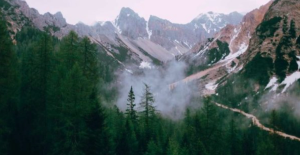
And then we considered the fact that here in the Bay Area, we have a national park, Golden Gate, that is home to more endangered species than any other national park in the continental United States. There are more endangered species in Golden Gate than in Yellowstone and Yosemite combined. And people in the Bay Area simply aren’t aware of this. So we thought this idea of a competition, which we did for the first time in 2008, would help raise awareness of this situation that is literally on our doorstep as a community.
G: Did you tweak the traditional Big Year?
BP: We found the idea of just having people go out and look for animals a little unsatisfying. So we modified the Big Year idea to say that if you really want to compete, you’ve got to do two things: One, you have to go out and look for the species; two, you have to take particular actions to help those specific animals or birds. There are 36 endangered species in the park, so we came up with 36 specific actions that anyone could do.
G: What are some examples of those match-ups between species and action?
BP: The northern spotted owl, which is found in Marin County and within the park, faces a number of threats. Its prime foraging habitat is being attacked by invasive plant species, including French broom. So we have people go out and not only try to see a spotted owl, but also help clear out French broom. Another good example is the California fresh water shrimp, which is threatened largely because fresh-water streams and rivers are being diverted for human use. So the action in that case is simply to conserve water at home, and we provide a whole information packet to help people do that. In other cases—such as the five different endangered salmon species—we ask people to write or call their elected representatives and push for more spending on salmon recovery programs. So some actions you can undertake at home—you don’t need to be in the park at all.
G: What kind of response have you seen?
BP: In 2008, it was overwhelming—far more than we anticipated as a volunteer-run effort, frankly. We had over 1,000 people involved, one way or another, by February. In the end, we had over 250 people actually complete the competition. On the very last trip of the year, which was an attempt to find some spawning salmon in the Muir Woods, we had over 120 people turn out in late winter.
G: That’s pretty great.
BP: Well, sure. It was good. But the very same day as that salmon trip, I went to see Cal’s football team play in the Emerald Bowl in San Francisco. And there were over 60,000 people sitting in that stadium. So that hammered home to me that whatever scale we achieved in 2008, we need to be at much larger scale.
G: How has that insight influenced this year’s competition?
BP: We started an actual organization—we founded Wild Equity in 2009, to do several different things but certainly to get the Big Year project to another level. We are doing it biennially so we have some time to adjust and experiment in between installments. And this year, for 2010, we’re actually doing it on a somewhat smaller scale. We have about 139 competitors signed up, but we are conducting fewer organized trips and so forth. But that is part of a strategy that’s aimed at making 2012 far bigger than 2008 was. We’re trying to take stock, refine the concept, and build capacity for a much bigger effort.
G: This strikes me as a great idea to steal. Have you inspired anyone?
BP: There’s an effort organized by Molly Tsongas, the daughter of former Massachusetts Senator Paul Tsongas, called TatZoo, in which competitors put forward creative ideas to help particular species. The idea that gets the most votes receives a number of prizes, including—and you’re required to accept—a tattoo of the species. So that’s an effort to reach a particular audience. The California Native Plant Society is doing a rare-plants treasure hunt.
In our case, we’re taking advantage of two great assets: the Endangered Species Act, which is really the world’s most powerful conservation law; and what Ken Burns called our nation’s best idea, the national parks. Together, those things form a very strong hook. But, honestly, you could come up with a version of this competition for a local city park or a state recreation area or anything. You could do a Big Year, a Big Month—you could do a Big Day. This all springs out of the conviction that we have absolutely got to find new ways to engage people with conservation. These competitions could be a very effective way to do just that.
Photo by Brent Plater.