
When Jennifer Salfen-Tracy shared two hauntingly different photos of her son on Facebook, she knew it would be difficult, but she hoped it could make a difference. The Wentzville, Missouri mom hadn’t seen or heard from her son Cody in weeks, and all she had was hope, faith, and two stark reminders of how quickly addiction can alter a life.

The photos, taken just seven months apart, show a heartbreaking transformation. Once a vibrant student-athlete who graduated from Wentzville Holt High School in 2011, Cody had become nearly unrecognizable. According to Jennifer, Cody’s descent began with heroin and meth, and spiraled from there.

Like millions of other American families, the Salfen-Tracys were suddenly living what too often remains a silent nightmare.

In 2017 alone, 19.7 million American adults struggled with a substance use disorder. That same year, 70,200 lives were lost to overdose. Cody was dangerously close to becoming part of those statistics.

Jennifer’s post, shared more than 44,000 times, wasn’t just a personal plea. It became a rallying cry. Her words resonated deeply with families nationwide who’ve faced similar struggles but remained quiet out of fear, shame, or stigma.

“I am hesitant on sharing.”

— Jennifer Salfen-Tracy

She didn’t mince words, either, pointing to systemic failures and misplaced political priorities:

“This is a true issue in our world today that we need to pull together and focus on to fix instead of the government worrying about and spending all their money on throwing each other under the bus.”

For Jennifer, the silence around addiction was the enemy. And her transparency helped break it.

“The unknown is what makes a person not sleep at night.”

— Jennifer Salfen-Tracy

The response to her vulnerability was overwhelming. Parents, siblings, friends, and survivors flooded the comments section, sharing their own stories and heartbreaks.

@ccadcbaaf shared: “Having a child that is an addict is awful. Just awful! I never, in a million years, imagined my kid(s) would suffer from addiction.”

@feffbdafbd wrote: “I lost my son to fentanyl. It took him before he could even develop an addiction. I’ve often thought in some way I am lucky that I didn’t have to see him do this to himself. Lucky me.”

“Lucky me.”

— @feffbdafbd

Others offered prayers, support, and, in some cases, vital updates. Jennifer later posted that Cody had been found, thanks in part to the power of social media and the compassion of strangers.

“I just want to say thank you to those who have talked to him and thank you for all the prayers. This is not just a problem that my family faces but almost everyone knows someone who has a drug/heroin addiction. I pray for strength for those suffering and healing for their families and friends.”

She made a plea that rings louder today than ever: “Let’s get ahold of this issue America and help each other.”

“Let’s get ahold of this issue America.”

— Jennifer Salfen-Tracy

Jennifer’s story is more than a wake-up call, it’s a reminder that no family is immune. Addiction doesn’t discriminate, and the path to recovery often begins with a conversation. Or a photo. Or a post like Jennifer’s.

Her courage underscores a truth we can’t ignore: the epidemic is real, and the time for compassion, action, and reform is now.

If you or someone you know is struggling with substance use, the Substance Abuse and Mental Health Services Administration (SAMHSA) offers a free and confidential helpline at 1-800-662-HELP (4357). Help is out there. And hope is real.

In the years since Jennifer’s post, the story has grown into one of hope and advocacy

Since her emotional post first captured national attention, Jennifer Salfen-Tracy has remained a public voice for recovery and awareness. Her son Cody was ultimately located in Las Vegas and entered a rehab program. In the time since, he has focused on staying sober and rebuilding his life, most notably celebrating his 28th birthday clean and healthy.

Jennifer kept supporters updated through the “Cody Bishop’s Road to Recovery” Facebook page, where she continued advocating for openness, compassion, and more resources for addiction treatment. Her message hasn’t changed: silence kills, and support saves.

But while Cody’s story has moved toward healing, the larger crisis has only intensified. National overdose deaths surged in the years following Jennifer’s viral post, nearly 93,000 people died in 2020 alone, and more than 100,000 in 2021. The spike has been fueled by fentanyl, a synthetic opioid often mixed into heroin, and a renewed rise in methamphetamine abuse.

In response, the public health conversation has begun to shift. More communities now support the distribution of naloxone (an overdose-reversal drug), and some states have decriminalized fentanyl testing strips, recognizing their role in preventing accidental deaths. But with so many still struggling, advocates like Jennifer continue pushing for more.

Her message remains as urgent as ever: recovery is possible, but only if we’re willing to talk about it, support it, and fight for it together.

This article originally appeared four years ago.

  • Scientists say reducing one brain protein may reverse age-related memory loss
    A neurologist looks at brain scans on a computerPhoto credit: Canva
    ,

    Scientists say reducing one brain protein may reverse age-related memory loss

    “It is truly a reversal of impairments. It’s much more than merely delaying or preventing symptoms.”

    Navigating the complexities of brain health as we age can be a daunting experience. From the mild frustrations of general forgetfulness to the devastating impacts of Alzheimer’s and Dementia, cognitive decline affects millions of families across the country. However, a groundbreaking 2025 study from the University of California, San Francisco (UCSF) suggests that we may finally have a way to do more than just manage symptoms. Researchers believe they have found a method to truly reverse age-related memory loss.

    The study, published in Nature Aging and reported by MSN, focused on a specific protein found in the brain called ferritin light chain 1 (FTL1). By studying the memory centers of aging mice, the team at the UCSF Bakar Aging Research Institute discovered that FTL1 tends to accumulate over time.

    When they successfully reduced the levels of this protein in older mice, something remarkable happened: their cognitive performance improved back to levels typically seen in much younger mice.

    memory loss reversal, FTL1 protein, brain health, cognitive decline, UCSF research, aging breakthroughs, MIND diet, neuroscience, alzheimers prevention, neuroplasticity
    A labratory mouse checks out a microscope Canva

    The Role of FTL1 and Iron Storage

    To understand why this protein matters, it helps to look at how the brain manages iron. Iron is essential for the body, as it assists in distributing energy to cells and keeping the brain functioning at its peak. FTL1 acts as a storage container for this iron. Without it, iron would move freely and cause damage; however, too much FTL1 can disrupt neurons and deprive them of the energy they need to form and recall memories.

    The researchers tested this theory by increasing FTL1 levels in healthy young mice, which caused them to immediately experience memory impairments. When they did the opposite with older mice, the results were definitive. “It is truly a reversal of impairments. It’s much more than merely delaying or preventing symptoms,” said Saul Villeda, the senior author of the paper. This suggests that FTL1 is a primary driver of typical age-related decline, even in the absence of specific diseases like Alzheimer’s.

    Proactive Steps for Brain Health

    While the medical world waits for these “frontier medicine” applications to move toward human trials, there are science-backed ways to protect your cognitive function today.

    As the field of neuroscience continues to unlock the secrets of proteins like FTL1, the prospect of maintaining a sharp, youthful mind well into old age is becoming more of a reality. While we wait for technology to catch up, the foundation of a healthy brain remains built on the daily choices we make regarding how we eat, move, and rest.

    This article originally appeared last year.

  • His memory resets every 30 seconds. A look inside his 1990 diary shows what he never forgot.
    An older man writes in his journalPhoto credit: Canva
    ,

    His memory resets every 30 seconds. A look inside his 1990 diary shows what he never forgot.

    He was a brilliant musician until a viral infection left him with a memory span of only 30 seconds.

    In 1985, the life of British musicologist Clive Wearing changed forever. After contracting herpesviral encephalitis, a rare virus that attacked the memory-forming regions of his brain, Wearing was left with what is considered the most extreme case of amnesia ever recorded. For four decades, his life has been lived in a loop lasting between seven and 30 seconds.

    Recently, a page from Wearing’s diary dated January 13, 1990, surfaced online via Diaries of Note, offering a haunting and beautiful look into a mind that cannot retain the past. The diary is filled with entries made just minutes apart, each one declaring that he has just woken up for the very first time.

    At 7:46 am, he wrote, “I am awake for the first time.” Just one minute later, at 7:47 am, he crossed that out and wrote again, “This illness has been like death till NOW. All senses work.” Because he cannot trust his own handwriting or remember writing the previous line, his diary is a chaotic map of scratched-out sentences and desperate attempts to grasp consciousness.

    A Rare Neurological Intersection

    Wearing’s condition is unique in the world of neurology because he suffers from both retrograde and anterograde amnesia simultaneously. According to Study.com, most patients only experience one form. Because he cannot retain any new information (anterograde) and has lost most of his past (retrograde), he lives in a perpetual state of confusion.

    Currently residing in an assisted living facility, Wearing understands his immediate surroundings but has no idea how he arrived there. Tragically, while he knows he has children, he cannot remember their names or faces. He knows he was a musician, yet he cannot recall ever playing or hearing a single piece of music—though, remarkably, his muscle memory remains intact, allowing him to play the piano and conduct with the same brilliance he possessed before the illness.

    The Bond That Defied Science

    While the virus destroyed his ability to form new memories, it failed to erase his connection to his wife, Deborah. Through decades of “restarting” his conscious mind, his first instinct upon seeing her is always one of pure joy and recognition.

    Deborah has documented their life in her memoir, Forever Today: A Memoir Of Love And Amnesia. She describes their relationship as a “story of a marriage, of a bond that runs deeper than conscious thought.” According to Historic Flix, she has worked closely with the Amnesia Association to help the NHS develop better rehabilitation protocols for those with severe brain injuries.

    In an interview with The Guardian, Deborah shared a perspective that challenges our traditional understanding of the human brain. She explained that even when her husband was in his most acute state, his love for her remained the one constant.

    “I realized that we are not just brain and processes. Clive had lost all that and yet he was still Clive,” she told the publication. “Even when he was at his worst… he still had that huge overwhelming love for me. That was what survived when everything else was taken away.”

    This article originally appeared two years ago.

  • This Gen Zer just shared their budget on a full-time job, and millennials are losing it in pure rage
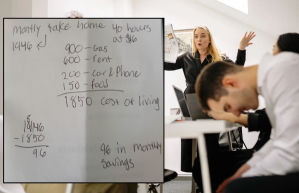
    (Inset) A handwritten budget; (Background) Young adults reacting in angerPhoto credit: Reddit / Canva
    ,

    This Gen Zer just shared their budget on a full-time job, and millennials are losing it in pure rage

    They are working six days every week and still have to live at home to make ends meet.

    For years, the cultural narrative around financial struggle was firmly planted on Millennials. Labeled the “Avocado Toast” generation, they were told that if they just worked harder and skipped the latte, a three-bedroom house would eventually appear. But as we move through 2026, a new generation is entering the workforce only to find the same roadblocks. And this time, the walls are even higher.

    A recent viral post on Reddit has laid bare the mathematical impossibility of modern “entry-level” life. The post, which garnered over 30,000 upvotes in the r/GenZ community, features a young worker who is doing everything “by the book.”

    They work six days a week in an apprenticeship and live at home with their parents to keep costs down. Yet, even with these advantages, the numbers refuse to add up.

    gen z budget, cost of living, minimum wage, millennial rage, financial struggle, reddit viral, living wage, economic policy, paycheck to paycheck, wage gap
    A young person doing their monthly budget Canva

    The $96 Safety Net

    After earning 16 dollars an hour and paying for essentials (including rent to their parents, groceries, a cell phone, and gas for a commute that includes driving family members around), the poster is left with a staggering 96 dollars in savings at the end of the month.

    This tiny cushion is currently one mechanical failure away from disappearing. “I’m stressing because my car needs work,” the poster shared. “It’s $1,300 for the power steering including labor and probably another $800 for the coolant system problems.” For this worker, the “safety net” is effectively nonexistent.

    The “Lazy” Myth vs. the Reality of Exhaustion

    The most striking part of the story for the thousands of commenters wasn’t just the low pay, but the sheer exhaustion of the schedule. The poster noted they are barred from working overtime but are required to work six days a week. Despite this grueling commitment, they are facing a ticking clock: their parents have given them only six months to move out.

    While a raise is expected in four months, it amounts to only a single dollar more per hour. In the current economy, a one-dollar raise feels less like a ladder and more like a toothpick. “I’m showing this to the older generations that say we’re lazy,” they wrote. “I don’t want to hear anything.”

    @becomingyouwithsuzywelch

    We all know it—Gen Z has a reputation problem. But maybe they’re misunderstood? Dr. Suzy Welch (NYU Stern Professor and NYT best-selling author) shares her take on Gen Z and millenials in the workplace, and why their lack of enthusiasm signals something much deeper—a lack of hope for the future. #genz #millennial #burnout

    ♬ original sound – Becoming You with Suzy Welch

    Why Millennials Are Seeing Red

    Instead of responding with “back in my day” anecdotes, Millennials have flooded the conversation with fury and solidarity. They recognize the trap because they have been living in it since the 2008 recession and the inflation spikes of the early 2020s.

    The data shared by users and reports from Newsweek highlight several grim realities:

    • The Federal Stagnation: The national minimum wage remains stuck at 7.25 dollars per hour, a number that hasn’t budged since 2009, back when the oldest Gen Zers were only 12 years old.
    • The Living Wage Gap: According to the MIT Living Wage Calculator, even in “low-cost” states like Iowa, a single person needs to make at least 20.89 dollars per hour just to be self-sufficient. In cities like Washington D.C., that requirement jumps to nearly 26 dollars.

    For years, media outlets played up a “Gen Z vs. Millennial” divide, focusing on trivial differences in fashion or slang. However, budgets like this one are proving that the two generations have far more in common than they have differences. Both are facing an economy where “purchasing power” has become a relic of the past. By acknowledging that the system (not the worker) is broken, this shared rage is beginning to turn into the collective power needed to demand economic policies that actually make a 40-hour work week enough to live on.

    This article originally appeared last year.

Explore More Past Events Stories

Past Events

Scientists say reducing one brain protein may reverse age-related memory loss

Culture

This Gen Zer just shared their budget on a full-time job, and millennials are losing it in pure rage

Humor

Doctors stunned after ​groggy woman wakes up from surgery and asks why they forgot her Brazilian butt lift

Culture

A daycare teacher lost her job after a dad caught her repeatedly lying about a show featuring cartoon vegetables