As writer-director-actress Lena Dunham’s HBO show, Girls, enters its fifth season, her groundbreaking character, Hannah, is still unabashedly Hannah. In the first episode of the new season, Hannah shows up at her best friend’s wedding with a cropped haircut, deconstructs her bridesmaid dress, and proves she has yet to master the art of armpit shaving. Like her TV alter ego, Dunham hasn’t given in to Hollywood’s idea of femininity. Today, she struck out at Spanish magazine Tentaciones for photoshopping her photo on its cover.
Tentaciones (“Temptations”) is a monthly supplement that accompanies Spain’s popular newspaper El Pais. Dunham took to Instagram to point out that the picture of her was digitally altered. “This is NOT what my body has ever looked like or will ever look like—the magazine has done more than the average photoshop,” she wrote. “So if you’re into what I do, why not be honest with your readers?”
After hearing Dunham’s criticism, Tentaciones released another photo of Dunham to prove they hadn’t committed any wrongdoing. “Those who know us and follow our magazine know that we do not use Photoshop or other digital tools to change the appearance of people who are on our cover or inside the magazine,” the magazine wrote. But Dunham, knowing what her body looks like, said on Instagram, “Thank you for sending the uncropped image (note to the confused: not unretouched, uncropped!) and for being so good natured about my request for accuracy … I’m not blaming anyone (y’know, except society at large.) I have a long and complicated history with retouching. I wanna live in this wild world and play the game and get my work seen, and I also want to be honest about who I am and what I stand for.”
Although Tentaciones may not have retouched the image, it appears that it was altered somewhere down the line. Regardless, Dunham’s tenacity on the issue of photoshopping female bodies is commendable. The more people in the public eye who take publishers to task for altering images of female bodies, the less likely they’ll be to employ digital trickery in the future.
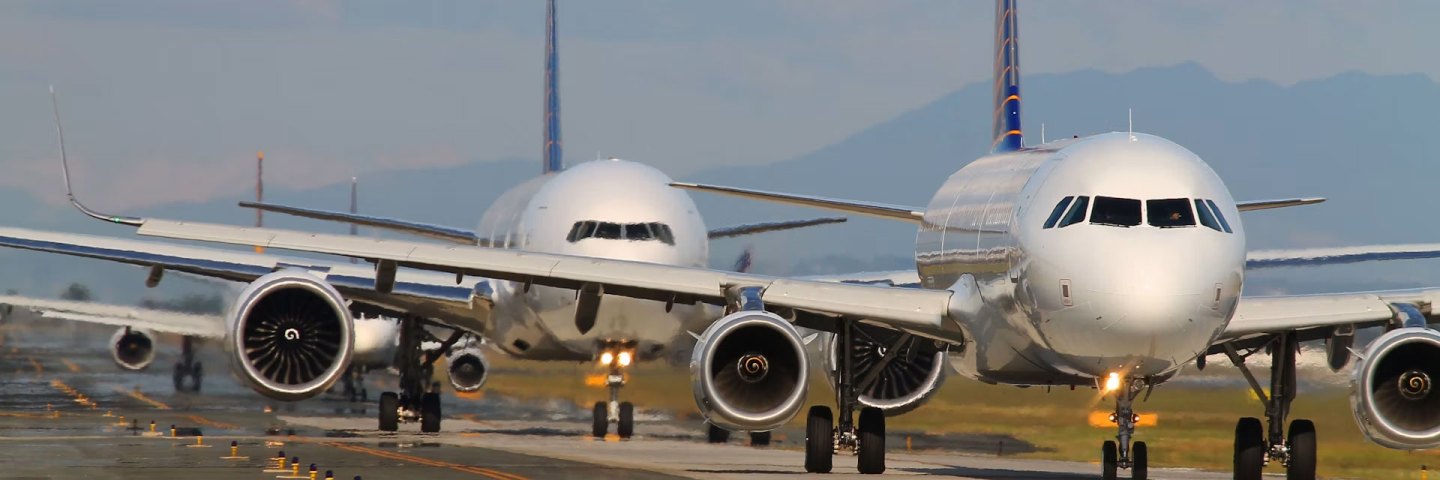
A commercial airplane crash can change how people behave long after the immediate tragedy. News outlets replay the images, people affected share their harrowing stories, and an extraordinarily rare event becomes easy to imagine. Some travelers cancel trips; others drive to their destination instead.
These choices may feel cautious. Statistically, the alternatives people switch to may come with greater risk.
Commercial airline crashes command attention because they are rare, catastrophic and beyond a passenger’s control. But the choice to avoid flying does not eliminate risk. As a new report from our research team at Embry-Riddle Aeronautical University outlines, skipping a flight and opting to drive instead is typically much riskier, even if it doesn’t feel like it.
Airline travel is safer than headlines suggest
People tend to respond strongly to events that are vivid, while paying less attention to familiar hazards – the risks of which manifest more frequently but less visibly. As a result, efforts to avoid one danger can create another.
In our recent peer-reviewed report, prepared with support from Embry-Riddle Aeronautical University’s Boeing Center for Aviation and Aerospace Safety, we compared fatality risk in U.S. commercial aviation with other transportation modes, recreational activities, household hazards and occupational risks. While the Boeing Center receives some funding from The Boeing Company, it operates independently.
We focused on commercial Part 121 airlines operating in the U.S. and analyzed data from 2016 through 2025. Part 121 carriers generally include large U.S. airlines and regional carriers that operate scheduled passenger service. Because fatal accidents are so rare, data from a single year would not have provided a stable risk estimate.
Across several measures of risk exposure, including distance traveled, individual boardings, hours spent traveling, annual risk and lifetime odds, the data consistently shows that U.S. commercial aviation is exceptionally safe.
For the same distance traveled, we estimated the fatality risk as about 626 times higher in a passenger car or truck than on a commercial airline. The risk associated with motorcycle travel was more than 22,000 times higher than commercial airline travel. Even highway bus travel, itself a relatively safe option, carried about nine times the risk of commercial airline travel over the same distance.
When risk is measured per passenger boarding, the numbers remain striking. From 2016 through 2024, the long-run estimate was approximately one passenger fatality per 97.7 million boardings on commercial airlines.
These numbers do not mean flying is risk-free, just that the risk is small enough that researchers need many years and enormous amounts of exposure to estimate it. Across the 10-year study period, 73 people died in accidents involving commercial airline travel in the United States.
These findings complement earlier research. A peer-reviewed 2013 study comparing U.S. transportation modes examined data from 2000 through 2009 and also identified commercial aviation as the safest way to travel. A 2018 study using data from the same period similarly ranked commercial aviation as the safest mode.
More recently, a 2022 study analyzed U.S. news coverage, travel patterns and accident data from 1996 through 2017. It found that increased news coverage of aviation accidents was associated with more road traffic and more fatal road accidents in subsequent months.
The 9/11 aftermath and the risk of avoiding risk
The aftermath of the Sept. 11, 2001, terrorist attacks provided a powerful example of how behavior can shift risk from one setting to another. Air travel declined sharply after the 9/11 attacks. Subsequently, researchers were able to investigate whether fear of flying led to additional deaths on the road.
Psychologist Gerd Gigerenzer analyzed traffic patterns for the final three months of 2001 and estimated 353 excess road deaths nationwide. He characterized many people’s decision to drive rather than fly as an attempt to avoid a “dread risk”: a low-probability event in which many people could die at once.
Transportation researchers Michael Sivak and Michael Flannagan later reanalyzed the period. They used road fatality trends from the first eight months of 2000 and 2001 to estimate how many deaths would normally have occurred during the final three months of 2001. They then compared that estimate with the number actually recorded in the past three months and calculated 1,018 additional road fatalities from October 2001 through December 2001.
But their findings complicated the idea that people who avoided flying merely drove to the same distant destinations. Much of the increase occurred on local roads, not interstate highways, and pedestrians and bicyclists experienced a disproportionate share of fatalities. This pattern suggests that travel behavior may have changed more broadly after the attacks, perhaps because people canceled longer trips, stayed closer to home or changed their daily routines.
It is hard to pin down how much of this increase was related to people changing their travel patterns in response to the 9/11 attacks, since these studies cannot track each individual’s transportation decisions.
But both studies suggest that a collective effort to avoid a highly visible danger can increase exposure to ordinary hazards whose victims are less visible. When more people choose to drive rather than fly, the roads become busier and the number of traffic deaths can rise.
The question shapes the risk estimate
One reason discussions about risk become confusing is that there is no single way to measure it. The answer to the question “Is it safe?” depends on what you measure.
How much risk does a person face for each mile traveled? What is the risk of one trip? How much risk accumulates during one hour of travel? What is the chance of dying from this cause in a year or over a lifetime?
These are legitimate questions, but to make a valid comparison, you need to look at the same measure of risk for both types of transportation. Comparing the risk of one flight with the annual risk of driving, for example, mixes unlike quantities.
A traveler deciding whether to fly or drive between two cities can compare the two modes over the same trip or distance. This comparison provides a clearer perspective than comparing a highly visible plane crash with a familiar daily routine.
Time matters too. In our estimates, an hour in a passenger car or truck carried about 74 times the fatality risk of an hour aboard a commercial aircraft.
Feeling in control is not the same as safety
Driving gives people a steering wheel, a brake pedal and the belief that their skill can protect them. Flying asks passengers to place control in the hands of pilots, airlines, regulators, air traffic controllers and a complex technical system. Psychological research has linked a stronger sense of agency – the feeling that people control their actions and their outcomes – with greater risk-taking. That difference in perceived control helps explain why a rare aviation disaster can feel more threatening than routine road travel.
Airline passengers don’t have the same sense of control over their vehicle as drivers, so flying can feel more uncertain and dangerous. AP Photo/Susan Walsh
Media attention also matters. A major airplane crash is treated as news of national or international importance. Road deaths occur across many locations and at different times, so the public does not see the cumulative toll.
The emotional intensity of coverage does not mean journalists are wrong to cover crashes. It just means audiences need context alongside the images.
Crafting better risk communication
Telling anxious travelers that flying is “safe” is rarely enough. Research on risk perception shows that people do not judge danger through statistics alone. Fear and vivid images also shape how risky an event feels. But providing more context about the risks from other forms of transportation can still help.
Effective communication about risk does not minimize tragedy or dismiss the real fear people may feel. But it can help people understand that when millions of travelers shift from one type of transportation to another, the risk moves with them.
For travelers, the practical question is not whether an option has zero risk. No option does. The question is whether a choice reduces their total exposure to risk or merely replaces a frightening, highly visible risk with a greater one that feels routine.
To put the rarity of fatal airline events into perspective, an average of 2.48 million travelers passed through TSA screening each day in 2025. Modern commercial aviation in the United States has achieved a safety record that is difficult to grasp precisely because fatal events are so unusual.
When fear leads people away from that system, the safest-feeling decision may not be the safest decision at all.
The modern workday unfolds largely indoors. Long hours spent commuting, sitting in meetings and staring at screens can make time outdoors feel like a luxury. Finding time for nature in an already packed workday can feel impossible, especially if you think nature only “counts” when it involves hiking boots and camping gear.
But a growing body of research suggests that nature’s benefits don’t require an exotic vacation getaway or weekend adventure. Even brief, routine interactions with green space can reduce stress, improve mood and promote overall well-being.
I spent the spring of 2026 teaching and studying urban landscapes in Denmark, a country consistently ranked among the happiest in the world. I expected to find thoughtfully designed parks, courtyards and bicycle paths. I did see those things. But what surprised me was how seamlessly people moved through those spaces as part of their ordinary lives.
These green spaces weren’t aspirational destinations, reserved for special occasions. They were places to eat lunch, meet friends, walk through on the way home from work, or just pause for a few quiet moments. Getting outside seemed a part of the natural rhythm of the day.
Denmark‘s outdoor culture stemmed not only from the creation of a meticulously planned network of parks, but also from the way green spaces were fundamentally woven into the routines of everyday life.
A wooden bench in one of Copenhagen’s forest therapy parks invites people to sit and soak in their surroundings. Todd Lookingbill
Everyday parks, everyday benefits
Evidence linking time spent in nature with health benefits has increasingly shaped public policy. In the U.S., for example, the National Park Service’s Healthy Parks Healthy People and ParkRx initiatives reflect a growing recognition that access to parks contributes to well-being.
For many Americans, however, the word “park” brings to mind iconic national parks such as Yellowstone, Yosemite or the Grand Canyon. Yet visiting parks of all kinds can improve your overall health. The greatest public health value may come not from the parks people visit once in a lifetime but from those close enough to visit again and again.
My own research on Civil War battlefield parks illustrates this point. These are parks that were established to commemorate historic conflicts that were frequently fought on the fringes of major metropolitan areas. Consequently, many of these landscapes preserve forests, grasslands and trails within easy reach of millions of Americans.
Because they’re accessible without extensive travel or planning, they can become places people return to repeatedly – such as during a lunch break or after work. Reframing the notion of “park” opens up millions of acres of land for everyday uses.
Designing for everyday nature
At the University of Richmond, where I work, a stream restoration projects became an opportunity to rethink how nature fits into campus life. Landscape architects designed an Eco-Corridor, as the project became known. It has walking paths, gathering spaces and seating areas for quiet reflection alongside flowing streams and native vegetation.
The result was a landscape that supports biodiversity and improves water quality while also creating places for students, faculty and staff to walk between meetings, eat lunch alfresco or spend a few quiet moments outside during the workday. Its ongoing care depends on an army of volunteers who spread mulch, remove invasive plants and tend the community garden. For these volunteers, stewardship between classes and meetings meant another opportunity to interact with nature.
Students walk through the ‘Eco-Corridor’ at the University of Richmond. Haley Herrmann
What we learned was that nature doesn’t have to compete with work, studying or everyday responsibilities. Thoughtful landscape design can make spending time outdoors, even if only for a few short minutes, feel like a normal part of the day.
Solo travel is surging – and an industry still largely built for two is taking note.
Google reported in April 2026 that online searches involving “solo travel” hit an all-time high this year, with queries for “women solo travel” reaching a 15-year peak. Hilton’s 2026 trends report found that 26% of travelers planned to take a trip alone this year, and that nearly half said they planned to add solo days to the front or back of a family trip.
The issue isn’t new. In 1992, marketing researchers identified the solo consumer as an underserved market. But as tourism researchers have documented, the accommodation sector treats double occupancy as the default unit of consumption, which often slaps a “single supplement” charge on customers when they travel without a partner. The industry essentially penalizes travelers for arriving without a second body to fill the other half of a room they aren’t using.
The reason why so many hotels, cruise lines and tour operators still base prices on double occupancy is that their costs – the room, the berth, the coach seat, the guide – don’t fall by half when the second person fails to materialize. But the supplement isn’t just a pricing convention. It’s the clearest signal the industry sends about who it built the product for.
I’m a scholar who studies what I call the solo economy: how institutions and markets adapt, or fail to adapt, to the rise of single living. I’ve written before about how retail and restaurants still design for pairs.
Travel is further along than most in recognizing this cultural shift. It’s also a useful case because the industry has started on the easy part of the problem but barely touched the rest.
Demographics matter, but not the way you’d think
The broader shift toward solo living is real. In 2025, 39.7 million Americans lived alone. That’s 29% of all households, up from 20% in 1975. Married couples, meanwhile, fell to 47% of households from 66% 50 years earlier.
Those numbers alone don’t explain solo travel. Some of that decline went to people living alone; some went to unmarried couples, who are still a party of two on a booking page. Married people take trips alone. Single people travel with friends, siblings and parents, and plenty of them have logged serious hours as an extra wheel. Living alone and vacationing alone are different behaviors with different causes.
What connects them is the erosion of a single assumption: that every adult arrives with a plus-one. That assumption is weakening at home, and it’s now encountering the booking page.
Price is the easy rung
One response by the travel industry has been to shave the single supplement. For example, the tour operator Tauck announced this year that it’s waiving the single supplement on a class of its riverboat cabins across more than 250 European river cruise departures and reducing it by up to US$600 on 105 land departures.
Another touring company has taken a more committed approach to adjusting its offerings: Aurora Expeditions sets aside 10 dedicated solo cabins on every sailing across its three ships, with no single supplement, through its 2026 and 2027 seasons.
Then there’s Norwegian Cruise Line, which was early to the shift. In 2010, it introduced Studio staterooms aboard Norwegian Epic: Small cabins designed for one passenger, sold at single-occupancy prices and arranged around a keycard-access Studio Lounge reserved for solo travelers. The trade-off is less private space, but at a price for one, with access to a room full of fellow travelers going it alone.
Norwegian then expanded solo categories in 2024 from nine ships to its full 19-ship fleet. But on ships without Studios, much of the expansion was relabeling. Cruise Critic reported that standard double-occupancy rooms would likely be reclassified rather than retrofitted. And by Norwegian’s own account, the Studio Lounge is reserved for guests in Solo Studios – so the fleetwide solo categories come with the discount but not the room full of other solo travelers.
That’s the difference between repricing and redesigning. The 2010 Studio was a purpose-built 100-square-foot (9 square-meter) cabin that cost Norwegian something to construct. The 2024 categories are, in many cases, the same rooms as before, with a new label and a discount. The solo traveler pays less than two people would, but it’s still more than half for a room sized and built for two. A cabin sold to one occupies the same space as a cabin sold to two, and the industry still counts berths.
There’s a cleaner approach. Yotel sells a room type it calls Solo – 114 square feet (about 10 square meters) in New York City, maximum occupancy one, at the bottom of its price range. Nothing was subtracted to make it. It was built at that size, for that guest, and priced accordingly. That’s what designing for one looks like, and it’s rare enough that a tiny room counts as progress.
Many solo travelers seek control over their experiences and schedules, but they still seek a social component. Keriliwi on Unsplash
Traveling alone doesn’t mean being alone
A common mistake in designing for solo travelers is assuming that solitude is the product. It isn’t.
In the same 2026 data showing record interest in solo travel, Google found that searches for “travel groups” and “tour groups” also hit record highs. A Mastercard survey of more than 15,000 consumers across 11 countries found that 39% of international travelers had already taken a trip alone — and 7 in 10 international leisure travelers were interested in solo experiences built to connect them with like-minded people.
The contradiction makes sense when you acknowledge that privacy and isolation are two different things. A person can want total control over where to go, when to eat and when to return to the room – and still want company at dinner.
The issue with double-occupancy pricing is that it assumes the customer brings their own company. But when only one person books, the operator has to address the pricing problem – whether or how to discount; and a product problem – how to supply a social component. Waiving a solo supplement solves the first issue, but it ignores the second. Norwegian understood this in 2010 by creating its lounge for solo travelers.
The pitch is easier when the product is for one
For all these changes, travel advertising often still runs on couples: two glasses of wine, two lounge chairs, two silhouettes against a sunset. Sandals Resorts built an entire resort category around the premise.
When solo travel does appear, it gets a different script. The traveler is adventurous, on a journey of self-discovery. AARP’s current solo-travel guide emphasizes personal growth and self-reliance. Even Norwegian closes its solo pitch by reassuring the reader that “you’re pretty good company.”
The effect is to mark solo travel as exceptional at precisely the moment it stops being exceptional. Nobody reassures a couple that they will enjoy the balcony. Calling a solo traveler “brave” can be a compliment, but it can also reveal the assumption that traveling alone is abnormal, even when that’s changing.
That all said, parts of the tourism industry have taken big steps over the past 15 years. But treating solo travelers as an audience rather than an accommodation is harder. It’s about selling them what they have already said they want: control over the trip, and access to other people, on their own terms.
Marketing researchers named this opportunity in 1992. Thirty-four years later, the industry is still learning to build for one. Meanwhile, the solo traveler is standing at reception, holding a credit card, waiting for someone to design a room.