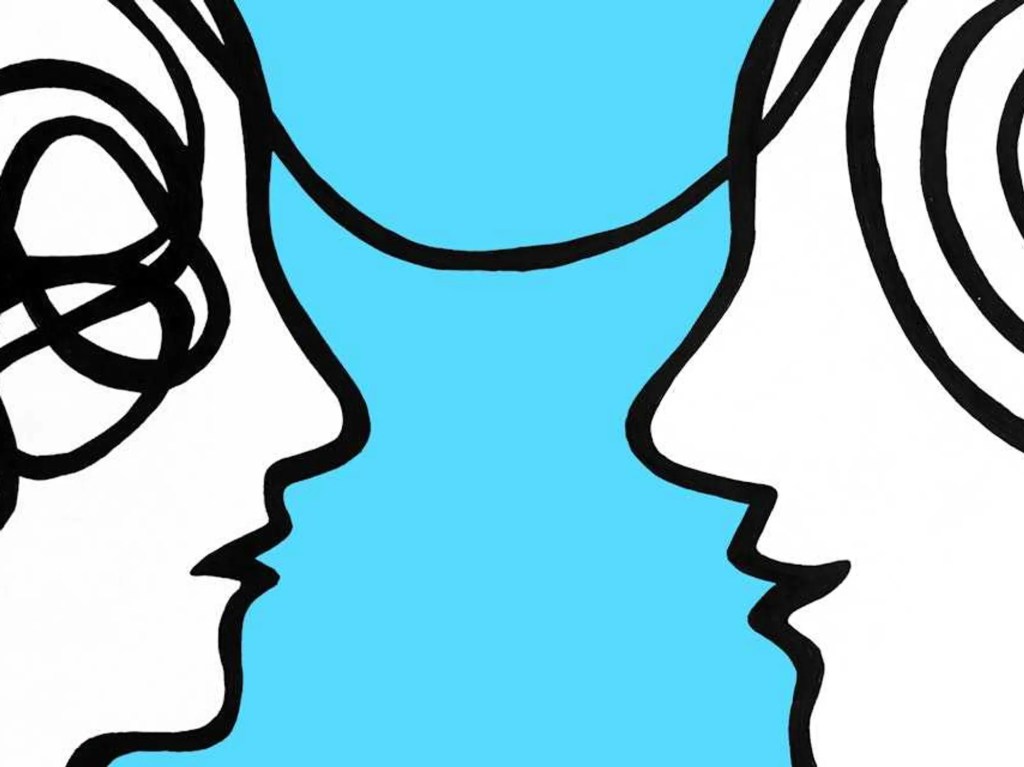

Understanding one another can be hard. There is a big difference between someone snapping at you out of contempt, and calling you out for a mistake because they believe in you and know you can do better. One of these cases calls for anger, but the other for humility or even embarrassment. Or maybe they are only snapping because they’re “hangry” – they might just need a Snickers bar.

And that’s just with people we know. What about strangers, people across the political divide, or even those with very different backgrounds and cultures than your own?

My field, philosophy, offers a tried-and-true answer to what we need to do in order to understand people and texts from very different backgrounds and cultural assumptions than our own. We need to be charitable.

Charity in this sense isn’t a matter of giving money to those who need it more. Instead, it’s seeing others in a favorable light – of seeing the best in them. In my work, I think of this as seeing other people as protagonists: characters who “do their best” with the predicament in which they find themselves. Interpreting someone charitably doesn’t require agreeing with them. But it does require doing our best to find merit in their point of view.

Of course, people and ideas don’t have unlimited merit. We can err by failing to see the merit of someone’s point of view – or we can err by finding merit that isn’t really there.

But the idea of charity is that it’s worse to make the first kind of error because it prevents us from getting along and learning from one another. By seeing the best in someone else and in their ideas, we can learn productively from engaging with them. Protagonists are people we can learn from and cooperate with.

Taking them seriously

It doesn’t take a genius to observe that we are all better at seeing the best in the people we agree with – and worse with those across the political divide. Political discussions on social media are often dominated by competing attributions of more and more insidious motives to people on the other side. We see them not as protagonists, but as antagonists.

By seeing the worst in someone else’s ideas, we let ourselves off easy. We dismiss them when instead we need to be taking them seriously.

So why, if charity requires seeing the best in others, are we so often tempted to see the worst in them?

A better understanding of charity provides the answer. Seeing the best and the worst in others are not opposite ways of interpreting someone, but simply two sides of the same coin. Here’s why:

Charity, Philosophy, Ethics, Conflict, Virtues, Understanding, Interpretation, Disagreements, Motives, Character virtue
Photo credit: Maskot/Getty ImagesPart of charity is sifting out the signal from the noise.

Interpretation trade-offs

Interpreting someone isn’t all about figuring out their motives. Sometimes it’s about sorting out what is signal and what is noise. If I snap at you, you could spend a lot of time fixating over whether to be angry or embarrassed. But sometimes the right move is just to pass me a Snickers bar and move on. Our moods and actions are influenced by hunger, hormones, alcohol and lack of sleep, just to name a few. Overinterpreting a snap after I missed breakfast treats as signal what is really just noise.

Overlooking a thing or two when I am hangry can be the best way to see the best in me. When you interpret my snap as merely the result of missing a meal, you don’t really see it as coming from me, the protagonist; but as the result of my predicament. You will judge me, not by whether I am hangry, but by how I overcome that. Your interpretation sees me in a more positive light, by taking away some of my agency.

By “agency,” I mean the extent to which someone gets credit for what they do. You have greater agency over something that you do on purpose, and less if was a foreseen but accepted side effect of your plan. You have less agency if it was an accident, but more if the accident was negligent; less agency if you just snapped because you’re hangry, but more if you know you get hangry and chose to skip lunch anyway.

A perfect agent wouldn’t be affected by hormones and hunger. They would simply make rational choices that advance their goals. But humans aren’t like that. We are imperfectly embodied agents, at best. So interpreting one another well sometimes requires seeing the good in one another, at the cost of agency. In other words, it has to balance agency against the good, as I have argued in my recent work.

But you can’t find the best in someone by just ignoring more and more until all the bad things are trimmed away and only something good is left. Your interpretation has to fit with the facts of what they do and say.

And sometimes the trade-offs between agency and the good go the other way – we interpret each other in ways that attribute more agency but less good. If passing me a Snickers bar seems to calm me down, you might try it again the next time I snap. But one day you realize that you have started carrying extra Snickers bars everywhere you go in case you run into me, and a different interpretation presents itself: Maybe instead of being a decent but mood-challenged friend, I have just been using you for your candy bars.

Charity, Philosophy, Ethics, Conflict, Virtues, Understanding, Interpretation, Disagreements, Motives, Character virtue
Photo credit: Deagreez/iStock via Getty Images PlusTruly angry, just hangry, or taking advantage of your chocolate supply?

This creates tipping points for charitable interpretation. When we cross the tipping point, you switch from seeing someone as an imperfectly embodied protagonist to seeing them as an antagonist.

Charity without a cost

All of this is a way of arguing that it is sometimes right to see the worst in others. Sometimes other people really are the worst, and understanding them requires understanding their agency, not what is good about them. Protagonists and antagonists are just two sides of the same coin: The very same interpretive process can lead us in either direction.

Unfortunately, this means there is no simple test for when you are doing well enough at seeing the best in others. In particular, there is no test that we can agree about across our political differences. Interpreting someone charitably requires looking hard enough for good in them, but part of what we disagree with one another about is precisely what is good. So we are bound to disagree with one another about who is being sufficiently charitable.

But as a personal aspiration, a little more charity can go a long way. We can be generous not just with money, but in how we interpret others. But unlike giving money away, we don’t lose anything when we try harder to see the best in someone else.

This article originally appeared on The Conversation. You can read it here.

  • HEPA air purifiers may boost brain power in adults over 40 – new research
    Photo credit: Jomkwan/iStock via Getty Images PlusAir pollution can negatively affect the brain.

    Using an in-home HEPA purifier for one month spurs a small but significant improvement in brain function in adults age 40 and older. That’s the result of a new study we co-authored in the journal Scientific Reports.

    HEPA purifiers – HEPA stands for high efficiency particulate air – remove particulate matter from the air. Exposure to particulate matter has been connected to respiratory and cardiovascular illnesses as well as neurological diseases such as Alzheimer’s and Parkinson’s. Environmental health researchers increasingly recommend that people use HEPA air purifiers in their homes to lower their exposure to particulate matter, but few studies have examined whether using them boosts mental function.

    We analyzed data from a study of 119 people ages 30 to 74 living in Somerville, Massachusetts. Somerville sits along Interstate 93 and Route 28, two major highways, resulting in relatively high levels of traffic-related air pollution. This makes it an especially good location for testing the health effects of air purifiers.

    We randomly assigned participants to one of two groups. One used a HEPA air purifier for one month and then a sham air purifier – which looked and acted like the real thing but did not contain the air-cleaning filter – for one month, with a month-long break in between. The second group used the real and sham purifiers in reverse order.

    After each month, participants took a test that measured different aspects of their mental capacity. The test probed people’s visual memory and motor speed skills by measuring how quickly they could draw lines between sequential numbers, and it tested executive function and mental flexibility by asking them to draw lines between alternating sequential numbers and letters.

    We found that participants 40 years and older – about 42% of our sample – on average completed the section testing for mental flexibility and executive function 12% faster after using the HEPA purifier than after using the sham purifier. That was true even when we accounted for factors like differences in the amount of time participants spent indoors, with either filter, as well as how stressful they found the test.

    This improvement may seem small, but it is similar to the cognitive benefits that people experience from increasing their daily exercise. While you may not experience a sudden increase in clarity from a 12% boost, preventing cognitive decline is vital for long-term well-being. Even small decreases in cognitive functioning may be associated with a higher risk of death.

    Why it matters

    Air pollution can negatively affect mental function after just a few hours of exposure. Studies show that air purifiers are effective at reducing particulates, but it’s unclear whether these reductions can prevent cognitive harm from ongoing pollution sources like traffic. Research has been especially lacking in people living near major sources of air pollution, such as highways.

    People living near highways or major roadways are exposed to more air pollution and also experience higher rates of air pollution-related diseases. These risks aren’t encountered by all Americans equally: People of color and low-income people are more likely to live near highways or areas with heavy traffic.

    Our study shows that HEPA air purifiers may offer meaningful health benefits under these circumstances.

    What still isn’t known

    Research shows that air pollution begins to affect cognitive function especially strongly around age 40. These effects may become increasingly prominent as people age.

    HEPA air purifiers may therefore be especially beneficial for older adults. Our study did not explore this possibility, as fewer than 10 of our 119 participants were over the age of 60.

    Also, our participants only used a HEPA air purifier for one month. It’s possible that longer durations of air purification may sustain or even increase the improvement in cognitive function we observed in our study.

    Finally, it is unclear exactly how air purifiers improve cognition. Some studies suggest that exposure to particulate matter reduces the amount of the brain’s white matter, which helps brain cells conduct electrical signals and maintains connections between brain regions. The brain regions most harmed by air pollution are the ones that control mental flexibility and executive function, the same domains in which we saw improvements in our study.

    We plan to study whether reducing particulate matter by using air purifiers is indeed protecting the brain’s white matter, and whether it could reverse some cognitive decline. We will explore that possibility by studying how levels of molecules called metabolites, which cells produce as they do their jobs, change in response to breathing polluted air and air cleaned by a HEPA filter.

    This article originally appeared on The Conversation. You can read it here.

  • Placebo effect can work as well as real medicine – but your body may need permission to use it
    Photo credit: Irina Marwan/Moment via Getty Images From empty pills to homeopathy to sham surgery, placebos have powerful effects on the body.

    The first time the placebo effect really got under my skin was when I read that roughly one-third of people with irritable bowel syndrome improve on placebo treatments alone. Usually this statistic is presented as a fascinating quirk of medicine. My reaction was anger.

    Humanity possesses an extremely effective treatment, with essentially zero side effects – and patients need someone else’s permission to use it.

    The placebo effect refers to the improvements in symptoms that patients experience after they’re given an inert treatment like a sugar pill. Driven by expectation, context and social cues rather than pharmacology, the placebo effect is often dismissed as all in the mind. But decades of research have shown it is anything but imaginary.

    Placebo treatments can trigger measurable changes in the brain, immune system and hormone function. In studies on pain, placebos cause the brain to release endorphins, the body’s natural opioids. In Parkinson’s disease, placebo injections increase dopamine activity in the brain. The placebo effect isn’t magic. It’s biology.

    Having spent nearly a quarter-century teaching evolutionary medicine, I’ve come to see placebos not as curiosities of clinical trials but as windows into how human biology responds to social signals. And it’s that relationship that is exactly what makes the placebo effect unsettling.

    Medicine works, even when it isn’t medicine

    The placebo effect is so reliable that researchers must account for it in nearly every clinical trial.

    When testing a new drug, scientists compare its effects to what patients experience on a placebo treatment like sugar pills, saline injections or sham surgery. If the drug doesn’t outperform the placebo, it rarely reaches the public. Placebo responses are common and powerful enough to rival active treatments.

    Even surgery isn’t immune to the placebo effect. In several well-documented studies of knee procedures, patients who received sham operations – incisions without the full surgical repair – improved almost as much as those who received the real procedure.

    Clinician in scrubs and gloves holding wrist of patient lying on a hospital bed
    The experience of going under the knife can itself be healing. Jacob Wackerhausen/iStock via Getty Images Plus

    Clearly something real is happening inside the body. But the strangest part of the placebo effect is not that it works. It’s what makes it work.

    The prescription of belief

    Placebo treatments tend to be more effective when delivered by credible authorities. Pills work better when prescribed by doctors wearing white coats. Expensive pills outperform cheap ones. Injections produce stronger responses than tablets.

    Some researchers have even removed the deception from placebo experiments entirely. In open-label placebo studies, patients are directly told they are receiving a placebo; and yet many still report significant improvement.

    But look more closely at how these studies are run. Patients are not simply handed a sugar pill and sent home. They receive an explanation from a clinician, in a medical setting, within a structured ritual of care: a context that may be doing much of the biological work.

    Even when the deception disappears, the social scaffolding remains. The permission to heal is still being granted by someone else.

    The placebo effect extends beyond the patient

    The placebo effect is often framed as something happening inside an individual. But it does not operate in isolation.

    Consider what happens in veterinary medicine. Dogs and cats cannot believe a treatment they’re given will work; they have no concept of receiving medication. Yet when owners and vets believe an animal is being treated, they consistently report improvements in pain and mobility that medical tests do not confirm.

    In one study of dogs with osteoarthritis, owners reported improvement roughly 57% of the time for animals receiving only a placebo.

    Dog resting head against person's arm while vet inspects a front leg
    Is Fido feeling better, or is the placebo effect working on you? Chalabala/iStock via Getty Images Plus

    The animals themselves may not have improved. But the humans caring for them perceived they had. The healing signal, it turns out, travels through the humans in the room.

    When healing makes things worse

    There have been times when going to the doctor made you less likely to survive. In the 19th century, mainstream medicine was built on bloodletting, purging and doses of mercury and arsenic – treatments that killed as often as they cured.

    Homeopathy emerged in the late 18th century precisely in this context. Its founder, Samuel Hahnemann, was a physician horrified by the harm the conventional medicine of his time was causing. His highly diluted versions of contemporary remedies did nothing pharmacologically. But they also did not kill people, which put them decisively ahead of the competition.

    Homeopathic patients not only survived but also reported dramatic recoveries from chronic ailments and acute infections alike. During the cholera epidemics of the mid-1800s, patients at homeopathic hospitals had lower death rates than those receiving standard care. Why was that?

    The standard cholera treatment of the era was aggressive and exhausting; for a disease that already caused massive fluid loss, doctors often prescribed further bloodletting, along with toxic purgatives such as calomel – a form of mercury – to “flush” the system. In contrast, homeopathic care involved extreme dilutions of substances in water or alcohol, effectively providing hydration and a calm, structured environment without the physiological assault.

    Death rates were lower not because homeopathy worked but because the placebo effect – combined with not poisoning patients – was more effective than the medicine of the day.

    Healing is not free

    The body needs resources to heal from injury and disease. Activating systems such as immune responses, tissue repair and inflammation at the wrong time can be dangerous.

    A full-scale immune response is metabolically expensive, with fever increasing metabolic rate by roughly 10% per degree Celsius rise in body temperature. Triggered at the wrong time, this can deplete critical energy reserves needed for immediate survival, such as escaping a predator. Furthermore, misplaced or overzealous inflammation causes collateral damage to healthy tissues, potentially leading to chronic dysfunction.

    Some researchers have proposed that placebo responses reflect a kind of biological health governor: a system that regulates when the body invests heavily in recovery. Cues from trusted individuals may be exactly the signal the body waits for before committing resources to recovery. A caregiver’s reassurance, a physician’s authority and the rituals of medicine may tell the body that conditions are finally stable enough to devote energy to healing.

    If that interpretation is correct, the placebo effect is not a trick of the mind. It is an ancient biological system responding to social information.

    Body under stress

    The placebo effect resembles another system people struggle with today: the stress response.

    Stress evolved to keep you alive in the face of acute danger – predators, famine, immediate physical threat. These days, this useful piece of biological engineering might fire when someone hasn’t replied to your email. The system that once saved people’s lives now makes many miserable over things that would have been unimaginable to their ancestors.

    You can talk back to the stress response, consciously reappraising the threat – in other words, reframing a looming deadline not as a catastrophe but as a manageable challenge – to help quiet it. But notice what you cannot do: You cannot simply decide to activate your placebo response. You cannot will yourself to release pain-relieving endorphins by believing hard enough in a sugar pill. For that, you still need the ritual, the white coat, the authority figure. You need someone else.

    The stress response, misfiring as it is, remains yours. The placebo response has been outsourced: not because it wasn’t always social, but because even now, people still can’t seem to access it on their own.

    The uncomfortable implication

    The placebo effect is not a trick of the mind. It is a feature of human biology that people have largely surrendered to whoever performs authority most convincingly.

    If belief can activate biological healing pathways, belief can also be manipulated. Charismatic figures, elaborate medical rituals and expensive treatments may produce real improvement in symptoms even when the underlying treatment is physiologically inert. That is how wellness culture works. It leverages the same social scaffolding of care to trigger the body’s internal pharmacy, regardless of whether the treatment itself does anything.

    The placebo effect is often celebrated as proof that the mind can heal the body. But I believe that may not be its most interesting lesson. It also reveals that human physiology evolved to take its cues from other people. Your brain, immune system and pain response are not isolated machines. They are deeply intertwined with social signals, expectations and trust.

    In a world filled with doctors, advertisements, wellness influencers and elaborate medical rituals, that insight is both fascinating and profoundly maddening. People are walking around with one of the most powerful healing systems ever documented locked inside them, and they can reliably access it only when someone in a position of authority gives them permission.

    This article originally appeared on The Conversation. You can read it here.

  • She called it a green flag when her date cooked a healthy meal for her. But then he explained which organ he was protecting.
    Photo credit: CanvaA man cooks for his date at home.
    ,

    She called it a green flag when her date cooked a healthy meal for her. But then he explained which organ he was protecting.

    “I am dating a dummy. But he is my little dummy, and no one can take that away from me ever.”

    Alexandra Sedlak had been seeing a man for over a month and things were going well. He was thoughtful, attentive, and one day invited her over for a homemade dinner. She immediately catalogued this as a green flag.

    She was right to be touched. He had actually thought about what she would like. She’s health-conscious, so he tailored the meal to her preferences. As they sat down he proudly explained what he’d made and why.

    It was designed, he told her, for her prostate health.

    dating, relationships, viral video, humor, couples
    A visibly confused woman tries to think. Photo credit: Canva

    Sedlak asked him if he meant his prostate health.

    He confidently said no. He meant hers.

    Sedlak, an actress and filmmaker with 145K Instagram followers, shared the moment in a video posted on November 22, 2025 under her handle @alexandrasedlak. She described the progression from delight to confusion with great precision. “I am dating a dummy,” she concluded in the video. “But he is my little dummy, and no one can take that away from me ever.”

    For reference: the prostate is a gland in the male reproductive system, located below the bladder. Women do not have one. A study published in PMC found that men’s knowledge of gynecologic anatomy tends to be significantly lower than women’s, which at least provides some scientific context for this particular gap running in the other direction.

    The comments were predictably delighted. One person suggested she invite him over and cook a meal focused on his ovulation health, then casually ask what part of his cycle he’s in. Another compared him to a golden retriever who should be given head scratches and told he’s a good boy.

    He is very caring. He cooked her a whole meal. The organ was wrong but the intention was right.

    For more relationship-based content, follow @alexandrasedlak on Instagram.

Explore More Health Stories

Health

Placebo effect can work as well as real medicine – but your body may need permission to use it

Health

She called it a green flag when her date cooked a healthy meal for her. But then he explained which organ he was protecting.

Health

It’s a myth that baby boys are less social than girls – a new look at decades of research shows all babies are born to connect

Well-being

Licensed therapist shares 6 signs you’re doing a lot better than you think you are