

If you have ever lifted a weight, you know the routine: challenge the muscle, give it rest, feed it and repeat. Over time, it grows stronger.

Of course, muscles only grow when the challenge increases over time. Continually lifting the same weight the same way stops working.

It might come as a surprise to learn that the brain responds to training in much the same way as our muscles, even though most of us never think about it that way. Clear thinking, focus, creativity and good judgment are built through challenge, when the brain is asked to stretch beyond routine rather than run on autopilot. That slight mental discomfort is often the sign that the brain is actually being trained, a lot like that good workout burn in your muscles.

Think about walking the same loop through a local park every day. At first, your senses are alert. You notice the hills, the trees, the changing light. But after a few loops, your brain checks out. You start planning dinner, replaying emails or running through your to-do list. The walk still feels good, but your brain is no longer being challenged.

Routine feels comfortable, but comfort and familiarity alone do not build new brain connections.

As a neurologist who studies brain activity, I use electroencephalograms, or EEGs, to record the brain’s electrical patterns.

Research in humans shows that these rhythms are remarkably dynamic. When someone learns a new skill, EEG rhythms often become more organized and coordinated. This reflects the brain’s attempt to strengthen pathways needed for that skill.

Your brain trains in zones too

For decades, scientists believed that the brain’s ability to grow and reorganize, called neuroplasticity, was largely limited to childhood. Once the brain matured, its wiring was thought to be largely fixed.

But that idea has been overturned. Decades of research show that adult brains can form new connections and reorganize existing networks, under the right conditions, throughout life.

Some of the most influential work in this field comes from enriched environment studies in animals. Rats housed in stimulating environments filled with toys, running wheels and social interaction developed larger, more complex brains than rats kept in standard cages. Their brains adapted because they were regularly exposed to novelty and challenge.

Human studies find similar results. Adults who take on genuinely new challenges, such as learning a language, dancing or practicing a musical instrument, show measurable increases in brain volume and connectivity on MRI scans.

The takeaway is simple: Repetition keeps the brain running, but novelty pushes the brain to adapt, forcing it to pay attention, learn and problem-solve in new ways. Neuroplasticity thrives when the brain is nudged just beyond its comfort zone.
Sleep, Muscles, Neuroplasticity, Brain training, REM sleep, Rest, Healthy aging, Muscle gain, Cognitive health, Sleep health
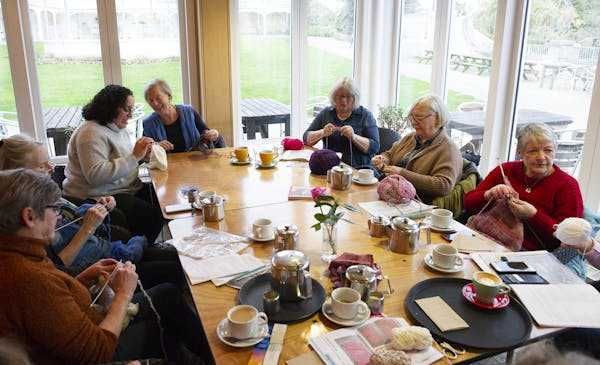
Tasks that stretch your brain just beyond its comfort zone, such as knitting and crocheting, can improve cognitive abilities over your lifespan u2013 and doing them in a group setting brings an additional bonus for overall health. Dougal Waters/DigitalVision via Getty Images

The reality of neural fatigue

Just like muscles, the brain has limits. It does not get stronger from endless strain. Real growth comes from the right balance of challenge and recovery.

When the brain is pushed for too long without a break – whether that means long work hours, staying locked onto the same task or making nonstop decisions under pressure – performance starts to slip. Focus fades. Mistakes increase. To keep you going, the brain shifts how different regions work together, asking some areas to carry more of the load. But that extra effort can still make the whole network run less smoothly.

Neural fatigue is more than feeling tired. Brain imaging studies show that during prolonged mental work, the networks responsible for attention and decision-making begin to slow down, while regions that promote rest and reward-seeking take over. This shift helps explain why mental exhaustion often comes with stronger cravings for quick rewards, like sugary snacks, comfort foods or mindless scrolling. The result is familiar: slower thinking, more mistakes, irritability and mental fog.

This is where the muscle analogy becomes especially useful. You wouldn’t do squats for six hours straight, because your leg muscles would eventually give out. As they work, they build up byproducts that make each contraction a little less effective until you finally have to stop. Your brain behaves in a similar way.

Likewise, in the brain, when the same cognitive circuits are overused, chemical signals build up, communication slows and learning stalls.

But rest allows those strained circuits to reset and function more smoothly over time. And taking breaks from a taxing activity does not interrupt learning. In fact, breaks are critical for efficient learning.

Sleep, Muscles, Neuroplasticity, Brain training, REM sleep, Rest, Healthy aging, Muscle gain, Cognitive health, Sleep health
Overdoing any task, whether it be weight training or sitting at the computer for too long, can overtax the muscles as well as the brain. Halfpoint Images/Moment via Getty Images

The crucial importance of rest

Among all forms of rest, sleep is the most powerful.

Sleep is the brain’s night shift. While you rest, the brain takes out the trash through a special cleanup system called the glymphatic system that clears away waste and harmful proteins. Sleep also restores glycogen, a critical fuel source for brain cells.

And importantly, sleep is when essential repair work happens. Growth hormone surges during deep sleep, supporting tissue repair. Immune cells regroup and strengthen their activity.

During REM sleep, the stage of sleep linked to dreaming, the brain replays patterns from the day to consolidate memories. This process is critical not only for cognitive skills like learning an instrument but also for physical skills like mastering a move in sports.

On the other hand, chronic sleep deprivation impairs attention, disrupts decision-making and alters the hormones that regulate appetite and metabolism. This is why fatigue drives sugar cravings and late-night snacking.

Sleep is not an optional wellness practice. It is a biological requirement for brain performance.

Exercise feeds the brain too

Exercise strengthens the brain as well as the body.

Physical activity increases levels of brain-derived neurotrophic factor, or BDNF, a protein that acts like fertilizer for neurons. It promotes the growth of new connections, increases blood flow, reduces inflammation and helps the brain remain adaptable across one’s lifespan.

This is why exercise is one of the strongest lifestyle tools for protecting cognitive health.

Train, recover, repeat

The most important lesson from this science is simple. Your brain is not passively wearing down with age. It is constantly remodeling itself in response to how you use it. Every new challenge and skill you try, every real break, every good night of sleep sends a signal that growth is still expected.

You do not need expensive brain training programs or radical lifestyle changes. Small, consistent habits matter more. Try something unfamiliar. Vary your routines. Take breaks before exhaustion sets in. Move your body. Treat sleep as nonnegotiable.

So the next time you lace up your shoes for a familiar walk, consider taking a different path. The scenery may change only slightly, but your brain will notice. That small detour is often all it takes to turn routine into training.

The brain stays adaptable throughout life. Cognitive resilience is not fixed at birth or locked in early adulthood. It is something you can shape.

If you want a sharper, more creative, more resilient brain, you do not need to wait for a breakthrough drug or a perfect moment. You can start now, with choices that tell your brain that growth is still the plan.

This article originally appeared on The Conversation. You can read it here.

  • Licensed therapist says these 3 steps stop rude people from hijacking your mind
    Woman exhausted by man's poor behavior.Photo credit: Canva

    Licensed therapist Jeffrey Meltzer offers three steps for dealing with rude people. In his helpful TikTok post under the name therapytothepoint, he suggests helpful tactics that go far beyond setting simple boundaries.

    Rude people are almost impossible to avoid, and the instinct to snap back or make a passive-aggressive remark can be strong. Meltzer shares some practical mental health advice that can lead to a calmer resolution.

    It Begins With Emotional Regulation

    Some individuals might believe that other people are responsible for how they make us feel. Meltzer suggests that self-regulation is an important first step to dealing with disrespectful people. Despite instincts to retaliate or escalate the situation, staying calm is more effective.

    Meltzer proposes that reciprocating aggression will only embolden a rude person and even justify their poor behavior. Instead, calmness and controlling our emotions will disrupt the pattern. Meltzer explains, “You might feel angry, embarrassed, disrespected, but calmness is about your behavior, despite the internal chaos you may be having. At the end of the day, emotional regulation is your strength, and reactivity gives your power away.”

    A 2024 study in the National Library of Medicine found that people’s ability to reappraise a stressful event in a more balanced way was strongly linked to greater resilience and better recovery from stress. The strategy helps people stay calmer by changing how the brain interprets the event.

    life hacks, behavior, Jeffrey Meltzer, sarcasm, emotional regulation
    A woman is rudely interrupted on the phone.
    Photo credit Canva

    Passive Aggression Is NOT a Solution

    An easy response might be the simple eye roll, sarcasm, or a retaliatory personal dig. Meltzer points out that these are only ego attempts to win an unwinnable situation. “Instead, be straightforward. I’m open to talking about this, but not like that. It’s hard for me to connect when you speak to me that way.” Meltzer explains that these tactics bring clarity and remove the defensive guard of said rude individuals.

    A 2026 study in Psychology Today reported that passive-aggressive behaviors worsen relationship dynamics and fail to resolve disagreements. Criticism, ostracism (ignoring others), and sabotage all undermine cooperation and relational success.

    frustrating, passive aggressive, solutions, mental health
    A man blows a dandelion in a woman’s face.
    Photo credit Canva

    Role play works

    Practice makes perfect has value in dealing with rude people. “You don’t magically become composed under pressure; you train for it.” Meltzer continues, “Practice with a friend. Practice with your therapist. Have them be rude. Respond calmly. Respond assertively. Respond clearly. Because in real life, you don’t rise to the moment, you fall to your level of preparation.”

    A 2024 study in the National Library of Medicine revealed that an individual’s level of assertiveness can be trained. The strategy of preparation reduced feelings of stress, anxiety, and depression.

    meditation, annoying people, strategies, peace of mind
    Interrupting a meditation.
    Photo credit Canva

    Stay Calm, Be Assertive, and Practice

    The solutions offered by Meltzer seem to resonate. Several people reveal their own struggles when facing similar predicaments. These are some of their comments:

    “Practice with a therapist? Why didn’t I think of that”

    “You don’t rise to the moment you fall to the level of your preparation. I’m gonna memorize that.”

    “I’m waiting for you to write a book about all your amazing insights”

    “I can handle them but i internalize later n let it ruin my day”

    “The real skill is knowing when to ignore and when to address it. Not everything deserves your energy.”

    “Rudeness is a weak man’s imitation of strength. Just say that to them and if they continue, walk away with a smile.”

    Meltzer advises that the best way to handle rudeness begins with how we respond. Diffusing a situation helps maintain peace of mind. Remaining composed helps control our own reactions. In the end, rehearsing for success allows us to stay confident when difficult situations arise.

  • Love educator shares how awkward flirting can be turned into a romantic superpower
    A couple flirts on the dance floor.Photo credit: Canva

    In a recent TED Talk, love coach Francesca Hogi shared how even your awkward flirting can be a superpower. Sometimes mistaken as off-putting, flirting actually offers a powerful gateway to real human connection.

    By reframing flirting as an act of curiosity, she explains how anyone can kickstart attraction and open the door to lasting love. In an impassioned presentation, Hogi demystifies flirting and explains why building attraction matters.

    Flirting can be a superpower

    Hogi explains that for 12 years she’s been helping people fall in love as both a matchmaker and a coach. “As a love professional, I can assure you that many dating problems can be solved with flirting,” Hogi says. “If you’re single, it helps you to connect and fall in love. If you’re partnered, it helps you to reignite or maintain the spark of chemistry that brought you together in the first place.”

    Many might have concerns about their ability to flirt. Will they be received well, or are they even doing it right? Hogi explains, “I’ve got good news for the introverts out there. You don’t have to be extroverted to be a magnet for connection. In fact, I believe that introverts have a secret advantage when it comes to flirting because your efforts at being more open feel more genuinely inspired by another person and therefore special.”

    She shares that flirting can give you confidence and courage. She also acknowledges that feeling awkward is normal. “Confidence with flirting comes from knowing yourself, your intentions, reading the room, discerning other people’s reactions, and adapting accordingly,” she says. “Sometimes it’s going to be awkward, sometimes it’s going to be embarrassing, and that’s okay.”

    flirtation, connection, mental health, good vibes, sexuality
    A couple enjoys flirting.
    Photo credit: Canva

    Healthy flirting

    “Flirting gives you more agency over human connection,” says Hogi.

    She then describes the two foundational principles of healthy flirting. The first is presence: being in the moment and avoiding distractions like a phone or the surrounding environment. The second is enthusiasm. Getting the right vibe while being enthusiastic goes a long way toward mastering the art of flirting. These principles have a strong effect on other people.

    Hogi explains that expressing positive intentions has a large impact on outcomes:

    “You have the ability to leave other people feeling good for having interacted with you…Even your unspoken appreciation for a shared moment of connection, no matter how brief, can often be felt. Lean into being the version of you who leaves other people with a smile on their face and notice how much more magnetic you become.”

    community, expression, humor, self-confidence, self-esteem
    A flirtatious interaction.
    Photo credit: Canva

    Hogi inspires the crowd

    People seem quite taken with Hogi’s energy and charisma. Some of the comments expressed admiration for her vibe and flirtatious delivery on stage. Hogi was sharing her own version of flirting as a superpower:

    “Even this presentation feels like shes flirting…especially her laughs”

    “She is such a good public speaker, ten minutes of speech with no filler words whatsoever”

    “Flirting is a way making one feel seen and acknowledged.”

    “Where were you, Francesca, when I needed these words? Like, 40 years ago? Never too late, right?”

    “Had me clapping in the end! She’z good”

    “I feel better about my flirting abilities after watching this now.”

    “She’s good , reading her body language generally teaches me more about flirting than learning it itself”

    gender, attraction, laws of attraction, social skills, personality traits
    A vintage photo of a couple flirting.
    Photo credit: Canva

    The power behind a flirtatious connection

    Flirting can have a powerful effect on both the initiator and the person on the receiving end. It isn’t necessarily about romance or sex. It helps build and strengthen relationships in everyday life.

    A 2025 study on ResearchGate analyzed where and how people flirt. The results suggested that people who flirt can improve with practice. The best flirting involved humor, confidence, and social skills. A 2026 study on ScienceDirect found that flirting can be an effective way for people to express their personality and individual differences. While personality traits and sex were linked to how often and how skillfully people flirted, these influences had only modest effects on overall outcomes.

    Hogi suggests flirting requires nuance and a little bit of courage. Practice prepares you for any occasion. “Attentiveness, compliments, playfulness—there’s nothing complicated about these actions, yet they have the potential to spark and sustain connection over time,” she says. “That’s a true superpower we can all tap into.”

    Hogi and the research suggest flirting isn’t just a trivial social game. It’s a meaningful way to express personality, build connections, and boost self-confidence. Flirting isn’t shallow. It doesn’t need to involve manipulation or outcome-obsessed action. These small everyday acts of courage embolden human connection and reveal individual superpowers in all of us.

  • Retired U.S. Navy chief explains how to end discipline anxiety with wholesome ‘butler’ trick
    (LEFT) A cluttered closet. (RIGHT) Chase Hughes.Photo credit: Canva and YouTube

    During an interview on The Diary of a CEO podcast, retired U.S. Navy chief Chase Hughes explained how to end discipline anxiety. Using a simple perspective shift, often referred to as the “butler” trick, he describes a method of “prioritizing the needs of our future self.”

    Hughes shares that understanding discipline is one of the fastest ways to change everything in our lives. We might wish discipline would arrive like a lightning bolt of motivation. However, Hughes suggests the solution lies in our relationship with discipline and the perspective we take on it, which ultimately relieves our anxiety.

    End discipline anxiety

    Hughes begins by explaining the importance of understanding what discipline actually is: “I define discipline as your ability to prioritize the needs of your future self ahead of your present self.” He goes on to explain that a simple reframing can change the link between discipline and anxiety.

    “If I can start looking backwards with gratitude, [it] is the fastest way to make discipline dopamine-generating,” Hughes says. “I want past-tense me to be a source of dopamine for present-tense me. Cause most of us look back with regret. ‘I shouldn’t have drank that much. I shouldn’t have mouthed off at the family reunion. You know whatever it is, I shouldn’t have overslept.’”

    discipline, butler tick, anxiety, service, community
    A butler ready to be of service.
    Photo credit: Canva

    The butler trick for discipline

    Instead, it’s possible to prioritize long-term endeavors over short-term desires. In the full YouTube video of the interview, Hughes describes the butler trick as a way of treating your future self as someone you can serve today, just like a butler. The concept of looking forward with concerned awareness and backward with gratitude can help release the connection between anxiety and discipline. This reframing and release of negativity help people better motivate themselves and manage their present circumstances.

    A 2025 study in SAGE Journals found that future self-orientation directly impacts discipline-related outcomes. This trick can lead to meaningful behavior change. By reframing our relationship with the past, we directly affect our relationship with discipline and procrastination. A 2023 study published by Springer Nature found that procrastination and self-control significantly influence attitudes toward time. How someone relates to time ultimately shapes whether discipline feels easy or overwhelming.

    Butler trick, discipline, time management, consistency, habit loops
    A woman realizes she is late.
    Photo credit: Canva

    Thoughts on the butler trick

    Viewers seemed universally impressed by the solution Hughes offers in the butler trick for discipline. Here are some of their thoughts:

    “I love it when Past Me has done something great to support Future Me. Sometimes it’s all I got, but it’s enough.”

    “This is the best advice on discipline I’ve ever heard in my life”

    “He’s giving you the blueprint for ultimate self care”

    “Be methodically organized and make your life less complicated and more suitable to your needs.”

    “I’ve heard everything can be looked at as a learning opportunity. Selfless gratitude + learning seems like a strong combo.”

    “Be my own butler. Love this!”

    self-discipline, self-mastery, perseverance, determination, butler trick
    Self-discipline is defined as controlling one’s own desires.
    Photo credit: Canva

    Discipline changes everything

    Hughes underscores the value discipline has in changing our lives:

    “Discipline is kind of the gateway drug to everything else in authority, and it’s the gateway to composure. But getting your discipline modified is one of the fastest ways to make everything else change.”

    Discipline can mistakenly be associated with punishment and rigid routine management. With Hughes’ framing, it might be better described as stewardship. Instead of battling the present, you can serve the future. The butler trick can help us all be more thoughtful toward the person we are becoming.

    You can watch the full interview with Chase Hughes on The Diary of a CEO podcast below:

Explore More Health Stories

Well-being

Love educator shares how awkward flirting can be turned into a romantic superpower

Well-being

Retired U.S. Navy chief explains how to end discipline anxiety with wholesome ‘butler’ trick

Health

Experts say you can ‘talk’ to someone using your eyebrows regardless of language or culture

Health

How birdwatching makes your brain stronger and healthier