Feeding a family has become increasingly expensive, leaving many parents in dire need of creative ways to stretch their grocery budget. One Brooklyn chef stumbled upon an entertaining solution that’s helping families turn cheap meals into something delicious.
Known to his online followers as “Chef Moe,” Maurice Levene, through his popular chat_n_chops TikTok series, proves how just $5 worth of groceries can be used to craft flavorful and satisfying family dinners. The captivating platform has viewers doing more than eating well on a tight budget. He’s boosting confidence in the kitchen and changing what people believe affordable meals can look like.
A former professional chef based in Brooklyn, Chef Moe has built a large audience through positive energy and budget-friendly meals. Using inexpensive ingredients from discount stores and grocery chains, he walks viewers through recipes step by step. Breaking down exactly how much each ingredient costs, he proves that affordable meals don’t have to be boring or uninspired.
The success of the videos is not only a testament to his food knowledge and great personality, but also to the larger need facing many Americans. Food prices are way higher than they were only a couple of years ago, forcing families to shop and cook on a much tighter budget.
In a story for the New York Post, Chef Moe recalled a widowed mother of three struggling to feed her family. “I got so sad thinking that she couldn’t even afford to buy seasonings,” he explained. “I figured if I could help people in some small way — teach them a few simple tricks or techniques — they’d be able to get by.”
Chef Moe stands out from similar budgeting experts because of his now seasoned approach. Rather than focusing on ways for people to sacrifice and cut out, he emphasizes how to be clever with limited resources. Using his professional culinary background, he turns bare-bones choices into intentionally satisfying meals.
Comments from his growing community reveal people grateful for the means to save money and the knowledge gained with practical cooking techniques. His positive energy leaves viewers feeling empowered, earning him 771 thousand followers and over 7 million likes.
“… I gotta say seeing you do this warms my heart. And now I know where to turn if God forbid I need to stretch a buck. keep doing good work”
“Not only are you teaching me how to make meals with $5, you’re teaching me the culinary techniques to help me with everything I cook.”
“This meal is not only ‘fun’ but you fed a family for $5, gave a cooking lesson and made everyone feel seen… thank you.”
“This is awesome, especially with so many folks struggling.”
“The price point is cool but the CULINARY TECHNIQUE in a basic way is why I’m really watching lol steam fry deglaze”
“One of the most useful series on here!”
“I love your videos!!! your positivity and good aura make me forget…”
“I’m genuinely shocked about what you were able to make with just $5 for your entire family. That is so awesome!”
Let’s feed our family with five dollars episode 22. Let’s see what we can create that is filling that can go a long way and most importantly that is flavorful extracting the flavors from the food without using seasonings only using technique. Come learn with me I will show you. #chefmoe#cooking101#budget#foodie#5dollars♬ original sound – Chef Moe
Simple ingredients and cooking skills
Chef Moe continues to share upbeat videos packed with affordable meal ideas. As people search for ways to balance rising costs with everyday needs, he offers practical, realistic solutions. While social media has its problems, it has also become an unexpected resource where people seeking guidance can connect with creators offering useful answers.
Chef Moe is helping people feel capable in the kitchen. Tight finances don’t have to mean sacrificing good food. In fact, a little creativity makes for surprisingly delicious dishes more enjoyable than you might expect. Even a seasoned chef knows that some of the best kitchen skills start by making the most of what they have.
William R. Kenan, Jr. Professor of History and Environmental Studies, Amherst College
Federal prosecutors recently described an interstate criminal enterprise with all the trappings of organized crime: clandestine warehouses, money laundering and stolen goods transported across state lines. The mid-September 2026 announcement stated that 19 defendants faced charges; two had just pleaded guilty, while the remainder are slated for trial in April 2027.
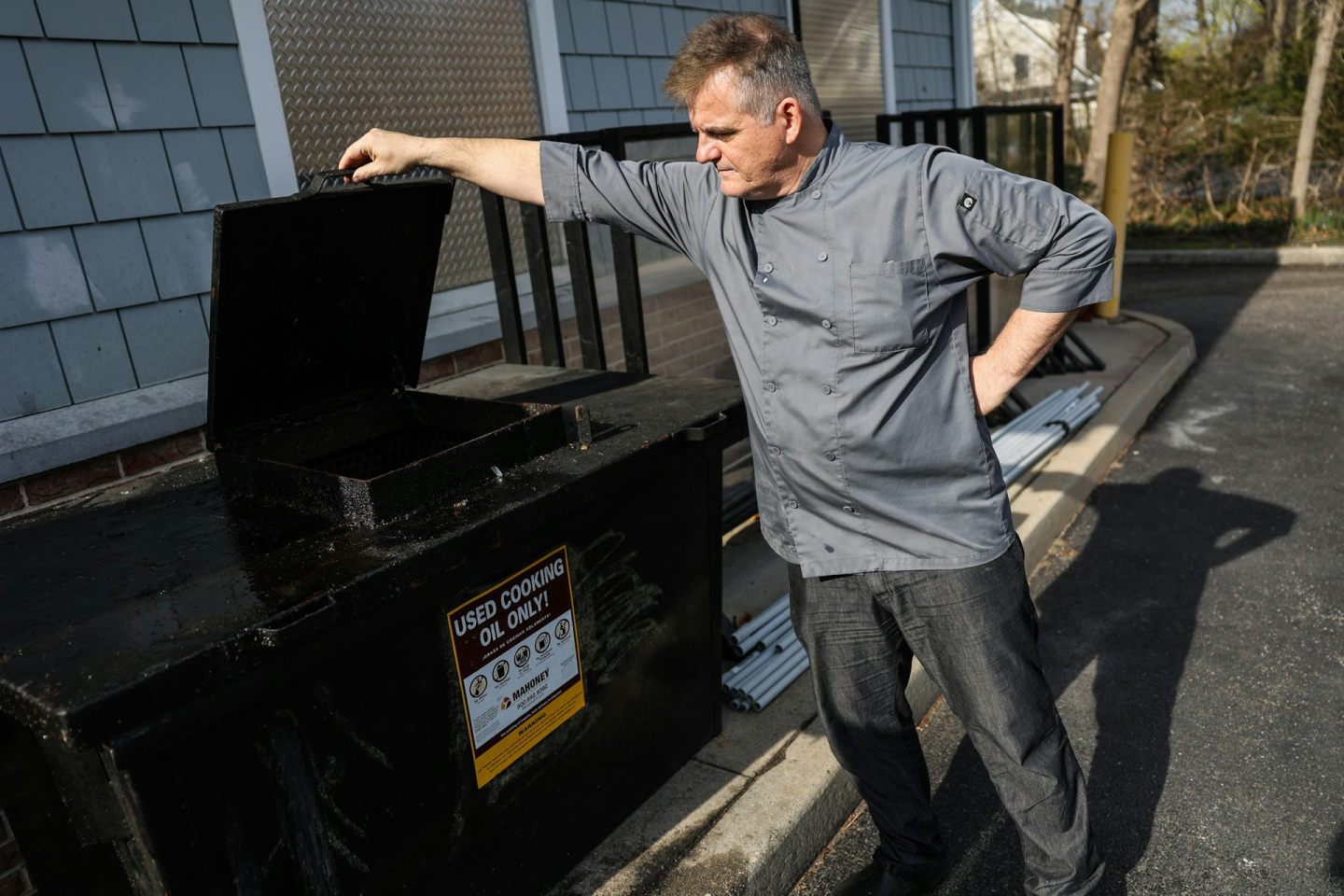
The stolen material was not drugs, guns or jewels. It was leftover cooking oil.
According to prosecutors, members of the group drove trucks to restaurants in 10 states, siphoned used cooking oil from collection tanks and transported it to depots for resale. The alleged motive was simple: Used cooking oil has value. It can be refined into biodiesel. A viscous fluid that the food industry formerly considered garbage has become valuable enough to spur a large-scale criminal operation.
This oil-theft scheme points to a larger lesson. People tend to think of waste as trash, sewage, slag, manure and other seemingly useless or disgusting substances. But historians, anthropologists and geographers increasingly recognize that “waste” is a category defined by humans. Technologies, markets, laws and cultural assumptions all determine what is discarded, what is kept and why. Waste describes a material’s status, not necessarily its substance.
As an environmental historian who studies how societies transform nature into commodities, I am also interested in the other side of the process: how materials classified as waste can be converted back into things of value.
Making matter into ‘waste’
Nothing in nature is wasted. A fallen tree becomes food for fungi and insects, while its nutrients eventually return to the soil or the atmosphere; animal feces feed creatures ranging from bacteria to dung beetles. In ecosystems, one organism’s leftovers routinely provide for another’s needs.
A fallen log serves as a nursery for a new hemlock tree in British Columbia, Canada, hence the nicknames nursery log or nurse log.Wing-Chi Poon, CC BY-SA
Human societies, by contrast, frequently remove unwanted materials from circulation. The question of where those materials go – and whether they remain useless – is part of the history of waste.
Scholars in a growing field called “discard studies” examine this process. Sociologist Zsuzsa Gille describes different “waste regimes,” the ideologies and concepts that people use to determine what’s valuable and what’s disposable.
Calling something “waste” does not mean that its physical properties are irrelevant. A toxic chemical can poison a river. But whether people dump, recycle, store or reprocess that substance – and whether they classify it as waste at all – depends on human decisions.
Industrialization did not invent waste, but it dramatically changed its scale and geography. During the 19th century, factories and processing plants brought raw materials together in unprecedented quantities and consolidated their unwanted residues in the same sites. That concentration created disposal problems. It also generated new incentives to find profitable uses for what industry left behind.
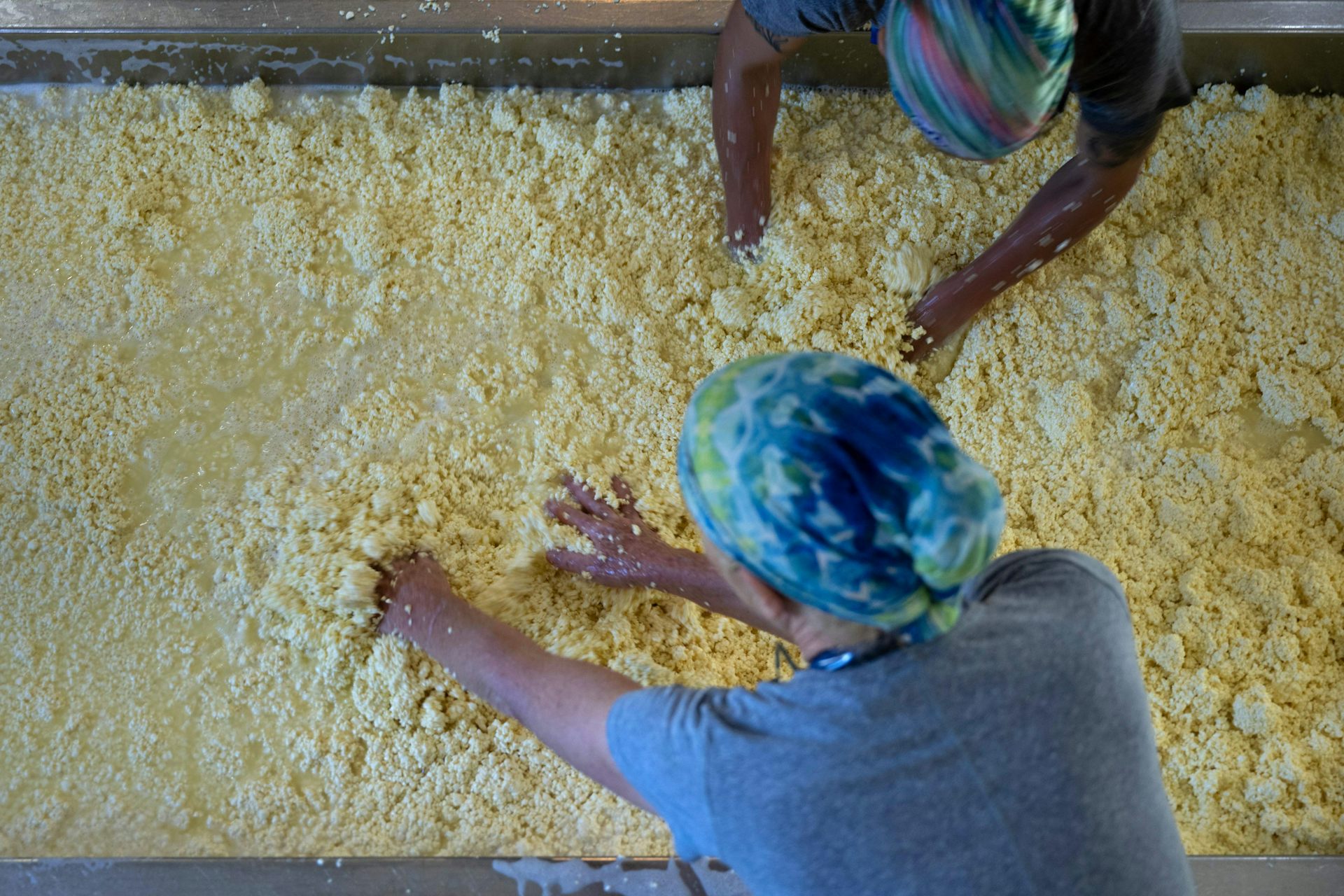
Consider whey. Cheesemaking produces extraordinary quantities of the watery liquid left behind after milk coagulates. For much of the 19th and 20th centuries, cheese manufacturers disposed of the whey as an unwanted residue. Dumped into waterways, whey encourages bacterial and algal growth that depletes oxygen and can damage aquatic ecosystems.
Beginning in the 1970s, ultrafiltration allowed producers to separate and concentrate whey proteins. A troublesome liquid became whey powder, lactose and protein concentrates, all of which can be used in baked goods, infant formula, animal feed and protein supplements.
Coal-fired power plants provide another example. Coal combustion leaves behind fly ash, a fine mineral residue that companies dumped in landfills or stored in enormous ash ponds. In the 1930s, engineers discovered that fly ash could replace a portion of the Portland cement normally used to make concrete. This new application diverted waste from disposal while reducing demand for energy-intensive cement production.
There is much to admire in these transformations. Repurposing leftover materials can reduce pollution, conserve resources and lower the amount of material dumped into landfills or waterways. The ecological ideal of “cradle-to-cradle” design rests on precisely this insight. Just as in nature, the output of one process can become the input of another.
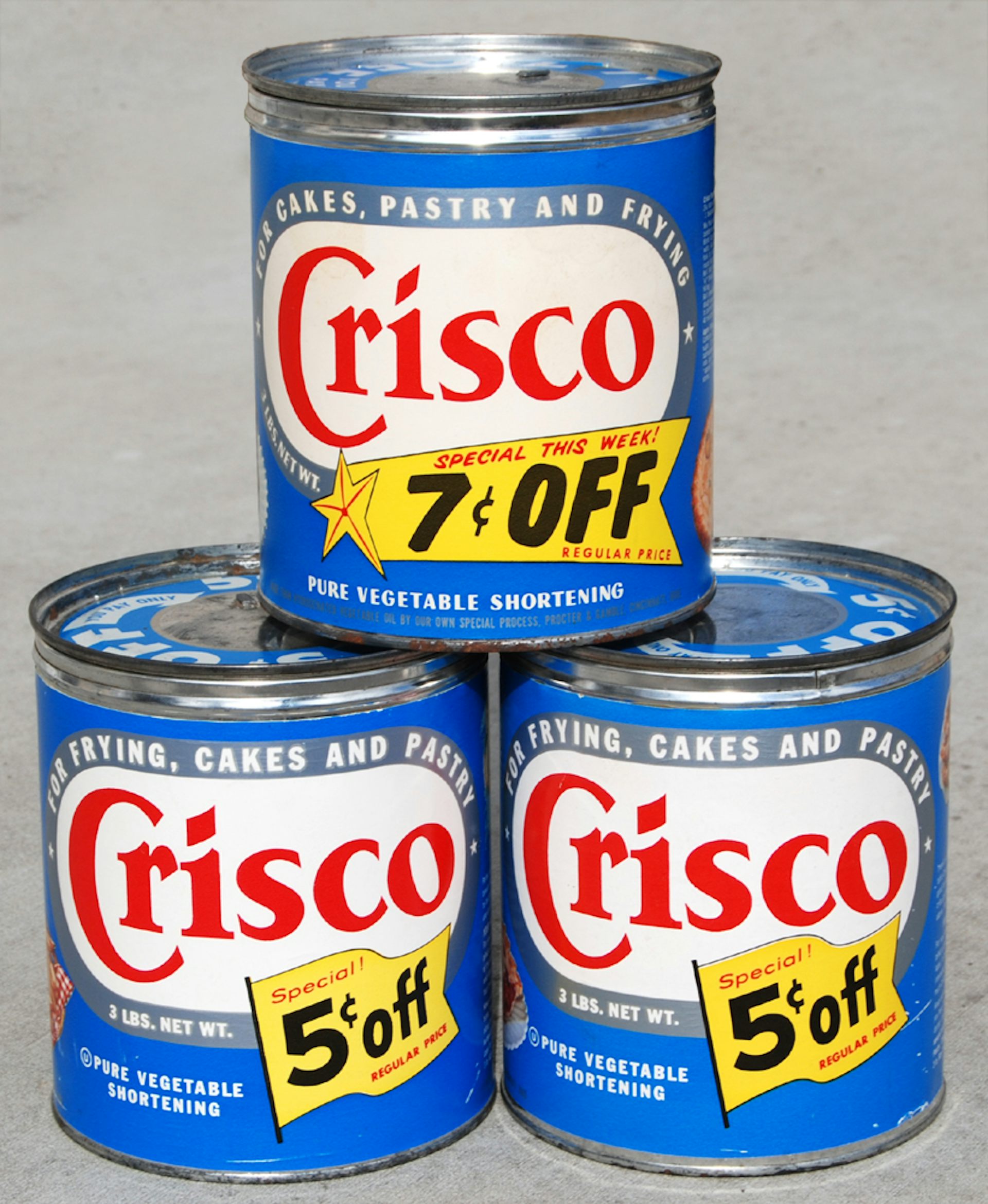
Crisco vegetable shortening was one way to reuse cottonseed oil, a waste product of another industrial process.Roadsidepictures via Flickr, CC BY-NC
When recycling creates new problems
Yet finding a market for waste does not necessarily solve the problems that the waste created in the first place.
Cottonseed provides a striking example. During the 19th century, American cotton growers regarded seeds as an enormous nuisance. Cotton ginning generated mountains of seeds, and many operators simply dumped these unwanted byproducts into nearby waterways, where they accumulated in foul-smelling, decaying masses. The problem became serious enough that Southern states began restricting cottonseed dumping in the mid-1800s.
Then manufacturers learned to crush cottonseed for oil to be used in soap, cooking and as a substitute for animal fats. They turned the remaining material into fertilizer and animal feed. By the late 19th century, something previously seen as garbage had become the foundation of a major new industry.
Cottonseed boosters proclaimed a transformation of waste into wealth. In 1911, entrepreneur Luther A. Ransom celebrated cottonseed’s ability to produce “edible oil without olives; medicinal oil without codfish; butter without cows; ice cream without cream; lard without hogs.”
The problem was not that cottonseed oil was secretly “waste.” It was that industrial processing widened the gap between what manufacturers knew about a product’s origins and composition and what consumers understood about those attributes. Turning a discarded material into a valuable commodity solved one problem while creating another. Consumers increasingly had to trust manufacturers to tell them what they were buying.
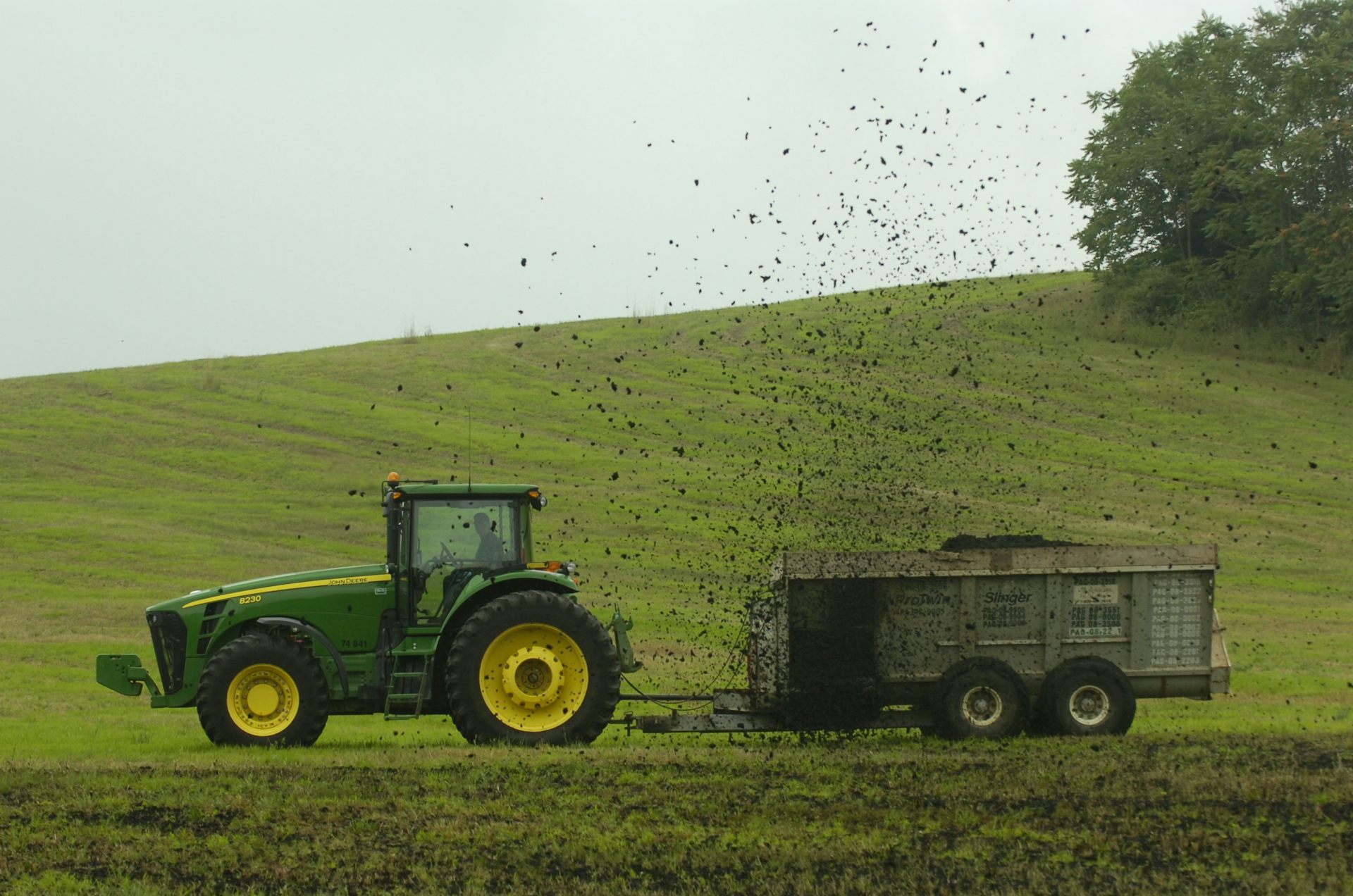
Sewage sludge presents an even sharper dilemma. Wastewater treatment produces nutrient-rich dregs that can be processed into biosolids and spread on farmland, returning nitrogen and phosphorus to soils. But wastewater also carries contaminants. Researchers have found a group of chemicals known as PFAS – persistent and potentially harmful “forever chemicals” more formally known as perfluoroalkyl and polyfluoroalkyl substances – in some sewage sludge. Their presence raises concerns that a system designed to salvage nutrients can also recycle pollutants.
Used cooking oil seems like an almost perfect example of recycling. Refiners turn oil discarded by restaurants and other waste fats into transportation fuel, extracting additional value from crops already grown and oils that have already served their original purpose.
But government policies regarding clean fuel have made some products that carry the label “waste” economically valuable. Because fuels made from used cooking oil can qualify for financial incentives unavailable to some virgin oils, demand has occasionally pushed prices for used oils above those of newly produced vegetable oils.
That creates an unusual temptation: mix cheaper virgin oil into used cooking oil – or simply pass virgin oil off as waste. Researchers and regulators have raised concerns about fraud in the rapidly growing international markets for used cooking oil.
Generating new uses for discarded matter does not eliminate the politics of waste. It can intensify them. Who decides whether something counts as waste? Who profits when something once considered disposable becomes a valuable commodity? And who can verify what a supposedly recycled material actually contains?
Stolen restaurant cooking oil offers an unexpectedly useful way to think about this problem. The fats and oils inside the tank did not physically change when thieves began siphoning them out. What changed was their status and their value.
That transformation captures one of the paradoxes at the heart of the history of waste. Matter is never worthless, but assigning it a price does not necessarily make its environmental and social costs disappear.
Sometimes finding a use for waste solves a disposal problem. Sometimes it merely gives the problem a new price.
Imagine you have a bag you really like. It felt like “the one” when you bought it.
Over time, it starts to look worn. There are some scuffs on it. Nothing is actually wrong with the bag, and it still works exactly as it should. Yet, once you notice those imperfections, you start thinking about buying a new one to replace it.
Consumers do this all the time. They replace phones that still work, furniture with a scratch and sweaters with a small snag. Often, what has changed is how people see these items.
We are marketingresearchers who study why people buy, use and get rid of stuff. This obsession with perfection began when one of us, Aprajita Gautam, moved from India to the U.S. in 2019. She was struck by how different the culture of buying and owning things was in the two countries.
In our peer-reviewed research paper, published in August 2026 in the Journal of Consumer Research, we identified one reason for this pattern: Some people care much more than others about having flawless things. We call this penchant a desire for perfect products.
Not the same as perfectionism
We began by interviewing 17 people in Austin, Texas, in 2023. They included real estate agents, entrepreneurs, stay-at-home mothers and people employed by an nonprofit that promotes reuse. We asked them about their possessions and what made things seem perfect or imperfect. We then surveyed about 540 more people, some online and some in a university research lab.
The results suggested that people who strongly preferred flawless items had more elaborate ideas about what their ideal product was and were sensitive to even small deviations from those ideas. Their standards also kept rising. Seeing something better than what they owned could raise the bar further for them.
Next, we developed questions to assess how much people care about having flawless possessions. We used people’s answers to determine how strongly they desired perfect products.
We also found that this tendency is related to but distinct from perfectionism. While perfectionists hold themselves to high or even impossible standards, people who want perfect stuff hold what they buy and own to lofty standards. You might easily shrug off a bad day at the office but be far less forgiving of a scratch on your new coffee table.
For people who feel they have to own perfect products, even a small imperfection can overshadow everything else they like about something they own.
Finally, we conducted 12 experiments where we recruited participants – University of Texas at Austin students and online workers participating in crowdsourcing marketplaces – to test the behavioral effects of the desire for perfect possessions.
It can affect how you shop
In our first online experiment, we asked 402 consumers across the country to imagine booking a hotel in California’s Napa Valley using filters like those on travel websites, such as star rating, Wi-Fi or a spa.
Consumers who desired perfect products used more filters and set higher cutoffs, narrowing their search to hotels that came closer to meeting their standards.
Newness itself also had value for them.
In another online experiment with 301 consumers, those who cared most about owning flawless possessions were quicker to upgrade to the latest iPhone, even when it offered little real improvement over the previous one.
This urge can be costly. It can mean paying extra for something new when the old one works fine, or spending more time searching for a product that meets every standard that may not actually matter.
Makes people less open to repairs
This preference also affects what people do with the stuff they already own.
In our next online experiment, we asked 1,004 U.S. participants to chose between two options: an insulated coffee mug and an insulated water bottle. When told that the product they chose had a small dent on the bottom, those who were most bothered by flaws in their possessions were more likely to swap it for the other option.
We found a similar pattern with repairs. In an online experiment with 601 consumers, we found that those who want to own perfect products were less interested in fixing a broken keyboard when the replacement key wouldn’t match the color of the other keys.
This highlights a problem with repairs that isn’t usually part of discussions about sustainable consumption: Fixing something can restore its function without necessarily making it look as good as new.
A factor for donations
Consumers with exacting standards for their things also applied their high standards to items they were getting rid of.
In an experiment we conducted in a university behavioral lab, we asked 339 students to help with a “Clean Out Your Closet” drive. They examined pieces of clothing that others had discarded and sorted them into two bins: one to donate and one to recycle.
Those who strongly preferred flawless items were less likely to donate imperfect but still usable clothing. This attitude can shorten a product’s useful life.
That becomes harder if small imperfections make otherwise useful products seem less valuable.
Learning to value imperfection
Our research suggests that how someone responds to flaws in their possessions can vary depending on what those flaws mean to them. We were inspired in part by the Japanese concept of wabi-sabi, which finds beauty and value in imperfection and change.
In our final online experiment, 1,203 consumers learned about hoodies with subtle variations in color and pattern. When those variations were described as making each hoodie unique, consumers who love having perfect products responded less negatively to them.
A mark on a well-used object can be seen as a flaw, but it can also become part of its history. And replacing products because of minor imperfections can lead consumers to waste their money.
None of this means consumers should keep everything forever. Mugs break and clothing and shoes get worn out. Sometimes people simply want something new.
But consider that bag again. Its scuffs could mean it is no longer the perfect bag you originally bought. Or they could mean you’ve carried it hundreds of times because you like it.
Solo travel is surging – and an industry still largely built for two is taking note.
Google reported in April 2026 that online searches involving “solo travel” hit an all-time high this year, with queries for “women solo travel” reaching a 15-year peak. Hilton’s 2026 trends report found that 26% of travelers planned to take a trip alone this year, and that nearly half said they planned to add solo days to the front or back of a family trip.
The issue isn’t new. In 1992, marketing researchers identified the solo consumer as an underserved market. But as tourism researchers have documented, the accommodation sector treats double occupancy as the default unit of consumption, which often slaps a “single supplement” charge on customers when they travel without a partner. The industry essentially penalizes travelers for arriving without a second body to fill the other half of a room they aren’t using.
The reason why so many hotels, cruise lines and tour operators still base prices on double occupancy is that their costs – the room, the berth, the coach seat, the guide – don’t fall by half when the second person fails to materialize. But the supplement isn’t just a pricing convention. It’s the clearest signal the industry sends about who it built the product for.
I’m a scholar who studies what I call the solo economy: how institutions and markets adapt, or fail to adapt, to the rise of single living. I’ve written before about how retail and restaurants still design for pairs.
Travel is further along than most in recognizing this cultural shift. It’s also a useful case because the industry has started on the easy part of the problem but barely touched the rest.
Demographics matter, but not the way you’d think
The broader shift toward solo living is real. In 2025, 39.7 million Americans lived alone. That’s 29% of all households, up from 20% in 1975. Married couples, meanwhile, fell to 47% of households from 66% 50 years earlier.
Those numbers alone don’t explain solo travel. Some of that decline went to people living alone; some went to unmarried couples, who are still a party of two on a booking page. Married people take trips alone. Single people travel with friends, siblings and parents, and plenty of them have logged serious hours as an extra wheel. Living alone and vacationing alone are different behaviors with different causes.
What connects them is the erosion of a single assumption: that every adult arrives with a plus-one. That assumption is weakening at home, and it’s now encountering the booking page.
Price is the easy rung
One response by the travel industry has been to shave the single supplement. For example, the tour operator Tauck announced this year that it’s waiving the single supplement on a class of its riverboat cabins across more than 250 European river cruise departures and reducing it by up to US$600 on 105 land departures.
Another touring company has taken a more committed approach to adjusting its offerings: Aurora Expeditions sets aside 10 dedicated solo cabins on every sailing across its three ships, with no single supplement, through its 2026 and 2027 seasons.
Then there’s Norwegian Cruise Line, which was early to the shift. In 2010, it introduced Studio staterooms aboard Norwegian Epic: Small cabins designed for one passenger, sold at single-occupancy prices and arranged around a keycard-access Studio Lounge reserved for solo travelers. The trade-off is less private space, but at a price for one, with access to a room full of fellow travelers going it alone.
Norwegian then expanded solo categories in 2024 from nine ships to its full 19-ship fleet. But on ships without Studios, much of the expansion was relabeling. Cruise Critic reported that standard double-occupancy rooms would likely be reclassified rather than retrofitted. And by Norwegian’s own account, the Studio Lounge is reserved for guests in Solo Studios – so the fleetwide solo categories come with the discount but not the room full of other solo travelers.
That’s the difference between repricing and redesigning. The 2010 Studio was a purpose-built 100-square-foot (9 square-meter) cabin that cost Norwegian something to construct. The 2024 categories are, in many cases, the same rooms as before, with a new label and a discount. The solo traveler pays less than two people would, but it’s still more than half for a room sized and built for two. A cabin sold to one occupies the same space as a cabin sold to two, and the industry still counts berths.
There’s a cleaner approach. Yotel sells a room type it calls Solo – 114 square feet (about 10 square meters) in New York City, maximum occupancy one, at the bottom of its price range. Nothing was subtracted to make it. It was built at that size, for that guest, and priced accordingly. That’s what designing for one looks like, and it’s rare enough that a tiny room counts as progress.
Many solo travelers seek control over their experiences and schedules, but they still seek a social component. Keriliwi on Unsplash
Traveling alone doesn’t mean being alone
A common mistake in designing for solo travelers is assuming that solitude is the product. It isn’t.
In the same 2026 data showing record interest in solo travel, Google found that searches for “travel groups” and “tour groups” also hit record highs. A Mastercard survey of more than 15,000 consumers across 11 countries found that 39% of international travelers had already taken a trip alone — and 7 in 10 international leisure travelers were interested in solo experiences built to connect them with like-minded people.
The contradiction makes sense when you acknowledge that privacy and isolation are two different things. A person can want total control over where to go, when to eat and when to return to the room – and still want company at dinner.
The issue with double-occupancy pricing is that it assumes the customer brings their own company. But when only one person books, the operator has to address the pricing problem – whether or how to discount; and a product problem – how to supply a social component. Waiving a solo supplement solves the first issue, but it ignores the second. Norwegian understood this in 2010 by creating its lounge for solo travelers.
The pitch is easier when the product is for one
For all these changes, travel advertising often still runs on couples: two glasses of wine, two lounge chairs, two silhouettes against a sunset. Sandals Resorts built an entire resort category around the premise.
When solo travel does appear, it gets a different script. The traveler is adventurous, on a journey of self-discovery. AARP’s current solo-travel guide emphasizes personal growth and self-reliance. Even Norwegian closes its solo pitch by reassuring the reader that “you’re pretty good company.”
The effect is to mark solo travel as exceptional at precisely the moment it stops being exceptional. Nobody reassures a couple that they will enjoy the balcony. Calling a solo traveler “brave” can be a compliment, but it can also reveal the assumption that traveling alone is abnormal, even when that’s changing.
That all said, parts of the tourism industry have taken big steps over the past 15 years. But treating solo travelers as an audience rather than an accommodation is harder. It’s about selling them what they have already said they want: control over the trip, and access to other people, on their own terms.
Marketing researchers named this opportunity in 1992. Thirty-four years later, the industry is still learning to build for one. Meanwhile, the solo traveler is standing at reception, holding a credit card, waiting for someone to design a room.