
The “right to repair” movement is gaining steam as consumers push corporations to offer them more freedom to fix products – from cars to dishwashers to toys.

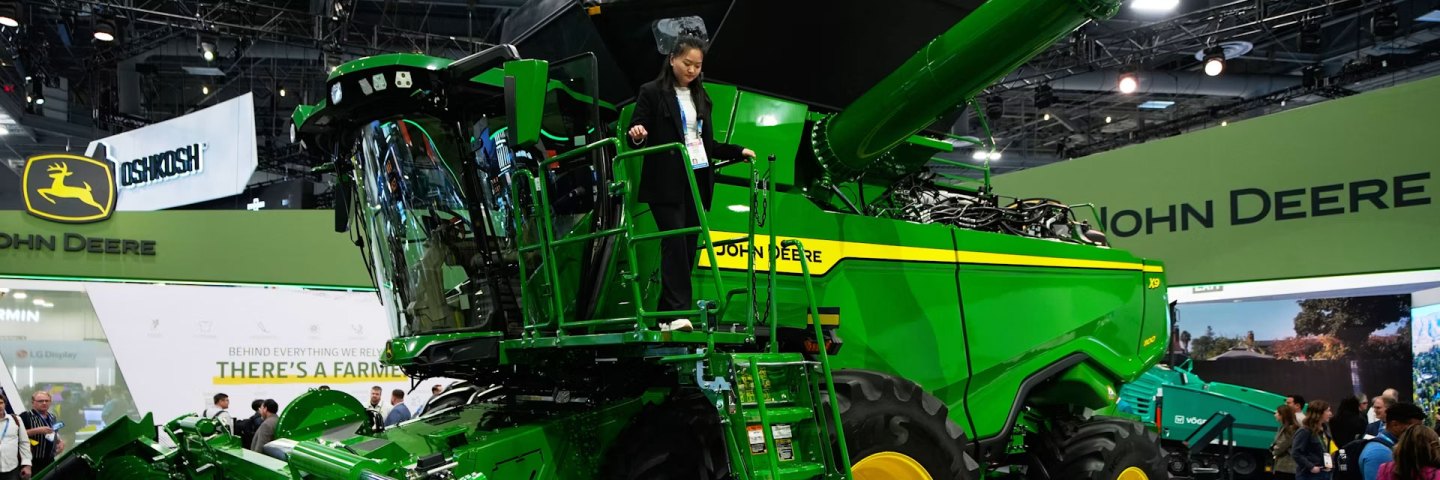
In April 2026, farm equipment maker Deere & Co. inked a US$99 million settlement in a class action suit over its prohibition on independent repairs to its increasingly high-tech equipment – another win for the movement. While the company didn’t admit wrongdoing, it will let farmers make more repairs themselves.

Equally significant, this case showed that the Federal Trade Commission, a lead plaintiff, may be more willing to protect consumers against the growing corporate control over servicing products after purchase.

Even President Donald Trump has weighed in. At an Oval Office event on June 4, 2026, he described existing restrictions as “strange” after he met with auto executives. “Nobody’s allowed to fix their car. … So I thought we’d do something about that,” he said, without offering details.

This push is understandable. As consumers want more reliable products, gaining the right to repair them with their own parts makes sense.

But they often overlook existing protections in their product warranties, which obligate the manufacturer to repair or replace if something goes wrong.

As a scholar focused on operational sustainability in supply chains, I have found that strong warranties aren’t just a safety net for buyers. They help companies build trust and stand out. Hyundai and Apple, for example, have used strong warranty programs to keep customers coming back for repairs within their own networks while maintaining profit margins. But many shoppers overlook this tool as the political momentum for the right to repair grows.

Back to the 1970s

Many automotive and electronics manufacturers have been making it harder for consumers to use parts not produced or authorized by the original manufacturer. For example, data can be transmitted back to the manufacturer in real time and flag a part from an independent supplier as incompatible.

Another common tactic is the use of “warranty void” stickers, which claim that repairs done by a third-party service will cancel the manufacturer’s product warranty. These practices have drawn widespread criticism for suppressing competition and encouraging planned obsolescence – and are among the main targets of right to repair advocates.

But consumers have a tool that’s widely underused: A 1975 law that prohibits voiding a warranty simply because an independent mechanic or a part from an independent vendor was used. This measure was designed to discourage the production or sale of low-quality products and sought to protect consumers from excessively restrictive coverage and bad-faith corporate negligence.

It was this law as well as several other consumer protections that the Biden administration’s FTC cited in 2024 when it warned several companies that they improperly restricted their warranty terms.

One reason consumers are largely unaware is that most find the text of warranty terms and the disclaimers difficult to read. And this isn’t an accident. Many manufacturers see warranties as sunk costs that should be avoided, and they have no incentives to clarify the terms or honor them.

Trust pays

Companies should rethink their approach to warranties – because it makes good business sense.

When manufacturers see they can no longer prevent third-party repairs, or offer warranties that are hard to redeem, it’s usually because they decide it’s more cost efficient to produce low-quality products. But that choice often cuts into the producer’s own profit while leaving the consumer worse off – and has a worse environmental impact, a recent study suggests.
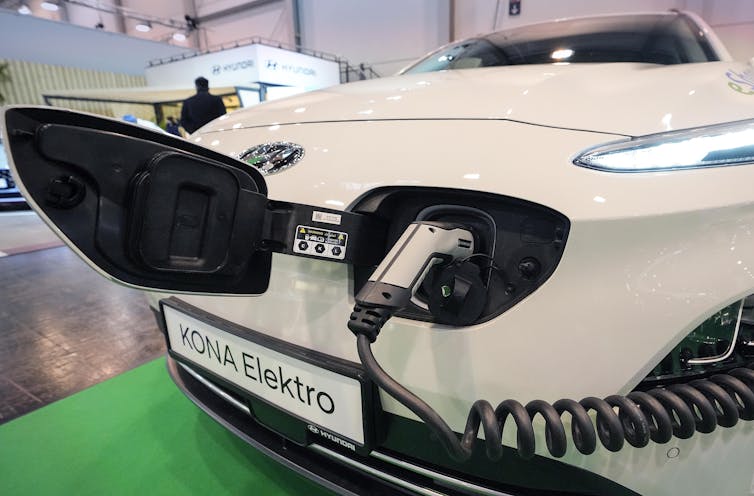
A while Hyundai Kona electric car is charged at a motor show in Essen, Germany, on Dec. 2, 2021.
Hyundai vehicles, including the Kona electric car, have built up customer loyalty through the flexible warranties offered by the automaker. AP Photo/Martin Meissner

A smarter option for manufacturers would be to establish a better, more efficient service network and offer more attractive warranty programs to retain customer loyalty.

Some companies have demonstrated that strong warranties pay off. Outdoor apparel maker Patagonia offers an “ironclad guarantee” to repair or replace its products for any reason. The “all mighty guarantee” offered by Osprey, which also manufactures outdoor gear, will repair or replace any damaged or defective product free of charge.

Then there’s retail giant Costco’s automatic extension of manufacturers’ warranties on major appliances and electronics – a major driver of its success.

Meanwhile, under the right to repair measures currently proposed, the post-purchase service and repair markets would likely get more competitive. New rules would let outside service providers and warranty companies gain better access to fix the products. Extended warranties and service contracts would then become even more prevalent, and manufacturers would need to become more vigilant.

Consumers also need more protection from the FTC, the top federal regulator tasked with consumer protection. Indeed, the right to repair movement reflects, in part, public disappointment that the government has failed to serve as a watchdog amid misleading corporate claims about warranty protections.

While the FTC has occasionally sued companies to protect consumer rights under the 1975 law, it has the legal tools to be more aggressive. Such a shift would not only change the corporate culture around warranties but send a message to consumers that warranties should work for them.

Enforcement, not just choice

If manufacturers embraced stronger warranty enforcement, consumers would benefit the most, provided they’re aware of what these protections entail. But manufacturers would come out ahead, too. By building up efficient service networks and offering more versatile warranties, they would remain competitive and foster customer loyalty, Hyundai being a good example.

The right to repair movement is in many ways a live policy experiment on expanding access to repair markets and giving consumers more choices. But more choices don’t necessarily lead to a better outcome. Coupling repair rights with stronger warranties and better enforcement is the best way a company can claim the prize it always says it wants: more satisfied consumers.

This article originally appeared on The Conversation. You can read it here.

  • The states with the highest rates of uninsured drivers and what it costs everyone else
    Photo credit: mojo cp // ShutterstockAn insurance agent explaining a policy to a customer.
    ,

    The states with the highest rates of uninsured drivers and what it costs everyone else

    Coverage gaps leave insured drivers and taxpayers footing the bill.

    Jeff Temple

    Nearly every state requires drivers to carry auto liability insurance, yet millions of motorists are still on the road without it.

    In 2023, 15.4% of U.S. drivers were uninsured, according to the Insurance Research Council, meaning more than 1 in 7 motorists lacked coverage that could pay for injuries or damage they caused in a crash. The rate has increased since 2017 and remains elevated after a pandemic-era jump that affected nearly every state.

    The burden is not limited to those driving without coverage. When an uninsured driver causes a crash, costs can shift to injured people, insured drivers, insurers, public systems, and households already dealing with higher auto insurance prices.

    Temple Injury Law, a Las Vegas personal injury law firm, examined national insurance and crash-cost data to understand where uninsured driving is most common and how those costs ripple beyond the crash scene.

    Mississippi, New Mexico, and D.C. had the highest uninsured-driver rates

    The highest uninsured-driver rate in 2023 was in Mississippi, where 28.2% of motorists were uninsured, according to the IRC. New Mexico followed at 24.1%, and the District of Columbia ranked third at 23.1%. At the other end of the spectrum, the lowest rates were in Maine at 5.7%, Utah at 6.2%, and Idaho at 6.4%.

    Those gaps show how differently the uninsured-driver problem plays out across the country. In Mississippi, the share of uninsured motorists was nearly five times Maine’s rate. Nationally, the National Association of Insurance Commissioners notes that uninsured-motorist rates range from 5.7% in Maine to 28.2% in Mississippi, despite near-universal legal requirements to carry coverage.

    The Insurance Research Council says several factors are associated with state-to-state differences, including economic conditions, insurance costs, and state insurance laws and regulations. That makes uninsured driving both a compliance issue and an affordability issue: A state can require insurance, but that does not guarantee every driver can afford or maintain it.

    Most states require insurance, but enforcement varies

    Auto liability insurance is compulsory in 49 states and the District of Columbia. New Hampshire is the only state without a compulsory auto insurance law, though drivers there must meet financial responsibility requirements in certain circumstances.

    Liability coverage is meant to protect other people when a driver causes a crash. But minimum coverage requirements vary by state, and so do enforcement systems. Some states use electronic insurance verification programs, registration checks, fines, license suspensions, or other tools to discourage uninsured driving. Others rely more heavily on proof-of-insurance checks after traffic stops or crashes.

    The result is a system in which uninsured driving can remain undetected until a collision occurs. By then, the financial problem has already moved from a compliance question to a question of who pays.

    The cost often shifts to insured drivers

    The NAIC describes uninsured motorists as a cost burden on drivers who comply with compulsory insurance laws. When uninsured drivers cause crashes, some of those costs are integrated into uninsured-motorist coverage purchased by insured drivers, which can help pay for injuries or vehicle damage caused by someone without insurance.

    That does not mean uninsured drivers are the only reason premiums rise. Auto insurance prices are affected by many factors, including accident rates, traffic density, vehicle theft, repair costs, medical and legal costs, population density, weather, and state liability requirements, according to the NAIC’s 2023 Auto Insurance Database report.

    Still, uninsured driving adds another layer of risk to an already expensive system. The NAIC reported that the countrywide average auto insurance expenditure was $1,281 in 2023, up 13.98% from the previous year. The countrywide combined average premium rose 14.41% to $1,438.

    For households living close to the edge, those increases can matter. In its 2023 household well-being survey, the Federal Reserve found that not all adults could cover an unexpected $400 emergency expense with cash or its equivalent, underscoring how a relatively small financial shock can force trade-offs for some families.

    Crash costs reach far beyond insurance claims

    The financial consequences of uninsured driving sit inside a much larger crash-cost system. The Bureau of Transportation Statistics estimated that motor vehicle crashes in 2019 incurred $340 billion in economic costs, including medical care, lost productivity, legal and court costs, emergency services, insurance administration, congestion, property damage, and workplace losses. Public revenues covered roughly 9% of all motor vehicle crash costs in 2019, amounting to about $30 billion, or $230 in added taxes for every U.S. household.

    Those figures are not limited to crashes involving uninsured drivers. But they help explain why insurance gaps matter: When the person responsible for a crash lacks coverage, the costs do not disappear. They are absorbed elsewhere. It can be through another driver’s insurance, out-of-pocket expenses, health coverage, legal systems, public services, or uncompensated losses.

    Underinsurance is growing, too

    Uninsured driving is only part of the problem. In 2023, 18% of U.S. drivers were underinsured, meaning they had liability insurance but not enough to cover the injury costs caused by a crash, according to the Insurance Research Council. Combined, IRC found that about 1 in 3 drivers was either uninsured or underinsured.

    That distinction matters for crash victims and insured motorists. A driver may technically comply with state insurance requirements and still carry limits too low to cover serious injuries, medical bills, lost income, or long-term care. IRC noted that rising underinsured-motorist rates are driven by upward pressure on the severity of bodily-injury claims.

    For drivers, the practical risk is similar: Even when another motorist has some insurance, the available coverage may fall short of the crash’s actual cost.

    What the numbers show now

    The latest public data points to a persistent national problem: Uninsured driving remains common, the highest-rate states have uninsured-driver shares above 20%, and underinsurance is rising alongside it.

    For insured drivers, the issue is not only whether another motorist is following the law. It is whether the financial safety net that is supposed to follow every vehicle on the road is strong enough when a crash happens. In states with the highest uninsured-driver rates, that safety net is missing for roughly one-quarter of motorists.

    This story was produced by Temple Injury Law and reviewed and distributed by Stacker.

  • South Korea creates a website that allows you to pretend to order takeout to get the dopamine rush without spending a dime
    Photo credit: CanvaGet the excitement of shopping without spending money.

    Have you ever done “retail therapy”? You feel stressed and overwhelmed so you decide to shop for some clothes or order food from an app? Sure, it can help you feel better in the moment, but not if you’re trying to save money. But what if you could get the same feeling of anticipation and the feel-good experience of shopping without spending anything? South Korea cooked up a solution.

    One of the latest trends that started in South Korea and is turning global are what are being called “dopamine sites.” These websites and apps provide realistic-looking digital storefronts that allow a person to add items to their cart, a fake credit card to fill out orders, and even simulate delivery trackers. The store, items, and everything about the transaction is fake but your brain gets that dopamine hit anyway.

    One example of this is FoodNeverComes, a fake delivery app in the vein of DoorDash and UberEats. The app is full of different eye-catching pictures of food to “order” like in those apps, allowing you to pick and choose. Users have said this app allows them to satisfy late-night cravings and get that feel-good buzz of ordering takeout without actually buying anything. If a person really does want a dish that’s on the app, FoodNeverComes provides a recipe so users can make it at home if they really want it.

    Abandoning the cart, feeling good anyway

    So why are people feeling the emotional payoff of making a purchase without actually buying anything? The psychology behind it is similar to the feeling some people get when they visit a website, add a bunch of items into the cart, and then abandon it. Psychologists found that anticipation of receiving an item is what triggers a better mood rather than actually having it in hand.

    Psychologist Dr. Deborah Ko explains in a video that this is due to what she called the endowment effect. She explains that putting items in a digital cart allows a person to feel like they “have” those items. Once you “have” those items it makes your brain already feel like you own it. 

    “It was the act of shopping that was the reward, not the product itself,” she says.

    These dopamine sites and apps simulate all of that and allow the brain to get that hit but eliminate the temptation and consequences of hitting the “buy” button.

    Are these dopamine sites good?

    Many psychologists are mixed as to whether these dopamine sites are beneficial. On one hand, it could help a person who regularly impulse buys food or products they cannot afford while also satisfying that urge. It could also help people adopt better habits while still keeping certain rituals. 

    For example, let’s say a person who typically orders pizza every Friday but wants to eat better or save money by removing that weekend-starting ritual. They could possibly benefit from “ordering” pizza through these fake food delivery apps. It will allow them to go through the motions and get that dopamine hit while they hit their fitness or financial goals.

    On the other hand, some argue using these dopamine sites won’t address certain harmful compulsive behaviors. They say that these apps and sites could just act as placebos and substitutes rather than truly address troubling issues.

    Whether an app or something like these dopamine sites can help or not, it is still important to learn, know, and discern how to best use the money you do have in real life.

  • US giving grew 3% in 2025, crossing the $600B mark for the first time
    Photo credit: AP Photo/John FroschauerThe estate of Microsoft co-founder Paul G. Allen, who died in 2018, made a big charitable bequest in 2025.
    ,

    US giving grew 3% in 2025, crossing the $600B mark for the first time

    Bequests and foundations drove a record-breaking year.

    U.S. charitable giving rose 3% in 2025, surpassing US$600 billion for the first time.

    The $617 billion that Americans gave to everything from churches to cat rescues was the second-highest ever in inflation-adjusted terms, but it fell short of the record set in 2021, when there was a burst of social services giving in response to the COVID-19 pandemic.

    This growth was slightly faster than the long-term annual average of 2.7%, thanks to the nation’s relatively strong – if mixed – economy. While the stock market performed well in 2025 and personal income roseconsumer sentiment was extremely low and inflation remained above the Fed’s 2% target.

    As part of my job researching trends in philanthropy and nonprofits, I’ve been the lead analyst for over a decade of this annual report from the Giving USA Foundation, produced in partnership with the Indiana University Lilly Family School of Philanthropy. In recent years it’s grown clearer that as giving grows, the kinds of donations the wealthy favor are gaining ground.

    US charitable giving through 2025

    Bequests and foundations led overall growth

    Charitable bequests – gifts to causes that happen after someone dies – represented about 10% of all U.S. giving in 2025, up from 9% in 2024. They grew by 16.6% to $62 billion in 2025, faster than all other sources of donations. Bequeathed gifts have exceeded $50 billion every year since 2022, growing significantly in three of the past four years.

    There are several possible reasons for this increase. One is the impending passing of tens of trillions of dollars in wealth from people over 65 to their younger heirs, often called the “great wealth transfer.” However, the total value of charitable bequests may be rising simply because stocks have been performing better than normal for several years. The stock market boom has increased the net worth of the estates of the wealthiest Americans, who are the main people making these gifts after death.

    This value does vary greatly year to year, partly because even a single very large bequest can significantly skew the total amount. And when these changes will occur is unpredictable due to the complexity of multibillion-dollar estates, which can get paid out several years after a wealthy person dies. For example, Microsoft co-founder Paul Allen, who died in 2018, was among the largest donors of 2025 due to the $3.1 billion bequest his estate made.

    Giving by foundations also tends to respond to strong stock market growth. By law, private foundations must spend at least 5% of their assets for charitable purposes, primarily through grants to nonprofits, to retain their tax-exempt status. Endowment growth tends to boost what foundations disburse.

    US giving by source through 2025

    Giving by foundations, which accounted for about 1 in 5 dollars given to charity in 2025, rose by 3% to $117 billion – an all-time high, even when adjusting for inflation. Giving by foundations has not decreased in any year in real terms since 2010.

    Giving by individuals, whether they’re rich, poor or in between, is clearly influenced by consumer sentiment and other trends that affect typical households more directly. And consumer sentiment declined in 2025 to the lowest annual level ever recorded.

    Giving by individuals grew by 1.4% in 2025, though that share of charitable giving has gradually shrunk. It dipped to 64% of the total in 2025 – the second-lowest share of total giving ever.

    Corporate giving was responsible for around 7% of all charitable gifts made in 2025 – a record high. It totaled $44 billion in 2025, up 0.5% from a year earlier. Giving by corporations has grown by almost 30% since 2020 in inflation-adjusted terms.

    Most kinds of donations increased

    Donations to seven of the nine charitable categories that Giving USA tracks grew.

    One exception was gifts to houses of worship and religious institutions. Religious giving was essentially flat in inflation-adjusted terms, with a 0.2% decline. That’s in keeping with a long-term trend.

    Religious giving has barely budged in the U.S. over the past two decades, increasing by only 1.2% since 2005. That pace is the most sluggish of all the categories we track. Even so, the $152 billion Americans gave to congregations and other religious institutions remains by far the largest category. It accounted for 23% of all donations in 2025.

    The other exception was gifts to foundations, which fell 18.3% in 2025 after surging to their second-highest level ever in 2024. In 2025 they represented 12% of all giving, totaling $79 billion.

    Giving to social services nonprofits, such as food banks and homeless shelters, grew 2.6% in 2025, reaching almost $100 billion. That marked a record high and represented 15% of all giving.

    Giving to education and public-society benefit causes, categories associated with wealthier donors, grew the most in 2025.

    Charitable gifts for education, which primarily support colleges and universities, grew 8.9% – faster than any other category in 2025. They totaled $92 billion, an all-time high.

    The causes that drew US charitable support through 2025

    Public-society benefit giving grew by 8.7% to $72 billion. This category consists of organizations serving the public more generally, such as advocacy organizations, independent research institutions and donor-advised funds, which function as charitable investment accounts.

    Giving to several other categories reached record highs, including the $61 billion Americans donated to hospitals and other health-related causes; the $27 billion they gave to the arts; and $25 billion dispatched to nonprofits tied to the environment and animals.

    While charitable donations did grow broadly in 2025, the giving categories the wealthiest Americans tend to favor – bequests, foundations, education, public-society benefit organizations – fared better than usual. Giving by less affluent U.S. donors – gifts from individuals and donations to religious institutions – lagged.

    Beginning in 2026, however, virtually all U.S. taxpayers will have some incentive to make charitable gifts due to the addition of the universal charitable deduction as part of President Donald Trump’s big package of tax and spending measures that Republican lawmakers passed in July 2025. That should increase the number of donors who make modest gifts to charity.

    This article originally appeared on The Conversation. You can read it here.

Explore More Money Stories

Everyday Economics

The states with the highest rates of uninsured drivers and what it costs everyone else

Smart Spending

South Korea creates a website that allows you to pretend to order takeout to get the dopamine rush without spending a dime

Money

US giving grew 3% in 2025, crossing the $600B mark for the first time

Everyday Economics

5 things to do when the car’s check engine light comes on before spending money at the mechanic