
Regardless of region, economic status, age, or health, there is one thing that unites us all: we’re all going to die someday. However, some scientists are saying that death is not necessarily the end. They’re arguing that after life and death, there is a third state of life. They found that certain cells appear after a body has been deceased and these cells could have consciousness.

In September 2024, Alex Pozhitkov, Ph.D., a bioinformatics researcher at the City of Hope Cancer Center, and Peter Noble, Ph.D., a microbiologist from the University of Alabama at Birmingham, analyzed new multicellular organisms designed by A.I. known as “xenobots” and noticed they acted with autonomy, forming new roles for themselves beyond their predetermined function within a body. Since these xenobot cells appear to reassemble and reorganize into new forms and functions upon a body’s death, Pozhitkov and Noble argue that these cells create a “third state” of life. While the forms the xenobots take wouldn’t materialize in nature, it’s huge that they’re able to adapt to drastic changes in their environment much like the human “anthrobot” cells that exhibit similar behavior.

“Taken together, these findings…challenge the idea that cells and organisms can evolve only in predetermined ways,” the authors of the study told The Conversation in 2024. “The third state suggests that [an organism’s] death may play a significant role in how life transforms over time.”

Along with this “third state” comes another potential good for the medical community. Seeing this adaptability in anthrobot cells could help doctors engineer new medical treatments that would be able to administer medicine through anthrobots derived from a patient’s living tissue. This could allow patients to receive medication without triggering unwanted immune responses along with other potential functions such as dissolving plaque in clogged arteries or removing excess mucus from cystic fibrosis patients.

These “biobots” have not just challenged what we currently know about the cells that made up the bodies of humans, plants, and animals, but also challenge our definitions of consciousness and sentience. There are scientists that argue, based on this finding and others, that cells contain consciousness. Other scientists, however, disagree with that opinion.

Part of the reason these scientists argue is because consciousness can have different definitions or contexts depending whether you’re discussing it from a scientific or a philosophical lens. In a broad definition, consciousness is whatever you experience. However, scientists see consciousness as a behavior rather than an actual process of responding to experiences or being aware of being aware. The debate and critical thinking on any side of the issue is so much that there is even a philosopher, Daniel Dennett, who argues that consciousness itself is an illusion and, ironically, that humans are just “robots, made of robots, made of robots.”

Whatever side of the debate you’re on, the xenobots are a definite breakthrough in getting us to ask questions that could lead to bigger truths and even bigger questions. That, and hopefully some new effective medical techniques that we may not yet fully understand, but do appreciate.


  • A bonobo’s make-believe tea party has scientists rethinking whether imagination belongs only to humans
    Photo credit: CanvaAn adorable baby bonobo.

    Childhood activities like playing house, superheroes and villains, the floor is lava, and the classic tea party all involve imagination. We create stories and worlds with rules and roles to play.

    Humans want to believe that our creativity and art make us unique. But a bonobo named Kanzi was part of research that has scientists wondering how different we really are. In three evolving experiments, Kanzi correctly identified pretend objects, demonstrating that he could understand and engage in make-believe situations.

    primate research, behavior, bonobo study
    Kanzi associates words and symbols with Sue Savage-Rumbaugh.
    Photo by William H. Calvin, Phd/ Wikimedia Commons (Cropped)

    Kanzi has a make-believe tea party

    Researchers developed a simple setup using cups, a pitcher, and actions that began as real pouring and gradually shifted into pretend play. The first experiment used real liquids. The second had a combination of real and pretend liquids. The final scenario had no real liquids and relied entirely on imagination.

    The scientists used gestures and make-believe to see if Kanzi would react differently depending on what he was being shown. He didn’t react the same way in each setup. His responses showed he was paying attention to more than just the objects, but also to the way the situation was presented.

    bonobo play, animal imagination, Kanzi bonobo, apes
    Kanzi participates in an indoor test.
    Photo by William H. Calvin, Phd/ Wikimedia Commons (Cropped)

    Animals engaging in fantasy

    The experiment revealed that non-human animals can understand and follow along with imaginary situations.

    “[It] shows that animals are capable of understanding pretence in a controlled experimental setting, which hadn’t been done before,” Dr. Amalia Bastos, first author of the research from the University of St Andrews, told The Guardian.

    Scientists involved in the research are careful about how they describe it. They don’t treat it as proof that bonobos imagine things the same way humans do. Instead, they suggest that animals are capable of responding to situations where meaning is implied rather than directly shown.

    Why scientists care about pretend play

    Albert Einstein, one of the greatest scientific minds in history, is often credited with the idea that logic gets you from A to B, but imagination can take you everywhere. This study suggests that the more we learn about animals, the more it seems the difference between us may not be as great as we once thought.

    Developmental research credits early social and cognitive growth in human children to imagining situations that aren’t physically present. A 2024 meta-analysis found that make-believe is not just entertainment but also directly linked to social understanding and real-world interpretation.

    Researchers now describe animal play as more flexible than once believed. A 2025 study of ravens revealed that play included the manipulation of sticks, stones, and other items, suggesting social awareness and responsiveness to context rather than simple instinctive behavior.

    Play and imagination may be versatile behaviors no longer seen as uniquely human traits. A broader cognitive toolkit shared across multiple species suggests the gap between humans and animals may be smaller than it once seemed. Things we’ve long believed to be uniquely human may instead exist along a spectrum of abilities expressed in different ways.

  • Humans nearly vanished 800,000 years ago, revealing a quiet truth: most family lines disappear
    Photo credit: CanvaA group of people hiking in the mountains.

    There was a moment in human history when our entire existence may have desperately clung to a thousand or so people. A DNA-based study found that between 800,000 and 900,000 years ago, our ancestors experienced a severe population crash.

    This wasn’t humans dealing with a giant meteor like the one that wiped out the dinosaurs. It was a much slower stretch during which humanity teetered on the brink of disappearing completely. This bottleneck in the human gene pool, comprising roughly 1,280 breeding individuals, lasted about 117,000 years.

    population, genomes, Ice Age, Early-Middle Pleistocene
    Removing representation of a human population group.
    Photo credit: Canva

    Human population levels plummet

    According to Scientific American, the study analyzed modern human genomes to piece together what the early human population looked like. By constructing a complex family tree of genes from present-day humans, researchers were able to identify important evolutionary events.

    During the Early-Middle Pleistocene, a period within the Ice Age, humans faced severe weather and intense glacial cycles. Most human ancestors may have died out, clearing the path for a new human species to take their place.

    Focusing on Africa, the study showed that 813,000 years ago, human populations began to recover and grow again. With an estimated two-thirds of genetic diversity potentially lost, traits like brain size appear to have been among the important features that survived. “It represents a key period of time during the evolution of humans,” population geneticist and study co-author Ziqian Hao said. “So there are many important questions to be answered.”

    DNA, genomes sequence, human existence, heredity
    DNA genome sequences.
    Photo credit: Canva

    Understanding evolution and ancestry

    What we know about evolution reveals a different story than a simple, continuous line of human improvement. Over time, genetic lines disappear—not dramatically all at once. It’s a slow and steady change, generation after generation.

    Human existence isn’t inevitable. Species strength or technical advancement doesn’t guarantee the future or explain our past. It’s contingent on narrow, accidental circumstances. A 2021 study showed that human evolution is better seen as a continuous flow of incremental fragments over time. Categorizing people into races and groups oversimplifies human history.

    species strength, evolutionary improvement, genetic lines, technical advancement
    A diverse group of wooden figures.
    Photo credit: Canva

    What does the bottleneck study say about us?

    The study reveals humanity didn’t simply decline; it nearly collapsed. With over 98% of our genetic diversity erased, entire branches of the human family tree permanently ceased to exist.

    It’s quite possible that if even a few more of those genetic lines had ended, human history could have vanished with them. Most branches of life don’t continue. What we witness today reflects biological persistence and countless moments that could have gone another way.

    A 2024 study conducted five billion simulations, revealing that as a species’ population shrinks, its risk of extinction rises. Even stable groups can quickly collapse if their numbers suddenly drop low enough.

    A 2025 study found that small populations erode genetic diversity. Isolation increases inbreeding and elevates the risk of extinction. Once a lineage shrinks, recovery becomes vastly more challenging over time. Long-term survival is an exception, not the guiding rule.

    Humanity likes to think of itself as the result of an incredibly unique progression. Perhaps studies like these suggest that we are actually what remains when everything else disappears. The reason any of us live today comes down to a small group of ancient outlasters: persevering individuals whose genetic lines are the building blocks of every human living today.

  • Researchers capture sperm whales headbutting on camera, validating what sailors have said for centuries
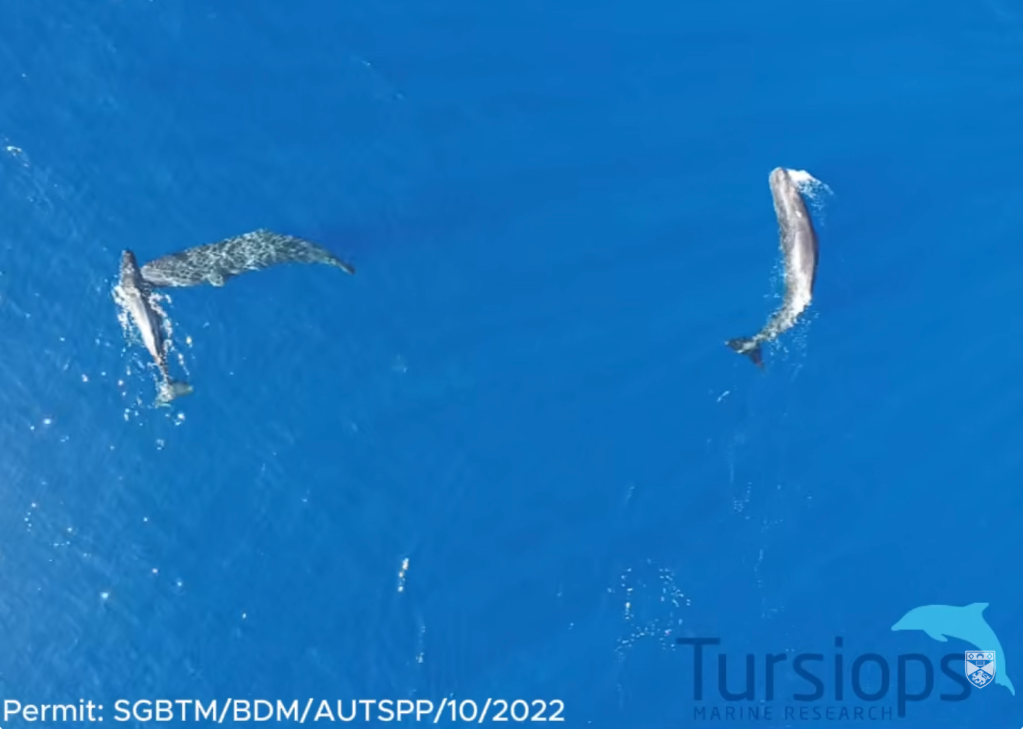
    Photo credit: University of St Andrews/YouTubeSperm whales headbutting.
    ,

    Researchers capture sperm whales headbutting on camera, validating what sailors have said for centuries

    “It’s exciting to think about what as-yet unseen behaviours we may soon uncover”

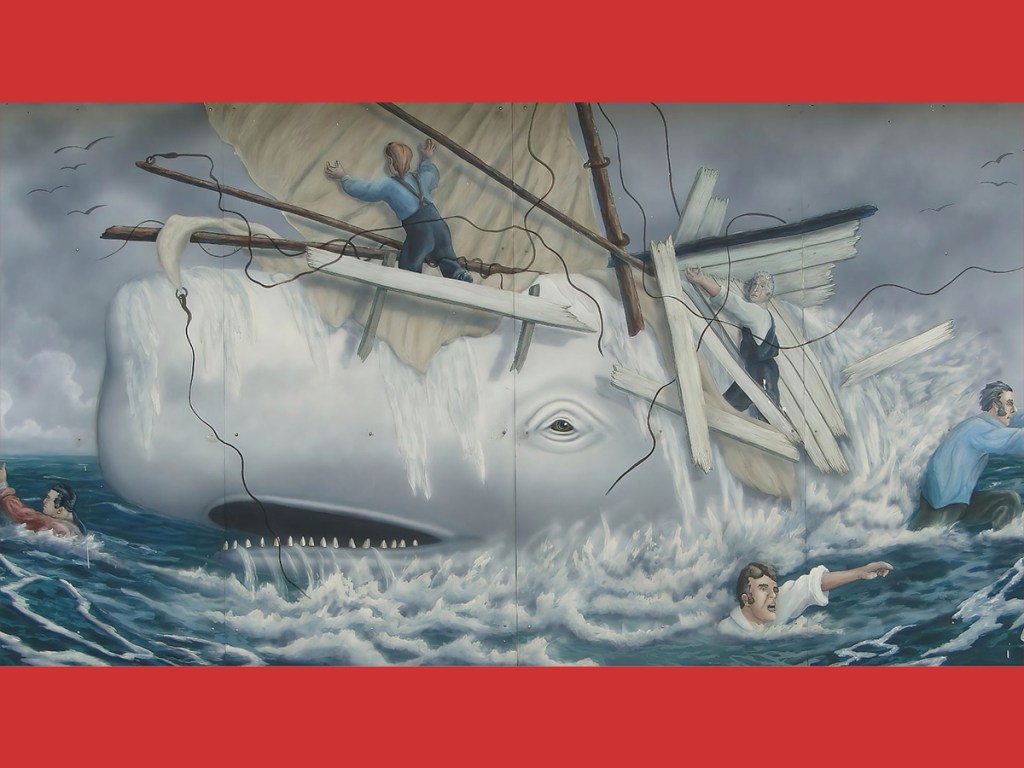
    For centuries, sailors have told wild tales of whales ramming ships. Reports of a sperm whale smashing and sinking the Essex in 1820 inspired Herman Melville to write Moby-Dick. Scientists had never witnessed it themselves—until now.

    Researchers have captured the first-ever drone footage of sperm whales headbutting each other. During fieldwork off the coast of the Balearic Islands, they recorded three separate incidents between 2020 and 2022.

    Drone footage captures sperm whales headbutting

    The new study was published in the journal Marine Mammal Science. Using drones, researchers from the University of St Andrews, the University of the Azores, and Asociación Tursiops captured video evidence of sperm whales headbutting. They found that most of the whales were young, immature males. In one incident, a young male circling near a female suddenly charged and slammed into her, knocking her off course. After the impact, she broke away from the group and did not return.

    The researchers estimated impact speeds ranging from 1.8 to 8 miles per hour, with collisions generating forces of up to 20 tons of pressure. The impacts captured on video were not necessarily considered aggressive. In fact, researchers believe the behavior reflects rough play or forms of mock combat. Similar behaviors can be seen in other mammals, like dolphins and lions.

    sperm whales, Moby Dick, literature, history, whaling
    A depiction of Moby-Dick.
    Photo credit: Canva

    Observations of sperm whale behavior

    Using their large heads, sperm whales have been reported by whalers to strike and move objects since the 19th century. “It was really exciting to observe this behaviour, which we knew had been hypothesised for such a long time, but not yet documented and described systematically,” said Dr. Alec Burslem, lead author of the study.

    “It’s exciting to think about what as-yet unseen behaviours we may soon uncover, as well how more headbutting observations may help us to shed light on the functions the behaviour may serve,” Burslem added.

    Documented, unprovoked attacks on humans by sperm whales are exceedingly rare, with most occurring during historical whaling incidents. Research indicates that sperm whales do not naturally exhibit aggression toward humans. While they can be curious, they often avoid vessels and observers. Historical accounts of whales ramming ships are likely defensive reactions rather than predatory attacks.

    ocean mammals, sperm whales, non-aggressive behavior, language, social structures
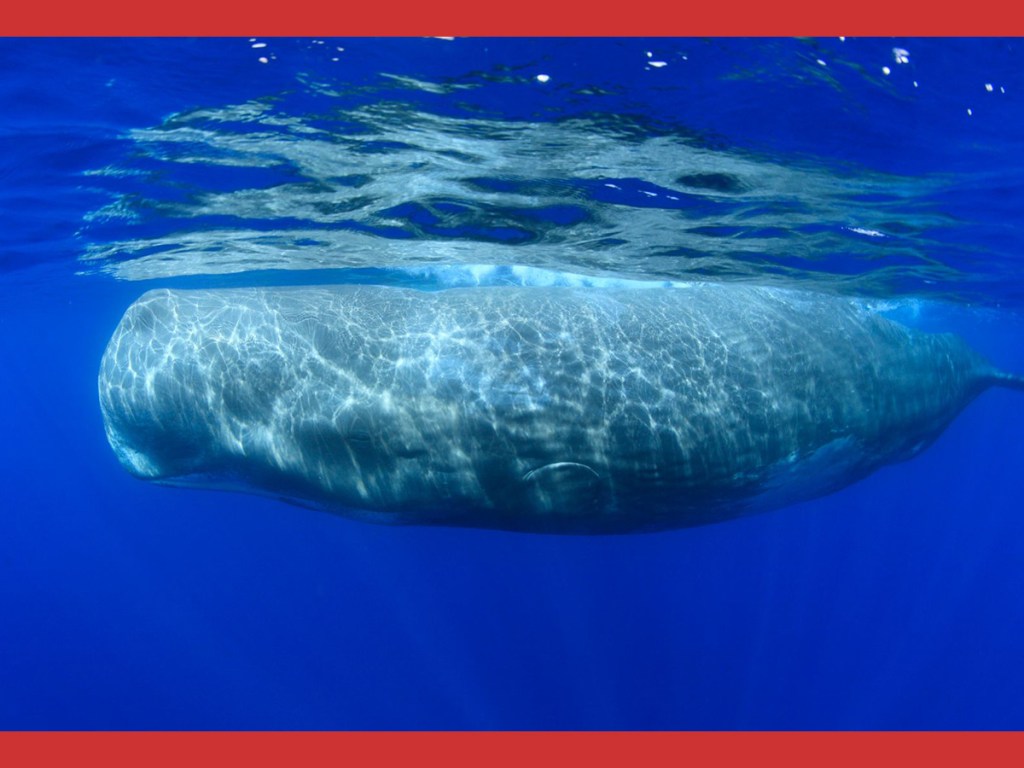
    A sperm whale.
    Photo credit: Canva

    Language and cultural identities

    Whales use clicks like letters, combining them into sequences that function like words in a complex form of communication. A 2024 study found that sperm whales use a highly sophisticated communication system with structures resembling a phonetic alphabet. These audio cues are used for coordination, caregiving, and social interaction.

    A 2022 study found that specific click patterns serve as symbolic markers that help establish cultural identities within sperm whale pods. Researchers identified seven distinct clans, each with its own unique dialect. This provided quantitative evidence of whale social structures known as identity codas.

    Studying this new drone footage offers fresh insights into whale social groups and behavior. While the headbutting may look aggressive, researchers interpret it as rough play. With technologies like drones giving scientists unprecedented access to these interactions, it’s exciting to think of what discoveries are yet to be made.

Explore More Exploration Stories

Science

A bonobo’s make-believe tea party has scientists rethinking whether imagination belongs only to humans

Science

Humans nearly vanished 800,000 years ago, revealing a quiet truth: most family lines disappear

Science

Researchers capture sperm whales headbutting on camera, validating what sailors have said for centuries

Exploration

Study reveals startling truth: Intelligence lowers our empathy toward other people