When we think of a “genius,” we often picture a mathematician scribbling formulas on a chalkboard or a tech mogul launching rockets. But according to psychologists, true intelligence isn’t always about raw computing power. Often, it manifests in subtle behaviors, emotional regulation, and how a person navigates the world.

A 2025 article in Global English Editing explored the subtle ways smart people behave that don’t always garner much recognition. These behaviors exhibit true levels of intelligence, and they’re habits you might already be doing. The real magic lies in the secrets behind what they do that exhibits true wisdom.

They are great at problem-solving

signs of intelligence, emotional intelligence, psychology, high IQ traits, adaptability, critical thinking, open-mindedness, self-reflection, cognitive patterns, Global English Editing
A woman looks at post-it notes while thinking Canva

Smart people are adept at identifying a challenge, understanding it, and then finding the best ways to overcome it. Two tools help them do it in a way that psychologists highly approve of and consider brilliant.

  • 1. Asking thoughtful questions: A 2021 study in Science Direct found asking questions to be an important cognitive activity. The quality of a question plays a crucial role in inspiring curiosity, critical thinking, and learning. A thoughtful question requires critical thinking, and smart people don’t shy away from it.
  • 2. Recognizing Patterns: “Pattern recognition” is a core skill behind problem-solving and creative thinking. A 2022 study on pattern recognition published in EBSCO states, “Pattern recognition is a cognitive process that enables individuals to identify and interpret patterns in their environment, allowing them to recognize objects, sounds, and other stimuli. This capability is fundamental to human perception and plays a crucial role in everyday activities, from appreciating art to making change.”

They have better relationships because they listen

signs of intelligence, emotional intelligence, psychology, high IQ traits, adaptability, critical thinking, open-mindedness, self-reflection, cognitive patterns, Global English Editing
Two women on a couch are having a conversation Canva

Better relationships require listening. When both people feel they have the opportunity to express themselves, there is validation. People tend to be more trusting and feel more connected when they feel safe and heard.

  • 3. Listening to both sides of an argument: Psychologists would call this being open-minded. A 2025 article in Psychology Today notes, “Open-mindedness does not require agreement with every viewpoint. However, it demands the ability to understand and engage with ideas that differ from our own.”
  • 4. Listening more than talking: People who value listening are more empathetic. They can self-regulate and not dominate a conversation. Their listening affords a better perspective. A 2022 study in the National Library of Medicine states that high-quality listeners use more cognitive processing to remain attentive and process information.

They are emotionally intelligent

signs of intelligence, emotional intelligence, psychology, high IQ traits, adaptability, critical thinking, open-mindedness, self-reflection, cognitive patterns, Global English Editing
A father and son sit on a porch talking Canva

Emotional intelligence is the ability to be in touch with your own feelings as well as the feelings and experiences of others. In a recent article, The Times reported that empathy allows people to live a more peaceful life because they don’t to take things personally.

  • 5. Self-reflection: The ability to truly look at ourselves doesn’t have to be negative. Smart people don’t just sit down and think about all the bad things they might be doing. Instead, they can positively reflect on their own habits and behaviors. A 2022 study published in the Cambridge University Press found that positive-themed self-reflection produced better psychological well-being.
  • 6. Admit they don’t know: Nobody likes a know-it-all. Some of the greatest minds have moments when they don’t have an answer. Recognizing the limits of one’s own knowledge is a sign of intellectual humility. These people are better learners and demonstrate a “growth mindset.” A 2021 study in the National Library of Medicine found that older individuals exhibiting higher levels of belief in the malleability of intelligence and abilities showed larger cognitive gains.

They are creative and innovative

signs of intelligence, emotional intelligence, psychology, high IQ traits, adaptability, critical thinking, open-mindedness, self-reflection, cognitive patterns, Global English Editing
A woman paints on a canvas Canva

Innovation isn’t just ideas. The ability to work with others, adapt to situations, and communicate well are all signs of higher intelligence. Creative people are capable of divergent thinking, which requires the ability to come up with multiple answers or choices moving forward.

  • 7. Sense of humor: Humor is a complex cognitive ability that requires creativity, perspective, and understanding. A 2024 study in the National Library of Medicine found humor allowed professionals to manage challenges more effectively. Humor also helps people cope with anxiety, stress, and adversity.
  • 8. Quiet time: Consistent meditation reduces negative moods and lowers anxiety. Smart people know the benefits of gaining stronger emotional regulation and better impulse control. The Melbourne School of Psychological Sciences reported on the value of just doing nothing. People doing nothing eventually find a high degree of calm and rest with little discomfort, tension, anxiety, or restless boredom.

They are adaptable

signs of intelligence, emotional intelligence, psychology, high IQ traits, adaptability, critical thinking, open-mindedness, self-reflection, cognitive patterns, Global English Editing
A student high-fives withu00a0his teacher Canva

Psychologists consistently emphasize that adaptability is a core trait of intelligence. It isn’t just physical flexibility, but also emotional. Smart people just know how to flow with life.

  • 9. Adapt: A 2023 study on college students published in the National Library of Medicine found the structure of students’ adaptability pulled from their emotional, interpersonal, professional, and even economic experiences. Navigating all these areas required emotional intelligence, and struggling in any one area was a predictor of their ability to handle their feelings.
  • 10. Open to change: Psychological research has consistently shown that one of the strongest personality traits linked to intelligence is openness to experience. Smart people enjoy exploring new concepts and thinking more deeply. In 2023, Frontiers published a study on the neurobiology of openness. The study revealed that people who are open to change had more active and larger prefrontal brain regions, which are responsible for planning, decision making, memory, and flexible thinking. These people had stronger brain connections, revealing higher levels of intelligence.

Psychology suggests that smart people are more emotionally aware and capable of navigating their feelings. The ability to implement tools that help a person manage relationships, themselves, and their experiences requires high levels of cognitive ability. If you have a deep capacity for empathy, self-awareness, compassion, and patience, you’ve been living the life of a genius without even knowing it.
This article originally appeared earlier this year.
  • Humans nearly vanished 800,000 years ago, revealing a quiet truth: most family lines disappear
    Photo credit: CanvaA group of people hiking in the mountains.

    There was a moment in human history when our entire existence may have desperately clung to a thousand or so people. A DNA-based study found that between 800,000 and 900,000 years ago, our ancestors experienced a severe population crash.

    This wasn’t humans dealing with a giant meteor like the one that wiped out the dinosaurs. It was a much slower stretch during which humanity teetered on the brink of disappearing completely. This bottleneck in the human gene pool, comprising roughly 1,280 breeding individuals, lasted about 117,000 years.

    population, genomes, Ice Age, Early-Middle Pleistocene
    Removing representation of a human population group.
    Photo credit: Canva

    Human population levels plummet

    According to Scientific American, the study analyzed modern human genomes to piece together what the early human population looked like. By constructing a complex family tree of genes from present-day humans, researchers were able to identify important evolutionary events.

    During the Early-Middle Pleistocene, a period within the Ice Age, humans faced severe weather and intense glacial cycles. Most human ancestors may have died out, clearing the path for a new human species to take their place.

    Focusing on Africa, the study showed that 813,000 years ago, human populations began to recover and grow again. With an estimated two-thirds of genetic diversity potentially lost, traits like brain size appear to have been among the important features that survived. “It represents a key period of time during the evolution of humans,” population geneticist and study co-author Ziqian Hao said. “So there are many important questions to be answered.”

    DNA, genomes sequence, human existence, heredity
    DNA genome sequences.
    Photo credit: Canva

    Understanding evolution and ancestry

    What we know about evolution reveals a different story than a simple, continuous line of human improvement. Over time, genetic lines disappear—not dramatically all at once. It’s a slow and steady change, generation after generation.

    Human existence isn’t inevitable. Species strength or technical advancement doesn’t guarantee the future or explain our past. It’s contingent on narrow, accidental circumstances. A 2021 study showed that human evolution is better seen as a continuous flow of incremental fragments over time. Categorizing people into races and groups oversimplifies human history.

    species strength, evolutionary improvement, genetic lines, technical advancement
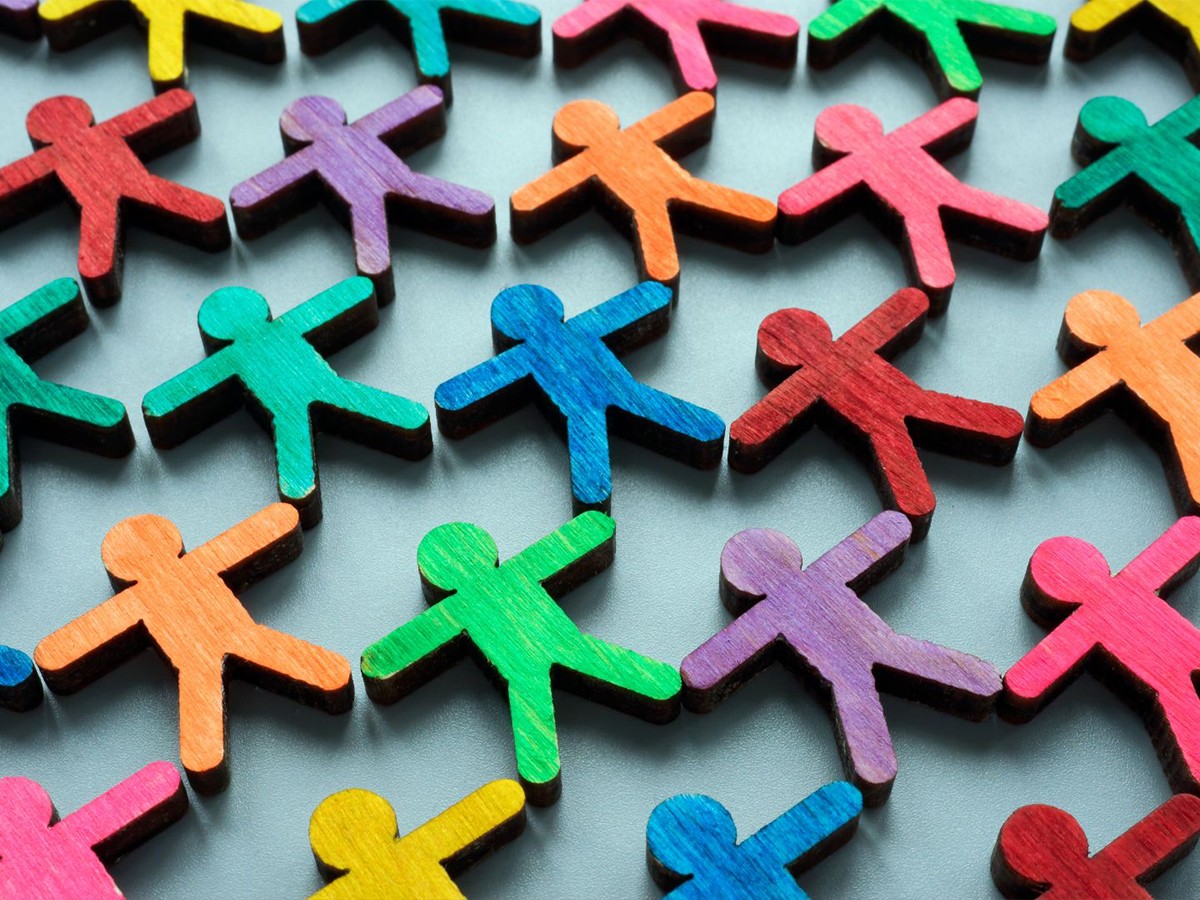
    A diverse group of wooden figures.
    Photo credit: Canva

    What does the bottleneck study say about us?

    The study reveals humanity didn’t simply decline; it nearly collapsed. With over 98% of our genetic diversity erased, entire branches of the human family tree permanently ceased to exist.

    It’s quite possible that if even a few more of those genetic lines had ended, human history could have vanished with them. Most branches of life don’t continue. What we witness today reflects biological persistence and countless moments that could have gone another way.

    A 2024 study conducted five billion simulations, revealing that as a species’ population shrinks, its risk of extinction rises. Even stable groups can quickly collapse if their numbers suddenly drop low enough.

    A 2025 study found that small populations erode genetic diversity. Isolation increases inbreeding and elevates the risk of extinction. Once a lineage shrinks, recovery becomes vastly more challenging over time. Long-term survival is an exception, not the guiding rule.

    Humanity likes to think of itself as the result of an incredibly unique progression. Perhaps studies like these suggest that we are actually what remains when everything else disappears. The reason any of us live today comes down to a small group of ancient outlasters: persevering individuals whose genetic lines are the building blocks of every human living today.

  • Researchers capture sperm whales headbutting on camera, validating what sailors have said for centuries
    Photo credit: University of St Andrews/YouTubeSperm whales headbutting.
    ,

    Researchers capture sperm whales headbutting on camera, validating what sailors have said for centuries

    “It’s exciting to think about what as-yet unseen behaviours we may soon uncover”

    For centuries, sailors have told wild tales of whales ramming ships. Reports of a sperm whale smashing and sinking the Essex in 1820 inspired Herman Melville to write Moby-Dick. Scientists had never witnessed it themselves—until now.

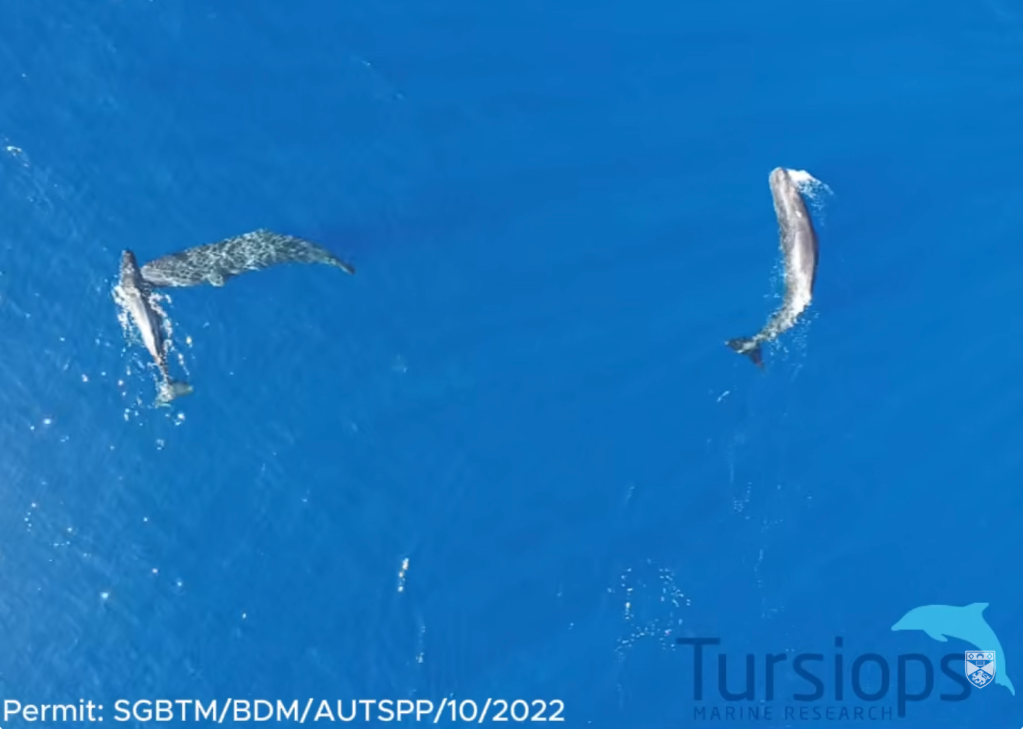
    Researchers have captured the first-ever drone footage of sperm whales headbutting each other. During fieldwork off the coast of the Balearic Islands, they recorded three separate incidents between 2020 and 2022.

    Drone footage captures sperm whales headbutting

    The new study was published in the journal Marine Mammal Science. Using drones, researchers from the University of St Andrews, the University of the Azores, and Asociación Tursiops captured video evidence of sperm whales headbutting. They found that most of the whales were young, immature males. In one incident, a young male circling near a female suddenly charged and slammed into her, knocking her off course. After the impact, she broke away from the group and did not return.

    The researchers estimated impact speeds ranging from 1.8 to 8 miles per hour, with collisions generating forces of up to 20 tons of pressure. The impacts captured on video were not necessarily considered aggressive. In fact, researchers believe the behavior reflects rough play or forms of mock combat. Similar behaviors can be seen in other mammals, like dolphins and lions.

    sperm whales, Moby Dick, literature, history, whaling
    A depiction of Moby-Dick.
    Photo credit: Canva

    Observations of sperm whale behavior

    Using their large heads, sperm whales have been reported by whalers to strike and move objects since the 19th century. “It was really exciting to observe this behaviour, which we knew had been hypothesised for such a long time, but not yet documented and described systematically,” said Dr. Alec Burslem, lead author of the study.

    “It’s exciting to think about what as-yet unseen behaviours we may soon uncover, as well how more headbutting observations may help us to shed light on the functions the behaviour may serve,” Burslem added.

    Documented, unprovoked attacks on humans by sperm whales are exceedingly rare, with most occurring during historical whaling incidents. Research indicates that sperm whales do not naturally exhibit aggression toward humans. While they can be curious, they often avoid vessels and observers. Historical accounts of whales ramming ships are likely defensive reactions rather than predatory attacks.

    ocean mammals, sperm whales, non-aggressive behavior, language, social structures
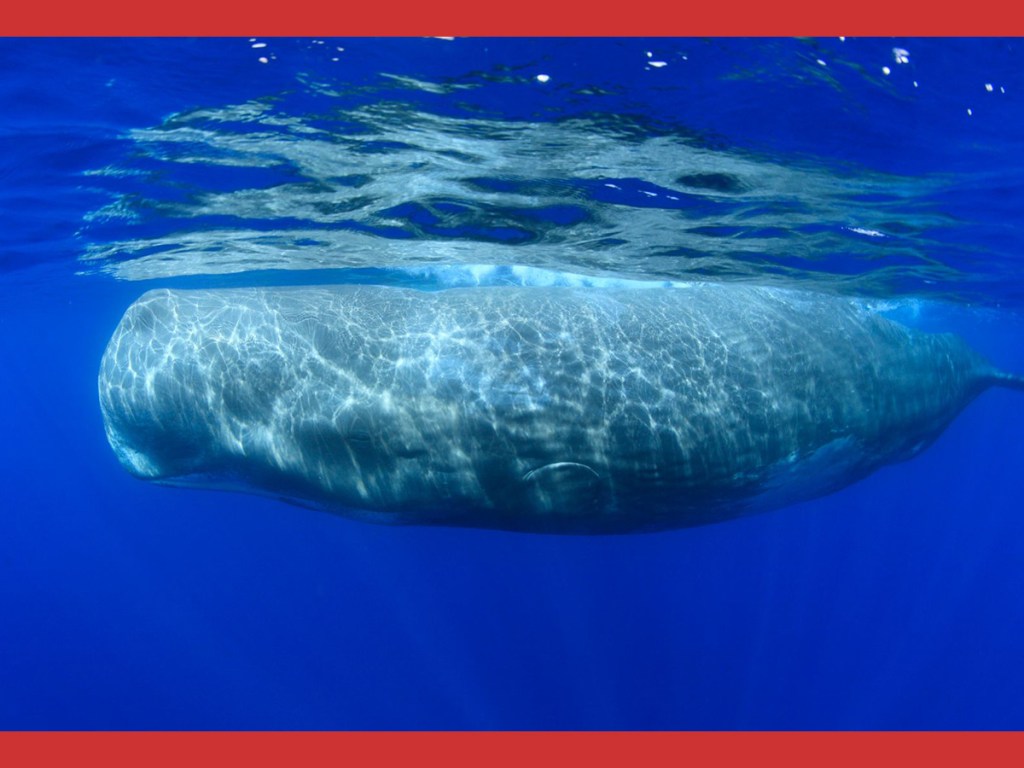
    A sperm whale.
    Photo credit: Canva

    Language and cultural identities

    Whales use clicks like letters, combining them into sequences that function like words in a complex form of communication. A 2024 study found that sperm whales use a highly sophisticated communication system with structures resembling a phonetic alphabet. These audio cues are used for coordination, caregiving, and social interaction.

    A 2022 study found that specific click patterns serve as symbolic markers that help establish cultural identities within sperm whale pods. Researchers identified seven distinct clans, each with its own unique dialect. This provided quantitative evidence of whale social structures known as identity codas.

    Studying this new drone footage offers fresh insights into whale social groups and behavior. While the headbutting may look aggressive, researchers interpret it as rough play. With technologies like drones giving scientists unprecedented access to these interactions, it’s exciting to think of what discoveries are yet to be made.

  • Study reveals startling truth: Intelligence lowers our empathy toward other people
    Photo credit: Canva(L) A man gives a thumbs up; (R) An eviction notice

    A recent study conducted on adults in the UK found that people with higher cognitive ability scored lower on moral foundations. The study, published this summer in the journalIntelligence, sought to gage people’s response to the Moral Foundations Theory based on their overall intelligence. After two different studies, no difference was found between genders, but a person’s intelligence revealed a different story.

    The research suggests that analytical thinkers tend to override their baseline moral intuitiveness. But what does that actually mean? First, cognitive ability refers to problem solving, abstract thinking, memory, logic, language comprehension, and basic critical thinking. This isn’t only IQ, but a person’s ability to process and apply their knowledge. Think of it as a living scholastic aptitude test (SAT.)

    intelligence, moral psychology, cognitive science, empathy, human behavior
    Man embraces a sunset. Photo Credit: Canva

    After testing to rate cognitive ability, subjects were then tested against The Moral Foundations Theory. The idea behind the theory is that, despite different cultures and populations, people tend to follow a similar set of themes and intuitive ethics. The theory follows six core ideas: care, equality, proportionality, loyalty, authority, and purity.

    Surprisingly, the results of the tests found that people with higher intelligence found the moral foundations to be less important.

    Care

    Care has to do with the virtues of kindness, gentleness, and nurturing. This is the foundation of empathy. By feeling connected and emotionally attached to the community, people gain purpose and a strong feeling of belonging.

    Equality

    intelligence, moral psychology, cognitive science, empathy, human behavior
    Symbols for equal diversity. Photo credit: Canva

    Always a hot topic on the political playing field, equality looks to create fair circumstances. The idea is all people have equal opportunity and treatment. Communities offering equality have reduced resentment and foster a cooperative environment where people feel respected and included.

    Proportionality

    This concept is based on fairness and merit. People should get what they deserve and be treated by what they do, not just who they are. What you put in, you get out. This is a driving principle underlying a core belief of this country: that anyone can achieve most anything if they are willing to put in the work. Many would argue for its merit while others would call it wishful thinking.

    Loyalty

    intelligence, moral psychology, cognitive science, empathy, human behavior
    Hands come together. Photo credit: Canva

    This is another popular topic of political leaders and followers. We are tribal by nature and greatly benefit from a feeling of belonging. Sacrificing the individual wants for the needs of the group, this is one of the foundational cornerstones of building communities.

    Authority

    leaders, leadership, hierarchy, traditions, genetics, authority, groups, UK adults, social groups
    Leader in front of group. Photo credit: Canva

    Authority encompasses the concepts of hierarchy and respect for traditions. Research shows we are genetically programmed to seek a social hierarchy. As much as many fight to climb to the top, feeling a part of the system is often enough to supply someone with a great amount of emotional security.

    Purity

    Perhaps you’ve heard the phrase, “Your body is a temple.” The ideal is expressed through self-discipline, self-improvement, and spirituality. Striving to be noble and less carnal, people try to be the best version of themselves. The moral advancement and the elevation of the social consciousness of the community is believed to have incredible value.

    These core values are believed to be inherent in all people, but are they? At least according to this most recent study, the more intelligent you are, the less you might care about them. However, author and literary genius Leo Tolstoy once famously claimed that kindness is one sure sign of a highly intelligent person and other studies back up his views. Maybe when it comes down to it, it depends on the person.

    This article originally appeared last year. It has been updated.

Explore More Exploration Stories

Science

Researchers capture sperm whales headbutting on camera, validating what sailors have said for centuries

Exploration

Study reveals startling truth: Intelligence lowers our empathy toward other people

Exploration

Body language experts reveal the secret truth about people who walk with their hands behind their backs​

Exploration

Dogs can recognize a bad person and now there’s science to prove it