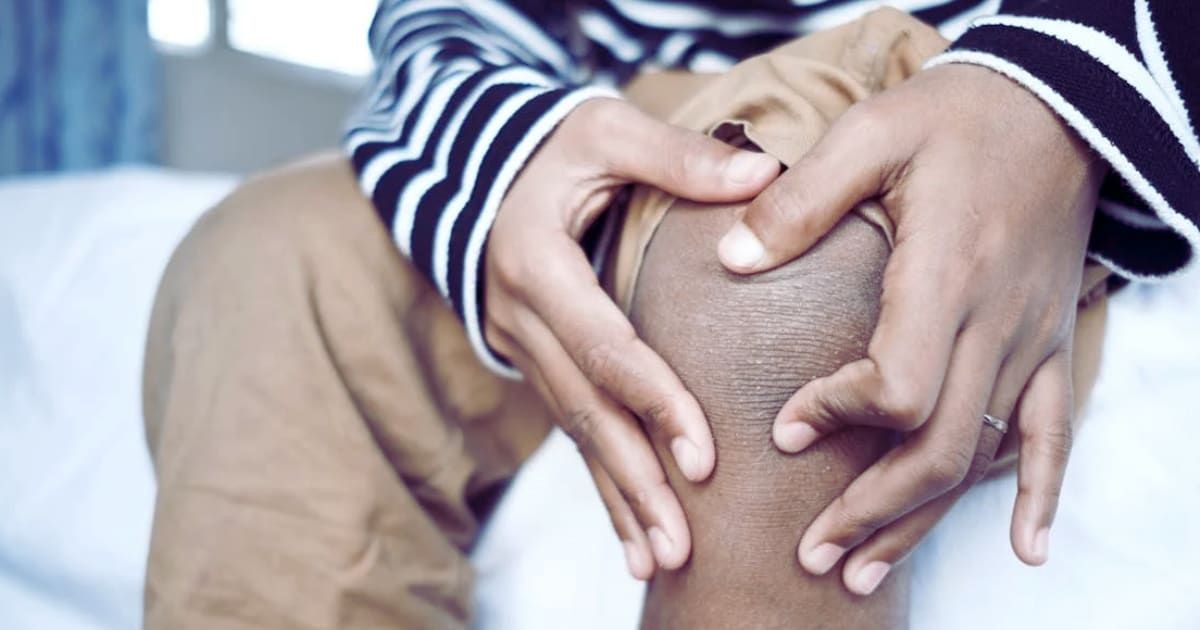
Social media is flooded with life hack videos. While some are genuinely useful, many are myths that experts don’t recommend. Dr. Karan Raj (@dr.karanr) on TikTok is known for his scientific videos that reveal useful hacks and debunk myths. In a recent clip, he reviews a quick hack to potentially detect dehydration, originally shared by @remus.bujor.

Representative Image Source: Pexels | Photo by Adrienn
The video begins with the original clip, where the overlay text reads, “Dehydration check,” and the camera focuses on four fingers. The person pinches the skin on his middle finger and explains, “You have to squeeze your fingertip right here, and if it goes back down, you’re hydrated. If it stays up, then you are dehydrated.”
With the floating caption, “Doctor reviews: Is this real?” Dr. Karan Raj stitches the video to explain the concept. He says, “This is known as a ‘skin pinch’ or ‘skin turgor’ test.” Showcasing a visual of a pinched finger that looks relaxed, he adds, “The more hydrated you are, the more elastic your skin will be and it will bounce back immediately after pinching it.”
In the next transition of the clip, the doctor shows us another picture of the finger which looks slightly wrinkled, as he explains, “If you’re dehydrated, the skin loses elasticity and it takes a while to return to normal and is more likely to tent up.” This method highlights the significance of drinking water and at the same time, acts as a neat trick to check the hydration levels in our respective bodies.
Hydration is vital for the basic functioning of our bodies, whether in high or low temperatures. While we have always heard that everyone should drink at least 8 glasses of water a day, that’s not true. According to Harvard Health Publishing, fluid needs vary among individuals and there’s no one-size-fits-all quantity. The publication also states that many of us aren’t drinking enough water, especially older adults and it can lead to dehydration. This is where this hack can be helpful- just a pinch can help in knowing whether our body needs more water.

The TikTok uploaded by Raj has raked in over 13.6 million views and over a million likes. While many found the hack useful, others were still doubtful about it. Some users took to the comment section to raise their doubts. @pamcoulter1 commented, “This is true I thought it was an old wife’s tale. My gran told me this years ago.” Another user, @yorkietalesuk, commented, “But are you meant to do it on your knuckles though? Never heard of doing it there, but back of hand, sure.”

Image Source: TikTok I @dabbleology
Image Source: TikTok I @maddie.hiness
You can follow Dr. Karan Raj (@dr.karanr) on TikTok for more health-related tips and tricks.
After a successful career as an artist, 80-year-old Alice Williams decided to transition into the role of social media influencer. What attracted a massive following wasn’t simply this second creative life shared on Instagram, but rather what happened when she posted that her PR packages had arrived.
In a now-viral video highlighted by People, the job of carrying these packages inside belongs to her husband. The sweet spectacle of an elderly man lumbering arms full toward home has resonated with people in a way that’s hard to ignore.
“POV my wife became an influencer at 80 years old and now I have to get the PR packages”
As the music from No Doubt’s “Just a Girl” carries the scene, the title on the video reads, “POV my wife became an influencer at 80 years old and now I have to get the PR packages.”
The husband, Don Williams, with his arms stacked with boxes and moving carefully but confidently, walks up the driveway like it’s just another regular day. No performance. No spectacle. Just a smile on a warm face during a beautiful afternoon.
His ho-hum attitude and the video’s casualness seem to have tapped into something instantly relatable. He’s just a husband being of service to his wife.
People online didn’t react to the packages. They reacted to him. Viewers were excited and hoped to have that kind of partnership, too. They also seemed impressed by how fit and natural he appeared. He was just helping out. No complaints. Here are some of those comments:
“So many things I love about this post; the love, the companionship, the nature, the house, the peace, and the supreme shirts”
“Seriously this proves ANY AGE. YOU ARE NEVER LATE”
“KING”
“Oh my heavens, what a sweet man you have! Does he happen to have an older brother, I’m 93 1/2”
“I don’t think I’ve ever seen a better video in my life”
“I think exercising keeps him happy & alive. We need his legs strong!”
“Where am I supposed to find a man like this???”
“Obsessed with this!!!”
“so cuteeee”
“This is the life! Pops is getting those steps in and getting a little strength training in.”
There’s more to the story than just a viral moment
This story doesn’t end after one viral moment. In a follow-up post, the couple opened the PR packages together. The at-home unboxing became less about the products and more about the playful rhythm between two people enjoying each other’s company.
The appeal of these videos really isn’t about influencer culture. These moments aren’t resonating simply because an older man carries boxes or because we see a kind gesture. Most people aren’t looking for perfect love. Having something that holds up as life changes, that’s valuable.
As Alice Williams opens a new chapter in her life, the relationship doesn’t pause for reinvention. It simply adjusts to it.
Interestingly, many healthy relationships feature the woman taking a leadership role or at least having the final say. In a GOOD story about happy marriages, versions of the same four-word advice kept coming up: “Listen to your wife,” “Whatever she says goes,” “She is the boss,” and “Do what she says.” When asked how these men became so wise, one replied, “Over time.”
The sweet Instagram post resonated with many, even though it wasn’t that unusual. Similar videos of couples reuniting, partners sharing small gestures of care, or long-married sweethearts showing affection often reach millions of views.
In each case, it’s probably less about what’s happening on screen. Sure, we all love a feel-good snapshot. However, it’s more about the belief that love can be slow and steady, and that fun adventure can happen without reinventing the wheel. The Williamses offer us all a glimpse of the casually possible. Things are simply good.
An elementary school teacher and mother of three who goes by @earlyedventure on TikTok offers a strong perspective on parenting in a recent post. She maintains that modern parents are making three key mistakes that need to be addressed immediately.
In an entertaining and highly viewed post, she doesn’t hold back. Laying out a thoughtful and compelling perspective, she sends a clear message to parents about exactly what needs to change with their kids.
She begins her tough-love discussion with something many have heard, but few have heeded:
“Throw away the iPad. I’m sorry, I don’t care what you say. The data is undeniable. This is different than TV and movie time. The research shows they are vastly different. When you put an iPad in front of them, and they’re getting that constant dopamine hit for an hour, even though you think it’s educational, you are frying their brain. They show up into the classroom. They have zero empathy. They cannot be engaged.”
Solid data support her impassioned opinion. According to a 2024 study in JAMA Pediatrics, digital tablet use was associated with increased anger and frustration outbursts, such as tantrums. Early exposure to screens may also delay both cognitive development and socioemotional growth.
It’s not just the effects of screen time itself that are concerning. It’s what kids may be missing in the moments when they would normally be learning how to struggle, cope, and grow. The Guardian reported that screen time may deprive toddlers of real interactions and exposure to as many as 1,000 spoken words a day.
“Let them fail. Don’t tie their shoes for them. When their tower falls down, let them struggle and figure it out. Because when they come to the classroom, the level of helplessness is absurd,” the TikToker explains. “How I frame it to my kids: ‘Wow buddy. I’m really sorry that happened. Let’s figure out how to solve our problem.’ Start giving them that vocabulary now so that when they get older, and they get in these situations, they have that internal dialogue of, ‘Ugh, I need to solve this problem.’”
A 2024 study in Frontiers in Psychology found that children build resilience through repeated experiences of challenge, not avoidance. Trial and error, emotionally distressing experiences, and adult-supported recovery are all critical for learning self-regulation.
A 2024 report in Scientific American said that shielding children from failure can lead to more anxiety, lower coping ability, and reduced independence. By contrast, productive failure can build persistence, and children may develop stronger executive function as they mature.
A child plays with wood blocks. Photo credit: Canva
“Bring back consequences”
“Let’s bring back consequences,” the TikToker says. “As a parent, make your word as good as gold. That way, they know you mean what you say, and you’re gonna follow through on whatever it is that you say.”
She adds, “I understand positive reinforcement. It has a time and a place for it. However, the real world has consequences for actions. Whether that’s at school or out in the real world, because a cop at the end of the day isn’t gonna give a sh** about what triggers them, when they spit in his face.”
She advocates for kids by challenging their parents, saying, “Do it in a loving way. Do it with boundaries. But, I’m begging you, set them up for the real world. So that when they come to school, when they leave school, they are successful, functioning members of society that people want to be around. Me included.”
Consequences are not punishment. Kids benefit from learning right from wrong through natural and logical repercussions. A 2024 report in Psychology Today said that over-intervention in parenting can prevent children from connecting actions to outcomes. This is a crucial skill for self-regulation and decision-making. Kids who rely too heavily on external direction may struggle to develop autonomy and self-control.
With an assertive, entertaining, and emotionally charged approach, her TikTok post sparked reactions from viewers. Some had thoughts on the message itself, while others shared opinions about the way adults are raising kids today. Here are some of those responses:
“As a teacher, you can walk into a class and IMMEDIATELY tell who’s an iPad kid and who’s not”
“As a behavior teacher, I like to frame it like this – we need to teach them about consequences for there actions now while those consequences are still safe and we can control them. if we wait, the world will be less kind in its consequences.”
“A lot of parents won’t listen to this advice because it actually requires them to work harder at home.”
“All three points- spot on!”
“This made me feel better about my own parenting, thank you”
“YES! YES! YES! Teacher for 22 years! Kids have changed because parenting has changed.”
“Passionate teacher telling the truth. Thank you.”
“And also as parents we should put our phones down and be bored with them.”
“Best TikTok I’ve seen in awhile!! Teacher of 23 years and I could not agree more!!”
“Parent is a VERB”
This conversation resonates so strongly because the TikTok post challenges how children are growing up today. Between tech screens and constant stimulation, teachers and experts question whether kids have enough space to make mistakes and learn from them. Protecting children from discomfort might seem like care, but science suggests it can create people who are less mature and less resilient. This mother of three and teacher of many believes, “If you digest these and apply them, your kids will suck less out in the real world.”
Ashley Jackson (@themossycactus) spent twenty years in Texas before packing up and moving to South Manchester, England with her British husband and their two kids. The decision, she told Newsweek, came down to practical realities: affordable healthcare, family support, safer gun laws, and the kind of walkable community life that’s harder to find in Texas, where she said “you drive everywhere and these opportunities aren’t there.”
Truth number one: the weather. “It’s cold, it’s rainy, it’s hot… there is no AC, and sometimes it’s all in the same day,” Jackson said. Coming from Texas, where the sun is a reliable constant, the erratic grey of northern England takes getting used to. Interestingly, Jackson said she has actually come around on the weather personally, but she still complains about it, because complaining about the weather is practically a requirement of British social life.
Truth number two: the humour. “You are never going to be as funny or sarcastic as they are,” she said. “You can strive, but they will probably always be one up.” British sarcasm is its own dialect, and Jackson said you just have to accept that you will never fully master it.
Truth number three: the cereal aisle. “You won’t have 99 choices of cereal, but your life will be better for it. You’ll get about a quarter of that.” The American supermarket experience complete with, wall-to-wall options and twelve varieties of the same thing doesn’t really exist in the same way in the UK, and Jackson said adjusting to less choice is actually a net positive once you stop expecting it.
The habits she picked up to blend in
To go with the harsh truths, Jackson shared three habits she’s adopted to blend in: eating a sausage sandwich once a week, using understatements as a communication style, and moaning about the weather even when she secretly doesn’t mind it.
She’s not alone on this
Jackson’s experience reflects a broader trend. A Harris Poll survey found that 52% of Americans believe they can achieve a higher quality of life abroad, with 49% citing lower cost of living, 48% citing dissatisfaction with the political climate, and 35% citing security concerns as reasons to leave.
For Jackson, the surprises weren’t all hard ones. “In many ways, it was better than I expected,” she told Newsweek. “I wasn’t expecting the community support we have found.”
She tried to prepare for everything. The sausage sandwich, nobody warned her about.