
We’ve all heard about the crowded, Dickensian “sweatshops” that produce our clothes, but few among us have actually been to one. For his book Where am I Wearing: A Global Tour to the Countries, Factories, and People that Make Our Clothes, Kelsey Timmerman ventured around the world for a firsthand look at garment factories. Now he’s filling us in on the workers who assembled his jeans-and his undies-as well as what he learned in the process.GOOD: When you first set out to visit these factories, how did you decide what countries to visit?KELSEY TIMMERMAN: Well, I selected my favorite items. So I had a pair of loyal boxers, they were made in Bangladesh and, funnily enough, they are “Jingle These” Christmas boxers. That kind of struck me as ironic. I figure they don’t celebrate Christmas in Bangladesh, yet they are making our underwear for Christmas. So, that’s the first place I went, Bangladesh, to explore where my underwear came from.I was there for a month and then I went undercover as an underwear buyer, kind of by accident. I had a translator, and I’d tell him, “OK, just tell them I’m a writer, and I’m here, and I’m trying to track down where my underwear came from and who made my underwear.” But he would tell everyone that I was this big-time American garment buyer who was looking to buy a large order of underwear. So he got me into a bunch of factories by doing that in Bangladesh.I also went to Cambodia where my Levis, the all-American blue jeans, were made. And then China where my Teva flip-flops were made.G: How much were you able to interact with the people working in the overseas factories?KT: I interacted with workers quite a bit in Bangladesh, Cambodia, and China. In Bangladesh the woman I met was a single mother. Her husband left her, she was the mother of three kids. Her oldest son was eighteen, and she had sent him to Saudi Arabia to earn money to send back. As she was talking about her oldest son, you could kind of tell that she was worried that she might have to send her middle child, who was eleven, as well. So that is a rough reality.In Cambodia I befriended a whole roomful of girls. They lived eight in a room. The room was maybe eight feet by eight feet. And they didn’t really have a bed. They had a wood table-a low lying, thick wood table. And I asked, “Man, this bed’s big but it’s not going to hold all eight of you. Where do you all sleep?” They’re like, “Well, four of us sleep on the floor”-on the concrete floor-“and the other four of us sleep in the bed.” Man, who decides who sleeps where? The girls on the floor said “Well, we like the floor because the floor is cooler.” So these are the decisions people make: to sleep on the bed or on the floor because it’s cooler.In China, it was hard to spend a lot of time with the workers because they were working all the time. The law in China at that time was that they can work 44 hours a week, and they where working 100 hours a week. Anytime I visited with them I felt like I was interrupting their nap time, or eating time.G: And you also visited a factory in the United States?KT: When I got back to the U.S. I visited a factory in Perry, New York, that made my 1992 Dream Team shorts. You remember the Dream Team?G: Absolutely.KT: Best basketball team ever. Champion was the brand. I called up Champion and they told me the shorts were made in Perry, New York, but that Champion no longer had a factory there. It’s a small town of a couple thousand. Champion had employed hundreds of people. When Champion left town, 13 people banded together and started up a company called American Classic Outfitters and that number has grown. I think last I heard they had 140 employees, and they kept making uniforms for the NBA, the WNBA, and the NFL.G: Interesting. What were the differences between the factory in Perry and the ones overseas?KT: By the outward appearances you couldn’t see much difference between all the factories that I was at in Cambodia and Bangladesh and the factory in Perry. The spaces kind of looked the same, they were well-lit, stuff was marked. The atmosphere was really different though. In Perry, people had their work stations, they had pictures of their kids, and they were listening to their iPods and munching on Doritos. They drove their cars to work. And then in places like Bangladesh and Cambodia, you know, they were just at the machine working. And I felt like when I was touring these places that it was not in my best interests to pay a whole lot of attention to the workers, because that might really cut my tour short.G: Right. Are the workers in these foreign factories aware of what American consumers’ opinions of sweatshops?KT: I asked a girl in Cambodia what she thought of people in the United States who would not buy a pair of jeans that she made because they don’t feel she was treated right. And she kind of laughed it off, being like “Well, if they don’t buy my pants, I don’t have a job.” Is it that simple? I don’t know if it’s that simple.In Bangladesh, I asked a lady “Do you know how much I paid for this pair of underwear?” I don’t remember, but I’m sure it was like $15-20 for a pair of boxers. Basically, almost a month’s worth of her wages. She’s like, “Yeah, you know we put the tags on, so we see how much stuff costs.”G: Have your habits as a consumer changed since you’ve been back? KT: Oh yeah, yeah they have. One thing I try not to do when I talk about my experience is preach what other people should do. I look at the situation like eating: There are vegetarians, there are vegans, and there are people that only eat organic foods, or raw foods. People eat in different ways for a variety of religious, ethical, health, or environmental reasons. And I think it should kind of be the same way when it comes to clothes. I think the way we consume should vary by the person.I’m trying to look for brands that at least acknowledge where our clothes come from. That’s important to me now. Studies have shown that possibly around a third of Americans are willing to pay more for clothing made under good working conditions. But that can become hairy. How do you label something as “made in good working conditions”? Was the cotton picked under good working conditions? With the artificial fabrics, was the oil collected under good working conditions? It’s a tough thing to put a label on, but I think there is a need for that.
Tags
advertisement
More for You
-
Man’s dog suddenly becomes protective of his wife, Internet clocks the reason right away
The online community came through in a big way.
Reddit user Girlfriendhatesmefor’s three-year-old pitbull, Otis, had recently become overprotective of his wife. So he asked the online community if they knew what might be wrong with the dog.
“A week or two ago, my wife got some sort of stomach bug,” the Reddit user wrote under the subreddit /r/dogs. “She was really nauseous and ill for about a week. Otis is very in tune with her emotions (we once got in a fight and she was upset, I swear he was staring daggers at me lol) and during this time didn’t even want to leave her to go on walks. We thought it was adorable!”
His wife soon felt better, butthe dog’s behavior didn’t change.

Otis knew before they did. Canva Girlfriendhatesmefor began to fear that Otis’ behavior may be an early sign of an aggression issue or an indication that the dog was hurt or sick.
So he threw a question out to fellow Reddit users: “Has anyone else’s dog suddenly developed attachment/aggression issues? Any and all advice appreciated, even if it’s that we’re being paranoid!”
The most popular response to his thread was by ZZBC.
Any chance your wife is pregnant?
ZZBC | Reddit
The potential news hit Girlfriendhatesmefor like a ton of bricks. A few days later, Girlfriendhatesmefor posted an update and ZZBC was right!
“The wifey is pregnant!” the father-to-be wrote. “Otis is still being overprotective but it all makes sense now! Thanks for all the advice and kind words! Sorry for the delayed reply, I didn’t check back until just now!”
Redditors responded with similar experiences.
Anecdotal I know but I swear my dog knew I was pregnant before I was. He was super clingy (more than normal) and was always resting his head on my belly.
realityisworse | Reddit
So why do dogs get overprotective when someone is pregnant?
Jeff Werber, PhD, president and chief veterinarian of the Century Veterinary Group in Los Angeles, told Health.com that “dogs can also smell the hormonal changes going on in a woman’s body at that time.” He added the dog may “not understand that this new scent of your skin and breath is caused by a developing baby, but they will know that something is different with you—which might cause them to be more curious or attentive.”
The big lesson here is to listen to your pets and to ask questions when their behavior abruptly changes. They may be trying to tell you something, and the news may be life-changing.
This article originally appeared last year.
-
14 images of badass women who destroyed stereotypes and inspired future generations
These trailblazers redefined what a woman could be.
Throughout history, women have stood up and fought to break down barriers imposed on them from stereotypes and societal expectations. The trailblazers in these photos made history and redefined what a woman could be. In doing so, they paved the way for future generations to stand up and continue to fight for equality.
-
Why mass shootings spawn conspiracy theories
Mass shootings and conspiracy theories have a long history.
While conspiracy theories are not limited to any topic, there is one type of event that seems particularly likely to spark them: mass shootings, typically defined as attacks in which a shooter kills at least four other people.
When one person kills many others in a single incident, particularly when it seems random, people naturally seek out answers for why the tragedy happened. After all, if a mass shooting is random, anyone can be a target.
Pointing to some nefarious plan by a powerful group – such as the government – can be more comforting than the idea that the attack was the result of a disturbed or mentally ill individual who obtained a firearm legally.

advertisement
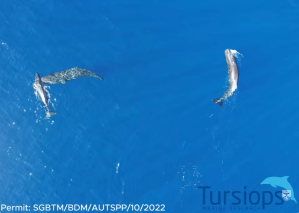
Researchers capture sperm whales headbutting on camera, validating what sailors have said for centuries
Tech company helps dementia patients live independently with memory-prompting smart glasses


Want to reconnect with someone but aren’t sure what to say? Try this simple, no-risk way to reach out.
Sign Up for the Daily Good!
Advertisement
