During one particular late-night editorial meeting, when all of us here at GOOD HQ probably had a few too many, we came up with the idea to send briefs detailing global problems to some of our most creative friends with one simple instruction: to design a solution to the problem in less than 30 minutes, a time frame that would make them think about the problem, but limit the extent to which it might overwhelm them. Call it “The Half-Baked Design Challenge.” Some of the solutions are comical. Some are super thoughtful. Some, to be perfectly frank, are mildly disturbing. But all of them engage creatively with a problem in search of a solution, and we think that’s a good thing. In this installment, we redesign the single family home.

The single family home conjures a fairly predictable image still—a tree-shaded,slant-roofed, lawn-fronted dwelling standing proudly on its own. You’ve seen kids’ drawings. Chances are you made them yourself many years ago: four little windows facing the street, a windy walkway, and a wisp of smoke rising from a chimney.


It’s a caricature, and, increasingly, a farce—one built on that fabled Jeffersonian foundation of “life, liberty, and the pursuit of happiness.” The true birth of the modern single family home wouldn’t come until May 7, 1947. That’s when William Levitt announced his eponymous housing development in Long Island and 2,000 cookie-cutter houses were claimed within two days. He soon added thousands more—slapped together with record speed, 30 per day. Five other Levittowns sprungup—housing developments with enormous carbon footprints during the golden age of cheap, dirty energy—and suburbia was born.

Levitt’s product found purchase abroad as well—that tangible portion of the American Dream is easily exported. As London, Paris, Toronto, and Tokyo developed in the late 20th century, they too followed the low-density path toward sprawl. One hour outside of Beijing sits Orange County, a development of single family homes designed by a California architect. Announced in 2003, every one of these cartoonish McMansions were snapped up with Levittown-like fervor in less than a month. On the other end of the spectrum is the cautionary tale of lionized architect William McDonough’s Green Village of model homes in Northeast China. The “sustainable” single family homes of Huangbaiyu sit empty—villagers refused to move into them in large part because they simply didn’t accommodate their agrarian way of life.

The urban exodus that built suburbia has reversed globally. As of 2010, more humans live in cities than outside them, and by 2050, 70 percent of us will be urbanites. Clearly, those shifts will not accommodate much growth for the singlefamily home and its resource-squandering design. American millennials are opting out of many of the trappings of the American Dream—they’re driving less, their employment paths are uncertain, and they’re delaying marriage. What then is the most appropriate container for these changing needs? Movement towards co-housing, tiny homes, and the birth of the “micro-unit” apartment building all suggest alternatives—a post-Levitt response in a scaled-back, more shareable economy with diminishing natural resources.

John Steinbeck in his final book Travels With Charley, a ruminating travelogue in search of the American Dream, talked to many who had opted out of that child’s drawing vision of home. He asked one father living with his family in a mobile home how he felt about raising his children without any roots. “What roots are in a housing development of hundreds and thousands of small dwellings almost exactly alike?” the father asked in response. So, let’s take out the crayons and go back to the drawing board.

Ayesha Siddiqi: Writer

Mimicking the relationship between a modern suburban home and the community around it, bedrooms are increasingly furnished as spaces you need to leave as rarely as possible. It’s no surprise that our hyper-individualistic culture treats the bedroom as a shrine for the person living in it—a space to fill with objects that best reflect its resident. But what if bedrooms were nothing more than their name suggests? Just rooms with beds? Forcing all other activity to occur in more commonly shared spaces within the home, and discouraging a selfhood defined through isolated accumulation. Imagine the values such a lifestyle might suggest, the types of habits it would encourage. If kids learned “ours” before they learned “mine.” If the glow of our various screens didn’t follow us where we were meant to sleep.

Pedro Gadanho: Curator, the Museum of Modern Art

The single family home of the future will be a mix of off-the-shelf solutions and DIY creativity, with architects and designers providing improvement apps for your ever-evolving, self-sufficient unit. The units themselves will be parked in urban voids and will grow out of existing buildings like parasites, or be stacked in vertical structures much as the one imagined by architect James Wines back in the 1980s.

Mitchell Joachim: Co-founder, Terreform One

Skywriter Burbs: Extraterritorial Floating Houses Made of Genetically Modified Avian Skeletal Muscle Tissues, 3D Bioprinted Feathers and Impregnated with Helium Gas Flotation Elements.

To rethink the American home is precarious territory—as many have tried it before—but the search for a perfect domicile is not dead. In the last two thousand years, every culture on our planet has attempted to envision the perfect residence. To simply dismiss further inquiry is to give up on a better world. The search for this perfect place is usually labeled as utopian. We must always strive for the impossible or, at the very least, welcome earnest speculation. What is a more perfect home for humankind and our planet? If not a perfect home, what then is a fundamental reboot of its architecture?

Newfangled prototypes of dwellings that are connected to the ever-shifting needs of sustainability are the predominant trend. A decade ago, I proposed a home that would be 100 percent made of living matter or, rather, shaped trees and woody plants, entitled: Fab Tree Hab. A home of living trees is not built, but grown. It is the landscape, not an awkward, foreign addition to the ecosystem. A home made of living arboreal matter would scrub and sequester carbon while producing fresh oxygen—a positive model for our environment.

The next generation of architects is thinking about synthetic biology. Now, the power to control design at the cellular level is an everyday reality. As the costs of doing so continue to decline, the opportunities percolate. Years ago, I planned a home bioengineered with in vitro replication of mammalian pig cells, nicknamed the “meat house.” It is calculated so sentient creatures would not be harmed in the tissue growth of the dwelling. It was essentially a victimless shelter. Recently, a hamburger was announced as being fully fabricated inside a laboratory. Derived from the meaty shoulder of a cow, synthetic biologists custom designed the cells to grow into a tasty burger shape. What can this do for design everywhere?

Similar in technique to the synthetic burger, I grew a house out of cells. Tissue growth of cells into a specific geometry has been possible in regenerative medicine procedures such as bladder transplants. I wanted to illustrate the ecological supremacy achieved by using real organic materials grown from scratch. This is different than, say, using bamboo as a building material and replenishing the harvested supply. Instead, it’s inventing a new material and fully integrating it into nature’s metabolism. It is neither a copy of nature nor the mimicry of nature. It is unsullied nature itself.

Imagine a collection of homes for skywriters. They are not actually professional skywriters per se, but people who circulate in the air each day, sometimes leaving a pixelated contrail. Here is a community comprised of folks who use smart, agile aircraft on a daily basis: flying cars (Terrafugia), jetpacks (Martin Aircraft), dirigibles (Aeros), flying bicycles (XploreAir) and the boundless sport of cluster ballooning (John Ninomiya).

They often choose to leave messages in the form of carbon free dot-matrix clouds. Freedom of speech is their mantra. All day long they can choose to express their concerns in gaseous texts written in air. This activity is intended to scrub carbon monoxide from our atmosphere as they glide to-and-fro.

The men, women, and birds, of the skywriters suburb live in homes made of genetically modified materials. These are extracted from various avian skeletal muscle tissues in the DNA of species like Argentavis magnificens [the Giant Teratorn, the largest flying bird ever discovered]. Birds have benefitted from millions of years of evolution that optimized the weight of their bones and muscle systems. Everything in their bodies is designed for lightweight aeronautical performance. The
same biological tissues that are used in their avian physiology are deployed in the home. Ultimately, each dwelling has an elegant structure of porous and voluminous bird skeletons. In addition, 3D bioprinter factories will produce oblong feathers for insulation elements. With the addition of helium injected into the structure’s membrane walls, the house gently glides across the sky. A series of kite turbines (Makani Power) power the house almost indefinitely. Collections of GM (genetically modified) bird homes float together to form a suburban flock.

Living architecture is a long way from being a mainstream practice. Likewise, the ability to mitigate climate change is of the utmost importance to every architect. Searching for innovative strategies to help solve our current eco-crisis is vital to human survival. New directions in biological design are a magnificent approach to going beyond just survivalist routines. Biodesign is the next step towards a resilient direction where humankind and nature seamlessly blend.

For more fully-baked solutions, check out our companion piece about the future of the single family home.

Illustrations by Kate Bingaman-Burt

  • Overpackers love this simple ‘5-4-3-2-1’ packing rule that makes travel way easier
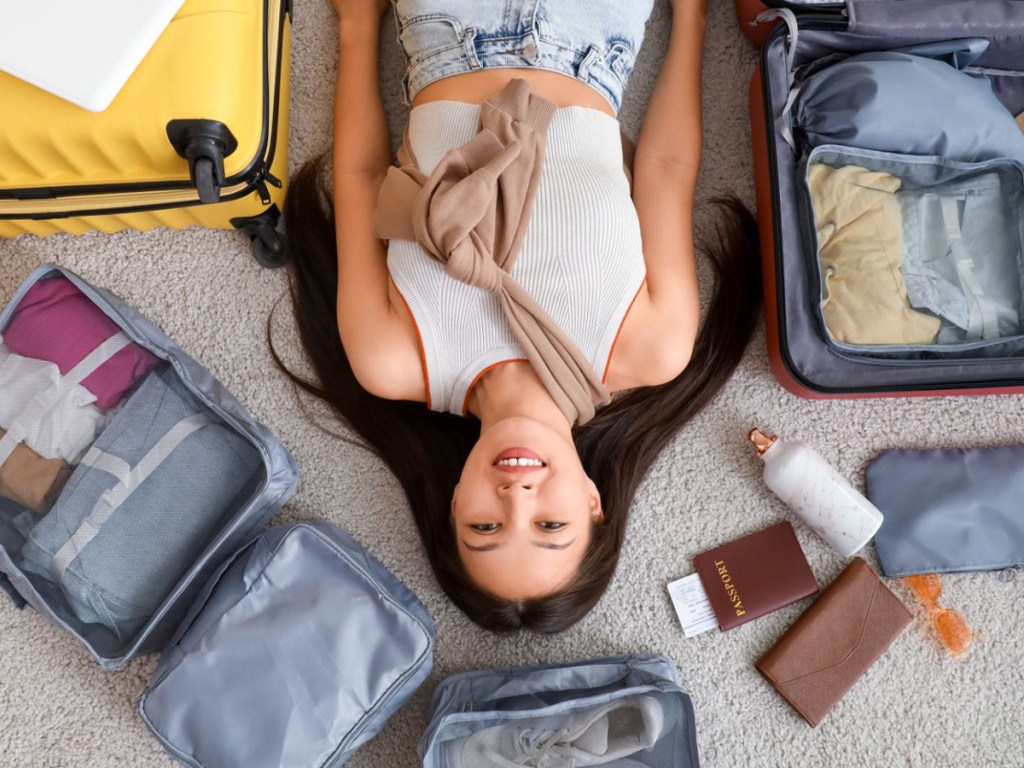
    An obvious overpack for travel.Photo credit: Canva
    ,

    Overpackers love this simple ‘5-4-3-2-1’ packing rule that makes travel way easier

    When it comes to travel, packing efficiently is a skill acquired through experience. Lifestyle and content creator Alison Lumbatis shares a helpful 5-4-3-2-1 method designed to take the stress out of packing for both seasoned travelers and first-timers. Trying to pack light while still remembering everything you need can feel a little daunting. A simple…

    When it comes to travel, packing efficiently is a skill acquired through experience. Lifestyle and content creator Alison Lumbatis shares a helpful 5-4-3-2-1 method designed to take the stress out of packing for both seasoned travelers and first-timers.

    Trying to pack light while still remembering everything you need can feel a little daunting. A simple trick is knowing exactly what’s necessary, making your bag lighter and more practical.

    @alisonlumbatis

    Calling all overpackers—this one’s for you! ✈️🧳 The 5-4-3-2-1 packing method is one of my favorites because it’s totally customizable. Prefer dresses? Swap a top and bottom for a dress. Love skirts? Sub them in for pants! These pieces should last you 1-2 weeks, depending on your access to laundry. 🔗’s to everything in bio! #outfitformulas #packinglight #styleconfidence #wardrobemadeeasy #travelcapsule #dailyoutfits #closetconfidence #vacationstyle #fashionover40 #smartstyle

    ♬ original sound – Alison Lumbatis

    Putting The ‘5-4-3-2-1 Packing Method’ Into Action

    In her trending TikTok post, Lumbatis shares a packing system she claims to be “as easy as it sounds.” Here are the basics of the 5-4-3-2-1 packing method:

    • 5 TOPS
    • 4 BOTTOMS
    • 3 SHOES
    • 2 LAYERS
    • 1 MISCELLANEOUS

    Lumbatis explains, “So all you got to do is pick out 5 tops, 4 coordinating bottoms, 3 pairs of shoes, 2 layering pieces, and 1 of anything else. Like a dress, pajamas, a hat, a belt, or any other accessories that you might need. And then of course pack as many undergarments and toiletries as you need.”

    The strategy isn’t just about simplifying and maximizing the number of items you bring on a trip. It’s also about function. “The key is to pick versatile pieces that can mix and match so you can pair them up for whatever activities you have planned for your trip.”

    minimalism, versatile pieces, functionality, packing
    Packing the necessary items
    Photo credit Canva

    Taking Pictures Can Help Plan Ahead

    Another helpful step is taking photos of your outfits to remember how everything fits together. Lumbatis offers, “You can even take pictures of the outfits with you wearing them or flat lays of the pieces and keep them on your phone or in your Notes App — So you can refer back to it on your trip.”

    Is the 5-4-3-2-1 packing method effective? These were some of the thoughts in the comments from readers hopeful to put the plan into action:

    “Great tip for me. Hate packing and never wear all the clothes I bring.”

    “Heading to Japan and I was just going to my closet to put it together. I overpack so this is sooo helpful.”

    “I’m dreading how to not over pack for such a variety of occasions, heat, and limited washing facilities. Ugh.”

    “I struggle with under packing so this is super helpful!”

    travel, adventure, alleviate stress, preparation
    Soaking up the adventure.
    Photo credit Canva

    The Science Behind Good Preparation

    Traveling is a great way to alleviate the stress and burdens of our daily lives. A 2025 study in Springer Nature Link showed travel helped people improve their long-term resilience by creating positive emotions while ecouraging self reflection. National Geographic found the benefits of travel begin even before the trip begins.

    However, preparation can have a powerful effect on the simple stresses a person might acquire during traveling. A 2025 study revealed that planning reduced anxiety and helped people prepare for delays or unexpected changes. Research in 2025 reported by AP News found that even making a simple checklist reduced anxiety and helped make for smoother trips.

    Lumbatis claims, “If you struggle with overpacking and want to create a great capsule wardrobe packing list, you’ve got to try this method.”

    People hope that traveling will relieve stress more than generate it. The 5-4-3-2-1 packing method offers a clear and simple way to pack just what you need. Careful preparation helps prevent last-minute chaos and produces a more enjoyable trip. Hopefully, this method can help you spend less time worrying and more time soaking in the adventure.

    Watch this YouTube video on incredible vacation destinations to inspire your next trip:

  • People are cheering woman’s refusal to accept the latest trend in hotel bathrooms
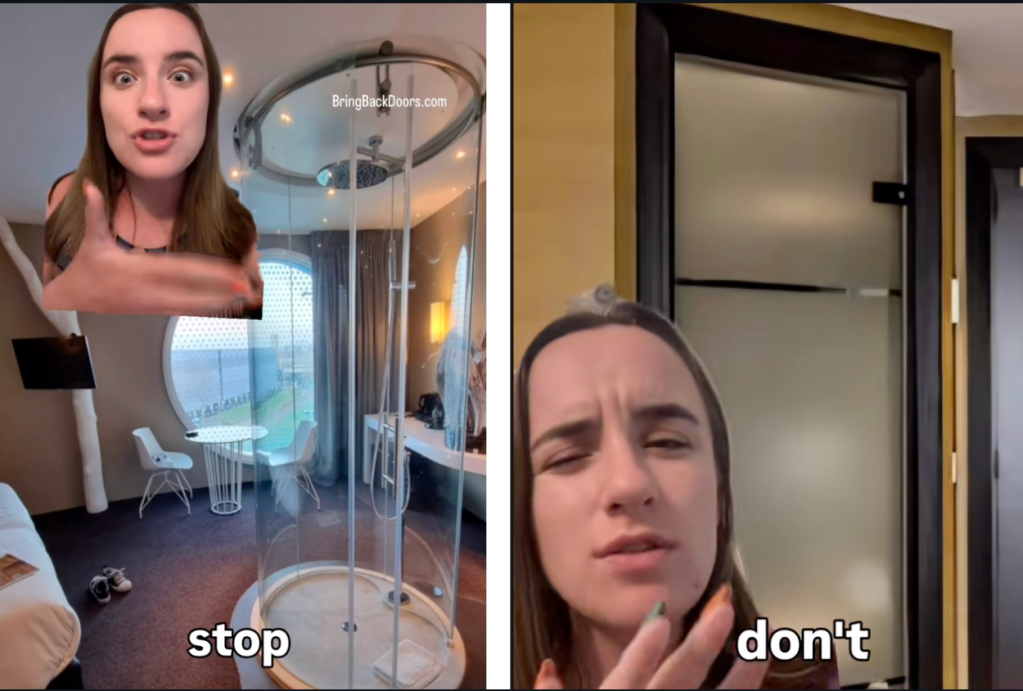
    Sadie has declared war on non-private hotel bathrooms.Photo credit: @bring_back_doors

    People are cheering woman’s refusal to accept the latest trend in hotel bathrooms

    “I HATE how hotels started thinking going to the bathroom is a shared experience.”

    It can be frustrating seeing change for change’s sake in the world. To be more specific, changes that are said to be done in the name of innovation and design, but are in truth ways for companies to save a buck.

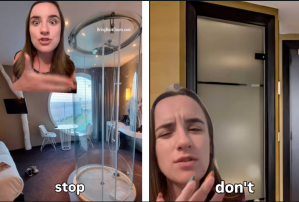
    One example that is getting attention is the bathroom doors in hotels… or the lack thereof, actually. One TikToker has had enough and has taken it upon herself to save regular bathroom doors in hotels and to point out why open-space bathrooms and glass doors just don’t cut it.

    On her @bring_back_doors TikTok account, Sadie has a collection of videos highlighting the flaws in hotel bathroom designs, with the most prominent being the lack of a regular door to the bathroom. In one viral TikTok, Sadie discussed a hotel that reached out to her, explaining that they have “foggy” glass doors to their bathroom to provide privacy. She was quick to point out that it still doesn’t provide adequate privacy. “Yes you can see through these,” Sadie said, adding that “glass doors do not close properly.”


    @bring_back_doors

    Hotel name: Alexander Hotel, Noordwijk aan Zee, Netherlands I need to be clear. Glass doors are not private. And making them foggy does not make them private. I am once again sitting here saying screw you to all bathroom doors that are not solid and close fully. And I am providing alternative hotels with guaranteed doors at bringbackdoors.com Check your hotels door situation before you book or risk your privacy. Door submitted by @mmargaridahb, DM me to submit your own bad doors. #bathroomdoors #hotel #travel #fyp Bathroom doors | bathroom design | hotel design | bad hotel design | travel fail | travel memories | travel inspo | door design | hotels with privacy

    ♬ original sound – Bring Back Bathroom Doors

    The comments rallied behind Sadie’s bathroom-door crusade

    The commenters joined in with Sadie, demanding the return of solid, closing, and lockable doors to bathrooms in hotels:

    “I HATE how hotels started thinking going to the bathroom is a shared experience.”

    “I hate how you can’t turn the bathroom light on without disturbing the other person in the room.”

    “The foggy ones are almost worse, you just get a hazy fleshy silhouette hunched over on the crapper like some kind of sack of ham.”

    “I just don’t get it, NOBODY wants this, even couples. I won’t be more likely to book two separate rooms for me and my friend/sibling/parent, I’ll just book another hotel.”

    “Love this campaign, I do not want a romantic weekend listening to the other person poo.”


    @bring_back_doors

    Hotel Names⬇️⬇️ Citizen M South Hotel (first pics) and Fletcher Hotel (third pic) both in Amsterdam. As part of this project, I’ve been emailing hotels around the world to put together an easy to reference list for people to find hotels with guaranteed doors at BringBackDoors.com And I did notice that in Amsterdam a lot of hotels were saying they don’t have doors. It wasn’t the worst city (that honor goes to Barcelona, so far I’ve only found TWO that have said yes to all doors), but it was still bad. Then I went into the comments. And kept getting people mentioning these hotels in Amsterdam. And I realized that clearly the city has a designer or architect on the loose who has a thing for test tubes. It’s horrible. Luckily, I was able to find 6 hotels in Amsterdam that all have bathroom doors in every room and have them all listed on BringBackDoors.com These hotels were submitted by so many people I couldn’t name them all. But to submit your own bad hotel bathroom send me a DM with hotel photo, name, and location! #hotel #bathroom #hoteldesignfail Bathroom doors | hotel bathrooms | hotel privacy | no privacy | travel problems | hotel issues | travel | hotel design | hotel design fail | hotel designers | design fail | hotel concept | bathrooms | Citizen M | Hotel Fletcher | Hotels in Amsterdam | Visit Amsterdam | Amsterdam

    ♬ original sound – Bring Back Bathroom Doors

    A great way to save a buck—er, I mean, ‘create a modern look’

    As many commenters asked, why do hotels have glass doors — or, worse, no doors at all—in their bathrooms? Well, this has been a growing trend in modern hotels over the past decade as a means to create a sleek aesthetic and to allow glass partitions to bring more daylight into otherwise darker sections of the room.

    At least that’s what’s being promoted to the customer. In reality, skimping on solid doors for glass ones or none at all gives the illusion that the room is bigger than it is while requiring fewer building materials. It does bring in more daylight, but mostly with the hope that you’ll cut down on electricity use for lights in an otherwise enclosed space. These reasons are also why some hotels don’t have solid walls around their bathroom areas at all.

    TikTok · Bring Back Doors

    TikTok u00b7 Bring Back Doors www.tiktok.com


    Tired of the lack of privacy? Check out the database

    To combat this trend, Sadie has developed a database at bringbackdoors.com for her and her followers to report which hotels have true, solid, private bathrooms in their accommodations and which ones do not, so people can properly plan where to stay and have true privacy during their most vulnerable moments.

    “I get it, you can save on material costs and make the room feel bigger, but what about my dignity?,” Sadie wrote on her website. “I can’t save that, when you don’t include a bathroom door.”

    Over time, the hope is that sanity and dignity can be restored as hotels realize that their glass “features” don’t have any real benefit when they don’t allow basic privacy.

  • MIT’s super-fast camera can capture light as it travels
    ArrayPhoto credit: assets.rebelmouse.io

    MIT’s super-fast camera can capture light as it travels

    It has a resolution rate of one frame per trillionth of a second.

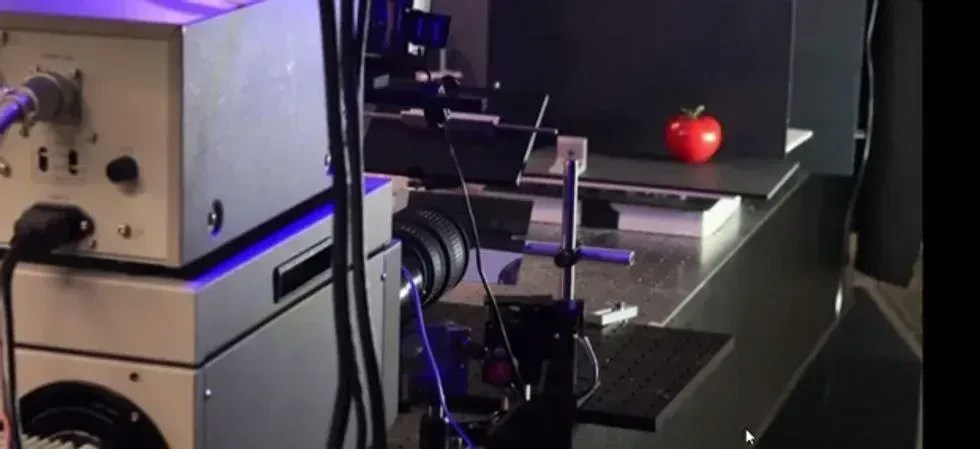
    A camera developed at MIT can photograph a trillion frames per second. Compare that with a traditional movie camera which takes a mere 24. This new advancement in photographic technology has given scientists the ability to photograph the movement of the fastest thing in the Universe, light. In the video below, you’ll see experimental footage of light photons traveling 600-million-miles-per-hour through water.

    The actual event occurred in a nano second, but the camera has the ability to slow it down to twenty seconds. For some perspective, according to New York Times writer, John Markoff, “If a bullet were tracked in the same fashion moving through the same fluid, the resulting movie would last three years.”


    It’s impossible to directly record light so the camera takes millions of scans to recreate each image. The process has been called femto-photography and according to Andrea Velten, a researcher involved with the project, “There’s nothing in the universe that looks fast to this camera.”


    This article originally appeared seven years ago.

Explore More Design Stories

Culture

Overpackers love this simple ‘5-4-3-2-1’ packing rule that makes travel way easier

Design

People are cheering woman’s refusal to accept the latest trend in hotel bathrooms

Design

MIT’s super-fast camera can capture light as it travels

Articles

Kelsey Wells’ Side-By-Side Photos Prove That Weight Doesn’t Equal Health