Words are more than just letters strung together—they carry the power to influence and inspire. Jonah Berger, an Ivy League professor, explores this power in his bestselling book “Magic Words: What to Say To Get Your Way.” He reveals how simple words, like the seven-letter “because” or six-letter “helper,” can shift mindsets, inspire action, and change people’s perspectives.
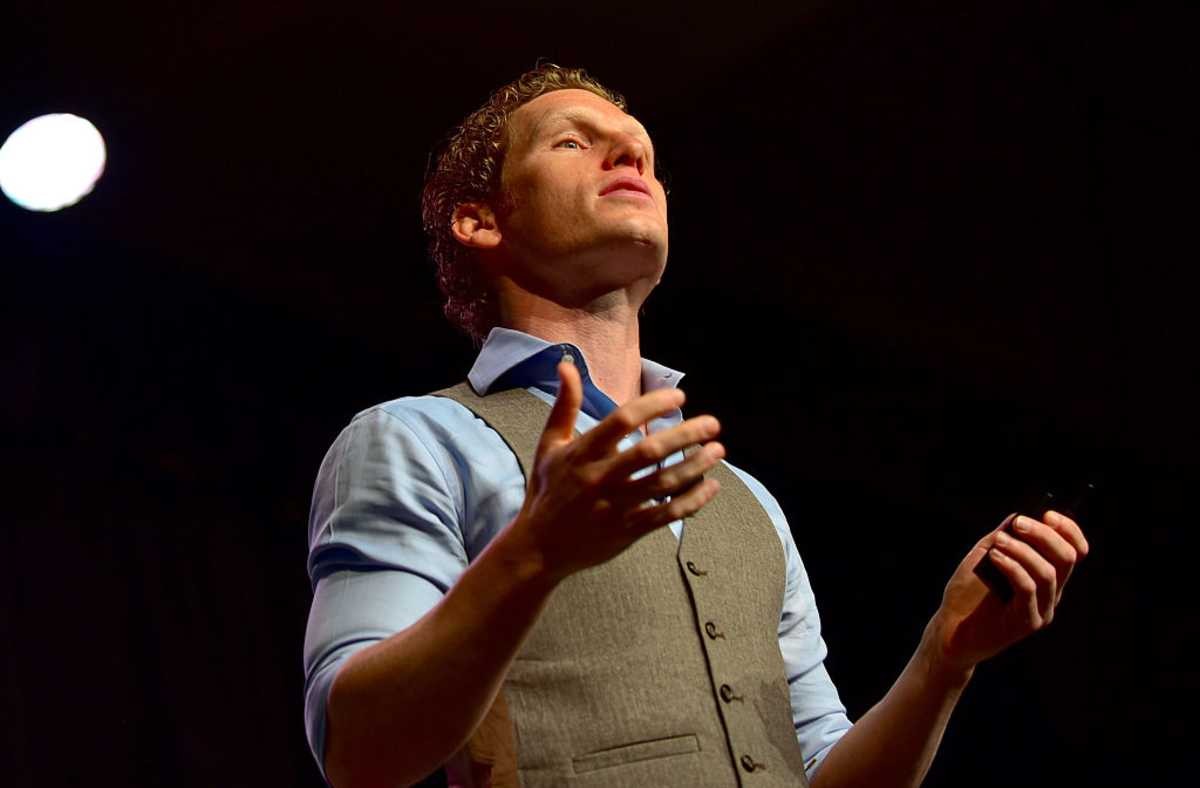
Image Source: Professor Jonah Berger speaks onstage at 'Invisible Influence and Winning at Austin Convention Center on March 11, 2016 in Austin, Texas. (Photo by Jason Bollenbacher/Getty Images for SXSW)
Image Source: Professor Jonah Berger speaks onstage at Austin Convention Center on March 11, 2016 in Austin, Texas. (Photo by Jason Bollenbacher/Getty Images for SXSW)

Apart from being the author of “Magic Words,” Berger is a marketing professor at the Wharton School of the University of Pennsylvania. Speaking to Big Think, Berger brings up the example of a Stanford University study from the 1960s. The researchers asked a group of three-to-five-year-old preschool kids to clean up a messy classroom. On the floor were scattered crayons, toys, books, and other things. So they asked the kids to help clean it up.


via GIPHY


Some children were asked, “Can you help clean?” For the second group of kids, the team slightly tweaked the language. These kids were asked, “Would you mind being a helper and cleaning up the classroom?” The difference between “asking for help (verb)” and “asking for being a helper (noun)” is small, just an addition of two letters, said Berger. But these two letters increased 30 percent of their likelihood of helping.


https://youtube.com/watch?v=UXFRgMb9TTw%3Fsi%3DeltrpXhnOxN5ZgyN

In another example he shared with CNBC Make It, he brought up a 50-year-old study from Harvard University. In this study, researchers sat in the university library and waited for someone to use the photocopy machine. They used three ways to ask people to use it. Some people were asked, “May I use the Xerox machine?” Others were asked, “May I use the Xerox machine because I have to make copies?” And the third strategy was, “May I use the Xerox machine because I’m in a rush?”
Representative Image Source: hai transgender woman blending with message collage on wall (Getty Images)
Representative Image Source: woman blending with message collage on wall (Getty Images)

Like the word “helper” in the preschoolers-based research, here, the word “because” acted as a magic word, and made people 50 percent more likely to use the copy machine. No wonder, beauty giants like L’Oreal Paris have been using the slogan “Because you’re worth it” to attract women all over the world to use their products. Advertisers use it all the time.


via GIPHY


According to Berger, there is a simple reason why these simple words like “helper” or “because” work like magic. “It turns out it comes down to the difference between ‘actions’ and ‘identities,’” Berger told Big Think. “By turning actions into identities, we can make people much more likely to engage in desired actions.” Elaborating on this, he said, that everyone wants to feel smart. So, people usually like being called “hard worker” than “hardworking.” He threw in the examples of Donald Trump and Steve Jobs mentioning how their usage of a lot of “definites” in their speeches makes people pay attention to them.


On the flip side, speakers who use a lot of fillers like “uhm” and “uh” in their communication appear to lack clarity about what they want to communicate. The communication superpower is not just about having great ideas. One must be able to present these ideas in a language that would evoke people’s attention. “You could have excellent ideas, but excellent ideas aren’t necessarily going to get people to listen to you,” Berger told CNBC. “Subtle shifts in our in our language can have a really big impact.”


  • Persuasion expert shares the one strategy that’s actually effective at changing people’s minds
    A woman is unsure how to respond.Photo credit: Canva
    ,

    Persuasion expert shares the one strategy that’s actually effective at changing people’s minds

    It’s nearly impossible to change someone’s mind. So let them do it for you.

    Learning how to communicate effectively and change people’s minds rarely succeeds by forcing your opinion. People are far more likely to adopt beliefs when they feel like they came up with them. Understanding this can make parenting, leading a team, or even trying to win an argument with a friend more effective.

    Chase Hughes, a former United States Navy chief and behavioral expert, told The Diary of a CEO podcast why self-persuasion is an effective strategy for influencing others. He believes it’s “maybe the most dangerous persuasion skill there is.”

    Changing people’s minds

    The most effective communicators influence others by offering small pieces of information that allow the other person to connect the dots themselves. Ideas we feel are our own carry far more weight in decision-making than those given to us by others. Hughes explains the simple approach behind changing people’s minds:

    “I’m gonna put a LEGO right here on the table in front of you. [He points to the right of the table.] And I’m going to put another LEGO right here in front of you. [He points to the left of the table.] And I’m just going to keep having the conversation until eventually your brain is going to go, ‘Oh, I bet those things go together.’ So the idea came from you.”

    Hughes further explains the pattern:

    “I’m going to give you one piece of information and another piece of information, but I will never put them together for you. And the reason is that any idea that you think came from your own mind, you have no ability to resist it.”

    conversations, debate, advocacy, direct persuasion
    Crafting a convincing idea.
    Photo credit: Canva

    Self-persuasion in a real-world situation

    The idea Hughes refers to is called self-persuasion. This form of psychological influence stems from the fact that people are more likely to adopt new beliefs when they feel those beliefs come from within. They are far less likely to be persuaded by external pressure.

    Hughes’ example of placing two LEGO bricks offers a clear visual explanation, but what would a real-life scenario look like? Hughes explains:

    “Let’s say you’re watching the news and they say, ‘Local Austin woman has been reported missing. Neighbors said that earlier this day, people saw her arguing with her boyfriend. Details after the break.’ And your brain is like, ‘I know what happened.’”

    In this example, it’s easy to infer that the boyfriend is likely involved in her disappearance.

    change minds, motivation, inoculation theory, effective strategies
    A couple attempts to convince a skeptical woman.
    Photo credit: Canva

    Self-persuasion is effective at changing people’s minds

    Self-persuasion is powerful because it creates a self-generated process. Individuals feel more personally connected, and even justified. A 2022 study found that people are more influenced when arguments align with their values and beliefs. Messages they may know little about can feel true and even self-driven when they aren’t imposed on them.

    A 2022 study examined self-persuasion as an influence on social norms. When people were given options that aligned with their values, the messages felt more personal and were therefore more convincing.

    Another 2022 study found that when people were asked to argue one side of a debate, they eventually came to believe that side was correct—even if they didn’t believe it at first. This form of self-persuasion can make disagreements harder to resolve because people naturally feel more confident in their own perspective.

    work, mental health, framing effects, conclusions, narrative
    That’s a brilliant idea.
    Photo credit: Canva

    People rarely resist their own conclusions

    Self-persuasion works because it changes who is doing the persuading. Telling a child what to do is very different from a parent explaining why it matters. In business, people are more motivated when they help generate ideas than when they’re given even simple instructions.

    The most effective communication isn’t about delivering perfect arguments. When people connect the dots on their own, the idea doesn’t just land—it sticks. Hughes suggests letting a person’s brain fill in the gaps. Once they do, the conclusion feels like their own. Studies show that this sense of ownership is a powerful motivator for changing minds.

    Watch the full interview with Chase Hughes:

  • A bride collapsed during her own rehearsal dinner toast. The detective who burst in explained everything.
    Bride gives a speech at her rehearsal dinnerPhoto credit: Canva
    ,

    A bride collapsed during her own rehearsal dinner toast. The detective who burst in explained everything.

    She planned a prank for the rehearsal dinner and cast herself as the victim. The groom had no idea.

    Alexandra Lahde had been a couple of things on the night of her rehearsal dinner: a bride, a hostess, and, briefly, a corpse.

    The 28-year-old barista from Canada had spent months planning the evening at Fairmont Banff Springs, one of the most storied hotels in the country. The decor was themed around old Hollywood glamour and detective fiction, with a vintage typewriter welcome sign, magnifying glass name tags, and moody florals and candles throughout the room. If any of her 30 guests noticed the clues, they kept quiet about it. When Alexandra clinked her wine glass to give a toast, nobody suspected a thing.

    “I just wanted to take a second and thank you all so much for coming here,” she began. Then she started to cough. She tried to continue. She coughed again, clutched the counter beside her, and said, “Oh my God” before dropping to the floor. Two guests who had been in on it from the start called out, “She’s dead. She’s DEAD!” Her husband Ian rushed toward her. Before anyone else could react, a man in a detective costume burst through the doors, flashing a badge. “Nobody move! My name is Bert Hammel. I’m from a bad police department. I’ve been told there’s a murder,” he announced, before looking down at Alexandra’s motionless body. “I can’t feel a pulse. The bride has been poisoned.”

    A dining table at a wedding reception with champagne bottles and flowers.
    Table arrangement at a rehearsal dinner. Photo credit: Canva

    The evening was underway. The actor, Eric from the improv company THEY Improv, had been hired by Alexandra with help from her wedding planner Melissa Alison Events. The murder plot was tied to the Fairmont Banff itself, which has its own legendary ghost bride story. Selected guests had been pulled into a separate room before dinner, briefed on the plot, and given character roles to play. After the faux detective questioned them in front of the group, guests split into teams to solve the mystery.

    Alexandra told People magazine that she had only learned the full script about 15 minutes before her guests arrived, which suited her perfectly. “I find I work best when I have little to no plan, so I went into it pretty blind,” she said, “only having practiced my expression and fall in the bathroom a few times before!”

    The video, captured by videographer Alesia Hardy (@alesiafilms) of Alesia Films, has since gone massively viral. Viewers were particularly impressed by one logistical detail: the detective appeared within seconds of Alexandra hitting the floor, giving the groom and guests no time to spiral into genuine panic. “The fact that the detective was virtually immediate to signal that she was okay and it was a game is the PERFECT way to pull this off,” one commenter wrote.

    This article originally appeared earlier this year.

  • Woman at airport quietly pays for dad who couldn’t afford toddler’s $700 ticket
    A woman pays at the counterPhoto credit: Canva
    ,

    Woman at airport quietly pays for dad who couldn’t afford toddler’s $700 ticket

    Debbie Bolton didn’t introduce herself or ask for thanks, she just handed over her card.

    He had done the math when he booked the flight. His daughter was under two, which meant she could sit on his lap for free. By the time they got to the check-in counter at Omaha’s Eppley Airfield, she was two, which meant she couldn’t.

    The ticket agent broke it to him simply: his daughter needed her own seat, and that seat would cost $749. The man stepped away from the counter, hugged his daughter, and started making calls. He’d told the agent he couldn’t afford to rebook his own ticket, let alone buy a second one. A fellow traveler who witnessed the scene, Kevin Leslie, later described what happened next on Facebook: “He was hit with emotion. He mentioned he couldn’t afford to rebook this flight or get her the ticket with such short notice. He stepped aside and tried to make a few calls. Hugging his daughter and grabbing his head, you could tell he was heartbroken.”

    That’s when the woman standing behind him in line spoke up.

    airport, line, airplane tickets, luggage
    Travelers wait in line at the airport. Photo credit: Canva

    “I wanna buy her ticket,” she told the agent, pointing to the little girl. The agent, caught off guard, double-checked: “You know how much this ticket costs, right?” The woman said yes. She pulled out her credit card and told the agent to charge it.

    The man asked for her name so he could pay her back. She told him not to worry about it and walked away.

    Leslie posted about what he’d seen, and the photo he’d taken began circulating on Facebook, eventually racking up tens of thousands of shares. People wanted to know who the woman was. Within hours, she was identified: Debbie Bolton, co-founder and Global Chief Sales Officer of Norwex, a sustainable cleaning products company.

    The story resurfaced in a big way in November 2025, when TikTok creator Bo Grant (@marriedtoalunatic) shared a video about it that went viral all over again, introducing the moment to millions of people who’d never heard it.

    @marriedtoalunatic

    Woman Identified as Debbie Bolton after interaction with a stranger and his 2 year old child is caught on camera #karma #kindnessmatters #norwex #heartwarming #debbiebolton

    ♬ original sound – Bo Grant

    Bolton, who spoke with Newsweek about the incident, said she noticed the father growing increasingly distressed at the counter and felt she had to do something. “He seemed like he couldn’t afford it and was traveling to visit family,” she said. She described the decision as straightforward. “I always ask myself every day, ‘Whose miracle can I be today?’” she said. “That day I was given the opportunity to be a miracle for someone else and I took action.”

    She said she hadn’t expected the story to travel as far as it did. “I honestly didn’t expect the story to resonate with so many people,” she told Newsweek. “My only intention was to help someone in need.” When Norwex confirmed her identity to CBS News at the time, the company’s chief marketing officer Amy Cadora said they were “very proud” of her. “She’s kind, caring and generous,” Cadora said. “That’s why none of us was a bit surprised.”

    @norwex

    “In a world full of Karens, be a Debbie!” Today, our Co-Founder Debbie Bolton is sharing a special message straight from the heart. 💚 We want to thank you for the incredible outpouring of kindness, messages, and support after her airport story touched so many this past weekend. As we head into the busiest time of year, we challenge you to look for simple opportunities to show kindness. It’s woven into everything we do at Norwex, from our home office to our Consultant community that Debbie has helped nurture since 1994. One person alone can’t change the world…but together? Together we can create something extraordinary. 💚 #norwex #sustainability #cleanhome #cleanliving #thankyou

    ♬ original sound – Norwex

    This article originally appeared earlier this year.

Explore More Ideas Stories

Ideas

A bride collapsed during her own rehearsal dinner toast. The detective who burst in explained everything.

Ideas

Woman at airport quietly pays for dad who couldn’t afford toddler’s $700 ticket

Ideas

A couple sat in an Olympian’s seat and asked her to swap. She has a name for exactly what they were doing.

Ideas

History teacher is trying to break the ‘Gamification’ of education