For any science enthusiasts, or those that, like me, felt a connection to Matthew McConaughey’s character in Interstellar, the opportunity to travel to a new world may be within reach.


Norbert Kraft is the chief medical officer for Mars One, a mission created by a Dutch nonprofit that wants to colonize Mars. Previously, Kraft trained and worked as a doctor in the Austrian military, and for 20 years, he studied the suitability of astronauts for long duration space missions, working with US, Russian, and Japanese space agencies. He is also one of the leaders in the process of selecting the first potential Mars colonizers.

In April 2013, Mars One opened up applications for aspiring astronauts. By the time the application period had closed, more than 200,000 people had applied. Mars One’s goal is to pick 28 to 40 candidates by the end of 2015 and train them for their mission.

Here are the steps Kraft is currently undergoing to find the crews for the Mars mission:

Physical Exam

The first step in narrowing the field of prospective space travelers is to weed out the people who are not fit enough for the journey, which includes people with chronic diseases such as diabetes, heart disease, and even asthma. This medical criteria is in line with traditional space agencies, and candidates have to provide medical certificates signed by qualified physicians.

“For the first settlers we are very, very strict,” Kraft said in an interview with BBC. “Later on we might loosen the requirements when we have, say, 600 settlers on Mars and better medical facilities.”

Knowledge

After receiving medical clearance, candidates then move on to a more traditional interview. The field of potential astronauts has shrunk rapidly by this point, with only 660 people making it to stage two. Interviews began in December 2014, and while Mars One applicants do not need formal qualifications, such as a degree or particular skills, they are expected to know about Mars, the mission, and a clear understanding of what the mission entails.

“Here we filter out people who have no clue about where they’re going, what they’re doing, what’s happening,” Kraft said. He also hopes to get a hint of whether or not the applicants will work as a team and why they want to go to Mars.

Group Challenges and Dynamics

We’ve always been told working in groups is a valuable life skill. There’s nowhere in the universe where teamwork is more important than the Mars mission. Kraft explains that the time delay between mission control and the settlers will be about 40 minutes, so it’s critical that they can work together calmly and safely without help from those back on Earth.

To begin assembling the perfect colonizing team, candidates will be invited to in-person training sessions for a series of group challenges that demonstrate their ability to work together. Any team is likely to involve a mix of sexes, personalities and skills.

“I have a perfect group in mind,” Kraft said. “You might be the perfect astronaut but not able to work with the group, so be totally useless—it’s the perfect group, not the individual that I’m after.”

Isolation

Arguably the most important step in the selection process is isolation: shutting groups of prospective astronauts away in simulated spacecraft and isolation chambers for weeks at a time to see how they hold up. The purpose of this is to see how different teams function together in a sealed environment—much like they would have to on a real long-duration mission.

If candidates make it past these steps, they will be required to spend another 10 years training intensely in order to develop the skills necessary for isolated life on Mars.

“I’m going to give them so many challenges,” Kraft said. “My hope is that when they get to Mars, they’ll say ‘compared to what Norbert put us through, Mars is a paradise!’”
  • ‘But you already helped me’: Elderly woman floored as landscaper reveals $625K GoFundMe in her name
    Photo credit: Photo credt: SB MowingSpencer mowed her lawn for free and changed her life.

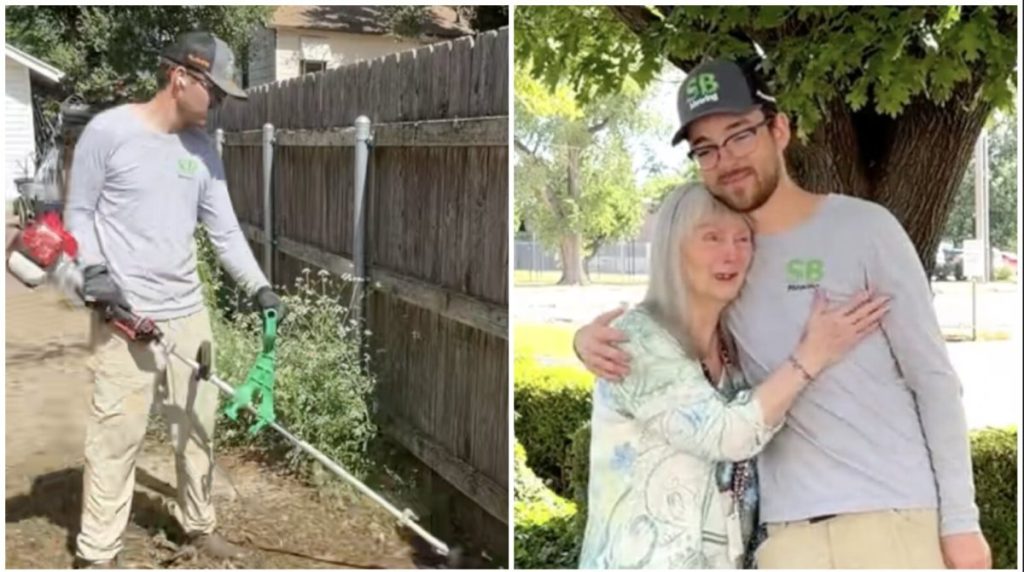
    An elderly woman in Wichita, Kansas who was experiencing hard times has now found hope in the kindness of others. It first started when a local landscaper decided to mow and clean up her overgrown lawn for free. Since then, she’s been given $625,000 in donations (and counting!) to help address her needs and raise her spirits.

    It all started with Spencer B. of SB Mowing, a lawn care and pressure washing company. Spencer (who wishes his last name be omitted) runs his business both as a mower and as a content creator. He often offers his services for free to the elderly and veterans who cannot afford the upkeep of their lawns.

    Spencer visited the elderly woman, Debbie, after Zach, her Uber driver, contacted him. Zach had seen how much she was struggling on her own and wanted to help. As Spencer and his dad cut Debbie’s lawn and cleared debris, they heard her story. 

    Debbie’s grief and relief

    Debbie had been the full-time caregiver for her ailing husband until he died from stage four pancreatic cancer. Since then, her grief and other factors had prevented her from keeping up her home, lawn, and her own health. Struggle upon struggle was placed upon her.

    “While she was grieving, she was also being taken advantage of,” Spencer wrote on Debbie’s GoFundMe. “A contractor took a $2,000 deposit for tree work and never showed up. A neighbor wrecked her car and didn’t pay for it. She fell three months behind on rent, put off dental and health care she genuinely needs, and there were days when she and her dogs went without food because she simply couldn’t afford it.”

    Aside from free lawn care, Spencer decided to help Debbie get back on track. He and his dad bought everything from Debbie’s yard sale and donated it all to Habitat for Humanity to get her some cash in hand. Spencer also paid three months of Debbie’s back rent through his non-profit organization SB Mow It Forward.

    Strangers donated to Debbie

    Spencer then set up a GoFundMe for Debbie and shared her story. Within three days, friends and strangers alike donated over $625,000. Donations continue to roll in as of this writing. All of the money will be put into a trust for Debbie to use for essentials, medical care, dental care, and to help her transition to a senior living community when she is ready.

    Spencer shared a video of him telling Debbie this news. She was floored when she found out that around 40 million people had seen the video of Spencer cleaning up her yard, and she had no idea he had set up a GoFundMe.

    “I thought you already helped me,” Debbie said, welling with emotion. “I can’t believe it. How can people be so generous to help a stranger?”

    With tears in her eyes, Debbie thanked Spencer, Zach, and all the 13,000 people who had donated to help her. Spencer even made a video to highlight Zach, as he was the one who brought Debbie’s troubles to Spencer’s attention.

    SB Mowing’s history of helping neighbors

    This isn’t the only time Spencer’s deeds have made headlines. In 2024, he had raised $242,000 for a pet rescue that treated a cat he found while mowing a lawn. In 2025, he raised $850,000 to help Beth, an elderly woman in need of financial aid and accessibility care.

    A lot of good can happen if we check in on our neighbors (and maybe offer to cut their lawns) every once in a while.

  • Solar-powered boat feasts on trash and could solve the ocean’s plastic waste problem
    Photo credit: Ocean Cleanup on YouTubeThe Interceptor boat-barge could significantly clean our waters.

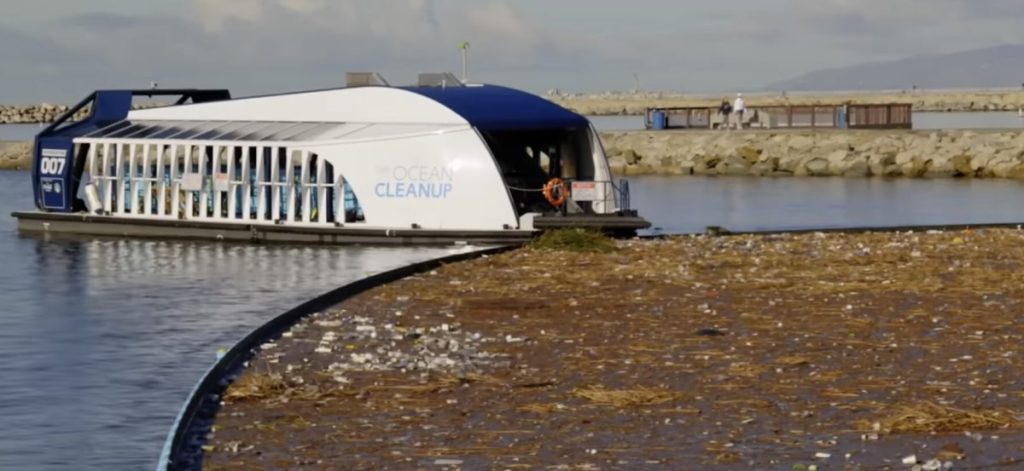
    Our oceans have a plastic problem. While it’s difficult to put a 100% accurate number on it, scientists estimated about 4.8 to 12.7 million metric tons of plastic waste entered the ocean in 2010 alone according to the journal Science. This issue has caused scientists and engineers to create a boat-barge in Los Angeles that skims the oceans to gobble up the plastic we leave behind.

    Devised by the non-profit Ocean Cleanup organization, the garbage-gulping Interceptor boat-barge is actually a smaller platform nestled within a larger boat. A floating barrier moves collected trash into the device onto a conveyor belt. An automatic shuttle then collects the trash from the conveyor to send it to a separate barge where there are six dumpsters to hold it. The solar-powered system can hold up to 20,000 lbs. of garbage. The trash is then separated into different categories (plastics, metal, etc.) so they can be disposed of responsibly.

    Catching ocean trash from the source

    Ocean Cleanup hopes to make a dent cleaning the Great Pacific Garbage Patch in the Pacific Ocean. However, they decided to first attack the plastic ocean problem at its source: rivers. When it rains, a lot of trash from the hills and valleys washes down into the nearest river. While there is significant ocean trash taken from beaches, they have found that the lion’s share of garbage that floats into our oceans actually comes from rivers and tributaries that lead into it. Essentially, the plan is to get ocean trash before it even enters the ocean.

    “We have to turn the faucet off before we can scoop the ocean, or else all we’re doing is taking out legacy trash to replace it with new trash,” James Patterson, the operations manager of Ocean Cleanup said to The Guardian. “Before you can clean out the Great Pacific Garbage Patch, you really need to turn off the source.”

    How the Interceptor is helping Los Angeles and beyond

    There is an Interceptor already doing its work at the mouth of Ballona Creek in Culver City, California. Since 2025, the Interceptor has prevented 143,710 lbs. of trash from entering the ocean via the creek. As a bonus, the Interceptor’s trash sweeping has lowered government budgets for beach grooming. Since there is less trash, the beach doesn’t need to be cleaned as often.

    There are two more Interceptors planned to be at the mouths of the San Gabriel River and the Los Angeles River. This can help clean up the rivers for the upcoming 2028 Summer Olympics for aquatic events.

    There are currently 21 Interceptor systems throughout the globe. Countries using them include Indonesia, Vietnam, Jamaica, Guatemala, the Dominican Republic, and Malaysia.

    If this is an issue that speaks to you, you can help even if you don’t live near an ocean. There may be a nearby river or creek that could benefit from volunteer cleanups. Do some research to find an organization near you to volunteer. If you can’t locate one, groups like River Cleanup can help you organize your own group. Much like how a small drop contributes to a large ocean, a small pick-up can make a big difference.

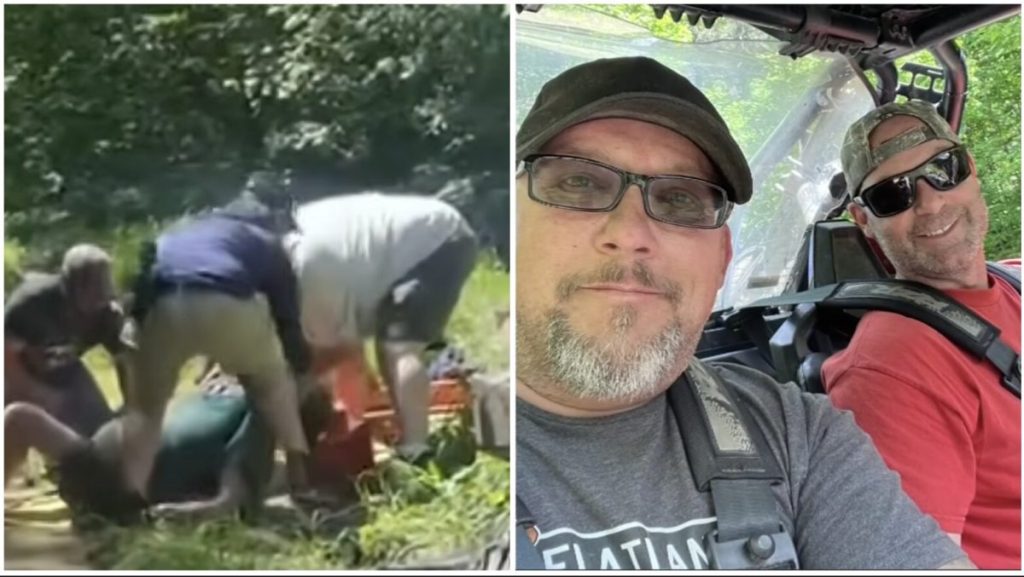
  • While exploring trails, two friends rescue missing woman trapped in a mud puddle for 3 days
    Photo credit: KARE11 News on YouTubeAdam Sandbeck and Mike Gravalin found a woman who was missing for three days.

    In Minnesota, 68-year-old Kathryn Woessner got out of her van and fell into a puddle beside it. The pool of mud was so deep that Woessner couldn’t get herself out; she compared it to quicksand. She was almost completely submerged, stuck in it for three days until two men spotted her and saved her life.

    The two men, Adam Sandbeck and Mike Gravalin, were riding their all-terrain vehicles nearby. On a whim, the two friends decided to ride on a trail that they hadn’t explored before that had been flooded. That’s when they spotted Woessner’s van in a clearing. 

    ‘Help me’

    Sandbeck and Gravalin went in to get a closer look. Next to the van, they saw what they thought was a corpse buried in the mud except for part of the face poking upward. That’s when they heard Woessner’s weak voice say, “Help me.” 

    Shocked at first, Sandbeck and Gravalin quickly went into action. It took them less than half an hour to pull Woessner out of mud and check in on her. They then called 911 to get volunteer firefighters, paramedics, and police to the scene for help. The tracking device on one of their vehicles helped provide coordinates to their location. Woessner explained to her saviors that she was stuck on her back, resulting in a serious sunburn on her face as she tried to yell for help for days.

    Woessner was taken to Essentia Health-St. Joseph’s Medical Center where she is expected to make a full recovery. The Douglas County Sheriff’s Office and Woessner’s family were relieved, as she was officially reported missing for three days. The Douglas County Sheriff’s Office thanked the other agencies that aided in the search and rescue of Woessner in a Facebook post.

    The two friends were ‘guided’ there

    While they were rightfully praised for their actions, Gravalin and Sandbeck say they were at the right place at the right time. In fact, they almost wouldn’t have found Woessner at all. Had they decided to take their vehicles on their usual routes, Woessner might not have survived.

    “We ain’t heroes,” Sandbeck told KARE 11 News. “We’re just two guys that were out there riding, enjoying the day together, making fun of each other all day long like we always do, like buddies, but I have no doubt the hand of God was there guiding us there. Because that trail that we found her on, we actually drove past it.”

    “We’ve driven past it for the last eight years and never went down,” added Gravalin. “And it was like, let’s go check that out,” Sandbeck added. “So we actually turned around and drove back down it.”

    Regardless of reason, it was good for Woessner that they decided to take a detour.

Explore More Stories

Society

The conversations people avoid may be the ones they would enjoy the most 

Internet

How one World Cup superfan bought a giant, rare FIFA soccer ball that barely fits in his car

Everyday Economics

Coloradans can now fight against a weaker economy and hunger through the ‘Tamale Act’

Health

Social media before bedtime wreaks havoc on our sleep − a sleep researcher explains why screens alone aren’t the main culprit