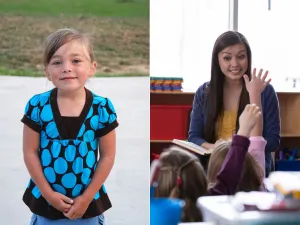
A revolution in child-rearing that begins with a parent, a child, and a book.
Davis Guggenheim’s new documentary, “Waiting for Superman,” captures the aspirations of parents wanting to send their kids to better schools—and the agony they encounter when there are no good options. With thousands of failing schools in the U.S., many parents justifiably feel powerless when it comes to the education of their children.
The truth is, though, that parents do have power—tremendous power that they may not even realize. And one of the most effective ways to begin to exert that power begins at home with their child. It doesn’t involve funding, politics, taxes, or school boards. It involves regularly reading with children and starting to take an active role in their child’s education. Further, parent involvement isn’t just a “feel good” idea; there is strong evidence linking it to long term academic achievement. Research conducted by the Harvard Family Research Project over the last twenty years has demonstrated that family involvement is a major predictor of a child’s k-12 development, educational achievement, and school success.
Studies have shown conclusively that developing the habit of sharing books with children is one of the most powerful things parents can do to improve their child’s life. Not just sharing books once in a while, or on a special day when there is a reading celebration, but everyday sharing, talking, having fun with books or magazines or comic books—whatever material is available.
In their landmark study, researchers Betty Hart and Todd Risley found that children living in poverty enter kindergarten having heard 30 million fewer words than their peers who do not live in poverty. That’s no typo—30 million fewer words. Why? Children from high income households had greater access to print materials and their parents spent more time sharing and reading those materials with them.
We also know that children who enter kindergarten lacking key skills are more likely to fall behind and stay behind throughout their school years. Richard Anderson and his colleagues found that the activity most strongly related to reading growth from second to fifth grade was, in fact, reading. Students who scored in the 50th percentile on reading tests read an average of five minutes a day; those who scored in the 90th percentile read about 20 minutes each day.
So how and where do parents start, especially those who lack resources? They can start with a pediatrician who participates in Reach Out and Read, a national program through which doctors talk about the importance of reading to young children and then give books to parents at well-baby visits. They can also participate in Raising A Reader, an organization that, through a weekly book rotation program, exposes young children to more than 100 high-quality children’s books in their homes annually, helping families develop and practice the habit of reading together and then maintaining it through connections to their public library. Or they might participate in Reading Is Fundamental, First Book or Imagination Library—all programs which help children own books. Ideally, they’d participate in all of these programs—getting support to develop family habits and own books.
It happens all the time all over the country. The homeless mother in Phoenix who knows she cannot always put a roof over her child’s head but through the support of the Southwest Human Development Center makes sure that the one constant in her child’s life is books and time to share them every day—no matter where they are; or the mother in San Francisco who always carries her red Raising A Reader book bag so she can spend the 20 minutes she has on the bus with her child sharing a book; or the father in North Carolina who isn’t a strong reader himself, but doesn’t worry about making mistakes anymore. He tells stories from books because he knows his son needs to hear his voice.
These are all stories of real people, living difficult lives. But they’re undaunted and totally focused on what they can do for their child. By making reading an integral part of their daily lives each is exerting more power than any even realizes to make things better. Their children will enter kindergarten with skills they need to learn to read. And these are just the stories associated with my organization; the kind I am fortunate enough to hear every day in my work.
Regular book sharing doesn’t just help children. It helps parents understand how their child learns, which builds their confidence in their own ability to speak on behalf of their child, to have a voice in their child’s educational life. Parents begin to see progress and believe in their children and themselves. When parents begin to understand the power they have and understand that they have a powerful voice, change begins to happen.
Imagine if the millions of parents in this country began very simply by developing the habit of sharing books with children. If they then felt confident enough to begin asking questions in their child’s classroom, school, and school district, they might understand and use the power they’ve had all along.
Yes, Superman can wait.
Photo (cc) via Flickr user juliegomoll.
Gabrielle Miller, Ed.D. , is the National Executive Director of Raising A Reader.