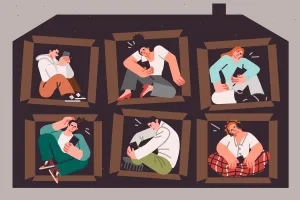
Every three months, GOOD releases our quarterly magazine, which examines a given theme through our unique lens. Recent editions have covered topics like the impending global water crisis, the future of transportation, and the amazing rebuilding of New Orleans. This quarter’s issue is about cities, spotlighting Los Angeles, and we’ll be rolling out a variety of stories all month. You can subscribe to GOOD here.

I live in a beautiful old apartment in an historically preserved neighborhood filled with trees. Most mornings, I walk three blocks to the nearest rapid-transit stop and take a 10-minute ride past a major art museum, a couple of beautiful art deco theaters, and several busy shopping and office districts. On alternate days, I bike the four miles, stopping at any one of the many sidewalk cafes along the route before settling into my desk on the fifth floor of a 10-story office tower.

Would you believe I live in Los Angeles?
Most people picture sprawling suburbs with deteriorating lawns, framed by minimarts and overshadowed by the Hollywood sign. The corner minimarts are there, but they border old neighborhoods thick with duplexes and other lowrise multi-family dwellings, the kind of dense living quarters that are all the rage among urban planners. In fact, Los Angeles has more people living closer together than Portland, Oregon, the current poster child of urbanism. And depending on where you draw the lines, L.A. is denser even than New York City.
But where Los Angeles differs from those urban cities is that it is really, really big. While the County of New York is less than 23 square miles, Los Angeles County stretches across 4,083 square miles, larger than all of Rhode Island and Delaware combined. And while walkable neighborhoods like mine flourish in many cities across the county, the last 70-odd years of history have decimated the relationships between them. When talking about cities like Cleveland or Pittsburgh, city planners and architects refer to the dead or under-used areas as “broken teeth.” Well, Los Angeles might as well be a washed-up prizefighter, because there are a lot of gaping holes between those pearly whites.
But all is not lost. Before we revert to old stereotypes about Los Angeles as a Blade Runner-esque dystopia, I’m here to report the good news: The City of Angels is turning away from that imagined future and heading toward a much brighter past.
As streetcars disappeared, so too did the street life that had formed around them.
In Hollywood’s heyday during the 1920s and ’30s, L.A. was transit heaven, its “Red Car” and “Yellow Cars” forming the largest electric railway in the world. But as car ownership incraeased and people began heading out toward the suburbs, the Red Cars were seen less as a convenience than a nuisance. L.A.’s public-transit decline began in earnest when General Motors and others bought up the streetcar lines and replaced them with buses.
But as streetcars disappeared, so too did the street life that had formed around them. People entered shops and other businesses through giant parking garages rather than walking in through the front doors. Blocks began to feel less like high streets than highways. In the 1960s, some bright-eyed futurists almost got a network of Disneyland-era monorails built, but the great era of public transit had come to an end.

The Game Changer

It will be no easy feat to turn around the oft-undisputed belief that nobody walks in L.A., but evidence of a transit resurgence is palpable.
“In order to coax Angelenos out of their cars and onto the sidewalks, buses, and subways, planners need to turn their attention to the streets,” says Yonah Freemark, who writes about transportation and land use for The Transport Politic. “Most people who ride buses and trains walk to get to their stations,” he says. “If the pedestrian environment is unfriendly or uninteresting—as it is in too many places in L.A.—it wouldn’t be surprising to see the car culture remain in place even after the development of the larger transit network.”
That larger transit network is courtesy of Measure R, a game-changing transportation bill approved by voters in 2008. Measure R, which raises sales tax in Los Angeles County by half a cent, is projected to bring in $40 billion over the next 30 years for traffic relief and transportation upgrades throughout the county. The cash will fund big-picture transit projects like connecting the Green Line directly to LAX (it currently connects to a shuttle bus to get travelers that last leg); the Gold Line out into the Inland Empire; and the Expo Line south into Culver City. But the measure will also be dedicated to the finer-grained details, such as pothole repairs, bike racks, and pedestrian improvements. One such project is the Figueroa Corridor Streetscape Project, which is re-envisioning the stretch of Figueroa Street between downtown Los Angeles and Exposition Park by adding dedicated bus lanes, park benches, and landscaping.
Perhaps the most significant project in terms of connectivity is the Regional Connector, a 1.9-mile underground light-rail (aka subway) that will finally turn the region’s rail system into a true network by connecting the Blue Line, Gold Line, and the upcoming Expo line. “Dollar for dollar, the Regional Connector is the best investment we can make,” says Denny Zane, who, as executive director of Move L.A., a coalition of labor, business, and environmental groups, was instrumental in getting Measure R passed. “Right now, you can take the Blue Line from Long Beach to downtown L.A., and with a couple of transfers you can eventually get to North Hollywood. With the Regional Connector, you’ll be able to connect from Long Beach to Santa Monica, LAX, or Pasadena with ease.”
Freeways are of course still a part of the transportation pie, and will receive 20 percent of the Measure R funding. Work is underway to fix the most congested freeway interchanges along the 605 (which connects the Inland Empire to the busy docks in Long Beach) and improving carpool lanes along California’s spine, Interstate 5. The 405, 110, and 105 will each get ramp and interchange upgrades to make the most out of the freeways we have (rather than building more of them). These incremental upgrades will have an effect, but nothing like what can be achieved by getting people out of their cars and walking, biking, and taking transit.
While transit has actually come a long way in Los Angeles—Rapid Transit buses crisscross the city, and Metro brags of its network of 12-Minute Transit (rail and buses that pick up every 12 minutes or less)—there is still a lot to be done to connect all of these communities.
“We’re at a huge crossroads,” says Stephen Box, a grassroots transportation activist, who sought election for (and lost) a City Council seat in March. “The long-term infrastructure that’s being developed is wonderful. In the meantime, we have the worst streets in the nation, and we are disconnected in terms of available services. People don’t have good choices, and quite simply whatever transportation mode you pick is limited in its efficiency and its efficacy.”
Box is proud of how far bicycle planning has come in L.A., but he would really like to see the city embrace the Complete Streets Act, a California state bill that recommends that cities make accommodations for all users of roads including motorists, bicyclists, and pedestrians as part of the planning for every roadway. Notice that the word is “recommend” and not “require.” “They’re not legally obligated to do anything,” says Box.

Creating Connections

“There are some great bones in the city of L.A., and L.A. County as a whole, which were shaped around transit,” says Abigail Thorne-Lyman, project director at the nonprofit Reconnecting America. “Employment decentralization is the real problem.”
Unlike many large cities in the United States, jobs in Los Angeles are not concentrated in a central commercial core. So the traditional “hub and spoke” transit model—jobs downtown at the hub, transit lines snaking out into bedroom communities along the spokes—is no longer relevant to the needs of commuters who work in the county’s true employment centers in Santa Monica, UCLA and USC, Culver City and Century City, and the Port of Los Angeles. The “Subway to the Sea,” an east-west subway line up Wilshire Boulevard that is currently in the works under Measure R funding (in part), would go a long way toward helping people get to their jobs without getting stuck in grinding freeway commutes.
In the long run, the Metro will reach every part of the county and create an interconnectivity that we never had.
According to Thorne-Lyman, one-fifth of the jobs in the region are actually out in the San Gabriel Valley, the region stretching along the old Route 66 route east toward the desert. An extended Gold Line reaching out from Pasadena could connect more people with those jobs and is also part of the Measure R package.
“Connecting these other employment nodes with the transit network is going to really help connect people to their jobs,” says Thorne-Lyman.
Coming Soon, Possibly Sooner
Even as Measure R projects settle in for the long haul, Los Angeles Mayor Antonio Villaraigosa is diligently working to speed things up. He’s been making trips to Washington to sell Congress on his “30/10” plan, which asks Congress to loan the city $40 billion now, a sum the city expects to collect in tax money over the next 30 years, so Los Angeles can enjoy the benefits of its expanded transportation program in only 10 years. The plan has received ringing endorsements from groups like the AFL-CIO and the U.S. Chamber of Commerce, but may face opposition from the new Tea Party Republicans in the House who sneer at “big government” projects of this ilk.
Still, the future looks as clear as the carpool lane for the City of Angels, whether in 10 years or 30. By investing deeply in new transportation options and building on the very stylish historic infrastructure that’s here, Los Angeles could soon return to its former glory.
“In the long run, the Metro will reach every part of the county and create an interconnectivity that we never had,” says Zane. “The economic efficiency of that, as well as the environmental benefits, will be extraordinary. We always had the best weather. Now we’ll have the best transportation system and cleaner air. Who can compete with that?”
Illustrations by Mark Giglio
  • Therapist shares why Justin Bieber’s duet with 13-year-old self was so incredibly moving
    Photo credit: Wikimedia Commons & FlickrJustin Bieber performs onstage (left) and at a Nintendo store in 2009 (right).

    Taking the stage at Coachella, singer Justin Bieber gave fans something unique: singing along to a YouTube video of himself at just 13, he harmonized on songs like “Baby,” “Never Say Never,” “With You,” and others.

    Blake Roberts, a licensed therapist and self-proclaimed “dude,” shared his perspective on Bieber’s performance. While reactions to the appearance may be mixed, Roberts found it courageous.

    Therapist finds Bieber’s performance incredibly moving

    “From the perspective of a therapist and dude, I have to talk about this Justin Bieber-Coachella thing,” Roberts said in an Instagram Reel. “If you’ve ever done any amount of inner child work, you can appreciate what that moment was.”

    “That little boy was artistic and creative. Just doing his thing. Probably got made fun of a bunch, and then he gets thrown into this industry. And he loses parts of himself, and people probably take advantage of him,” he added.

    Roberts turned the performance into a learning experience, discussing a form of therapy known as inner child work:

    “Like we watched this man’s trauma, and yet he still shared a moment with us. Like a peek inside what it looks like to do inner child work. What looks like to look back at the younger versions of ourselves who have been rejected, who have been abused, who we ourselves have left behind. And to look at them with compassion and see them from the purity that they were.”

    Mixed reactions to Coachella performance

    Bieber’s performance relied heavily on nostalgia and early-career callbacks. A review in Entertainment Weekly described the set as “lacking some swag.” For much of the performance, Bieber sat at a desk onstage, scrolling through viral videos of himself.

    Despite negative feedback on his set, some fans appeared to be very appreciative of Bieber. One fan commented on Roberts’ Instagram post, saying, “I loved it so so much, aaaand now I’m crying again.”

    Regardless of whether people admire what the artist did, Roberts saw an opportunity to highlight recovery and the value of therapy. Bieber’s duet with his younger self could be seen as a meaningful act of openness and vulnerability. Roberts reflected, saying, “I thought it was pretty crazy. I could feel it.”

    Bieber’s challenges scrutinized by the public

    For those unfamiliar with Bieber’s personal life, he has faced some rough patches, as rumors have circulated about a struggling marriage and financial difficulties.

    The obstacles began to appear in 2017, when Bieber pulled out of a world tour due to mental exhaustion. In 2022, he posted on Instagram about the challenges of dealing with Ramsay Hunt syndrome. The illness occurs when the chickenpox virus reactivates later in life, causing facial weakness. Bieber said he was experiencing facial paralysis on his right side, which led him to cancel his tour again.

    There have also been allegations, including claims of drug use and questions about Bieber’s friendship with Sean “Diddy” Combs dating back to his youth. Clips have resurfaced showing Bieber as a teenager spending time with the music mogul. However, Bieber has not made any clear, on-the-record statements about that time.

  • City animals act in the same brazen ways around the world
    Photo credit: Saeed Khan/AFP via Getty Images A monkey swipes a soda in Thailand.
    ,

    City animals act in the same brazen ways around the world

    Why squirrels, monkeys and ibises get bolder in cities.

    The urban monkeys in New Delhi are so bold they’ll steal the lunch right off your plate. If you’ve spent time in New York, you’ve probably seen squirrels try to do the same. Sydney’s white ibises got the nickname “bin chickens” for stealing trash and sandwiches.

    This brazen behavior isn’t normal for most species in the countryside, yet it shows up in urban wildlife, and not just in these cities.

    Studies show that animals living in urban environments around the world exhibit common sets of behaviors. At the same time, these urban animals are losing traits they would need in the wild. This process of urban animals’ behavior becoming more similar is known as “behavioral homogenization,” and it accompanies the loss of species diversity with urbanization.

    A man reads his newspaper in New York's Central Park as a squirrel rifles through his bag on the bench beside him.
    Squirrels in New York’s Central Park have no qualms about rifling through your belongings and stealing your food. Keystone/Getty Images

    We study animals in urban settings to understand how humans can help wildlife thrive in an urbanizing world. In a new study, we explore the causes and the long-term consequences of these behavior changes for urban wildlife.

    What makes animals in cities similar?

    Cities, despite their local differences, share many of the same features worldwide: They are warmer than the surrounding countryside, noisy, polluted by light and, most importantly, dominated by people.

    New York’s squirrelsNew Delhi’s monkeysgulls in coastal cities of the U.K. and other urban wildlife have learned that people are a source of food. And because people typically don’t harm the animals, city-dwelling animals learn not to fear people.

    Cities drive evolution as well. Humans and the changes we’ve brought to cities have led to the survival of bolder animals, and those bolder animals pass on their traits to future generations. In genetics, scientists refer to this as the environment “selecting” for those traits.

    It’s not just sandwich-stealing that is more common among city wildlife; urban birds also sound more alike.

    Why? Cities are loud and filled with traffic noise, so those who can effectively communicate in that environment are more likely to survive and pass on those traits.

    For example, urban birds may sing louder, start singing earlier in the morning or at higher frequencies to avoid getting drowned out by low-frequency traffic noise.

    Cities select for smart individuals and species because that’s what it takes to survive.

    Animals may behave similarly in cities because they learn from each other how to exploit novel human food sources. For instance, the cockatoos in Sydney have learned to open trash bins. In Toronto, the raccoons are in a race to outwit humans as urban wildlife managers try to design animal-proof trash bins.

    The buildings and bridges in cities become home to batsbirds, and other urban dwellers, at the cost of learning to use more natural nesting sites. Roads and culverts modify how and where animals move.

    While rural animals may forage at a variety of places and eat a variety of foods, urban animals may concentrate on garbage bins or rubbish dumps where they know they can find food, but they end up eating a potentially unhealthy diet.

    Consequences of similar behaviors

    The loss of behavioral diversity is happening everywhere that humans increase their footprint on nature. This is worrisome on several levels.

    At the population level, behavioral variation may reflect genetic variation. Genetic variation gives species the ability to respond to future environmental change. For example, for animals that have evolved to breed at a specific time of the year, urban heat islands can select for earlier breeding.

    Reducing genetic variation leaves populations less able to respond to future changes. In that sense, having genetic variation resembles a diversified investment portfolio: Spreading risk across a variety of stocks and bonds lowers the risk that a single shock will wipe out everything.

    A large white bird with a black head and curved black beak picks through a trash bin along a waterfront area.
    An ibis picks through a trash bin in Sydney. Greg Wood/AFP via Getty Images

    Moreover, as animals become tamer, new conflicts between animals and humans may emerge. For instance, there may be more car crashes, animal bites, property damage and zoonotic disease transmission. Such conflicts cost money and may harm both the animals and humans.

    Losing behavioral diversity is also troubling for conservation.

    When a species loses behavioral diversity, it loses resilience against future environmental change in the wild, making reintroducing urban animals to the wild harder.

    Losing behavioral diversity also risks erasing socially learned, population-specific behaviors, such as local migration routes, foraging techniques, tool-use traditions or vocal dialects.

    For example, Australia’s regent honeyeater populations have been shrinking and are critically endangered. The isolation of having fewer of their own species around has disrupted normal song-learning behavior, making it harder for male birds to sing attractive songs that help them find mates and breed successfully.

    Ultimately, behavioral homogenization is making wildlife in cities such as Los Angeles, Lima, Lagos and Lahore behave in similar ways despite living in different environments and having different evolutionary histories.

    Many of these behaviors influence survival and reproduction, so understanding this form of diversity loss is important for successful wildlife conservation, as well as future urban planning.

    This article originally appeared on The Conversation. You can read it here.

  • Health care sticker shock has become the norm, but talking to your doctor about costs can help you rein it in
    Photo credit: National Cancer Institute on Unsplash, CC BYA doctor at the National Cancer Institute talks with a patient.

    As health care costs rise, patients aren’t just shouldering higher bills. They’re bearing more and more responsibility for getting information.

    Americans are facing a health care affordability crunch on multiple fronts. In 2025, the Republican-controlled Congress approved a sweeping tax law that scaled back premium subsidies for Americans accessing care through the Affordable Care Act starting in 2026. As a result, millions on ACA plans now face much higher premiums, with many dropping out or expecting to drop out and risk going uninsured as premiums surge. By March 2026, about 1 in 10 people on ACA plans had dropped out, and that share is expected to rise.

    Meanwhile, high-deductible insurance plans have become more common, requiring patients to pay thousands of dollars before coverage fully kicks in. The rise of those plans, along with surging drug prices and the growing share of Americans who are under- or uninsured, means that medical debt remains a leading source of financial strain.

    Nearly half of U.S. adults now report difficulty affording health care. Together, these shifts are accelerating the “consumerization” of health care. Patients now have the ability to comparison shop, evaluate options and manage costs – but often without clear pricing. In this environment, knowing how to ask the right questions may be one of the most important tools patients have.

    We are professors who study how perceptions of health care costs shape patients’ decisions about their care. Our research examines how factors such as price-transparency regulations influence patient choices. Across our work, we consistently hear from patients about rising costs and how conversations about price with their providers too often never happen.

    Why speaking up about cost matters

    When one of us took our child to the doctor for pink eye, the pediatrician quickly sent a prescription for antibiotic drops to the pharmacy. At the pickup, the pharmacist dropped the news that the drops would cost more than US$300. A follow-up phone call to the doctor’s office, however, yielded important information: A generic version of the same medication offered the same treatment and the same results, but at a fraction of the price.

    That quick phone call saved her a lot of money. It also raised a broader question: Why don’t more people have these conversations about cost? In fact, one study shows that cost conversations occur in only about 30% of medical visits.

    These discussions aren’t just for medications. They can be crucial when a recommended procedure has multiple alternatives; when out-of-pocket costs might affect whether you follow through on care; or when a sudden medical bill could create financial strain. Speaking up about price can help patients stay healthier and avoid the all-too-common trade-off between medical care and household expenses.

    The study mentioned above also found that doctors and patients identified ways to reduce out-of-pocket costs – such as switching to a generic drug or adjusting the timing of care – in nearly half of those cases. Importantly, these conversations were typically brief and did not compromise the quality of care, the researchers found.

    Patients actually prefer doctors who bring up costs, other research has found. Still, most patients remain hesitant. While a majority say they want to discuss cost, only a minority actually do, often waiting until a bill arrives – often when it’s too late to consider alternatives. That’s why it’s important that consumers feel empowered to ask the right questions. Here are three that can help make care more affordable.

    A close-up of a person's hands, with pen in one, going over a complicated medical billing form.
    A patient works on a medical billing form. Mael Balland on Unsplash.CC BY

    Is there a generic or lower-cost alternative?

    One of the simplest ways to reduce drug costs is to ask whether a less expensive option is available. Brand-name medications can cost significantly more than generics, even when they are equally effective. One industry survey estimated that 90% of all prescriptions filled in 2024 were generic or biosimilar, but these accounted for only 12% of drug spending.

    In many cases, physicians can substitute a generic drug or recommend a similar treatment that achieves the same outcome at a lower price. And when no direct generic exists, there may be therapeutic alternatives worth considering. For example, if a brand-name eye drop or inhaler isn’t available in generic form, doctors can often prescribe a different medication in the same class that works just as well but costs far less. Research on physician–patient cost conversations shows that switching to lower-cost, clinically similar alternatives within the same drug class is a common strategy for reducing out-of-pocket spending without compromising care.

    Is there any financial assistance available?

    Some hospitals and large health systems have specific programs aimed at making care more affordable for lower-income patients. In many states, government programs address this same goal. These programs often offer discounts on care, but they can be complex to navigate and require significant paperwork. Many health care offices have staff who are knowledgeable about these programs and can help patients determine eligibility and sometimes even assist with applications, although the Trump administration has cut funding.

    Patients can often find these programs through hospital or health system websites, which typically include financial assistance or “charity care” pages outlining eligibility and how to apply. State Medicaid offices and insurance marketplaces are also key entry points for coverage and subsidy programs. Nonprofit organizations and patient advocacy groups may also offer or list assistance tailored to specific conditions or medications.

    It’s also important to remember that for prescription medications, what you’re quoted isn’t always the final price. Many medications come with options to reduce costs, including manufacturer coupons, copay assistance programs and patient assistance programs. Doctors’ offices and pharmacists may also know practical ways to save money, such as using a different pharmacy, switching to mail order or adjusting how a prescription is written. Asking about these options can uncover savings that aren’t immediately obvious.

    What will this cost me, and are there other options?

    Health care pricing is often opaque, and costs can vary widely depending on where and how care is delivered. Asking up front about your expected out-of-pocket cost can help you avoid surprises later.

    This question also opens the door to alternatives. For example, patients may be able to choose a lower-cost imaging center, opt for outpatient rather than hospital-based care, or delay nonurgent services until insurance coverage improves.

    Speaking up is part of taking care of your health

    Health care decisions shouldn’t feel like a choice between your well-being and your wallet. A brief, honest conversation about cost can lead to more affordable and more sustainable care.

    Physicians can’t address financial concerns they don’t hear about, and most want to help their patients access care they can realistically follow through on. As costs continue to shift toward the patient’s burden, asking these questions isn’t just helpful – it’s essential.

    The next time you’re handed a prescription or a referral, remember: One simple question about price could make all the difference.

    This article originally appeared on The Conversation. You can read it here.

Explore More Stories

Ethics

A connection to nature fuels well‑being worldwide, according to a study of 38,000 people

Health

A shocking scientific study says water isn’t actually the best way to get hydrated

News

Hero son’s split-second warning saves sunbathing mom’s life

Science

20 enormously funny photos of animals in the wild