
Woollen swimwear, popular a century ago, might soon make a splash on Australian beaches again.

In the 19th century, when natural fibres were the only option, beach-goers donned costumes made of wool or cotton. Swimsuits worn at the water’s edge or in the crashing waves transformed across the 20th century from natural fibres to sleek, high-performance synthetics.

But with concern mounting over microplastics and the search for sustainable options, the woollen swimsuits of the past could be the swimwear of the future.

Shifting (and shrinking) swimsuits

Plenty who enjoyed a day on the sand in the first decades of the 20th century did so fully clothed. It was not uncommon for men to dress for the beach in three-piece suits or for women to wear gowns that fell to their ankles.
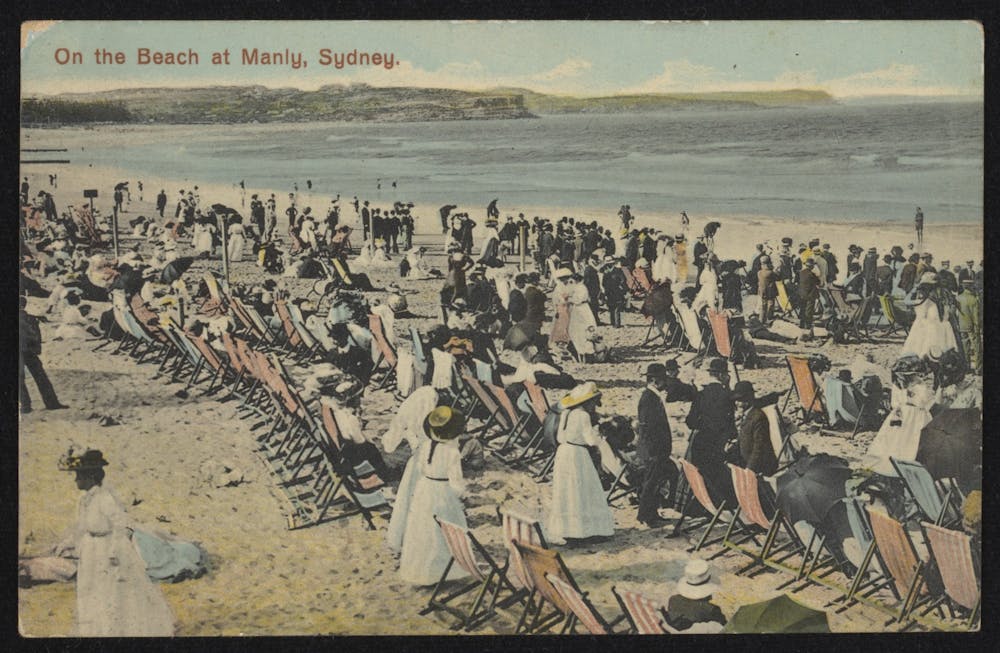
Postcard of people at the beach in long white dresses and suits.
At the beginning of the last century, people often went to the beach fully clothed. National Museum of Australia

But women who ventured into the water donned belted, knee-length bathing gowns that featured bloomers to conceal the legs. Men’s two-piece bathing costumes revealed a little more, with a top extending to the thighs paired with shorts to the knees.

In the space of a couple of decades, however, swimsuits radically changed. Styles altered as attitudes to the exposure of bodies relaxed, shifting ideas around public morality.
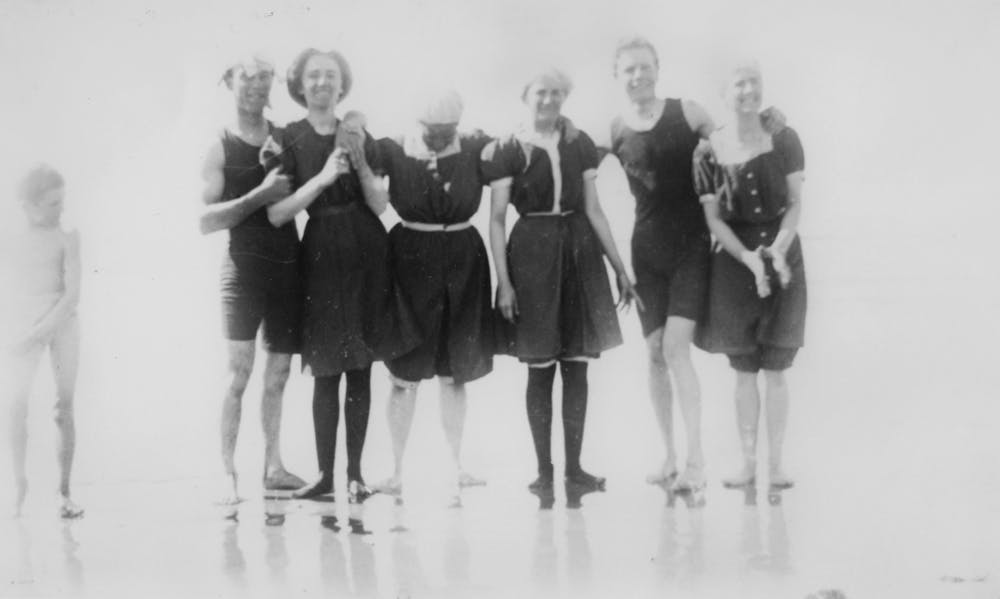
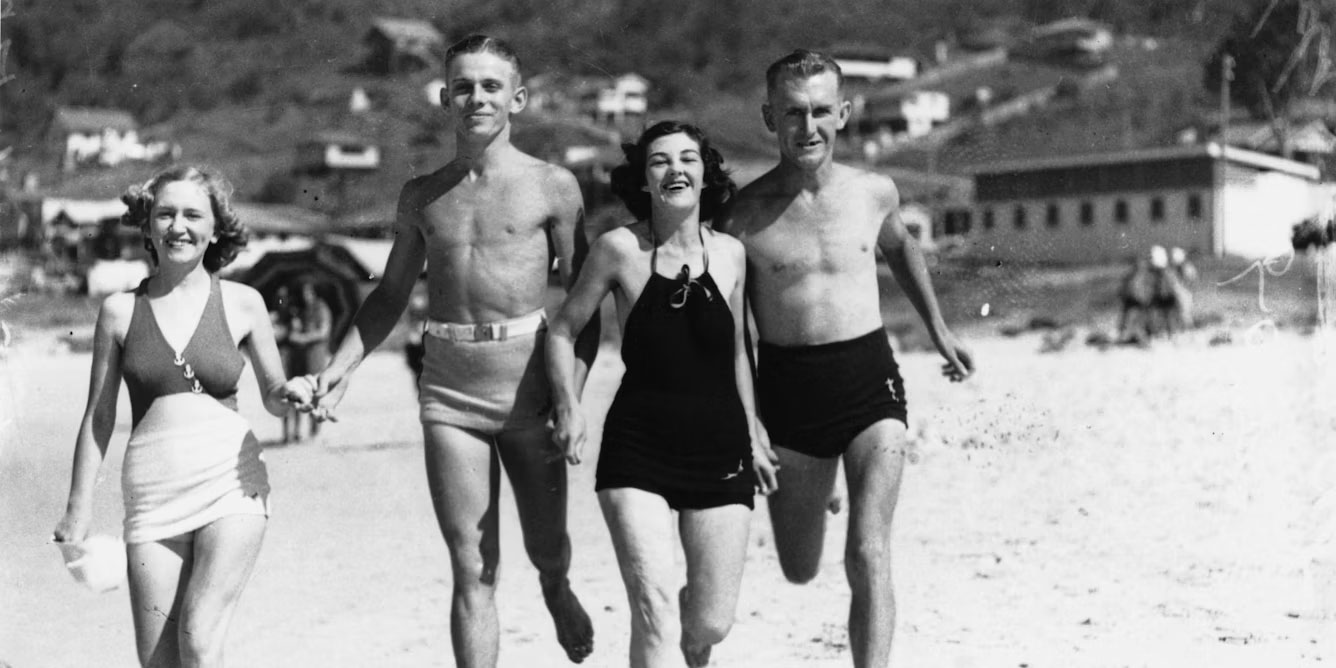
A group of friends, covered from neck to knee.
Both men and women were modestly dressed for swimming. State Library of Queensland

The 1930s witnessed a rise in topless bathing for men as they adopted trunks. Some had half skirts at the front, and many sported belts with buckles to keep them firmly on the waist.

Women’s swimwear now revealed the arms, legs and back – then even more when bikinis appeared on Australian beaches in 1950. Shock rippled across the sand.

Swimwear had reached body-baring new dimensions.

A man in shorts and a woman in a bikini.
As the decades passed, bathing suits got smaller. Mark Strizic/State Library of Victoria

Wool on the beach

Knitted wool – rather than woven wool or cotton – fitted swimwear snugly to the body, helping it shrink in size.

For wearers of Foy & Gibson’s evocatively named wool suits in the late 1920s and early 1930s – “Sunnybeach”, “Sunbath”, “Seafit” and “Siren” among them – this knit offered comfort and freedom.
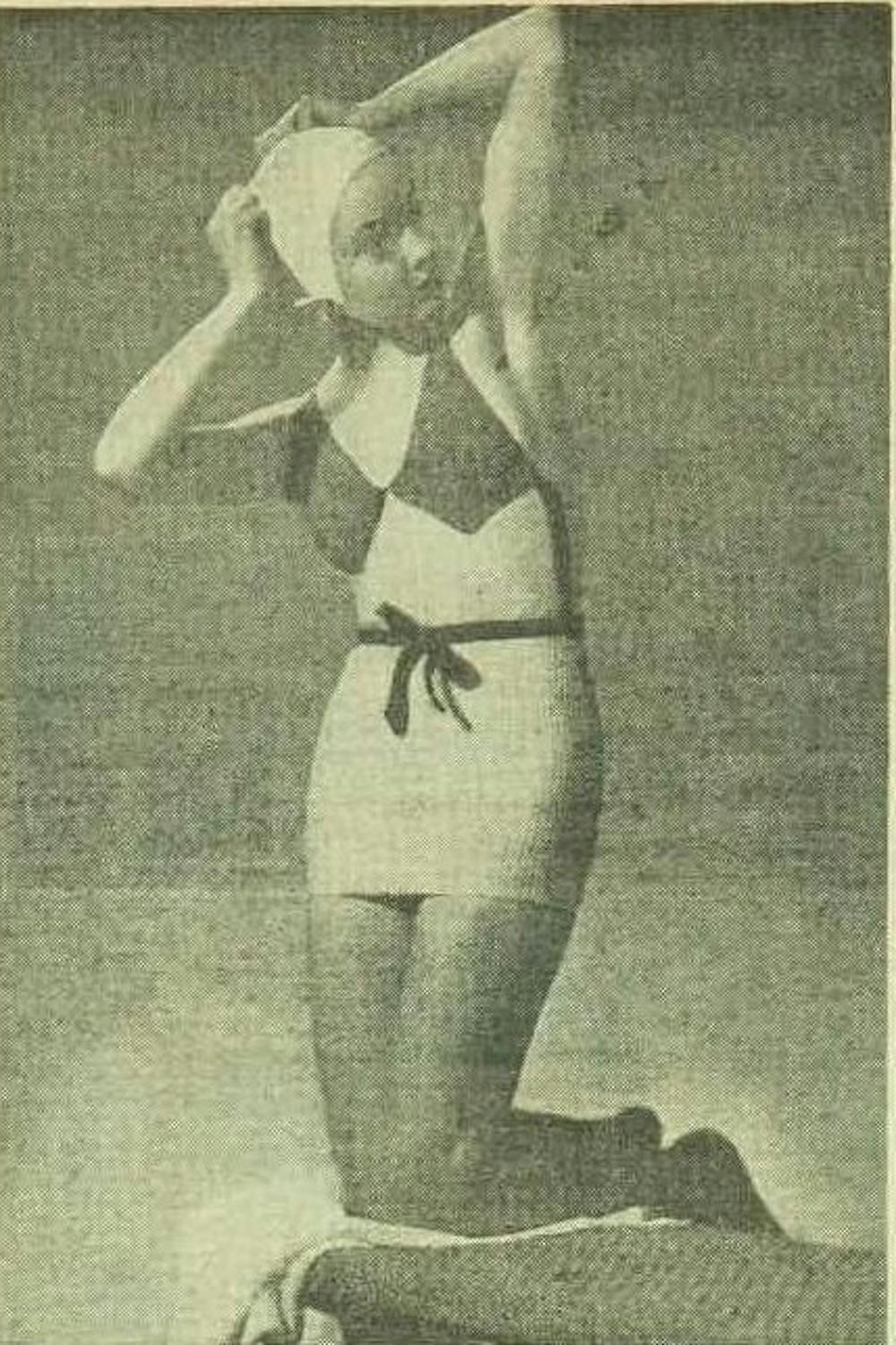
A woman in a one-piece bathing suit.
The Australian Women’s Weekly provided instructions to knit these bathers in 1938. Trove

Speedo’s knitted wool trucks in the late 1930s were made to streamline men’s figures, sparking the enticing slogan: “Next to your figure Speedo looks best!”

Those with knitting skills could make their own swimsuits that decade, using instructions like those given in the Australian Women’s Weekly.

With the introduction of “Lastex” – a rubber yarn – to woollen swimsuits in the 1930s, they transitioned to even more body-hugging fits. These exuded a new kind of glamorous appeal that elevated swimwear to a “sea-ductive” (as one newspaper columnist quipped) new height.

The synthetic swimsuit revolution

When synthetics burst onto the market, Australians embraced the new “modern” fibres. Wool was also in short supply, prioritised for uniforms and blankets for second world war troops.

Swimwear started to be made in the so-called “miracle” fibres: nylon in the 1940s, then polyester (known as “Terylene” in Australia) in the 1950s. From the 1960s, “Lycra” (also called elastane and spandex) was blended into swimsuits. These made sleeker, slimmer, more satin-like suits.

By the 1960s, bathing suits were more streamlined and made with synthetic fibres.
By the 1960s, bathing suits were more streamlined and made with synthetic fibres. H. Dacre Stubbs/State Library of Victoria, CC BY

Neoprene, a foam fabric, first appeared in wetsuits on Australia’s beaches in the late 1950s – increasing the possibilities for winter surfing. Wetsuits improved significantly in decades to follow, keeping their wearer warm by trapping a thin layer of water heated by the body.

In the pool, our Olympic swimmers tested more advanced fabrics. Those at the Sydney Games in 2000 wore the Speedo “fastskin”, with its compression fabric and replication of shark skin scales that streamlined the body in the water.
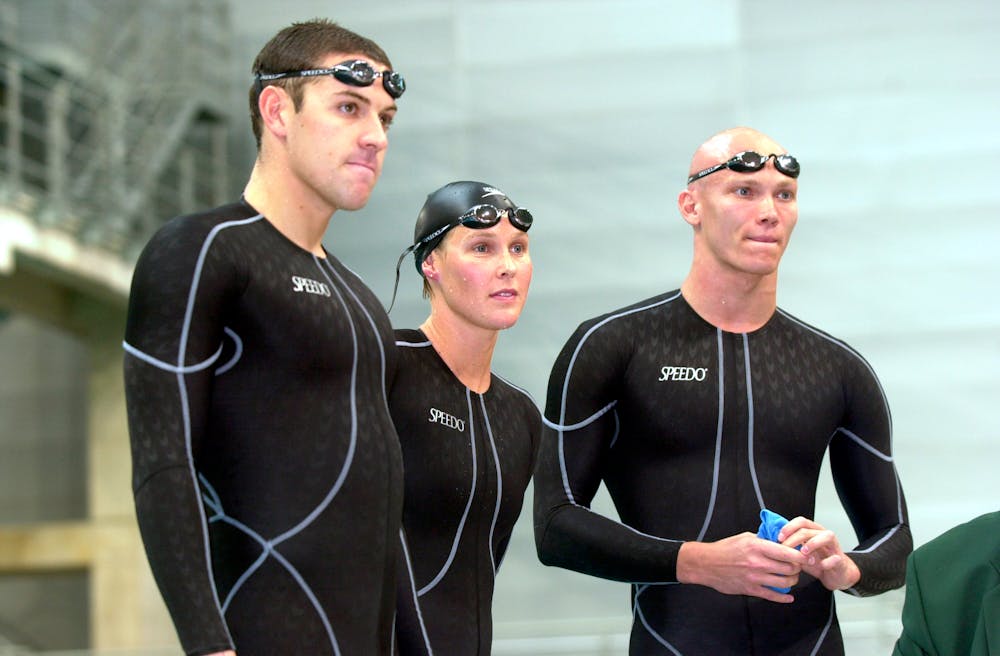
Three swimmers in black bathers.
These full-body swimsuits worn at the 2000 Olympics were designed to be sleek in the water. AAP Photo/Dean Lewins

More recently, swimsuits made from recycled plastic – bottles, bags and other plastic waste – have emerged as an eco-friendly option. Some question, however, just how green these recycled swimmers truly are when reducing all plastic consumption is needed to make a difference.

Why wool, again?

We might dismiss woollen swimsuits from the 20th century’s first decades as unpleasant or uncomfortable to wear. Or we might see them as unflattering for the way they sagged when wet.

But new processes for working with wool suggest it is ideal to wear in the water. New merino boardshorts have been designed to dry in less than seven minutes. Wool is also thermo-regulating, helping the body maintain an even temperature.

It’s not just that wool options are increasingly available. As we buy and throw away clothing at alarming rates, some have embraced the natural fibre as a sustainable, renewable alternative to synthetics.
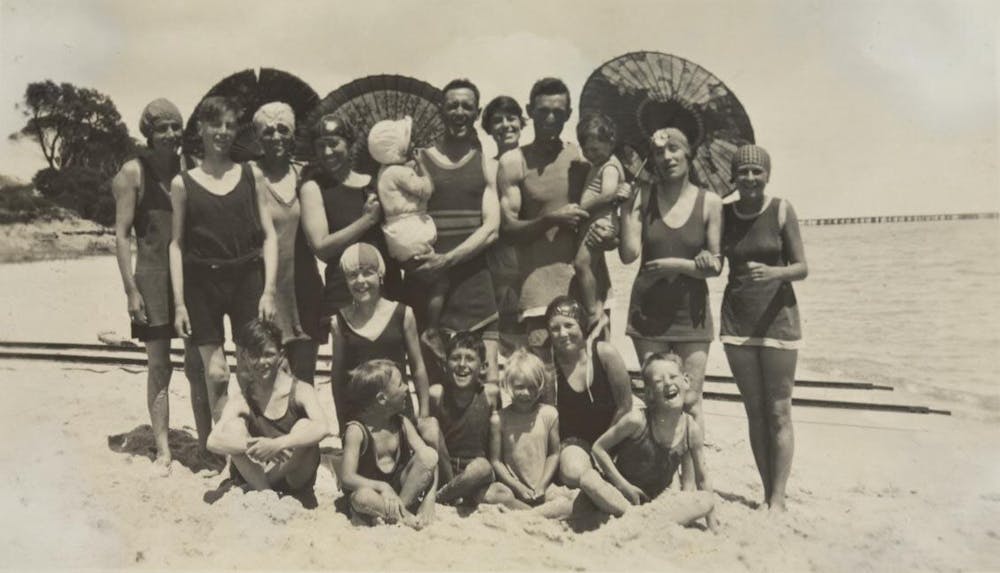
A happy crowd of people on the beach.
Today’s knitted bathers look quite different to these. Museums Victoria

Wool is biodegradable, naturally returning to and nourishing the earth, unlike synthetics that can take centuries to break down. Clothes in artificial fibres linger in landfill, with devastating consequences.

Our growing awareness of microplastics – tiny fibres released with washing that pollute marine (and other) environments – is also driving this shift.

So is it time to rethink wearing wool as you head to the beach this summer?

This article originally appeared on The Conversation. You can read it here.

  • Why ‘Main Character Energy’ videos are making everyday life feel extraordinary
    Photo credit: Canva(left) A woman eats, (center) a woman walks, (right) a woman shops at a farmers market.

    A rapidly growing trend on TikTok encourages people to see themselves as the protagonist of their own lives. In “main character energy” videos, creators turn ordinary moments into cinema. Clips of people walking to work, grabbing coffee, or reading a book sometimes attract thousands of views after specialized music and stylized cuts are added.

    The social media posts might look like just another aesthetic trend. But the reason people keep returning and liking them seems less about style and more about how they turn a regular day into something special.

    What is “main character energy” all about?

    “Main character energy” is Internet slang for seeing yourself as the central figure of your own story. Not in an inflated sense, but more in a way that turns ordinary routines into something a little more intentional.

    TikTok creators have embraced the trend, creating an easily recognizable video that encourages self-focus and a playful, story-driven way of seeing themselves. Entire feeds are now filled with “main character walks” and similar clips of daily activities where nothing remarkable happens, but the attitude suggests it matters.

    Making the ordinary feel extraordinary

    People seem to really respond to the trend. Comment sections are filled with thoughts about their own “main character” moments. The video just above, posted by @chelsbol received over 15,000 comments.

    “Me every time I walk home from Trader Joe’s”

    “my newest coping tool has been: *make it an imaginary situation, you are now playing pretend, cosplaying even*

    “this is gonna flip my mindset so much thank you.”

    “Im 100% doing this tomorrow”

    “Be your starring role in your own movie everyday!”

    “Making the best out of any situation”

    People generally move through their lives from one obligation to another. Work, errands, commuting, cooking, cleaning, and endless scrolling can make days blend in a blur. In that repeated normalcy, a video that slows down and has a little theatrical fun can feel surprisingly refreshing.

    Balancing fun against narcissism

    However, these unique videos may point to deeper underlying concerns. In a Psychology Today article, psychotherapist Duygu Balan warns that what begins as self-discovery can turn into content made primarily for clicks and likes. There’s a toxic risk when personal growth becomes something curated for an audience.

    The same videos that encourage people to romanticize their own lives can also invite comparison. Videos carefully crafted to elicit audience engagement rarely project reality. A 2025 study in Frontiers in Psychology found that social comparison on social media can dramatically affect a person’s mental health. Viewers don’t always stop at appreciating someone else’s perspective. Sometimes they get lost in measuring their own lives against it.

    Most successful “main character energy” creators focus on more ordinary moments than extraordinary ones. The appeal isn’t necessarily about having a better life. It’s more about finding a different way to approach the one you already have.

    Whether people see the trend as a helpful mindset or just another social media trend, its popularity suggests viewers crave it. By framing routine differently, they invite the audience to craft a little more joy in the mundane of their own lives.

    At their best, these videos aren’t about becoming the star of a movie. They propose finding meaning from the moments people often overlook. In a culture driven by productivity, infusing everyday life with a little lighthearted whimsy is a big reason people keep watching.

  • How one World Cup superfan bought a giant, rare FIFA soccer ball that barely fits in his car
    Photo credit: @kickballdad on YouTubeKickball Dad gets the ultimate World Cup ball.

    The 2026 FIFA World Cup brings out a wild streak in footie fans. For one fan though, his passion for the sport led him to pursue the ultimate piece of memorabilia for months. Then, it happened: to the envy of every FIFA fan, the fan was able to purchase a giant World Cup soccer ball.

    Kevin Cronin, better known as Kickball Dad online, was excited to see an Adidas Trionda Jumbo soccer ball. The massive 31.5-inch ball was part of a store’s display. 

    “We need one of those,” said Cronin.

    Upon seeing it, Cronin immediately asked if he could buy it. The store said it was for display only. The cost of the sold-out ball typically goes for $320.00, but would likely be higher in price since Cronin was lucky enough to find it in the secondary market. That didn’t stop him.

    The store management was unprepared for Cronin’s determination and fandom. For months, he would come in and visit the store, asking again and again if he could buy the incredibly large soccer ball. He was told again and again that it wasn’t for sale.

    Until it was.

    He got the ball!

    One day, Cronin found the right store manager willing to sell him the ball. Cronin excitedly checked out the ball at the cash register. In a video of the purchase, Cronin’s daughter Alyssa can be heard giggling the entire time as Cronin triumphantly lifts the ball into the air.

    “I’m like Atlas,” said Cronin. “I got the World Cup on my shoulders!”

    Buying the giant ball was one massive task, but soon came the next one: trying to fit the ball into Cronin’s small four-door car. This gave everyone, including Cronin, second thoughts. But Cronin’s will was strong.

    “Why did we buy this?” asked Cronin’s son.

    “Because we have W.C.F.,” Cronin replied. “World Cup Fever.”

    Cronin was able to squeeze the massive soccer ball into the backseat and drive it home. He pried the ball out of the car and into his house, where his wife greeted him with laughter.

    “We got it,” he said victoriously as he placed it on the kitchen counter.

    Soccer fans and brands alike congratulated him

    Cronin’s video went viral on Instagram with many soccer fans commenting on his determination:

    “This is a triumph a man dreams about.”

    “Never give up!!!!!!”

    “It’s meant to be 💞

    Even major brands reached out to give their kudos:

    “Some display pieces are just too awesome to leave behind.” said Lego.

    “The look on your wife’s face = priceless. What’s next? 🤣 quipped Adidas Football.

    “Mission accomplished 🏆 shared Dick’s Sporting Goods.

    Who is ‘Kickball Dad’?

    This isn’t the first time Kevin Cronin/Kickball Dad has made waves online. Cronin has become an avid content creator known for his fandom of most sports—specifically his kids’ sports games and Miami Dolphins football. Fans see videos of him shopping at the grocery store, going to sporting events, sharing his sports takes, and even birding. His daughter Alyssa shoots and edits the videos, leading to a fun family side hustle as content creators.

    As the 2026 World Cup starts, it’ll be fun to see fans all over the world show their enthusiasm whether it’s through loud cheers with their families or creating fun videos starring a hard-won giant soccer ball.

  • Actor shares with Harrison Ford that he was her late dad’s favorite actor. His reply was perfect.
    Photo credit: Apple TV on YouTubeMimi Fletcher acting next to her father's favorite actor.

    Mimi Fletcher has the prototypical origin of a successful working actor: moving out from the Midwest to Los Angeles to become a star. She got her start doing background gigs and now is doing recurring guest roles on television. However, one acting gig she’ll treasure forever was when she got to work with Harrison Ford.

    Ford is a part of the main cast of Shrinking, an Apple+ show starring him and Jason Segel. The show is about a therapist (Segel) who, motivated by grief, takes a more proactive and candid approach with his patients. Ford plays Paul, a senior therapist at the practice who suffers from Parkinson’s disease.

    When Fletcher met Ford

    In 2023, Fletcher got to do scenes with Ford and Segel. It would be one of the biggest highlights of her career so far. However, recently on Threads, Fletcher shared that it was also a highlight of her life that she’ll never forget.

    Fletcher shared that her father was a big fan of Harrison Ford. Her dad was also a big fan of his daughter and very encouraging of her acting dream. She shared how her father supported and believed in her, even when she made decisions that her dad wouldn’t approve of. Her dad passed away in 2005 before Fletcher truly “made it” as a Hollywood actor. She wishes she was able to make him proud.

    Before going on set, Fletcher was waiting in the holding room with both Harrison Ford and Jason Segel. As they were all waiting, Fletcher thought of her father. She approached Ford and said:

    “You know, Harrison, my Dad was a big fan of yours. I remember him taking me to see Witness when I was a little girl. I did some things that I know disappointed him, but he still supported me. He never got to see me do any professional acting, but I’d like to think that today, he’d be proud of me.”

    Harrison Ford’s perfect response

    Fletcher tried to keep it professional, but the tears she was holding back spilled out. Immediately, Ford rushed to give her a hug.

    “He wrapped me in his arms, and held me as I cried. He then kissed my forehead and said, ‘Your dad’s here, he sees you, and he’s proud of you.’”

    In sharing the story, Fletcher expressed her gratitude to Ford and everyone on Shrinking. Fletcher felt compelled to tell this story since her father passed away over twenty years ago this June. And since June is also when we celebrate Father’s Day, he’s been on her mind. While Fletcher still mourns her loss, she treasures this happy memory.

    Fletcher was able to get comfort from a person her father respected even when Ford didn’t have to do anything more than say, “Thanks for sharing.”

    “A little bit of my broken heart was healed that day, through the goodness of Harrison Ford…” she wrote. “I miss and love you, Dad.”

Explore More Culture Stories

Media

Why ‘Main Character Energy’ videos are making everyday life feel extraordinary

Internet

How one World Cup superfan bought a giant, rare FIFA soccer ball that barely fits in his car

Film & TV

Actor shares with Harrison Ford that he was her late dad’s favorite actor. His reply was perfect.

Culture

Voice actor explains why Americans instantly trust people with British accents, even if they’re lying