The answer: just a little more than you have, dammit. As this graph shows, there’s a psychological tendency Americans have to always feel like they need just a little more money before they have enough. And this is the case no matter how much money they’re making. GDP per capita increased significantly over this period.A big driver in this phenomenon of perpetual striving is that people don’t measure how they’re doing in absolute terms, they measure it relative to others. And no matter who you are, you can be sure there are people who have more than you.So the bad news: if your personal happiness and life goals are closely tied to your status and wealth you’re in for a lifelong tease.But, interestingly, this data could also be marshaled as a case for an extremely progressive tax structure. The smaller the differences between people’s incomes the less likely they are to feel this relative status anxiety. And that would apply to people everywhere on the income ladder (except, perhaps, for whoever’s in the number one spot). It’d be good for everyone’s psychological health to have a more compressed income distribution.What lesson do you draw from this?Graph from a great post on The Oil Drum.
Tags
advertisement
More for You
-
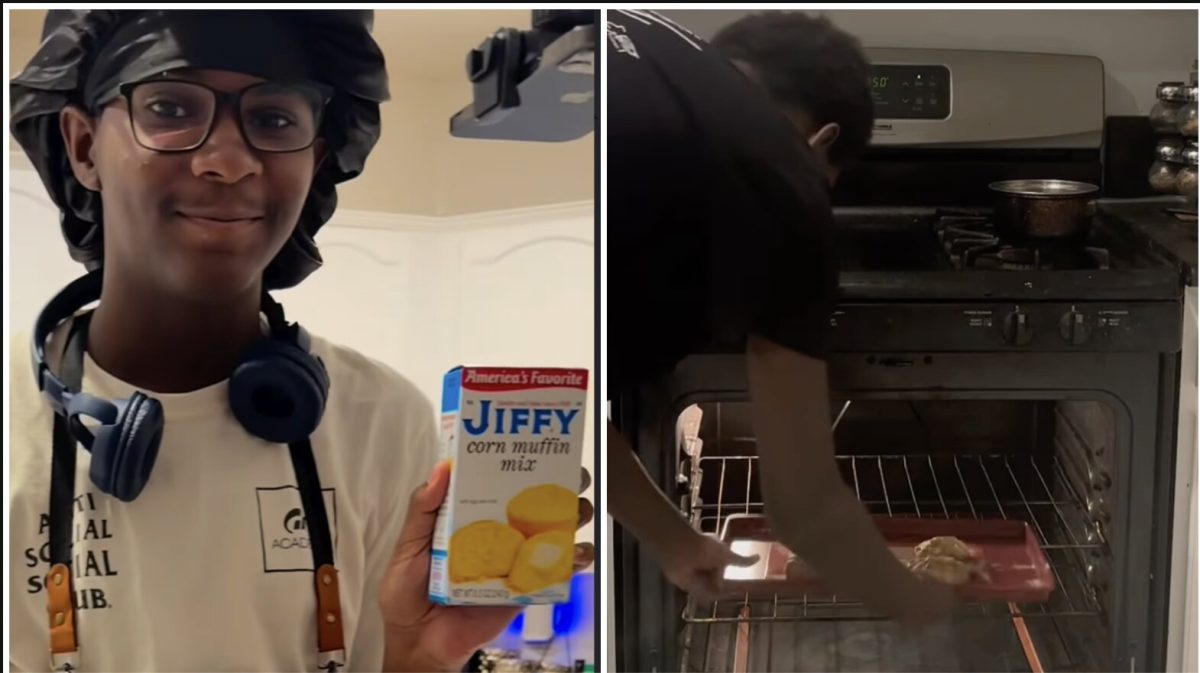
Woman documents her nephew’s late night culinary quests as the viral ‘Midnight Chef’
A 15-year-old cooking late night snacks is inspiring the Internet.
One night in Apple Valley, California, Morgan Graham rose in the middle of the night. A smell had woken her up. It was pleasant, but at 11:28 p.m. she wasn’t expecting to smell delicious cooking. She went down into the kitchen to see her 15-year-old nephew, Amir Jackson, baking cookies.
This was the first of several viral videos of Graham’s nephew cooking up a storm late at night. Jackson, who has been staying with his aunt during the summer, is taking advantage of her kitchen to whip up some sumptuous snacks.
Birth of a Midnight Chef
Nearly every night, Graham wakes up around midnight to the smell of cookies, cornbread, tacos, or whatever her nephew wants to prepare.
“I don’t care,” said Graham in the initial video. “He’s very responsible. He’s not gonna burn the house down, so therefore, cook whatever you want.”
Graham further explained in the video that Jackson looks at recipes daily. He also rummages through her pantry during the day to search for ingredients for his nightly cooking fest.
“In his world, he’s having the time of his life. In my world, I just want to stop waking up close to midnight to the smell of food,” Graham joked.
Graham’s videos featuring her nephew have racked up millions of views on TikTok and Instagram. The commenters soon bestowed the nickname “Midnight Chef” upon Jackson, to general delight. In another video, Jackson explained he liked the peace and quiet of the night while preparing his dishes.
“I was like, ‘Man, I could go for some cookies right now.’ I saw they had cookie dough, so I started just making them, just randomly,” Jackson told TODAY. “I was trying to make sure nobody was up. My thought process was just like, ‘Man, why not?’”
Graham is encouraging her nephew to keep cooking even though it wakes her. In fact, Graham set up Jackson’s own Midnight Chef Instagram page for him to post his latest recipes.
“I just want to experiment while I still got the chance to experiment. I’ll maybe like branch into different fields,” said Jackson. “Explore what I can do while I still got time to.”
Why do we indulge in late night snacking?
Jackson’s popularity has brought up a commonly asked question: Why do we crave food randomly in the middle of the night?
Well, there’s actually a bit of science behind it. Turns out that late night snacking is a result of our circadian rhythm system. As part of our now-defunct survival mechanism, our ancestors would eat large meals at night to store energy in times of famine. This is also why most midnight snackers crave foods higher in fat, salt, and sugar compared to what they’d usually eat during the day. While there’s nothing inherently wrong with late night snacking, it could curb certain health goals if a person is trying to trim down.
If you find yourself getting up in the middle of the night with a hankering for a snack, it may be worth taking a peek at Jackson’s videos. Who knows what kind of late night cooking it can inspire? Perhaps you’ll become a Midnight Chef yourself.
-
Millions of Illinois citizens wake up to find out that $2.6 billion of their medical debt eliminated
Illinois residents are getting relief from medical debt.
Regardless of how well or poorly the overall economy is doing, many Americans are saddled with crushing medical debt. Such debt can hold people in a dangerous place: they can’t prosper or build wealth because they’re too deep in the hole, and they might make their health worse by forgoing necessary care in order to save. However, one million residents in Illinois are breathing a sigh of relief knowing their medical debt has been paid for.
Partnering with officials in Cook County and Undue Medical Debt, Illinois governor J.B. Pritzker worked on the Illinois Medical Debt Relief Program based on a Cook County Medical Debt Relief Initiative. The patients needn’t apply for the relief initiative. They just had to be Illinois residents with a household income at or below 400% of the federal poverty level. They could still qualify if they had medical debts equal or more than 5% of their annual household income. If qualified, the resident would receive a confirmation letter that their debt had been paid.
Debt today, gone tomorrow
“In Illinois, we believe healthcare is a human right—and affordability is central to that promise,” Lieutenant Governor Juliana Stratton said in a press release. “No one should ever delay care because of cost or face financial ruin simply because they got sick. The Illinois Medical Debt Relief Program is about lifting that burden, strengthening families, and ensuring every Illinoisan can seek the care they need. When we make healthcare more affordable, we build healthier and stronger communities.”
“Combined with our partners here in Cook County, who have erased $1.5 billion, we have delivered more than $2 billion in relief to over a million Illinoisans in all 102 counties of our state, with an average elimination across the state of $1,200 per patient,” Governor Pritzker said to The Center Square.
Another state collaboration with Undue Medical Debt
If this story sounds familiar, GOOD recently covered the state of Connecticut partnering with Undue Medical Debt in a similar fashion. To put it simply, the strategy UMD and their partners use is to purchase medical debt from bill collectors. They bundle and purchase the debt for a discount and, since they are buying so much debt at once, they’re typically able to negotiate a good deal. This means that they’re able to purchase most debt for pennies on the dollar.
It’s not without critics
While this has been bringing relief to many folks, there are still critics. A 2024 National Bureau of Economic Research study found that medical debt erasure didn’t improve the recipients’ overall financial wellbeing. While no longer having medical debt relieves a burden, it doesn’t automatically raise a person’s wages, assist housing needs, etc.
They also argue that having medical debt relieved wouldn’t improve a person’s access to healthcare. A patient may accrue new, additional debt because of ongoing care. A person may also still avoid getting necessary care to avoid a new bill.
It will be interesting to see if this version of medical debt relief becomes even more common or if different solutions are inspired from it.
-
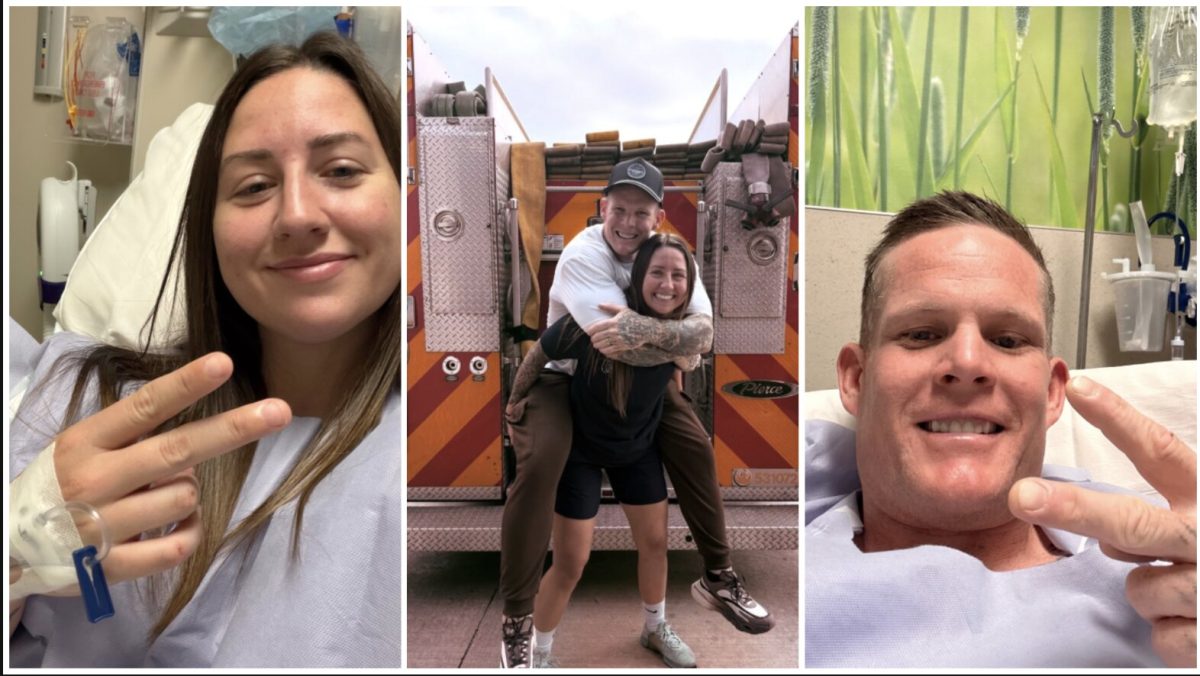
Arizona firefighter donates her kidney to a fellow firefighter—her husband
Husband and wife firefighters go through a kidney transplant together.
Firefighter Maddie Geer was shocked when she heard the news. Another firefighter was diagnosed with stage five kidney failure out of nowhere. She rushed to volunteer her kidney to save her colleague’s life. That colleague also happened to be her husband.
Geer and her husband, Robert Coleman Jr., fell in love while training to become firefighters at different stations. Last year, they got married. This year, after visiting a doctor to address fatigue issues, Coleman found that he was diagnosed with a rare kidney disease.
It was a total surprise
“What really threw us for a loop, though, is the fire department does very thorough physicals, and nothing was caught with my blood pressure,” Coleman said to Action News 5. “Blood pressure was good when I was going into my doctor’s meetings, but at night, my blood pressure was just going out of control. So, that’s what the scary part is.”
Not only that, but Coleman had stage five kidney failure. He needed a new kidney as soon as possible. Geer leapt to volunteer.
“Ever since he got diagnosed with it, I was like‚ ’If I’m a match, it’s meant to be because I’m going to give you my kidney,’” said Geer.
“(Maddie) was just itching to help me in any kind of way. It ended up being the most miraculous way,” Coleman said to 12 News.
A perfect match
Geer took the necessary tests and found she was a perfect donor match for her husband. They underwent the transplant to rounds of cheers from friends, family, and hospital workers. After the transplant, Coleman immediately felt the change.
“Once I saw him, he looked like a new person,” said Geer. “His face was lit up; he had a smile I hadn’t seen in a while.”
“I felt alive again,” he said. “She gave me a chance at a second life.”
While the two are itching to get back to their jobs, they have to wait until they’re fully recovered. Knowing that taking the proper time off to heal impacts their income, Geer’s sister Caitlyn has set up a GoFundMe for the couple. The money will be used to help with household expenses and follow-up doctor’s visits.
Check for signs, see your doctor regularly
There’s one thing that Robert Coleman Jr. hopes people do after hearing his story. He’s advocating that everyone gets their annual physical and regular checkups with their doctors.
“No one is invincible, and I learned the hard way,” he said.
It’s important to be mindful and alert about any changes in your body. The signs for kidney disease can be pretty mundane. Symptoms include swelling in the ankles and feet, frequent urination, and trouble sleeping among others. If you are experiencing any of these symptoms, it’s probably best to check with your doctor. It may be scary, but it’s best address any issue you may experience for the best chance of an optimal outcome.

advertisement


Millions of Illinois citizens wake up to find out that $2.6 billion of their medical debt eliminated


After 40 years in a Portuguese circus, elephant retires to become the first resident of a new sanctuary

Oakland officials open ‘play-lending library’ to offset the cost of equipment for youth sports
Sign Up for the Daily Good!
By subscribing, you accept beehiiv's Terms of Use & Privacy Policy. Our site's Privacy Policy applies.
Advertisement