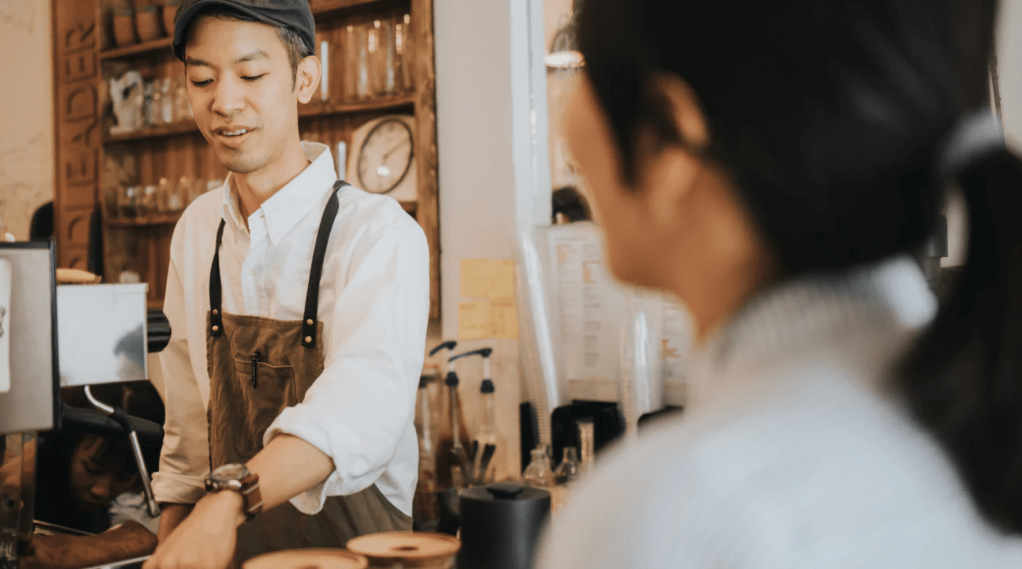
It may not be news to the 1.5 million college graduates struggling to find a job or toiling behind café counters, but Northeastern University researchers break it down: 53.6 percent of bachelor’s degree-holders under age of 25 were jobless or underemployed last year, the highest percentage since the dot-com bubble of 2000. In the last year, college graduates were more likely to be employed as servers, bartenders, and food-service helpers than as engineers, physicists, chemists, and mathematicians combined. The class of 2012 is about to get a gigantic wake-up call.

Unsurprisingly, the college majors least likely to yield a job were zoology, anthropology, philosophy, art history, and humanities, intimating that practical degrees like accounting and teaching were the way out of grim post-graduate job prospects. This is certainly true, but it’s a short-sighted way of thinking about our problem. We need to stop undervaluing creative fields as a culture and pressure politicians to support education and the arts. Perhaps if the government didn’t keep whittling down allocations to state universities, these humanities grads wouldn’t be so paralyzed by debt and could pursue their creative impulses—or score a tenure-track position with a Ph.D.


And we need to invest in our service sector. According to these new numbers, only three of the 30 occupations with the largest projected number of openings by 2020 will require a college degree—teachers, college professors, and accountants. The lion’s share of those openings will be in retail sales, fast food, truck driving, and caregiving, especially as Baby Boomers age. The dilemma of the low-wage service worker is one of the few instances when that famous Millennial sense of entitlement comes in handy. Like it or not, our generation will be in these jobs for a while—so let’s work to make them better. Let’s push our legislators to raise the minimum wage. Let’s start demanding that our government invest in education, but let’s also be real about how many of us can afford to be drowning in debt after a four-year college degree.

Mobilization works: The scrappy, Millennial-led Jimmy John’s union I profiled in March just won the case against their employer. That doesn’t mean everything is perfect—they’re staring down a long road of appeals, and a year’s back pay is cold comfort for someone who’s been unemployed for a year. Still, it’s a glimmer of hope. Sometimes, people listen to the squeaky wheels.

Photo by Benjamin Innes
  • A farmer caught a person dumping 421 tires on his land and his response is legendary
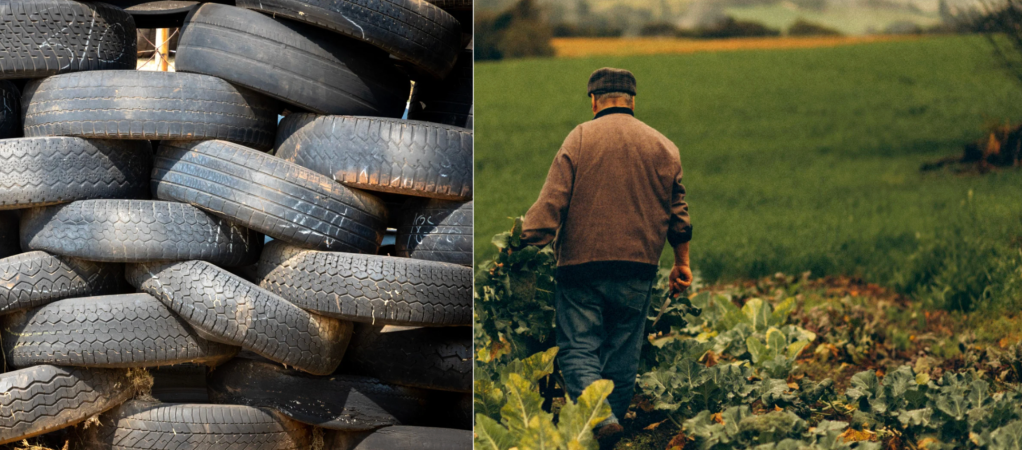
    (L) A pile of tires; (R) A farmer walks his landPhoto credit: Canva
    ,

    A farmer caught a person dumping 421 tires on his land and his response is legendary

    After years of his land being treated like a junkyard, Stuart Baldwin decided it was time to send a very large, rubbery message.

    Living on a farm often means dealing with the beauty of nature, but for Stuart Baldwin, a livestock farmer in Haydock, it also meant dealing with the mess left behind by others. Baldwin says about 25 times a year his land is targeted by “fly-tippers,” people who illegally dump trash on private property. As the Manchester Evening News reported, the situation recently reached a breaking point when Baldwin discovered a staggering 421 tires scattered across his fields.

    Instead of just cleaning up the mess and footing the bill, Baldwin decided to check the CCTV cameras he had recently installed. The footage clearly showed a van arriving at the property and unloading the massive haul of rubber.

    Baldwin didn’t immediately call the authorities or retaliate. In a move that reflects a very grounded sense of fairness, he tracked the man down and gave him a chance to make it right. He offered the man a few days to return and clear the field himself.

    When the deadline passed and the tires remained, Baldwin decided that if the man wouldn’t come to the tires, the tires would go to the man. Utilizing a truck from his family’s recycling business, Baldwin and a group of volunteers loaded every single one of the 421 tires and drove them straight to the address associated with the van. As The Daily Mail reported, they carefully unloaded the entire pile into the man’s front garden, ensuring no property was damaged in the process.

    This wasn’t just about a “petty” dispute. Illegal dumping is a massive problem that places a heavy financial and emotional burden on farmers. According to official government data from the UK, authorities dealt with over 1.2 million fly-tipping incidents in the last year alone. Baldwin’s daughter, Megan, told reporters that the family simply wanted to prove a point about respect and accountability. They wanted to show that a farmer’s land is a livelihood, not a convenient trash can.

    The community response has been overwhelmingly supportive. Baldwin noted that people have even approached him on the street to thank him for standing up for the neighborhood. While he joked that the culprit was likely feeling “deflated” after the delivery, the message was serious. By returning the waste to its source, Baldwin turned a frustrating violation of his property into a legendary lesson in personal responsibility.

    This article originally appeared earlier this year.

  • The Tsimané people of Bolivia have almost no dementia. Scientists say modern life is our problem.
    A tribe sharing a mealPhoto credit: Canva

    Deep in the Bolivian Amazon, researchers studying two indigenous communities have found something that stopped them in their tracks: among older Tsimané adults, the rate of dementia is roughly 1%. In the United States, the figure for the same age group is 11%.

    The finding, published in the journal Alzheimer’s & Dementia, is part of nearly two decades of research on the Tsimané and their sister population the Mosetén, communities who have been recorded as having some of the lowest rates of heart disease, brain atrophy, and cognitive decline ever measured in science. A subsequent study from the University of Southern California and Chapman University, published in the Proceedings of the National Academy of Sciences, used CT scans on 1,165 Tsimané and Mosetén adults to measure how their brains age compared to populations in the US and Europe. The answer was striking: their brains age significantly more slowly.

    The researchers’ explanation centers on what they call a “sweet spot” — a balance between physical exertion and food availability that most people in industrialized countries have drifted far from. “The lives of our pre-industrial ancestors were punctuated by limited food availability,” said Dr. Andrei Irimia, an assistant professor at USC’s Leonard Davis School of Gerontology and co-author of the study. “Humans historically spent a lot of time exercising out of necessity to find food, and their brain aging profiles reflected this lifestyle.”

    The Tsimané people of Bolivia posing for a photograph.
    The Tsimané people of Bolivia posing for a photograph. Photo credit: Canva

    The Tsimané are highly active not because they exercise in any structured sense but because their daily lives demand it. They fish, hunt, farm with hand tools, and forage, averaging around 17,000 steps a day. Their diet is heavy on carbohydrates — plantains, cassava, rice, and corn make up roughly 70% of what they eat, with fats and protein splitting the remaining 30%. It is not a low-carb or protein-heavy regimen. It is, essentially, the diet of people who burn what they consume. CNN’s Dr. Sanjay Gupta, who visited a Tsimané village in 2018 for his series “Chasing Life,” noted that they also sleep around nine hours a night and practice what might be called intermittent fasting — not by choice, but by necessity during lean seasons.

    The research also included the Mosetén, who share the Tsimané’s ancestral history and subsistence lifestyle but have more access to modern technology, medicine, and infrastructure. Their brain health outcomes fell between the Tsimané and industrialized populations, better than Americans and Europeans, but not as strong as the Tsimané. Researchers describe this gradient as especially revealing because it suggests a continuum rather than a binary, and that even partial movement toward a more active, less calorically abundant lifestyle appears to have measurable effects on how the brain ages.

    “During our evolutionary past, more food and less effort spent getting it resulted in improved health,” said Hillard Kaplan, a professor of health economics and anthropology at Chapman University who has studied the Tsimané for nearly 20 years. “With industrialization, those traits lead us to overshoot the mark.”

    The researchers are careful to note that the Tsimané lifestyle is not simply transferable. Their longevity in absolute terms is lower than Americans’ because of deaths from trauma, infection, and complications in childbirth, hazards of living without a healthcare system. The point of the research is not that modern medicine is unnecessary but that the environments it’s embedded in may be undermining the brain health it’s trying to protect.

    “This ideal set of conditions for disease prevention prompts us to consider whether our industrialized lifestyles increase our risk of disease,” Irimia said.

    This article originally appeared earlier this year.

  • She tipped a dollar on a $5 coffee and the barista called her out in front of the whole café. The internet couldn’t agree on who was wrong.
    Barista hands customer their coffeePhoto credit: Canva
    ,

    She tipped a dollar on a $5 coffee and the barista called her out in front of the whole café. The internet couldn’t agree on who was wrong.

    The incident touched a nerve because almost everyone has stood at a tip screen lately wondering what they actually owe.

    A regular customer at her local coffee shop dropped a dollar in the tip jar on her way out last week and ended up sparking a debate that a lot of people clearly needed to have.

    She’d paid $5 for her coffee, skipped the card tip prompt at checkout, and left a bill in the jar on her way out the door. The barista noticed, glanced at the cash in her customer’s wallet, and said loudly enough for the room to hear: “Oh wow! A whole dollar… that’s SO generous! Thank you SO much.”

    The customer, who goes by u/moonchildcountrygirl on Reddit, said she was rattled enough to wonder whether something was going to end up in her drink. When she posted about it online, Newsweek picked up the story and more than 800 comments followed.

    Reddit’s reaction was not especially sympathetic to the barista. “Should have picked that dollar back,” was among the most upvoted responses. Others said they would have asked for a full refund on the drink. The OP herself landed on a version of that position: if a tip is going to be met with sarcasm, why tip at all?

    But the incident is a little more complicated than a straightforward etiquette violation, because the math here actually favors the customer. A dollar on a $5 drink is a 20% tip, the same percentage most people consider the standard for a sit-down restaurant with table service. Industry veterans generally say a dollar a drink is a reasonable coffee shop tip, and that baristas at most cafés (unlike servers) are paid standard minimum wage rather than the lower tipped-employee rate that makes gratuities more essential.

    A barista serves a customer in a coffee shop
    A barista serves a customer. Photo credit: Canva

    None of which makes a public sarcastic remark the right response. But it does situate the incident inside a broader frustration that’s been building for a few years. A Pew Research Center survey found that 7 in 10 American adults say tipping is now expected in more places than it was a few years ago. A Bankrate survey found that 41% of Americans think tipping culture has gotten out of hand, and around 63% have at least one negative view about tipping overall. More than 60% agreed that employers should simply pay workers better so tips don’t have to fill the gap.

    The tip jar and the checkout screen have become the place where all of that tension gets concentrated into a single uncomfortable moment. The barista’s comment was out of line. The customer’s dollar was not stingy. And the fact that it’s hard to say either of those things without someone disagreeing is probably the actual story.

    This article originally appeared earlier this year.

Explore More Stories

Ideas

Woman at airport quietly pays for dad who couldn’t afford toddler’s $700 ticket

Culture

Second-grade teacher asks her students for marriage advice. Here’s their 7 best responses.

Society

Her bosses wore the same sneakers but only she got fired. So she took them to court and won.

Internet

Teacher spots suspicious bare feet under a school bench, but the ‘lockdown’ scare has a surprising explanation