In 1971, six years after the United States sent combat units into Vietnam, the nonprofit group Vietnam Veterans Against the War sponsored the Winter Soldier Investigation. More a three-day press conference than an actual “investigation,” Winter Soldier offered a platform to veterans and civilians who had seen the horrors of Vietnam firsthand and wanted to share their stories with the public.

On the first day, former Marine Joe Bangert was called on to talk about “the slaughter of civilians, the skinning of a Vietnamese woman… and the crucifixion of Vietnamese either suspects or civilians in Vietnam.” Before dozens of other soldiers, civilians, and members of the press, Bangert testified that it was common practice for soldiers to not only kill scores of Vietnamese people at a time—some of whom were civilians—but to mutilate the dead. Bangert said sometimes they would disembowel corpses, then explode the bodies with C-4 to destroy the evidence of their sadism. “You don’t even think of them as human beings; they’re ‘gooks,’” Bangert told reporters. “And they’re objects; they’re not human, they’re objects.”


Forty years after Bangert’s brutal admissions, America and the Middle East are in an uproar about a video that appears to depict four Marines urinating onto the dead, bloodied bodies of Taliban fighters. The video emerged on Wednesday, and in the hours since, many have come forward to express their displeasure: The Taliban spoke up immediately to say it was outraged—though luckily not enough to walk away from Afghan peace talks; Senator John McCain, a Navy man who fought in Vietnam, said the incident “makes me so sad”; and Secretary of Defense Leon Panetta on Thursday called the video “utterly deplorable,” adding that he’d ordered a full investigation by the Marine Corps. If the footage is proved to be authentic, the Marines could be brought up on charges of breaking rules of war, some of which prohibit photographing corpses.

What a world we live in, a world in which it’s perfectly acceptable to shoot your enemy in the brain so long as you don’t take a picture of his exploded head afterward.

This latest bit of U.S. military tactlessness is reminiscent of May 2011, when Navy SEALs stormed Osama bin Laden’s Pakistani compound and shot him in the face. Both cases involve America’s war on terrorism, of course. But they also both ask America to confront its feelings on what’s appropriate when it comes to killing people. In May, that confrontation meant a great debate over whether it was prudent to release photos of bin Laden’s shredded head. In the end, President Obama decided to not release the photos, a ruling met with happiness by those who believed publishing the pictures would be barbaric. “To put [bin Laden’s] head on a digital spike and display his mangled head is, indeed, not the Western way,” wrote Daily Beast blogger Andrew Sullivan. “We are better than that. […] We don’t torture and we respect the human dignity of even our worst enemies.” Presumably Sullivan’s logic applies to the urination video as well, an attack on the dignity of our enemies.

If you’re a fan of dark comedy, all the hand-wringing about preserving the dignity of our enemies after they’re dead can seem outright laughable. We allow—nay, encourage and demand, our troops to shoot people in the face, stab them in the guts, and bomb their homes. We ask them to do work that destroys families, communities, cities, and countries. We ask them to witness their friends and colleagues get slaughtered on the battlefield, and to see gore and trauma generally found in scary movies. What’s more, frequently we ask them to do all this when they’re still teenagers, too young to even drink a beer.

To be a soldier in wartime means being told constantly to do things that tread close to hellish. Yet when that hellishness occasionally boomerangs and smacks civilians in the face via grotesque videos and images, journalists and politicians like to label the soldiers “completely inhuman,” as Afghan President Hamid Karzai called the urination footage. In fact, Karzai is right: It is completely inhuman. But it’s inhuman because many of our soldiers have, for their own sanity, learned to strip humanity out of the equation, making their enemy not a man, but a “gook” or “towelhead.” Being able to make that distinction in your mind is important in war, because when you can look at the person at the end of your gun barrel and think he’s not a man, you allow yourself to ignore all the lessons you learned about how killing people is wrong. If your enemy is not a man like you, with a family and a mother, then why not shoot him in the heart? And once you’ve shot him in the heart, why not pee on him?

More American troops now kill themselves than die in combat, and female soldiers are more likely to be sexually assaulted by a colleague than to be killed by the enemy. In short, the kids aren’t all right, and it’s time for everyone to stop being shocked when they behave in abnormal, terrifying ways. War is an awful thing that irrevocably changes and destroys people, and it yields horrific, destructive behavior. If you’d like to live in a world in which soldiers don’t pee on their dead enemies, then it’s your duty to fight for a world in which soldiers aren’t killing people in the first place.

  • A bonobo’s make-believe tea party has scientists rethinking whether imagination belongs only to humans
    Photo credit: CanvaAn adorable baby bonobo.

    Childhood activities like playing house, superheroes and villains, the floor is lava, and the classic tea party all involve imagination. We create stories and worlds with rules and roles to play.

    Humans want to believe that our creativity and art make us unique. But a bonobo named Kanzi was part of research that has scientists wondering how different we really are. In three evolving experiments, Kanzi correctly identified pretend objects, demonstrating that he could understand and engage in make-believe situations.

    primate research, behavior, bonobo study
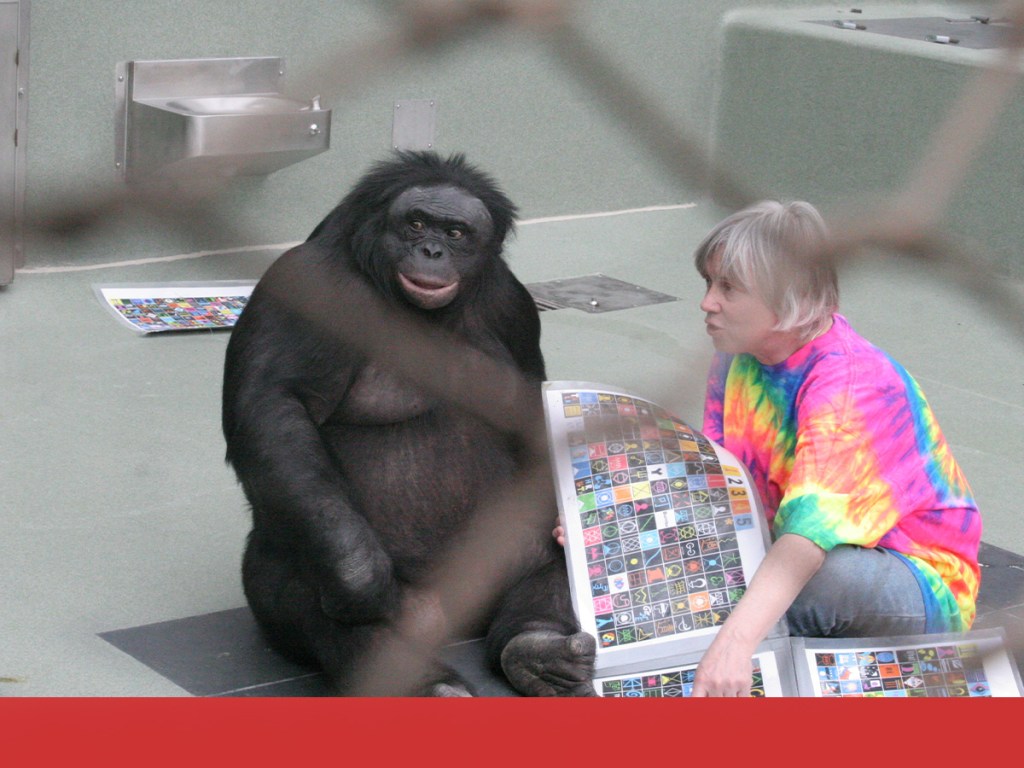
    Kanzi associates words and symbols with Sue Savage-Rumbaugh.
    Photo by William H. Calvin, Phd/ Wikimedia Commons (Cropped)

    Kanzi has a make-believe tea party

    Researchers developed a simple setup using cups, a pitcher, and actions that began as real pouring and gradually shifted into pretend play. The first experiment used real liquids. The second had a combination of real and pretend liquids. The final scenario had no real liquids and relied entirely on imagination.

    The scientists used gestures and make-believe to see if Kanzi would react differently depending on what he was being shown. He didn’t react the same way in each setup. His responses showed he was paying attention to more than just the objects, but also to the way the situation was presented.

    bonobo play, animal imagination, Kanzi bonobo, apes
    Kanzi participates in an indoor test.
    Photo by William H. Calvin, Phd/ Wikimedia Commons (Cropped)

    Animals engaging in fantasy

    The experiment revealed that non-human animals can understand and follow along with imaginary situations.

    “[It] shows that animals are capable of understanding pretence in a controlled experimental setting, which hadn’t been done before,” Dr. Amalia Bastos, first author of the research from the University of St Andrews, told The Guardian.

    Scientists involved in the research are careful about how they describe it. They don’t treat it as proof that bonobos imagine things the same way humans do. Instead, they suggest that animals are capable of responding to situations where meaning is implied rather than directly shown.

    Why scientists care about pretend play

    Albert Einstein, one of the greatest scientific minds in history, is often credited with the idea that logic gets you from A to B, but imagination can take you everywhere. This study suggests that the more we learn about animals, the more it seems the difference between us may not be as great as we once thought.

    Developmental research credits early social and cognitive growth in human children to imagining situations that aren’t physically present. A 2024 meta-analysis found that make-believe is not just entertainment but also directly linked to social understanding and real-world interpretation.

    Researchers now describe animal play as more flexible than once believed. A 2025 study of ravens revealed that play included the manipulation of sticks, stones, and other items, suggesting social awareness and responsiveness to context rather than simple instinctive behavior.

    Play and imagination may be versatile behaviors no longer seen as uniquely human traits. A broader cognitive toolkit shared across multiple species suggests the gap between humans and animals may be smaller than it once seemed. Things we’ve long believed to be uniquely human may instead exist along a spectrum of abilities expressed in different ways.

  • People thought cats lay on laptops to get in the way. The real reason is surprisingly sweet. 
    Photo credit: CanvaA kitty decides when it's time to work.

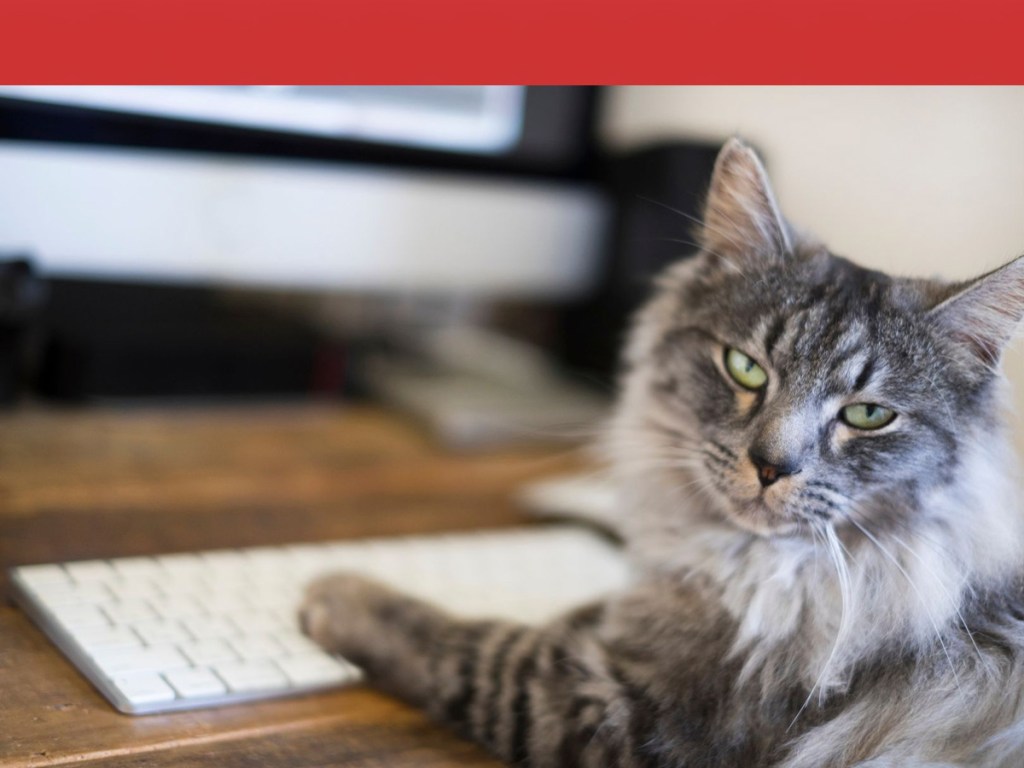
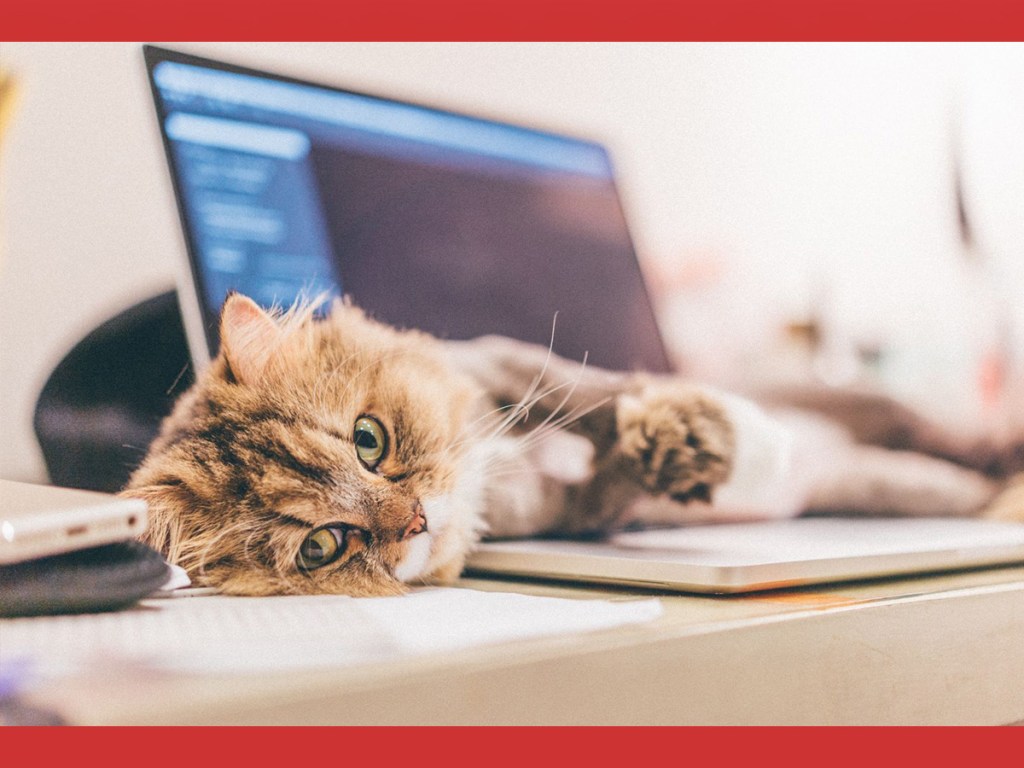
    People who work from home with a cat nearby tend to recognize this moment well. The instant a laptop opens and a document appears on the screen, a cat arrives within seconds, claiming ownership of the keyboard.

    It can feel like an unwelcome interruption, yet veterinarians and animal behavior specialists have identified a common pattern among domestic cats. Cats often choose to sit on objects their owners are engaged with, particularly when those things are central to human attention or activity.

    pets, psychology, curiosity, scent
    A cat with a little attitude on the computer.
    Photo credit: Canva

    Cats aren’t trying to be a nuisance

    The first, and probably most familiar, reason a cat jumps on you and the computer when you’re working is attention. Animal behavior experts at vet-reviewed sources like Catster explain that cats repeat behaviors that reliably get responses from their owners. Why work when you can play and look at me?

    Another commonly cited explanation is simple comfort. Laptops, keyboards, and similar devices radiate heat. Cats seek out these warm surfaces for napping. Daily Paws notes that warmth is one of the practical reasons cats may choose electronics over other available spaces in the home.

    And let’s face it, cats are naturally curious. They are highly responsive to human activity and tend to investigate objects their owners are focused on. The laptop, papers, and even a phone being scrolled at home become sources of fascination.

    cat owners, remote work, home life, domestic cats
    A white cat relaxes on a laptop.
    Photo credit: Canva

    The science behind cats lying on laptops

    Research suggests there is more behind this behavior than basic attention-seeking and curiosity. Physical contact with objects can shape how cats interact with their environment, especially with items frequently handled by humans. For cats, scent helps create and strengthen connections with their owners.

    “Cats are very possessive individuals,” Dr. David Sands, an expert in animal psychology, told BBC Science Focus. “For them, the more they can brush past you and deposit your scent, the better!”

    The laptop is not just a warm surface but also a shared space that already carries a lot of its owner’s presence.

    Research from the Tokyo University of Agriculture found that cats can differentiate between familiar and unfamiliar humans using smell alone. In everyday settings, this may explain why cats often spend time on items like clothing, beds, or computers that carry their owner’s scent. These objects are strongly associated with a favorite human.

    animal science, feline behavior, pets,  animal bonds
    A kitty on a laptop.
    Photo credit: Canva

    Cats want to be close to their owners

    These explanations point in a similar direction. What may seem like a deliberate effort to interrupt work is more likely the result of several well-intentioned feline behaviors. The family mouser is probably not plotting against your productivity.

    From seeking warmth and comfort to investigating the objects that hold our attention to interacting with surfaces carrying our familiar scents, cats have plenty of reasons to gravitate toward a laptop. These soft and cuddly family members adapt to the people and environments around them, even if that process occasionally lands them squarely on our keyboards.

  • How out‑of‑work fishermen saved the American Revolution
    Photo credit: wynnter/iStock via Getty Images Plus Ships like these played a vital role in the American Revolution.

    George Washington knew his forces could not win the American Revolutionary War without some measure of sea power. “It follows then as certain as that night succeeds the day,” he later wrote in a letter, “that without a decisive naval force we can do nothing definitive, and with it everything honorable and glorious.”

    The problem was that the American commander did not have a navy.

    As a professor of early American history, I have taught courses on the American Revolution for more than 20 years and have written two books on its maritime dimensions. Washington’s solution wouldn’t come from a French shipyard or a congressional committee. It would come from a group of angry, out-of-work New England fishermen.

    Supplying the army from the sea

    In 1775, American ground forces managed to lay siege to the British army in Boston, but Washington needed provisions and military stores to sustain pressure on this key commercial hub. Looking out across the Atlantic Ocean, he noticed supply ships arriving in droves from Great Britain – unescorted – to supply the British army in Boston with guns and ammunition.

    Unbeknownst to them, the British had already handed the American commander the ships and mariners he needed to capture those resources.

    The Sons of Liberty, a network of political activists, had angered the British government by resisting taxes and commercial regulations – from the 1765 Stamp Act, which taxed printed documents, to the 1773 Tea Act, which controlled what tea leaves made their way into North American cupboards.

    To punish rebels for their treason, Parliament passed the Restraining Act of 1775, banning New Englanders from fishing on the Atlantic Ocean. Overnight, thousands of skilled mariners – men who spent their lives wrestling 100-pound cod out of the freezing, storm-tossed North Atlantic – were out of a job. They weren’t just unemployed; they were furious. These fishermen left their work tools and ships behind, picked up weapons and joined the siege of Boston alongside American farmers.

    Ashley Bowen, who lived and worked in Marblehead, Massachusetts, the principal fishing port in America at the time, recorded in his journal on May 22, 1775, “the fishermen are enlisting quite quick.”

    A letter from a French diplomat to the foreign minister in Paris confirmed the news a couple of weeks later: “4,800 sailors seeing they were going to be deprived of their fishing rights, deserted their ships and joined their compatriots under arms.”

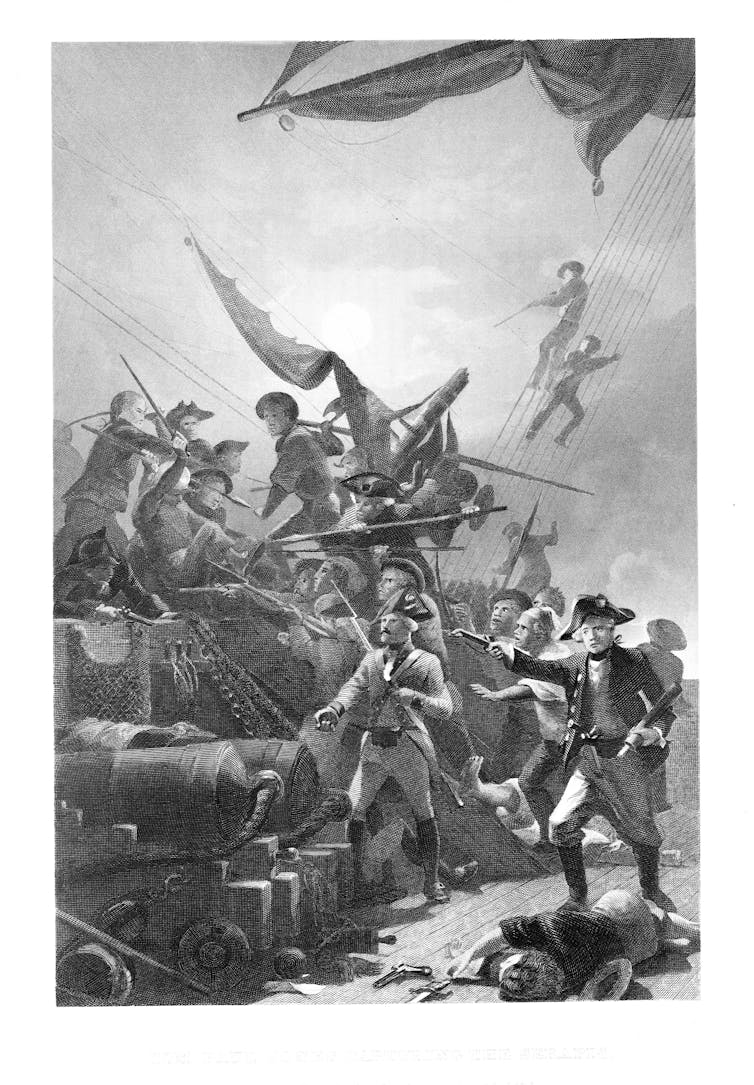
    A black-and-white image shows John Paul Jones standing in the midst of a battle on a ship
    John Paul Jones, known as the Father of the American Navy, commanded sailors during the American Revolutionary War. Christine Kohler/iStock via Getty Images Plus

    Creating the first navy

    Washington, commissioned by Congress as commander in chief of all American armed forces in June 1775, saw an opportunity. He didn’t wait for Congress to build new frigates. Instead, he reached out to John Glover, a fish merchant from Marblehead and a commissioned officer under his command.

    Washington’s plan was simple: Take the sturdy, salt-stained schooners used for fishing and turn them into armed, seagoing predators.

    The first of these was Glover’s own fishing vessel and trade ship, Hannah. She wasn’t a formidable man-of-war but a 78-ton workhorse that spent summers at the Grand Banks and winters hauling rum and sugar from the Caribbean. Washington armed the trade ship with a few cannons, manned her with fishermen and sent her out to hijack British supply ships to help his army win the siege of Boston.

    Just two days after the Hannah was underway, her crew captured the Unity, a sloop loaded with naval stores and lumber, supplies sorely needed by British forces in Boston.

    Between August and October 1775, Washington outfitted a fleet of schooners at Congress’ expense to intercept British supply ships off the coast of New England. These vessels and crews, whose wages were paid by the American government, constituted what many historians consider America’s first navy. Washington reminded each captain that they sailed “at the Continental Expense.” These orders from Washington and the payments made by Congress made these ships official American warships, operating under the authority of what would become the federal government.

    These recruits didn’t need nautical training; they were seasoned seafarers who had battled rough waters and gale force winds. On Oct. 13, 1775, George Washington wrote to his brother, John Augustine Washington, that the fishermen were “soldiers … who have been bred to the sea.”

    In 1776, Washington informed the governor of Connecticut, who had asked to draft seamen from Washington’s regiments for his own naval expedition, that he could not spare any. “I must depend chiefly upon them for a successful opposition to the Enemy,” Washington explained.

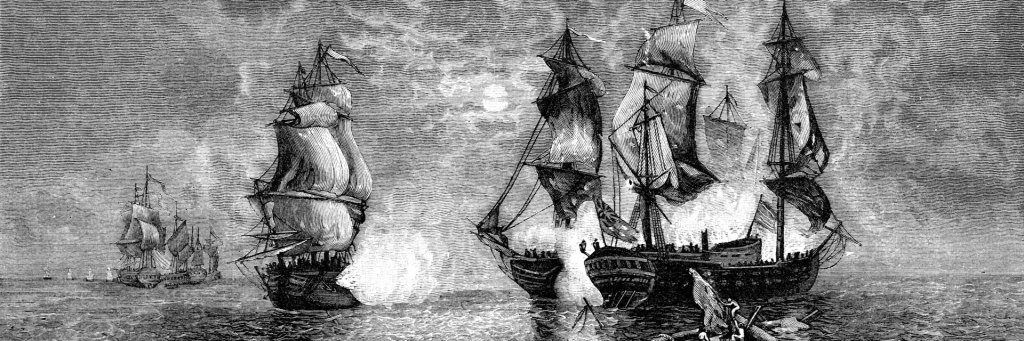
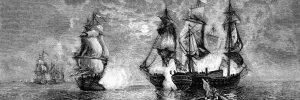
    A black-and-white image shows two ships at battle
    An American navy ship defeats a British navy ship, 1779. Christine Kohler/iStock via Getty Images Plus

    Keeping the Revolution alive

    This fleet of converted fishing boats punched above its weight: In the early years of the war they captured 55 British vessels. One such prize, the Nancy, was transporting 2,000 muskets, 30 tons of musket balls and a massive 15-inch brass mortar – supplies the American army desperately needed for the war effort.

    Because the British navy was spread too thin, with too few warships available to police the Atlantic coastline, the armed fishing vessels were able to disrupt supply lines and keep the Revolution alive through its infancy. By the time the British realized the threat, the damage was done.

    On Feb. 26, 1776, just a few months after Washington launched his fleet, British Admiral Molyneux Shuldham wrote in a report to his superiors that his forces in Boston were low on everything from naval supplies to weapons. What little they could find had to be purchased “at the most extravagant prices.”

    The British government had not assigned military convoys to trans-Atlantic shipments at the start of the conflict in 1775. Now, Shuldham recommended arming the supply ships themselves, since valuable stores were being intercepted by rebels in small vessels, “however attentive our Officers to their Duty.”

    He concluded the report with an ominous note, explaining that he simply did not have the resources to do everything that was being asked of him – support the army, blockade rebel ports and protect British ships bound for Boston: “I must beg leave to observe to you the very few Ships I am provided with to enable Me to Co-operate with the Army, Cruize off the Ports of the Rebels to prevent their receiving Supplies, or protect those destined to this place from falling into their hands.”

    This article originally appeared on The Conversation. You can read it here.

Explore More Stories

Film & TV

Actor shares with Harrison Ford that he was her late dad’s favorite actor. His reply was perfect.

Everyday Economics

4 reasons why coffee grounds are a money-saving cleaning supply

Environment

As climate change causes flooding in London, experts found an effective, low-cost solution: beavers

Smart Spending

Brooklyn chef’s budget-meal videos turn $5 worth of groceries into delicious family dinners