

Some things in life are actually necessary—clean water, decent healthcare, basic human decency. But then there are the things that feel like they’re gaslighting us. The things we’re told we can’t live without, even though we survived just fine before they existed. Things like “smart” fridges, lawn fertilizer services, and yes—whole body deodorant.

Recently, our sister-site Upworthy asked their Facebook audience the question: What’s a product or service that feels like it’s gaslighting all of us into thinking it’s necessary? More than 8,000 responses poured in. The answers were passionate, funny, and surprisingly unified. Here are 21 products, services, and systems people called out for pretending to be essential—when they might actually be optional, overpriced, or flat-out invented.

1. Health insurance

gaslighting, unnecessary products, consumerism, Upworthy, viral, wedding industry, whole body deodorant, tipping culture, smart appliances, health insurance
A hospital administrator goes over insurance papers with a patient Canva

It topped the list. Erica L. explained: “My doctor prescribes, the pharmacist issues meds, nurses care for people, surgeons do surgery—Health Insurance stands between health care and patients and says no, exclusively on whether they think it’s financially effective to treat you.”

Important note: Health insurance can provide life-saving access for many—but what people are frustrated by here is the profit-first system, not care itself.

2. Whole body deodorant

“Take a shower,” said Shannon H.
“How did we ever manage all those years without it!! ” added Karen R.
Others noted it may help people with medical conditions—but for the average person, it’s definitely a marketing creation.

3. The wedding industry

gaslighting, unnecessary products, consumerism, Upworthy, viral, wedding industry, whole body deodorant, tipping culture, smart appliances, health insurance
Newlywed coupleu00a0leaving the reception Canva

Multiple people slammed the high cost of modern weddings.
JoElla B. put it plainly: “We spend too much time and money planning one day, and not enough thought on how to blend two lives in a mutually beneficial one.”
Others called out expensive dresses, venues, and pressure to perform for social media.

4. Bottled water

Carole D. said: “Water in plastic bottles! Get a cup!”
While bottled water has value in emergencies, it’s often just filtered tap water—sold for profit in plastic.

5. Baby product overload

“Most baby products,” wrote Kelli O. “They really aren’t as needy and complicated as companies want us to think.”

6. Fabric softener

“It’s bad for clothes, bad for the Earth, bad for the wallet, and totally unnecessary,” said Gail H.
Some experts agree—many softeners contain chemicals that can reduce fabric lifespan and irritate skin.

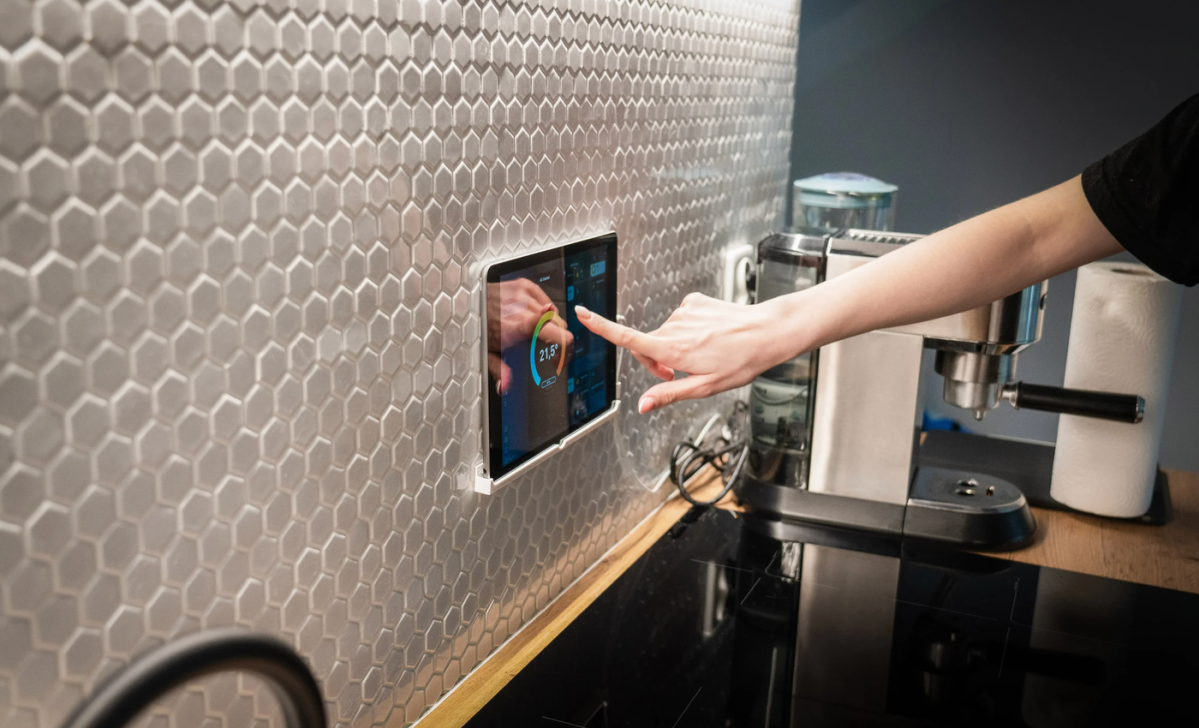
7. Smart appliances
gaslighting, unnecessary products, consumerism, Upworthy, viral, wedding industry, whole body deodorant, tipping culture, smart appliances, health insurance
A hand reaches out to touch a smart appliance on the wall Canva

“Adding ‘phone controls’ to every appliance instead of making them last as long as they used to,” wrote Sherry S.
When your fridge needs a software update, something’s gone off the rails.

8. Makeup and anti-aging products

“Anything anti-aging,” said Melissa T., “Please just let me age into the gargoyle I was meant to become.”
Others questioned products designed to “fix” eyelashes, eyebrows, pores, and graying hair.
April S. added, “Products that women are convinced they MUST have in order to be ‘beautiful’ and therefore ‘loved.’”

9. Cosmetic surgery

Ron P. called out the industry as a whole. And while body autonomy matters, many commenters questioned whether insecurities are being commodified and sold back to us.

10. Ticketmaster and “convenience fees”

“Let’s go back to waiting in line at a record store,” wrote Nicole C.
Zaida B. added: “Convenience fee for online purchases—then charging $10 more at the actual event.”

11. Engagement rings

gaslighting, unnecessary products, consumerism, Upworthy, viral, wedding industry, whole body deodorant, tipping culture, smart appliances, health insurance
A woman shows off her newu00a0engagement ring Canva

James P. didn’t mince words: “Engagement rings.”
The diamond industry has long been criticized for manufactured scarcity and marketing-fueled necessity.

12. Lawn chemicals and services

“Plant native grasses and you don’t have the pests or need for constant watering,” wrote Jamie B.
Environmental groups have raised similar concerns over runoff and unnecessary pesticide use.

13. AI and generative tech

“This stuff squeezes the lifeblood and individuality out of the human experience,” said Teresa L.
Saskia D. and others echoed skepticism about its necessity, even as many of us are being pushed to use it.

14. Funeral services

gaslighting, unnecessary products, consumerism, Upworthy, viral, wedding industry, whole body deodorant, tipping culture, smart appliances, health insurance
A wreath made of flowers sits on display Canva

Amy W. shared: “My parents both have already paid to have themselves cremated and are very adamant that they do not want anything big done for them. In their words, ‘I won’t care, I’m dead.’”
Of course, some families find comfort in tradition—but the cost and pressure can feel overwhelming and predatory.

15. Rinse and repeat

Amy D. nailed it: “It’s just to sell more. Not even sure you need it at all.”

16. Credit Card Surcharges

Shawn S. took aim at the extra fees popping up at checkout: “That is the cost of doing business and shouldn’t be the burden of the purchaser.”
Many questioned why customers are increasingly being asked to pay extra simply for the convenience of using a card.

17. Constant phone upgrades

“Apple are notorious for releasing the same shit every year,” said Steph S.
Diana H. added, “Needing to upgrade our phones so frequently.”
Built-in obsolescence and marketing cycles drive most of the demand.

18. Vitamins and supplements

gaslighting, unnecessary products, consumerism, Upworthy, viral, wedding industry, whole body deodorant, tipping culture, smart appliances, health insurance
A collection of supplements Canva

“If I took every supplement they say I NEED I wouldn’t need food. Nor could I afford it,” said Tausha L.

19. Fake pockets on women’s pants

Jessica W. said, “I have to buy men’s pants for work because women’s pants would just get torn up too fast!”
Form over function, and then they charge more for it.

20. Disposable everything

“The ‘convenience’ of disposable everything,” said Rick R.
It’s killing the planet—and draining wallets.

21. Tipping

“I’m sick of supplementing for corporations that refuse to pay a living wage,” wrote Susan V.
Tipping culture has evolved into something far removed from its original intent, and for many, it now feels like a burden shifted onto the customer.

The bigger picture

People aren’t saying all these things should vanish tomorrow. But when we start seeing convenience sold as necessity, and insecurity turned into billion-dollar markets, it’s worth asking: who benefits from all of this?

And more importantly—who pays?

This article originally appeared earlier this year.
  • He threw a message in a bottle into the ocean as a teen. It washed up 49 years later with a response.
    A bottle with a message inside resting on a beachPhoto credit: Canva
    ,

    He threw a message in a bottle into the ocean as a teen. It washed up 49 years later with a response.

    Two beachcombing brothers nearly skipped the trip. On a remote Bahamian island, one of them found a sand-covered glass Pepsi bottle with a note inside from 1976.

    In May 1976, a ninth-grader named Peter R. Thompson sealed a short note inside a glass Pepsi bottle, handed it to the Coast Guard, and watched it get dropped into the Atlantic Ocean. The note asked whoever found it to write back with the date, location, and how they’d come across it. He was 14. He was doing it for an oceanography class at Pentucket Regional Junior High School in West Newbury, Massachusetts. He then, by his own admission, mostly forgot about it.

    The bottle drifted for 49 years.

    Earlier this year, brothers Clint and Evan Buffington had nearly canceled a trip to a remote out-island in the Bahamas after both came down with an illness. They went anyway. As Clint told WCVB, they were walking the beach on a beautiful sunny morning when his walkie-talkie crackled to life. His brother’s voice came through: “You’re not going to believe what I just found.”

    It was the bottle. Inside, the note was sand-covered and browned with age but still fully legible, more than 1,000 miles from where it had started.

    As reported by Boston.com, Clint Buffington is no casual beachcomber. He found his first message in a bottle in 2007 and has since found over 120 of them, documenting each one on his Message in a Bottle Hunter blog. He knew immediately this one was special. In a Facebook post that began circulating widely, he wrote about what the note meant not just as an artifact, but as a window into the mind of a kid from the 1970s with a science assignment and a big imagination: “Just think what it meant to the 14-year-old kid who sent it in the 70s! The dreams of where it would travel, where it might wind up, who might find it.”

    @clint_buffington

    Here’s the 1976 message in a bottle my brother found a few weeks ago! Y’all wanted to know what it says, so here you go 🙂 Now, to some, this may sound like a pretty “straightforward” message… No romance, no pirate treasure map. But just think what it meant to the 14 year old kid from West Newbury Massachusetts who sent it in the 70s! The dreams of where it would travel, where it might wind up, who might find it… Well, after who knows how many trips around the North Atlantic, drifting past whales and cargo ships, shimmering under the northern lights…it wound up on a very sparsely inhabited out-island of the Bahamas and rested in the sun as world leaders and wars came and went, music and clothing styles rose and fell. Somewhere in there, my brother (who found it) and I were born, grew up, went to school, got married, had kids…. And all that time, this message was waiting to be found. There’s way more going on with this message than you could ever imagine just by reading it! So, here’s hoping we connect with Peter R. Thompson of West Newbury, MA — And that wherever he is today, he still has that 14-year-old dreamer inside him, full of curiosity! #messageinabottle #westnewbury #massachusetts #beachcombing #beachcomber #beachcombingtreasure #treasurehunting #fun #happy #goodvibes #newengland #lostandfound #exciting

    ♬ original sound – Message in a Bottle Hunter

    He went on to describe the bottle’s imagined journey across the North Atlantic, drifting past whales and cargo ships, sitting on a Bahamian shoreline while decades of history rolled by, while he and his brother were born, grew up, got married, had kids. “And all that time,” he wrote, “this message was waiting to be found.”

    Clint posted a TikTok asking for help tracking down Thompson. It crossed one million views. Boston journalist Emily Maher, a reporter at WCVB, got there first. She found Thompson, now living in Leominster, Massachusetts, and put him on the phone with the brothers. “I have found someone that you’ve been looking for,” she told Clint. “I’m going to hand the phone over to Mr. Peter Thompson.”

    Thompson’s reaction, as he told WCVB, was simple and genuine: “It’s amazing. It’s almost 50 years later. It’s a big surprise.” He said he doesn’t remember writing the exact note, but he does remember the oceanography class. The Buffington brothers are planning to return the note to him in person.

    @clint_buffington

    Wow, you guys! Guess what? WE FOUND PETE THOMPSON!! The author of this 1976 message in a bottle!! My sweet brother, Evan, and I are still reeling from the outpouring of support and help we got through TikTok and @WCVB Channel 5 Boston News as we searched for Pete, who was about 14 when he sent the bottled note 49 years ago. Well, thanks to YOU all, we DID find him!!! I mean, really, we are just two goofy brothers, now dads in our 40s (where did the time go!) who have a weird hobby (finding messages in bottles) and we’ve never gone viral on TikTok, so we are a little overwhelmed and a lot grateful! Evan was FLOORED when we very luckily happened to be together this past week, and in the midst of this wild search for Pete, all of a sudden we received a phone call from WCVB’s Emily Maher who had Pete ON THE PHONE WITH US!!! We had a great little chat, all of us totally in shock, and we all STILL are! Pete still lives in the area and was deeply surprised to hear about his message in a bottle—at last check he was still combing through memories of his science / Oceanography class for recollections of making this message in a bottle. It’s amazing what one little scrap of paper in a bottle can do—the memories it can rekindle, the friendships it can spark. It’s so strange to think that this bottle was sent 6 years before Evan was born, and 8 years before I was. Every day of our lives, every little triumph or loss—graduations, meeting and losing friends, getting our drivers licenses, family vacations when we were tiny…every single breath we’ve ever breathed, and this message in a bottle was out there the whole time, just waiting… Sharing this with Pete is a great joy, and sharing it with all of you—who really seem to understand why we love this crazy hobby so much—has also been a total thrill. We have so many more unopened messages in bottles to investigate, and we will need your help! Each one is a portal into someone else’s life, into their world, and who knows where the next one will take us?! We really hope you stick around for the ride. So, from Evan, from me: Thank you, thank you, thank you. We could not have done this without you! As Evan says in this video, “It takes a village”!! Here’s hoping we can return Pete’s message to him! #messageinabottle #westnewbury #massachusetts #boston #newengland #bahamas #fun #happy #goodvibes #goodnews #beachcombing #beachcombingfinds #oceanography #grateful #gratitude

    ♬ original sound – Message in a Bottle Hunter

    Clint’s framing of what makes these discoveries meaningful applies as much here as anywhere: “I always think the most important thing about these messages is not how old they are or how far they’ve traveled. It’s the people on the other side.”

    Peter Thompson spent 49 years not thinking much about a bottle he threw into the ocean as a kid. Then two brothers nearly sick enough to stay home decided to go to the beach anyway, and suddenly the question he asked in 1976 finally had an answer.

    @clint_buffington

    Ahoy, New England!! My goonball brother EVAN found this 1976 message in a Pepsi bottle on a sparsely inhabited Bahamas island last month, 49 years after it was sent by a Peter R. Thompson who lived in West Newbury, MA at the time! He was a 9th grader at Pentucket Regional Junior High School. Yes, there are many Peter Thompsons on social media but we can’t seem to find the right one! Does anyone out there know the right Peter? And @pepsi – if you are looking to rack up some good karma, here’s a chance: Get out your megaphone! Let’s find Peter R. Thompson and COMPLETELY BLOW HIS MIND!! #messageinabottle #pepsi #westnewbury #massachussets #newengland #lostandfound #beachcombing #beachcomber #beachcombingaddict #beachcombingfinds #beachtreasure #trashtotreasure #found #exciting #fun #mystery #happy #goodvibes #goodnews #solvethis #whoareyou #bahamas #treasurehunter

    ♬ original sound – Message in a Bottle Hunter

    This article originally appeared last year.

  • Restaurant owner turns a fake 1-star tamale review into a social media frenzy
    (Left) Tamales in the corn husk. (Right) A woman works on a laptop. Photo credit: Canva

    A restaurant owner shared a strategic, fake one-star review that became a social media frenzy. Posing as Rebecca O., the first review described the tamale-eating experience as “absolutely awful tamale.” A second review followed, joking that Rebecca didn’t know to remove the husk before eating it.

    Restaurant owner Pauline Alvarado dreamed up the creative marketing tactic. She came up with the idea after a woman had expressed a similar experience just days before.

    One-star tamale review goes viral

    Located in Phoenix, Arizona, The Tamale Store is a family-owned Mexican restaurant. After Alvarado craftily posted the first one-star review, the second earned a full four stars. It read, “OK, I was just told I’m not supposed to eat the cornhusk. That just changed the whole experience. Seriously the best thing I’ve ever tried omg. Sorry I don’t know how to delete my other review, my bad.”

    The review has gone viral on multiple platforms, including Instagram and Facebook. The Internet delivered thousands of comments and a flood of exposure for the restaurant—an excellent outcome for any successful marketing strategy.

    In a 2026 article in Newsweek, Alvarado shared the story behind her winning idea:

    “The idea came from a woman who purchased a hot tamale the day before and came back to complain. When I went to see which one she had been eating, I realized she had eaten part of the corn husk. We both laughed, and I gave her another tamale on the house so she could try again. That moment inspired the Rebecca character. In our 18 years in business, I cannot count how many Rebecca O’s we have had. I wanted to showcase that in a lighthearted and funny way!”

    tamale, restaurants, Mexican food, husk, food preparation, funny story
    Unwrapping a tamale from the corn husk.
    Photo credit: Canva

    People share their thoughts with Rebecca

    One of the reasons behind the success of the fake one-star review was its relatability. Here are some of the comments shared on one of the Instagram posts:

    “Welcome to the wonderful world of tamales, Rebecca.”

    “Had a friend from Ohio also eat the husk and was trying to be polite and still said it was good. Such a good laugh lol.”

    “Like when my dad said he didn’t like mango and come to find out it’s because he ate it like an apple”

    “They really should tell people or give instructions not to eat the skin I had my first one a couple years ago and I didn’t know either.”

    “I didn’t eat a tamale until I was almost 30 and I was so confused about this too”

    crowd, community, relatability, social interactions, social media, events, viral
    A crowd doing the wave. Photo credit: Canva

    Why relatability sells

    Alvarado isn’t the first business owner to craft a successful sales and marketing tactic through social media. Credibility and engagement are often tied to relatability.

    A 2025 study published on Springer Nature Link revealed that “authentic” influencers drive stronger engagement and significantly affect consumer response and purchases. Similarly, a 2025 engagement study found that increased user interaction on platforms like Instagram suggested relatable content influenced sales.

    When studies reveal that relatable, story-driven content drives engagement, it’s easy to see why Alvarado’s fake one-star tamale review was so successful. Turning confusion into comedy and connection created real buzz. The idea, based on real-life experience, was simple, human, and funny.

  • These seven simple phrases could be the secret to deepening trust and romance in your relationship
    A happy couple enjoys coffee togetherPhoto credit: Canva
    , , ,

    These seven simple phrases could be the secret to deepening trust and romance in your relationship

    If you want a more secure relationship a Harvard expert recommends using these seven phrases.

    Maintaining a deep sense of connection and trust in a long term relationship is often easier said than done. Even for couples who have been together for years, the daily grind can sometimes dull the spark of romance. However, Dr. Cortney Warren, a psychologist trained at Harvard Medical School, has identified a specific set of verbal habits that distinguish highly successful, trusting couples from those who struggle.

    Dr. Warren recently shared seven phrases that secure partners use every day to reinforce their commitment. These small shifts in language are designed to foster vulnerability, safety, and a sense of shared purpose.

    The first few phrases focus on the core of any partnership: the belief that your partner is on your side.

    @drcortneywarren

    Feeling that twinge of jealousy or insecurity in your relationship? It happens to all of us, but how you respond can make all the difference. Instead of immediately reacting, try this: pause and ask yourself: What does my reaction to this situation say about me? Is it about fear of being unloved? A belief that you’re “not enough”? Often, our strongest emotional reactions are more about our own insecurities than about our partner’s actions. Taking the time to reflect on your triggers, where they come from, and how you can strengthen your self-esteem can help you communicate with your partner in a healthier, more productive way. This clip is from my recent conversation with Shanenn Bryant on the Top Self Podcast. #SelfAwareness #EmotionalIntelligence #HealthyRelationships #JealousyTriggers #TopSelfPodcast #RelationshipAdvice

    ♬ original sound – DrCortneyWarren – DrCortneyWarren

    1. “I trust you.”

    Simple, to the point, and clear. This communicates that you know your partner and that you believe they have your best interest in heart, even if you get into an argument. It also allows them to feel safe making some decisions on both of your behalf.

    2. “You see me as I am.”

    This not only tells your partner that they know all there is to know about you without fear of hiding parts of yourself, but that you’re comfortable being vulnerable should a difficult subject come up. It communicates that you trust your partner will respond with compassion, not judgment, while implying that they can trust you to do the same in return.

    Dr. Cortney Warren, relationship advice, Harvard psychologist, building trust, healthy communication, romance tips, non-verbal cues, marriage success, intimacy, partnership
    A couple on a romantic date. Credit: Canva

    3. “We’ll get through this.”

    Arguments, fights, and conflicts happen in even the most solid relationships. However, saying this phrase reinforces that while things still need to be sorted out, there is no intention of breaking the relationship over the disagreement. It allows more open communication and reiterates that it is you and your partner against the problem, not each other.

    4. “Go have fun with your friends/Thanks for giving me space!”

    If your relationship is solid, time apart shouldn’t be a threat. Alone time is natural and, frankly, healthy. Respecting your partner’s independence in turn respects yours.

    Dr. Cortney Warren, relationship advice, Harvard psychologist, building trust, healthy communication, romance tips, non-verbal cues, marriage success, intimacy, partnership. Credit: Youtube

    5. “I miss you.”

    As a counterbalance to the previous phrase, “I miss you” isn’t an indicator of being too clingy unless you’re not offering your partner the trust to have space. It’s just a nice way of saying that you look forward to being together and builds upon that when you reunite, whether it’s after a long business trip or later in the evening after work.

    6. “Let’s make a plan!”

    A growing relationship means mutually planning and investing in each other’s futures to further turn “your plans” and “my plans” into “our plans.” This phrase relays to your partner that you want them around for the long haul.

    7. “Can we talk?”

    Communication issues are one of the primary reasons relationships fail. Asking this simple and direct question accompanied with the previous phrases as foundations in your relationship will allow trust for you to ask and be asked when something troubling occurs with either of you.

    While verbal communication is important in sustaining relationships, it’s good to incorporate non-verbal gestures of support, love, and trust, too.

    Now, pairing these loving wordless gestures that expertscounselors, and psychologists recommend with the previous seven phrases could help your relationship develop deeper connection and trust.

    1. Eye contact

    Seeing eye-to-eye literally helps you both see eye-to-eye better when discussing a difficult topic or when you want to express loving attention to your partner.

    2. Smile

    Smiling is a nonverbal cue to reiterate that your partner’s presence is welcomed and safe. It also reminds your partner that you’re both okay, too.

    3. Supportive touch

    Caressing a shoulder, a peck on the forehead, holding hands, or a tight hug—any of these and all of these are ways to provide comfort and reassurance along with your words. It could also be a way to indicate your interest in further intimacy.

    4. Mirroring

    Matching your partner’s posture and pose helps foster connection while also indicating you’re absorbing what they’re verbally communicating to you. So, when you adjust your posture to meet theirs when they’re discussing something important to them, they’ll know you think it’s important, too. On the other end, if you match their relaxed pose, they’ll in turn feel more relaxed, too.

    5. Enjoy quiet time together

    Being able to enjoy the silence in the same room bolsters feelings of safety and comfort. It shows that you and your partner don’t feel panicked or stressed about the other feeling bored, awkward, and you don’t cary the pressure of needing to be entertained/entertaining. Shared silence is precious in a relationship.

    6. Handwritten notes

    Okay, this might be a cheat technically, but written notes and letters can be left for your partner to find when they wake up after you have left for work early, on the kitchen table, or on a bathroom mirror as ways to express those previous seven phrases. For some people, written communication is much easier for them than speaking, too, so there’s that factor to consider.

    7. Acts of service

    This is a bit of a grab bag as what acts of service are depends on who you are in the relationship with. It could be making them coffee each morning the way they like it so they don’t have to. It could be doing a chore they hate doing. It could be cooking them their favorite food after finding out that they had a long day. These acts remind your partner that they’re known and safe with you.

    This article originally appeared last year.

Explore More Culture Stories

Culture

Restaurant owner turns a fake 1-star tamale review into a social media frenzy

Well-being

These seven simple phrases could be the secret to deepening trust and romance in your relationship

Culture

Local governments provide proof that polarization is not inevitable

Culture

His memory resets every 30 seconds. A look inside his 1990 diary shows what he never forgot.