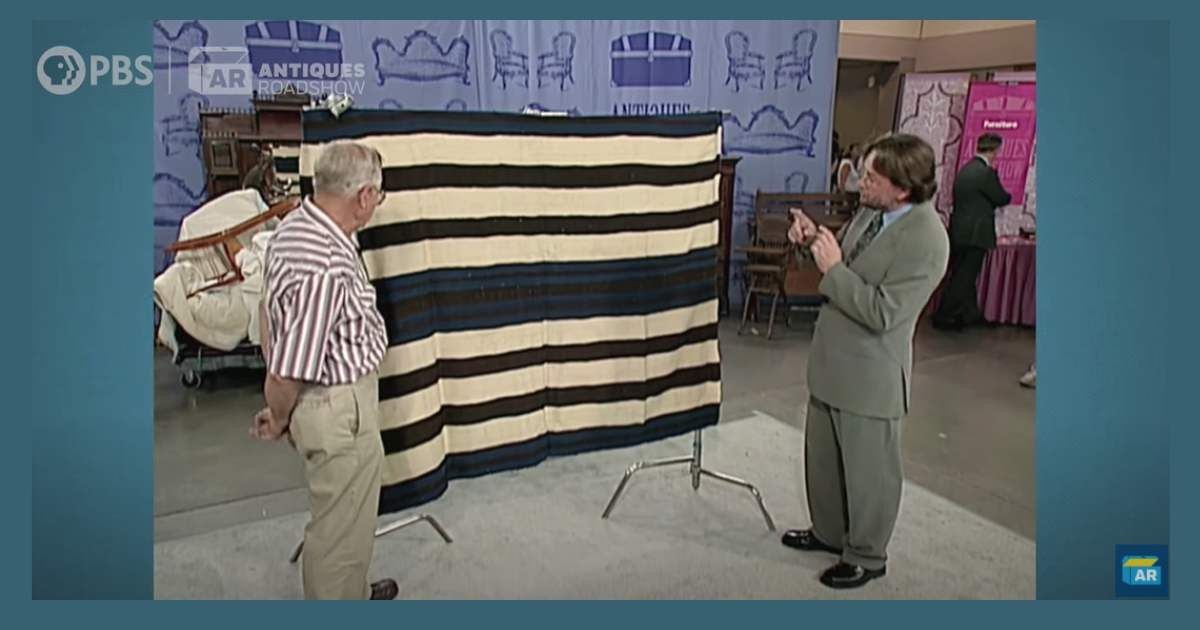
All heirlooms are old and antique, but some are truly timeless. In 2001, Ted Kuntz from Tucson, Arizona appeared on PBS’s “Antique Roadshow” with an heirloom blanket he had found “at the back of a chair.” As the episode unfolded, it was revealed that the blanket was not only highly valuable but a “national treasure.” When Ted learned its actual worth, his eyes welled up with tears, something he had never expected, even in his dreams.
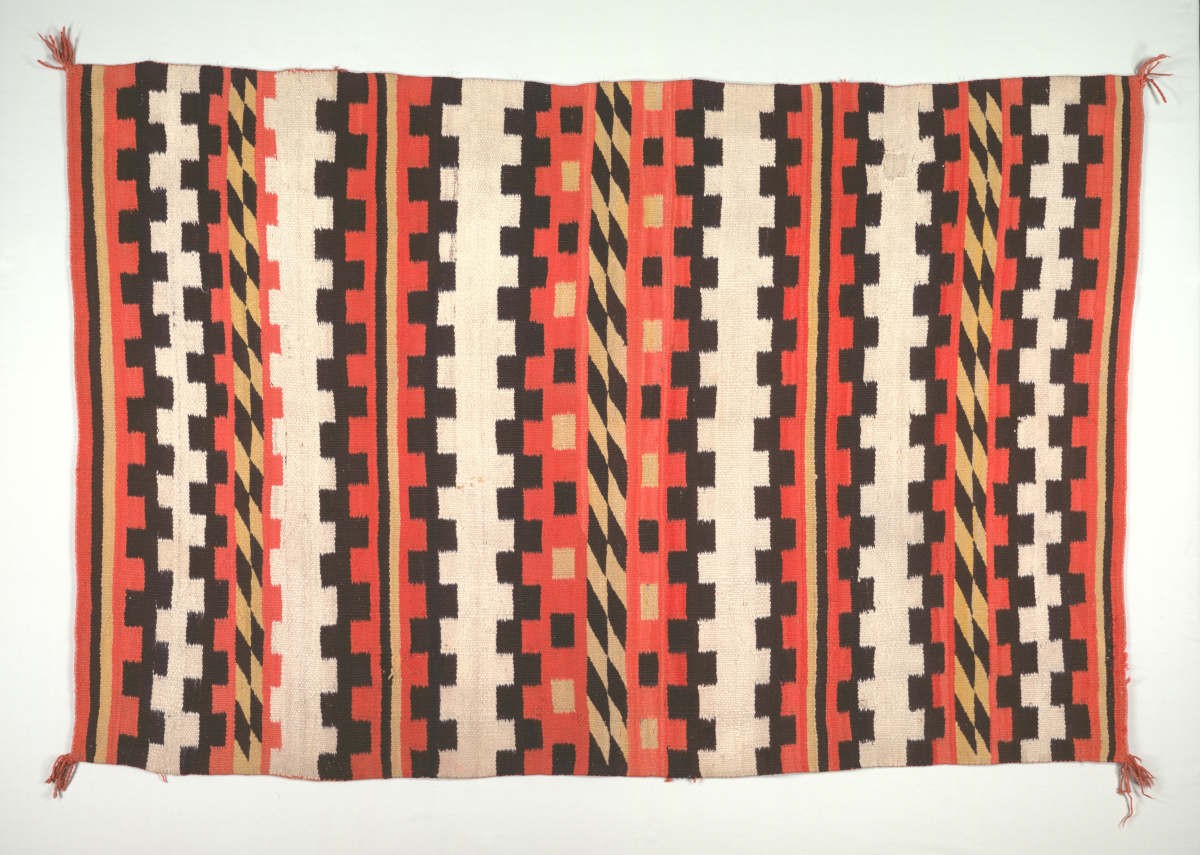
Representative Image Source: Rug (banded pound blanket style), circa 1895-1910. Creator Unknown. (Photo by Heritage Arts/Heritage Images via Getty Images)

Antiques Roadshow” is PBS’s most-watched series, combining history with adventure and treasure hunting. The show features specialists from leading auction houses and independent dealers who offer free appraisals of antiques and collectibles. Cameras document tales of family heirlooms, flea market finds, and items saved from attics and basements, as experts reveal fascinating truths about these items. These items capture sweet family memories and serve as interesting historical time capsules.


via GIPHY


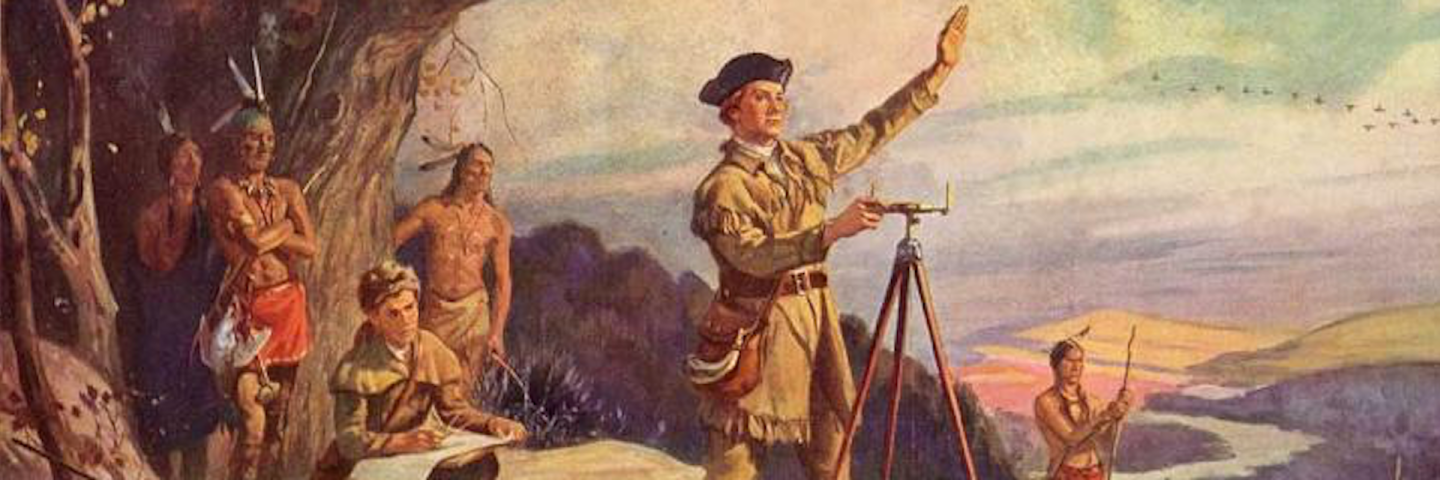
At the beginning of the episode, Ted revealed that the blanket belonged to his grandmother and was gifted by Kit Carson to her foster father. Kit Carson was a renowned American mountain man and trapper. According to the National Park Service, he explored and traveled through many parts of the American West during his lifetime, and became one of the main frontiersmen who helped expand the United States’ territories on the west side of the Rocky Mountains. In an interview, Ted shared that Carson gave this blanket to a man named Marc Bedell, with whom her grandmother “had grown up.”
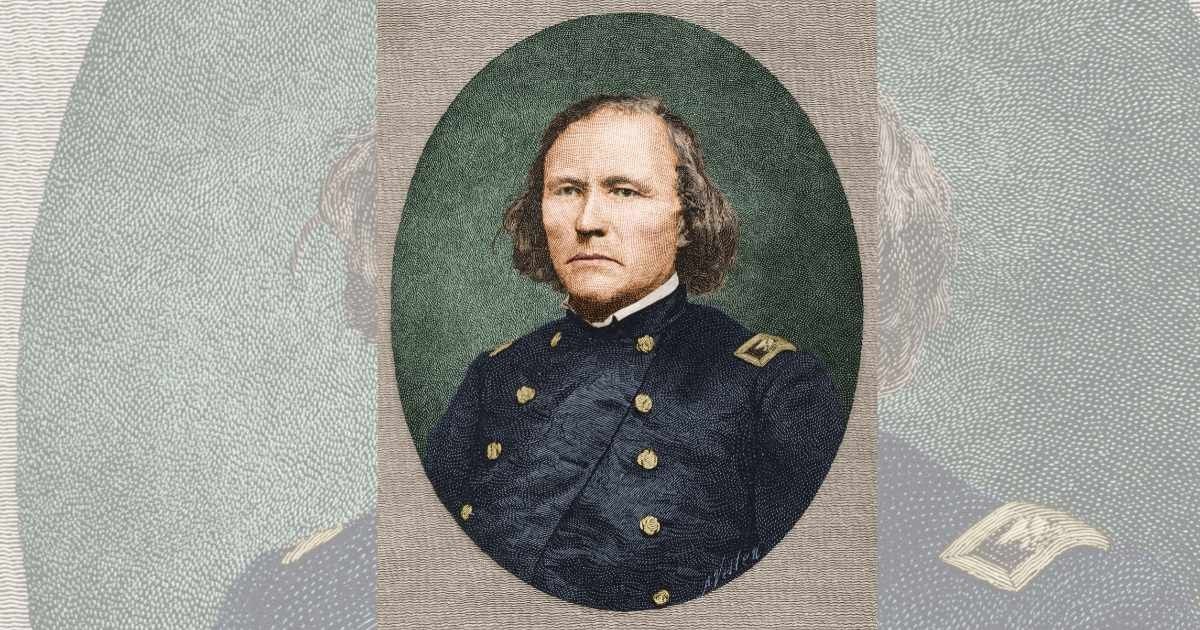
Image Source: Colorized portrait of American soldier, explorer, and scout Kit Carson (1809 - 1868) (born Christopher Houston Carson), 1860s. (Photo by Stock Montage/Getty Images)
Image Source: Colorized portrait of an American soldier, explorer, and scout Kit Carson (1809 – 1868) (born Christopher Houston Carson), the 1860s. (Photo by Stock Montage/Getty Images)

The show’s appraiser, Donald Ellis asked, “Do you know who made this weaving? What kind of blanket is this?” To this, Ted said, “Probably a Navajo,” guessing. Although it was just a guess, there is a good possibility that the blanket was Navajo. This is because Carson was well known for leading a destructive war against the Navajos.
Image Source: A Navajo weaver (Photo by Transcendental Graphics/Getty Images)

In the spring of 1864, Carson forced the surrender of the Navajos, leading 8,000 men, women, and children to march 300 miles from Fort Canby to Fort Sumner, New Mexico. His connection with the Navajos adds to the probability that he could have taken this blanket from some Navajo individual. “Well Ted, did you notice, when you showed this to me, that I kind of stopped breathing a little bit?” Ellis said. “Yeah you did,” replied Ted, and both men burst into laughter. At this moment, Ellis exposed a thrilling fact, about the antique blanket. “It’s not just a chief’s blanket,” he said. “It’s the first type of chief’s blanket made. These were made in about 1840 to 1860, and it’s called a ‘Navajo Ute First Phase wearing blanket.’”
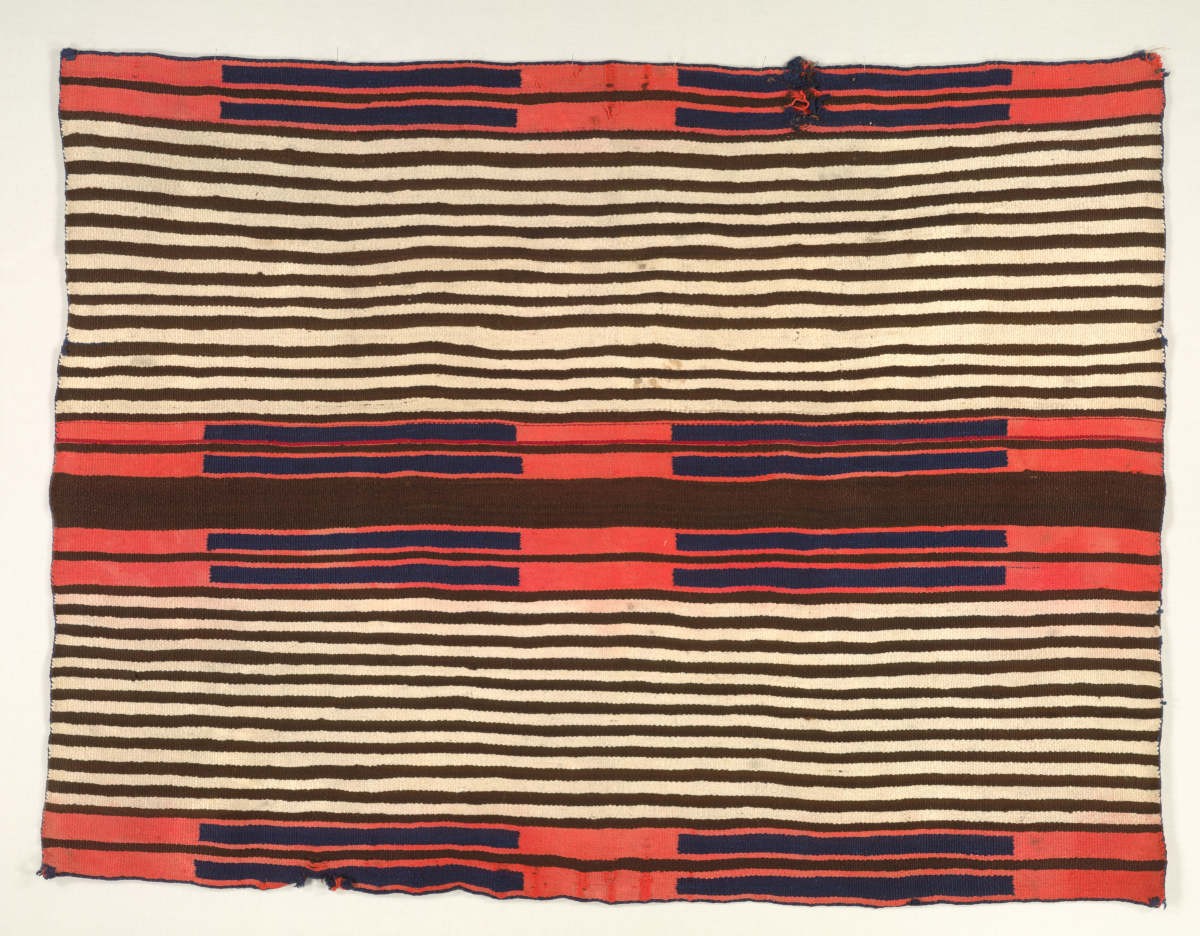
Representative Image Source: Woman's Wearing Blanket, circa 1875-1880. Creator Katsukawa Shuncho (Japanese). (Photo by Heritage Arts/Heritage Images via Getty Images)

“They were made for Ute chiefs and they were very, very valuable at the time,” he explained, adding, “This is Navajo weaving in its purest form. This is the beginning of Navajo weaving. The condition of this is unbelievable. It is made from handwoven wool but it’s so finely done it’s like silk. This would repel water. And this here is dyed with indigo dyes,” he continued while pointing to a dark blue strip in the blanket, ”It was a very valuable dye at that time.”


via GIPHY


“And what’s really interesting, is right here we have an old repair that was probably done in 1860s,” the screen showed a tiny red strip of fabric on the blanket, “And it was done with raveled bayetta, which is in itself a very important thing in Navajo weaving. So all involved, it’s an extraordinary piece of art, and it’s extremely rare. It is the most important thing that has come on the Roadshow that I have seen. Do you have a sense at all of what we’re looking at here in terms of value?” Ted shrugged saying that he had no clue.


via GIPHY


“Are you a wealthy man?” Ellis asked, to which Ted responded with a “No!” Saying that he had to tell Ted something crucial about the heirloom, he went on, “On a really bad day, this textile would be worth $350,000,” Ted’s eyeballs popped wide as he gasped in astonishment. Ellis continued, “On a good day, it’s about half a million dollars.” Ted exhaled with shock, “Oh my God!”


via GIPHY


“And you had no idea,” quipped Ellis. “I had no idea. It was just lying on the back of a chair,” said Ted. “Well Sir you have a national treasure,” said Ellis, congratulating the guest who was still unable to believe what he had heard. But there was more to it. Ellis elaborated, “If we research and know that Kit Carson actually owned this, the value of this would increase further, maybe 20%.”


Ted couldn’t hold on any longer. Tears rolled down the man’s eyes. As he was wiping them, he recalled, “My grandmother, you know, was a poor farmer. Her foster father had started gold mills and discovered gold but there was no wealth.” His voice broke in overwhelm and he could only utter the words, “I am amazed. I am flabbergasted.” The overlay text on the episode’s video shows that the price of the blanket in 2021 was estimated to be between $1,500,000 and $2,000,000.


via GIPHY


In a behind-the-scenes video of this episode, Ted said, “I didn’t think it could be worth anything like that. I thought it was maybe $5,000 to $6,000.” He said he couldn’t afford to keep it and thought of giving it away to someplace where it could be preserved properly. He contacted Ellis thinking if he’d be interested in buying it. Appraiser John Buxton revealed that Ellis sold it for about $450,000 to an anonymous buyer who donated it to the Detroit Institute of the Arts, where it is still on display. Ted used the money he received to pay the mortgage of his house.
https://youtube.com/watch?v=smwwIQBH0qo%3Fsi%3DpmL8ktznMNfkUNiB

  • Motorcyclist trapped under a 3,300 pound car saved by Australian car salesmen
    Photo credit: @ACurrentAffair9 on YouTubeA man was saved from being crushed under a car.

    Tyler Wiebe was on his way to work on his motorcycle in Brisbane, Australia. Then a car approached in the wrong way in traffic, colliding with another car that then hit Wiebe. The accident threw Wiebe off his bike and under a car. He was trapped under the 3,300-lb. vehicle, doomed until a group of salesmen and onlookers came to his rescue.

    “I was being dragged and when it stopped, my head and chest were under the car,” Wiebe said to the Australian Broadcasting Corporation. The crash and being pinned down under the vehicle gave Wiebe several injuries. He suffered broken ribs, a broken collarbone, and a collapsed lung.

    But that would be diagnosed later. At the time, the car’s weight was crushing Wiebe to the point that he couldn’t breathe. His heart was also unable to beat, the pressure causing his eyes, mouth, and nose to bleed.

    “Initially it was ‘can I get out?’ and then it was ‘man I am dying, this is it,’” recalled Wiebe. “[My] wife and two kids are not here, and this is it.”

    Hope comes in the form of a car salesman

    After being stuck for two minutes under the car, help arrived from the nearby Auto Request Kedron, a used car dealership.

    “I was in the office at the time, so I heard the bang [and] came running to the doors,” Mick, one of the employees, said to A Current Affair.

    “I realized there was someone trapped under the car,” fellow employee Rob added.

    They rushed into action, recruiting other coworkers to help.

    “[I] saw Rob running and he was just whistling out saying, ‘Hey, boys, hurry up,’ ” Corbin recalled. “I remember seeing him, just like two legs. They weren’t moving at that time.”

    The salesmen tried to lift the vehicle up to get Wiebe to safety, but the car wouldn’t budge.

    “We tried to lift it off. We couldn’t, and then on the second attempt, we had a couple of other good Samaritans come and help us,” said Brian, another employee of Auto Request Kedron.

    Reportedly 15 people were finally able to lift the car and free Wiebe underneath. He was rushed to the hospital where he went under emergency operations. Under hospital care, Wiebe’s condition stabilized and he survived. Had he been under that car any longer, the worst would have happened.

    Wiebe was humbled and grateful to the salesmen and others who stepped up to save him.

    “I get more time with my daughters, I get more time with my family and a second lease on life, so just thank you, thank you,” Wiebe said in his hospital bed.

    Certified legends

    When he was discharged from the hospital, Wiebe set up a reunion with the employees of the used car dealership. He was able to introduce his family to his rescuers and thank them face-to-face. Wiebe presented them with matching t-shirts, each one with a logo reading “Certified Legend” on the front and an illustration of a person lifting a car over their head on the back.

    “You guys are legends, but now you’re certified legends,” Wiebe said to his heroes.

    A father and husband was saved thanks to the alertness and quick action of the nearby community.

  • Texas engineers develop a jacket that pulls fresh drinking water out of thin air
    Photo credit: @fascinatingonX/CanvaWearing this jacket could help keep people hydrated.

    For too many, access to clean drinking water is incredibly difficult. According to the World Health Organization, over two billion people live in water-stressed areas due to pollution, climate change, or population growth. However, engineering experts in Texas have developed a possible solution: just put on a jacket.

    The engineers and researchers gathered at the University of Texas at Austin developed a prototype jacket that can pull drinking water out of thin air. The jacket could help anyone frequently in areas where drinkable water is scarce. This could be used recreationally by campers, hikers, and runners—but it could also save lives. Emergency responders, soldiers, and agricultural workers could also collect water for themselves and others simply by wearing it.

    The technology behind the jacket is similar to the materials used in netting for water harvesting of air and fog. This time, however, the idea is to collect water while also being mobile.

    “Water harvesting from air is usually imagined as a stationary device such as a box, a panel or a large sorbent bed,” said Guihua Yu, chair professor of the Cockrell School of Engineering’s Walker Department of Mechanical Engineering and Texas Materials Institute. “Here, we wanted to rethink the form of the technology. If the fabric itself can collect water from air, it opens a new direction for personal and portable water access.”

    How does this jacket collect water?

    The textile used to create the jacket was derived from a device the same team created. That device was a specially engineered hydrogel fabric made from biomass-derived materials. This hydrogel fabric takes moisture from the air and then releases it as water via condensation when it’s heated by sunlight. The water can easily be collected.

    The jacket’s textile collects moisture from the air and funnels it into detachable harvesting units. The units can be placed into a foldable collector piece where they are heated to produce water. The material and system doesn’t just absorb water like other materials. Instead, it actively converts vapor into water while functioning as a piece of protective clothing.

    The jacket is able to produce between 400 to 900 milliliters of drinkable water daily. This is a vast improvement upon other similar inventions that yielded less water and were significantly bulkier to wear. The jacket’s material could collect and produce more water over time and testing, depending on the humidity of the terrain.

    Aside from creating clothing out of the material, the researchers hope to make backpacks, tents, emergency shelters, and other outdoor gear from it. The hope is that this could create more clean water access for disaster response units and everyday people living in water-stressed areas alike.

    How much hydration do you need in the heat?

    Until water-collecting jackets are commercially available, it’s important to have drinkable water nearby at all times, especially during the summer. When out in the heat, the Center for Disease Control recommends having a drink of water before working outdoors. Then drink a cup of water every 15 to 20 minutes. This can help keep your body cool and hydrated to prevent heat stroke. That said, stay alert and stay indoors if there is a heat warning in your area.

  • Why Gen Z is falling in love with film photography
    Photo credit: Yasin Akgul/AFP via Getty ImagesChildren look at developed film in a darkroom during an analog photography workshop held in southeastern Turkey on June 14, 2026.
    ,

    Why Gen Z is falling in love with film photography

    Analog cameras offer a slower, social antidote to digital life.

    Film photography is experiencing a resurrection, summoned by unlikely conjurers: Gen Z.

    It wasn’t too long ago that analog photography – which uses photographic film and chemical processing – was declared all but dead, relegated to the province of niche hobbyists and professional artists.

    Digital cameras had taken over nearly all areas of photographic production. Film industry titans like Polaroid and Kodak had shrunk dramatically from their heyday, becoming shells of their former selves. Darkrooms, where students learned how to manually develop and print film, shuttered at high schools and college campuses across the country, replaced by digital labs. For most people, the spirit of analog photography was mainly channeled through Instagram filters.

    But within the past five years, younger people have been increasingly drawn to the old way of doing photography.

    In 2025, 35% of the 42 million active film camera users worldwide were reported to be between the ages of 18 and 30. The year prior, online searches for analog photography saw a 41% rise.

    Disposable camera sales have been steadily increasing since 2023. The photography journal PetaPixel went a step further and announced 2024 as “film’s best year in decades,” as major brands have introduced new cameras in response to renewed demand and revived classic modelsMore than 30% of respondents to a 2024 Ilford Photo survey on film photography were in the 25-34 age group.

    As I’ve witnessed more and more of my undergraduate art and design students embrace analog photography, I’m not seeing this as a trend rooted in a nostalgic yearning for the past. Instead, I’m seeing it as young people rejecting algorithms, breaking free from the alienation of social media and reacting to childhoods spent on Zoom and TikTok – a deliberate move to redefine the future of art, social connection and engagement with the world.

    Pining for a ‘third place’

    In my work as a historian of photography and lecturer at the University of Southern California, I’ll often ask my students about how they take photos – whether they’re using digital cameras their smartphones or analog devices.

    This year, for the first time, some of my students discussed images they’d printed and the physical photography albums they’d put together of their friends and family. They talked about how they’d also been sending postcards, writing letters and tacking photographs to their bedroom walls.

    Young Black man wearing a black hat and black sweatshirt holds a small camera up to his eyes to snap a photograph.
    New York Knicks forward OG Anunoby snaps a photo with a disposable film camera during the team’s victory rally on June 18, 2026, after winning the NBA Finals. Craig T. Fruchtman/Getty Images

    I couldn’t help but think about how so much of the language tied to early social media seemed to refashion physical gestures for a virtual world – “posting” on a “wall,” “poking,” “tagging” and “bookmarking,” not to mention “friending.”

    This was a rhetorical move by social media companies, likely designed to help people feel as though they were in a familiar terrain of social connection. Yet the underlying business model of these platforms depended more on maximizing engagement and advertising revenue than on nurturing authentic relationships.

    Everyone knows what happened next: The more connected young people became online, the more isolated and detached they started to feel. The COVID-19 lockdown pushed social life online even further, and researchers are only now starting to see how the combination of increased screen time and isolation negatively affected adolescents’ mental health. By 2023, 51% of American teenagers reported they spend at least four hours a day on social media.

    I see the attraction of analog photography as a response to life lived through screens, a pathway toward community engagement and the desire for what sociologists call “a third place.”

    Coined by sociologist Ray Oldenburg in his 1989 book “The Great Good Place,” third places are meant as a space separate from home and work. They offer a reprieve for the in-between, generating the conditions needed for creative cross-pollination. They might include a local cafe, a neighborhood writing group, a weekly Magic: The Gathering game or a college fraternity – any space that allows for social interaction and personal growth.

    These spaces also combat loneliness. They get people out of their heads and into a community. Oldenburg also referred to them as “havens of sociability,” places or gatherings where people can arrive alone to join others, and the atmosphere is “democratic and festive.”

    Analog communities IRL

    In April 2026, the inaugural AnalogCon took place in Los Angeles. Organized by the Los Angeles Center of Photography, where I serve as executive director and chief curator, it was a festival for all things analog photography. It didn’t just serve as a third place for photography enthusiasts; it also showed how analog photography – as a practice, ritual and community – is flourishing.

    Vendors, industry leaders, artists and teachers participated in the two-day event, which included exhibitions, panels, demonstrations and guided photography tours around Little Tokyo. The excitement and thirst for similar events was palpable.

    Photography now joins a broader trend of a generational preoccupation with physical cultural objects and media. Although music streaming represents 82% of revenues generated in the music industry, vinyl records sales have been rising for over a decade, crossing the US$1 billion threshold in the U.S. in 2025.

    A table featuring an array of camera equipment spanning different eras, with hands holding some of the objects.
    Customers peruse vintage film cameras at a stall on Brick Lane in London’s East End on June 14, 2026. Richard Baker/In Pictures via Getty Images

    Nearly 60% of Gen Z are now purchasing records. VHS tapes and VCR players are also making a strange comeback, with stores like Be Kind Video and Videotheque in California offering VHS, DVDs and Blu-ray rentals.

    But beyond that, record stores and video rental shops have become third places in their own right. There’s a big difference between selecting a film to stream from your bed and getting out of the house, going to a store and talking about movies with a clerk and fellow film enthusiasts.

    Think about the sound a tape cassette makes when you open and close it, or the vibrant graphics on the covers of DVDs or VHS tapes. Think about rewinding or making a mixtape for your recent crush. These are objects of belonging that signal specific cultural moments, rituals and aesthetics, and many young people today are starting to experience them for the first time.

    Now, think about gently inserting a roll of film into a camera. Think about choosing an angle carefully when snapping a photo, because the number of frames is limited and you want to make them count. Think about the thrill of discovery when the pictures finally emerge as objects on paper.

    To me, these are more than fleeting trends. They signal a push against a digital culture that is designed to cultivate envy and reward outrage, insults and humiliation.

    Instead, armed with rolls of film, more and more Gen Zers appear to be opting out of their algorithmic feeds in favor of experiencing life in ways that feel more deliberate, personal and tangible.

    This article originally appeared on The Conversation. You can read it here.

Explore More Stories

Culture

In America’s sandwiches, the story of a nation

Health

Every dog has its day, but it’s not the Fourth of July

Society

Who owns the beach? It depends on state law and tide lines

Culture

Wool swimsuits used to be standard beachwear – is it time to bring them back?