The world is a pretty uncertain place right now, and institutions of all kinds—businesses, governments, universities, religions—are trying to figure out how, and whether, they can survive in the 21st century.
The story I want to tell you is about how cricket—yes, that cricket—has become a model for them all.
Over the past decade cricket, one of the world’s oldest and most popular sports, has shown a remarkable capacity for change. In its format, its governing laws and regulations, its relationship to technological advances, and its social media savvy, a sport that could have languished in the past has become one of the most innovative on the planet.
A Flexible Format
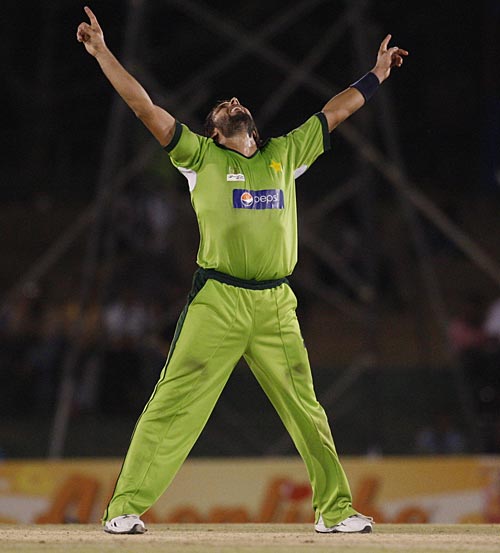
For the uninitiated, there are three flavors of modern cricket: Extra-long, long, and still fairly long. For much of the game’s history, which dates back to the mid 1500s, the sport was dominated by a marathon, five-day contest called the test match. In the 1960s, cricket responded to the quickening pace of modern life with the one-day match, and adopted a batting limit of 50 overs per team (an over consists of 6 balls). Stadium lighting and changes in ball color have ensured that the game actually fits into one day. (And it has also modernized aesthetically, as well. Players have shed their all-whites in favor of sometimes garish outfits).
Within the last ten years, cricket has added yet another format, the Twenty20, in which each team receives 20 overs to bat. The T20—lasting between two and three hours—has exploded in popularity, setting domestic and international match attendance records worldwide.
Moving from the test match, to the one-day match, to Twenty20, cricket has shown a rare capacity to experiment with the very definition of cricket that has allowed the centuries-old game to position itself as a relevant sport for many generations of fans and athletes. Akin perhaps to the book, the article and the blog post, each format of cricket caters to different segments of the cricket-loving world, and rewards multiple levels of engagement.
Technology and Tradition
To many sports fans, this will be remembered as the summer of blown calls. Officiating mistakes in baseball and the World Cup marred important matches for many fans, and raised questions about how we should integrate new technologies with longstanding traditions.
In recent years, cricket has given its officials access to technology that allows them to see if a ball hit the batter’s bat, rather than some other part of the batter’s equipment. Using infra-red cameras, umpires can see the heat generated by the ball’s impact on the bat, and as such they can readily determine where the ball made contact. This type of heat mapping is much more sensitive than even the slowest replay, and allows umpires to make much more accurate decisions about whether a batter has been, for example, caught out on a tipped ball. It closes the gap between what the audience sees at home, and what the officials can reasonably be expected to observe during the pressures of real-time sports.
In cricket, outs—roughly analogous to an out in baseball—can be awarded based on an umpire’s expectation of future events. In order to give an out based on Leg Before Wicket, the umpire must believe that, “the ball would have hit the stumps had its path not been obstructed by the batsman’s pads or body.” In other words, the out depends on an umpire extrapolating the trajectory of a ball. This is hard to do in ideal conditions, let alone after standing outside for six hours in the Australian summer sun.
To assist in ensuring correct decisions, cricket uses modeling technology called Hawk-Eye—which is also used to help with close calls in tennis—to determine the future flight of a ball. When assisted by Hawk-Eye, the umpire’s prediction can be tested, and ultimately corroborated or refuted, as the ball’s trajectory in three-dimensional space can be modeled almost instantaneously.
Using a challenge system similar to that in professional American football, cricket has adopted a framework that balances the inherent subjectivity of the umpire’s role with technological advances that serve to strengthen both players’ and fans’ trust in the rules and officials that govern the game. In so doing, cricket has managed to create a perfect hybrid for the 21st century—one that fuses a leisure activity born in the early stages of industrial capitalism with advanced technologies, such as sophisticated, near-real-time modeling, that are increasingly a part of our modern day lives.
Old Sport, New Media
As a final testament to the innovative capacities of modern cricket, the sport has been extremely advanced in experimenting with both the content and the platform of broadcast cricket matches. During this summer’s Tour de France, fans of team HTC-Columbia were able to track the heart rates of team members. In cricket broadcasts I’ve watched, similar technology has been applied to add a layer of information for the home viewer. It may seem superfluous, but watch a batsman’s heart rate increase when he faces a particularly fast bowler and see if yours doesn’t as well. Equipped with this extra sensory input, I felt closer to the action on the pitch in an entirely new way.
Cricket has also experimented with delivering media to fans through new avenues. The upstart, wildly successful T20 Indian Premier League has shown itself to be far ahead of the curve, providing a comprehensive, free-to-access stream of the league’s matches on YouTube.
The IPL’s partnership with YouTube marks a substantial shift in content delivery for the sports industry. With an estimated brand value of almost $4 billion, the IPL’s wholesale embrace of online content is significant, especially as it stands in stark contrast to the intellectual property rights asserted by, for example, Major League Baseball. Past IPL games can be found for free online, which allows a broad, international audience to connect with the sport. This kind of access to the game helps the league’s audience engage more directly with the league, as they can watch any team’s game at any time, and serves as the foundation for a strong community of dedicated followers of the sport.
The depth of cricket’s foresight is remarkable.
Consider the music industry. When music distribution began to shift online, and consumers began to download MP3s, companies like Sony were steadfast in their support of the album as the format in which music should be sold. Instead of accepting the structural diversity that the mp3 heralded—perhaps complementing the album and the concert—these companies declared, in effect, that if the consumer didn’t want to watch one-day matches, then he couldn’t enjoy any cricket at all. Obviously this was a shortsighted view, as Apple demonstrated when it launched the music equivalent of the T20—the iTunes store.
Similarly, while blogs were growing as sources of entertainment and information for the online world, the belief that the format generated lesser editorial products slowed newsrooms from hiring writers who could work with the new technology. In both cases, the lesson is clear—blind faith in the supremacy of existing structures prevented venerable institutions from seeing valuable opportunities to experiment with their core business model. The music and news industries could have learned something from cricket.
Cricket’s use of preview technology mirrors an increasingly important practice in the world outside of sports. Harnessing the massive amounts of data that is being generated by, for example, online consumer behaviors, computation-driven modeling is being used to make sense of a wide variety of parameters, and to offer predictions of potential outcomes and recommendations for future courses of actions. In the case of the Netflix Prize, past user behavior was used to create algorithms that can improve the quality of choices we may make in the future.
In his seminal work on the sociology of play and games, Roger Callois wrote about how the games that a culture plays are reflective of the culture itself:
[the] preferred and widely diffused games [of a culture] reflect, on the one hand, the tendencies, tastes, and ways of thought that are prevalent, while, at the same time, in educating and training the players in these very virtues or eccentricities, they subtly confirm in them their habits and preferences.
The most important lesson we can learn from cricket is that, in order to remain relevant, an organization shouldn’t cling to inflexible traditions and pretend it’s possible to wall itself off from the influence of technology, but must instead look for ways to adapt these traditions to the changing world.
Despite what some critics may say, all games—sports included—reflect the cultures that play them, and in this sense cricket is the perfect sport exemplar for our time. At odds with its own history and structure, in the past decade cricket has rapidly adapted to technological advances, and has become representative of the global, internet-connected culture that follows the game.
Mathias Crawford is a research manager at The Institute for the Future.