The crux of Severance, the dystopian black-comedy thriller streaming on Apple TV+, is the titular medical procedure, which “severs” the memories of one’s “innie” work self from their off-hours “outie.” This essentially results in two different humans, each with potential for a unique personality. It’s not inconceivable that your innie could love jazz (perhaps even “Defiant Jazz”) and your outie could only dig hair-metal. The possibilities are endless.

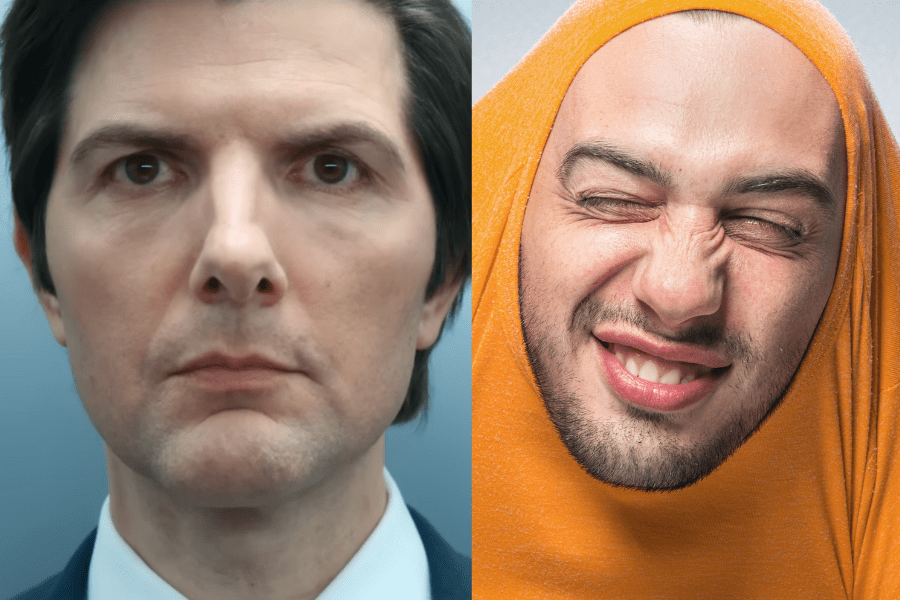
Seemingly branching out from there, content creator Jaden Williams wound up with a hilarious premise: What if your outie was super cringe? In an Instagram sketch titled “When You Realize Your Outie Sucks,” he plays two characters: a tie-wearing innie with an initially chipper demeanor that recalls early season one Mark S. (Adam Scott), and a smooth-voiced wellness director reminiscent of Gemma “Ms. Casey” Scout (Dichen Lachman). Just like in the show, where “Ms. Casey” presents the innies with innocuous info about their outies—a way to satiate their curiosity about their other lives—Williams’ counselor character shares a series of simple facts. They just don’t go over well.

The first fact—”Your outie loves Nickelback”—earns a modest look of concern, but nothing too extreme. But the innie enters outright disbelief when learning, “Your outie has a ‘Live, Laugh, Love’ bumper sticker.” From there, these statements touch on slang (“no cap,” “I’m baby”), social media (calling the platform “X” instead of “Twitter,” overusing LinkedIn), and political headlines (“Your outie says ‘The Gulf of America’”). The innie becomes gradually more frazzled, eventually pleading to “stop” and noting, in a violation of company policy, that he “hate[s] each of these facts equally.”

The sketch ends with a curveball: “Your outie is a software engineer,” the innie learns, breathing a temporary sigh of relief. “But his full-time job is content creating.” (Wow. If you’ll indulge me for a second: In the universe of this sketch, the innie presumably underwent the severance procedure to accept a job that required it. But his outie also works an additional full-time job, with more work on the side. That’s real hustle.)

The actual Severance wrapped its second season in late March with “Cold Harbor,” a universally acclaimed finale that offered a nuanced and mind-bending portrayal of old vs. new love. But it’s been captivating everyone’s collective imagination—and infiltrating broader culture—this entire run of episodes. On a darkly comedic tone befitting the world of the show itself, someone on LinkedIn shared some of the in-office perks of working at JPMorgan, and they do give off a Lumon Industries vibe.

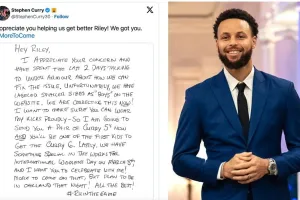
On a more heartwarming note: Ben Stiller, the series’ primary director and executive producer, engaged with a hardcore fan who’s battling stage 4 cancer and reached out with a special request. “A great bucket list item to check off would be to meet you and any of the cast and crew from the show,” the viewer wrote. “We can fly anywhere.” Stiller responded on the same day, requesting a DM—and apparently initiating plans to meet up: “Look forward to meeting you xx,” he wrote. The fan added that Stiller and the team had made their “wish come true.”
  • 25 hilarious signs proving some messages just can’t be taken seriously
    Photo credit: Reddit | u/beachvbguyA funny bathroom sign.
    ,

    25 hilarious signs proving some messages just can’t be taken seriously

    From sharp edges to dog-friendly policies, these funny signs show how humor and confusion collide in public places.

    Signs are meant to inform, warn, or direct, but sometimes, they unintentionally entertain. Whether due to poor wording, clever humor, or just plain absurdity, some signs end up being comedic gold.

    Thanks to the internet, we no longer have to stumble upon them by accident—there’s even a whole subreddit, r/funnysigns, dedicated to collecting the most ridiculous ones.

    Here are 25 of the funniest signs that prove not all signage is created equal.

    1. Some people might need this reminder

    “Not knowing who Taylor Swift is doesn’t make you interesting.”

    funny signs, viral humor, Reddit funnysigns, funny warning signs, humorous signage
    Funny sign Reddit | u/Key_Shoe5850

    2. A dog-friendly policy we can all support

    “Dogs welcome. People tolerated.”

    funny signs, viral humor, Reddit funnysigns, funny warning signs, humorous signage
    Funny sign. Photo credit: Reddit | u/phoenix-fatale

    3. Coffee fixes everything

    “Given enough coffee, I could rule the world.”

    funny signs, viral humor, Reddit funnysigns, funny warning signs, humorous signage
    Funny sign. Photo credit: Reddit | u/AprilBoon

    4. Watch your step—sort of

    “Caution: This sign has sharp edges. Also, the bridge is out ahead.”

    funny signs, viral humor, Reddit funnysigns, funny warning signs, humorous signage
    Funny sign. Photo credit: Reddit | u/Winnin_Dylan

    5. Priorities: Keep the cat inside!

    “Please close the door behind you. DO NOT LET THE CAT OUT! No matter what it tells you!”

    funny signs, viral humor, Reddit funnysigns, funny warning signs, humorous signage
    Funny sign. Photo credit: Reddit | u/GigaPrime14900

    6. Cats really are the masterminds

    “If a cat asks for a cheeseburger, give it one. You don’t want to know what happens if you don’t.”

    funny signs, viral humor, Reddit funnysigns, funny warning signs, humorous signage
    Funny sign. Photo credit: Reddit | u/Zion_Annabella

    7. Nice try

    “Always read the fine print.”

    funny signs, viral humor, Reddit funnysigns, funny warning signs, humorous signage
    Funny sign. Photo credit: Reddit | u/Winnin_Dylan_

    8. Football confidence at its peak

    “World champions… of a sport only we play.”

    funny signs, viral humor, Reddit funnysigns, funny warning signs, humorous signage
    Funny sign. Photo credit: Reddit | u/Khaleeasi24

    9. The toughest decision you’ll make all day

    “Hmmm.”

    funny signs, viral humor, Reddit funnysigns, funny warning signs, humorous signage
    Funny sign. Photo credit: Reddit | u/Material-Practice-58

    10. Not the CPR instructions we were expecting

    “If someone collapses, administer CPR. If CPR doesn’t work, try turning it off and back on again.”

    funny signs, viral humor, Reddit funnysigns, funny warning signs, humorous signage
    Funny sign. Photo credit: Reddit | u/Lovecutiepie77

    11. Honesty is the best policy

    “Lying is bad. Except when you tell someone they look good in those pants.”

    funny signs, viral humor, Reddit funnysigns, funny warning signs, humorous signage
    Funny sign. Photo credit: Reddit | u/BaronVonBroccoli

    12. Job requirements have changed

    “Now hiring: Must be able to lift 50 lbs, work weekends, and fight off at least two raccoons a day.”

    funny signs, viral humor, Reddit funnysigns, funny warning signs, humorous signage
    Funny sign. Photo credit: Reddit | u/PurpleRuby_

    13. Someone really needed spellcheck

    “Public Notice: The libary is close today.”

    funny signs, viral humor, Reddit funnysigns, funny warning signs, humorous signage
    Funny sign. Photo credit: Reddit | u/Internetboy5434

    14. Looking for the Teenage Mutant Ninja Turtles

    “Caution: Sewer entrance. Heroes in a half-shell may be present.”

    funny signs, viral humor, Reddit funnysigns, funny warning signs, humorous signage
    Funny sign. Photo credit: Reddit | u/Poke-girl56

    15. In case of emergency… or not

    “In case of fire, please use stairs. (Sign is next to an escalator).”

    funny signs, viral humor, Reddit funnysigns, funny warning signs, humorous signage
    Funny sign. Photo credit: Reddit | u/Swimming-Pool143

    16. Why do we need to know this?

    “Fun fact: The average person will walk past a murderer 36 times in their lifetime.”

    funny signs, viral humor, Reddit funnysigns, funny warning signs, humorous signage
    Funny sign. Photo credit: Reddit | u/PrettySuccubus

    17. Stating the obvious

    “Warning: Water is wet.”

    funny signs, viral humor, Reddit funnysigns, funny warning signs, humorous signage
    Funny sign. Photo credit: Reddit | u/celestial-chic

    18. This store was ahead of its time

    “Employees must wash hands before returning to work. We’ve been saying this since 1992!”

    funny signs, viral humor, Reddit funnysigns, funny warning signs, humorous signage
    Funny sign. Photo credit: Reddit | u/beachvbguy

    19. The Force is strong with this one

    “Please use the Force to open the door.”

    funny signs, viral humor, Reddit funnysigns, funny warning signs, humorous signage
    Funny sign. Photo credit: Reddit | u/beachvbguy

    20. Elevator or trampoline?

    “To activate the elevator, please jump three times.”

    funny signs, viral humor, Reddit funnysigns, funny warning signs, humorous signage
    Funny sign. Photo credit: Reddit | u/PurpleRuby

    21. Beware of the nighttime hunters

    “Warning: This area is protected by highly trained owls.”

    funny signs, viral humor, Reddit funnysigns, funny warning signs, humorous signage
    Funny sign. Photo credit: Reddit | u/ScarlettPrincess

    22. Karen’s personal space

    “DO NOT TOUCH. This wall belongs to Karen.”

    funny signs, viral humor, Reddit funnysigns, funny warning signs, humorous signage
    Funny sign. Photo credit: Reddit | u/Limp_Duck_9082

    23. Not exactly good life advice

    “Or get away from that road as soon as possible.”

    funny signs, viral humor, Reddit funnysigns, funny warning signs, humorous signage
    Funny sign. Photo credit: Reddit | u/celestial-chic

    24. A new spin on fast food slogans

    “Make fast food great again.”

    funny signs, viral humor, Reddit funnysigns, funny warning signs, humorous signage
    Funny sign. Photo credit: Reddit | u/AprilBoon

    25. A truly ineffective calming method

    “Would be great if it did work, though.”

    funny signs, viral humor, Reddit funnysigns, funny warning signs, humorous signage
    Funny sign. Photo credit: Reddit

    Want more? Check out these YouTube videos for additional funny signs:

    This article originally appeared six ago. It has been updated.

  • Indie coffee shops are meant to counter corporate behemoths like Starbucks – so why do they all look the same?
    Photo credit: stomy/iStock via Getty ImagesMany coffee shops today seem to be aesthetically divorced from time and place.

    Like many young, urban professionals, we run on coffee. We especially enjoy frequenting independently owned cafes that pride themselves on ethically sourced beverages, strong local ties and a hip aesthetic.

    They’re the kinds of places that sneer at the homogenization and predictability of Tim Hortons, Second Cup, Dunkin and Starbucks.

    But as public space and consumer culture researchers, we began noticing a pattern: While the invention of new, nondairy milks to mix into lattes continues to amaze us, many U.S. coffee shops seemed to share a similar aesthetic.

    What was up with all the exposed brick? Why did so many of the baristas look cooler than us, but also so similar to one another? And why did most menus appear on a chalkboard, as if we were still in kindergarten?

    Weren’t we supposed to be in one-of-a-kind, authentic settings that make us feel unique and, let’s admit it, slightly elevated?

    As it turns out, the visual patterns we noticed had never been backed up by research. So after a quick cortado, we set out to test our hunch that local coffee shops had adopted a uniform aesthetic.

    Measuring homogeneity

    We asked over 100 American and Canadian young professionals living in cities to share an interior image of their favorite independent coffee shop, describe why they liked the shop’s appearance, and document aspects of its interior design.

    They could select these interior design features from a list of 23 common elements that we had identified in a pilot study – brick walls, marble counters, indoor plants, local art, vintage furniture and even the look of the baristas. Respondents could also write down other details they noticed.

    The elements that they selected and wrote down showed a fascinating overlap.

    Baristas led the pack: Two-thirds of the participants’ favorite local coffee shops had staff with tattoos or piercings. Over half had baristas with beards. Well over half of the respondents noted that their favorite shop had chalkboards, reclaimed wood features, local art, milk foam designs on beverages, local event posters and exposed brick. A large share of the shops had vintage furniture, community message boards and free books available to patrons to read. One-third of the images had indoor plants, trees or greenery.

    Barista with a beard and tattooed hands pours boiling water over coffee grounds.
    Chances are your favorite local coffee shop has a barista with a beard and tattoos. Wera Rodsawang/Moment via Getty Images

    Next up, we challenged the participants to identify the city where these coffee shops were located.

    Using the images provided by the respondents from the initial survey, we asked 158 new and prior participants if they could match the location of the shops depicted in six photographs to Cincinnati, St. Louis or Toronto – cities chosen for their different architectural and aesthetic qualities.

    Not a single participant was able to correctly identify the correct city for all the photos.

    We gave respondents another chance by showing two pictures of coffee shops, one at a time. This time, the two shops were located in Chicago and San Francisco – again, places that pride themselves on their unique and recognizable design culture. They were now given the choice of these key cities to select from, as well as three wrong cities. Only 6% successfully located both coffee shops, and nearly 20% immediately gave up.

    As one participant conceded: “Honestly, these aesthetics are very transferable now … they were random guesses and they could have been in any of the cities mentioned.”

    In other words, independent coffee shops in North America have become so similar aesthetically that their location cannot be picked from a lineup. The purportedly unique and local feel of coffee shops has instead been homogenized into a singular, palatable, North American aesthetic.

    Ironically, these shops have narrowed their aesthetics like a de facto brand franchise – exactly like the chain stores that their patrons ostensibly reject.

    A young woman with dreadlocks pays for her coffee as a smiling young female barista with short hair holds out a card reader.
    Exposed brick, check. Plants, check. Chalkboard, check. Tara Moore/Digital Vision via Getty Images

    Computers and capital

    So why is this happening?

    New Yorker cultural critic Kyle Chayka has attributed aesthetic homogenization to popular social media platforms like Instagram. He calls it the “tyranny of the algorithm”: Social media algorithms promote the visuals that users are most likely to engage with. This, in turn, causes the same types of visuals to be liked and shared, since users encounter them more often. Because the algorithm sees they’re popular, it continues to promote them, in a self-reinforcing cycle. In turn, coffee shop owners also see these online images and try to replicate them in their own establishments.

    Artificial intelligence will likely accelerate the digital homogenization of visual culture, since AI models are trained on massive datasets that feature widely circulated images. Whether it’s popular fashion, architecture or interior design, idiosyncrasies are collapsing into a generic, hegemonic aesthetic – what scholars Roland Meyer and Jacob Birken call “platform realism.”

    Finance plays a role as well. With the average cost of starting a new coffee shop between US$80,000 and $300,000, and with only a small share of coffee shops expected to stay open beyond five years, banks are keen to reduce their risk. Many of them will therefore ask aspiring coffee shop owners to opt for cheaper interior design choices that appeal to the broadest customer base.

    The consumer also plays a role

    But patrons of hip coffee shops may also be to blame.

    Decades before the rise of social media, AI and financial risk management, scholars such as Sharon Zukin revealed how young urban professionals paradoxically embrace the homogenization of their environment in their quest for authenticity.

    Those exposed brick walls? Zukin already described how Manhattan real estate brokers had marketed them to gentrifying SoHo yuppies in the early 1980s.

    Like their predecessors, today’s hipsters, creative professionals and knowledge workers are essentially cultural and aesthetic consumers. Many of them crave visuals – from fashion to architecture – that are different enough to feel cool and authentic, yet safe enough to match their lifestyle and their social status. They want a tasty latte as much as a palatable interior to drink it in.

    Businesses and developers are eager to appeal to these upwardly mobile consumers. At the same time, they want to reach the biggest number of customers. So they tend to create repeatable, homogenized environments in what Zukin describes as a “symbolic economy.”

    In coffee shops, patrons want more than a good espresso. They want to immerse themselves in a “scene” that matches their lifestyle and aspirations. And the exposed brick and the vintage furniture do just that – even if they’ve been copy-and-pasted in cities, small and large, across the nation.

    As we chase authenticity, we may just be finding comfort in carefully curated conformity.

    This article originally appeared on The Conversation. You can read it here.

  • If a song moves you, does it matter who made it?
    Photo credit: CanvaMusic Pop Star or AI creation?
    ,

    If a song moves you, does it matter who made it?

    The AI music revolution is here. Maybe that’s a good thing?

    Artificial Intelligence is pushing boundaries of creativity that were once unimaginable. Perhaps you’ve seen some outrageous AI memes. Maybe there’s a new movie trailer that isn’t actually real, but a bizarre AI creation you’ve scrolled across. And now with music, we’re entering uncharted territory—and it raises questions we can’t ignore.

    AI is generating music in a way that lets humans create remarkable songs without needing technical knowledge or the years of practice required to become proficient. With a music-creating AI app, some prompts on mood, genre, and lyrical themes make anyone a musical artist.

    Is this real or another AI creation?

    Believe it or not, Enily Blue (Video Above) is 100% NOT human and a complete AI fabrication. Created by songwriter Thong Viet, “Through My Soul” debuted at #44 on the Emerging Artists chart. Billboard also reported it debuted at #15 on Rock Digital Song Sales with 1,000 downloads sold.

    But what does the typical audience think of AI music? What happens if they believe it’s a real artist? What happens when they find out it’s not?

    Here are some of the comments from the Enily Blue YouTube video, which has reached over 10 million views in only six months.

    “Kind of music that make you close the eyes and just feel the music”

    “Found this song by sheer accident wow just beautiful wow”

    “Absolutely crazy how good AI is becoming — such a great blues song”

    “Great vibe .i cant stop listening to this”

    “What a voice!!!!”

    “One of the best songs made by AI , i love it”

    “Now this is what you call music and she got a good voice.”

    Reading through some of the comments, it’s hard not to believe many people don’t know this is AI. However, those who did seemed to love the music anyway.

    Edie Dalton’s song “Another Day Old” is a manufactured AI artist. This video has 1.5 million views and over 34,000 likes.

    What does AI tell us about why we listen to music?

    Why are so many of us drawn to music? A simple dopamine release, emotional arousal, and a feeling of connection to something bigger than ourselves can all drive people toward its rhythmic architecture.

    A 2024 study in Nature Reviews Psychology confirmed that every culture responds emotionally to the rhythm and melody that music weaves together. We are hardwired to musical feeling itself, not necessarily the artist creating it.

    A 2024 study in Scientific Reports found that novelty and creative surprises shape whether we enjoy music. This tension created between what’s familiar and what feels new is something AI can mimic well.

    Does it matter to listeners whether the artist behind the music is actually a human or just something digital? Experts believe the way we connect to music makes for a more complicated answer.

    AI artist Breaking Rust has 24 million views on YouTube with the song, “Livin’ on Borrowed Time.”

    Translational research scientist Dr. Lauren Jessell believes music has never just been about quality or the artist. “I’m not surprised that AI generated songs are drawing a lot of attention and popularity right now; music reflects our culture and AI is very much a part of our culture now.”

    Seema Sharma, a traumatologist and therapist, has written several papers on Consciousness of Music. She told GOOD, “AI Music or not, we listen to music because it is a form of connection as old as time. It allows us to feel and tap into a non-verbal form of connection.” Sharma continues, “Songs are impactful due to the way we resonate with it. It is all about the meaning we make of it. If there wasn’t an emotional connection to the song, we would not find it memorable.”

    Traditional artist concerns and rights

    The conflict with AI may not be about making music people love. The battle surrounds the fact that the artists whose style, voices, and art that shaped the music are being copied and fabricated. A 2024 peer-reviewed study at Cornell University surveyed over 400 artists on ownership, disclosure practices, compensation, and labor concerns. The majority believed creators should have rights.

    Sony, Universal, and Warner sued music apps Suno and UDIO for training their music models on copyrighted recordings without permission or compensation. Branching into individual settlements, Universal licensed an AI music partnership with UDIO. According to The Verge, Sony and Universal are in a deadlock with Suno. There are vastly different opinions on whether AI-generated songs should be freely shared outside of the app.

    GHhostwriter – “Heart on my sleeve” featuring Drake ft. The Weeknd (Remastered AI Song) has over 1 million views.

    It’s hard to simply label AI-generated music as good or bad. Signs of successful human-made music such as popularity and recognition by charts and experts are being awarded to AI songs. Listeners continue to respond to the melody and emotions created in the very framework of a song, regardless of who (or what) created it.

    AI can make music that feels personal, strikes perfect chords, and forms spectacular melodies. Without being outright told it’s AI, most people couldn’t tell the difference. As artists raise urgent questions about consent and ownership, this moment drives us toward a cultural reckoning. Is creativity solely defined by who makes a piece of art? Or the art itself? Or does it rely solely on whether or not it moves us in the first place? AI may be challenging us to rethink what we’ve always believed art to be in the first place.

Explore More Culture Stories

Internet

Today’s obsession with authenticity isn’t new – being true to yourself has troubled philosophers for centuries

Culture

Teacher shares 5 specific examples of how chaotic an average middle school day really is

Culture

During one of Peter Gabriel’s final Genesis shows, a roadie got naked for one amazing prank

Music

41 years ago Bono’s Live Aid stage antics ended up saving a female fan from being crushed