
I have been a dog lover ever since I was a kid and have spent years learning about the temperaments and histories of different dog breeds, as well as famous dogs and their adventures. I have attended a variety of dog shows to meet various breeds and talk with their owners, and I’ve also lived with several dogs – including a dachshund, otterhound, German shepherd, Indian spitz and Labrador retriever – over the course of my life.

Beyond my canine concerns, I’m a professor of management who loves teaching courses and conducting research on leadership. So, it was a no-brainer for me to combine my two interests to write a book, “Learning Leadership from Dogs.” Various dog breeds embody distinct traits and behaviors that we humans can emulate to become better leaders.

Here are five qualities dogs model that any leader, at work or in life, can learn from.
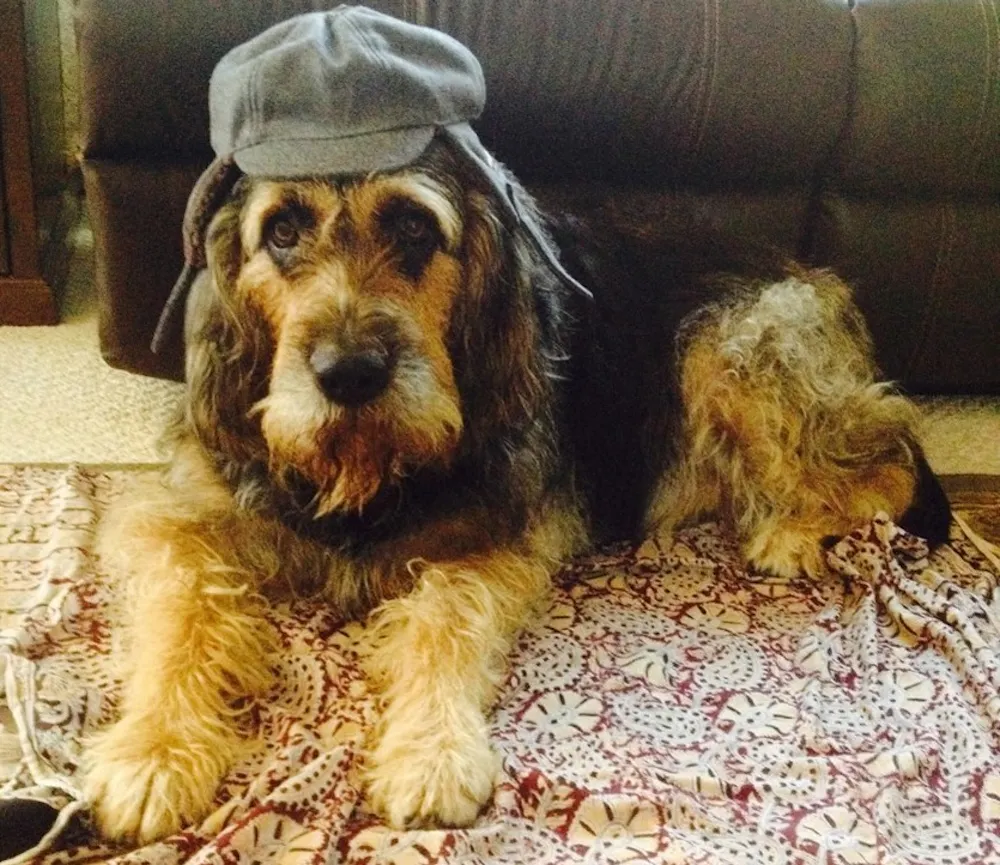
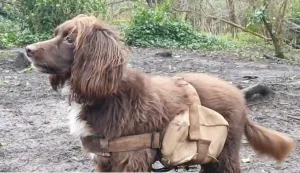
Dog lying down and wearing a cap looks at the camera
The author’s own otterhound Fiona was always up for a good time. Aditya Simha

Joie de vivre

Happy-go-lucky hounds have an abundance of joie de vivre, a French phrase that refers to a cheerful and exuberant enjoyment of life. My own otterhound, Fiona, amply embodied this trait. A simple walk in the woods or hike on the beach was all she ever wanted.

This kind of optimism and cheerfulness can make leaders more empathetic and pleasant to work with, partly because psychology research finds that positive moods increase helping, generosity and interpersonal understanding. Those are key ingredients of empathy.

Followers feel and perform better when led by good-natured, enthusiastic leaders who look on the bright side. A leader’s joie de vivre can be passed on to the team. Scholars of positive leadership call this process emotional contagion – how a mood or emotional tone can spread through a group.

Courage

Who wants to follow a timid leader, right? Most people want a leader who is brave and who walks the talk – someone who’s courageous enough to do the right thing under all circumstances, not just when it’s convenient to do so.

dog looks at attention with person in military garb holding its leash
Some Dutch shepherds are military working dogs with the U.S. Army. Defense Visual Information Distribution Service

While there are many dog breeds that embody courage, I want to single out the Dutch shepherd. Smaller than the German shepherd and the Belgian Malinois, the Dutch shepherd is used in police and military work because of its athleticism, trainability and strong work ethic. Just like how Dutch shepherds run toward danger to protect others, courageous leaders take risks for their values and to support their team.

Intelligence

Leaders must not only know about their domain, they also need to be able to understand which of their followers needs to be treated or led differently. Both emotional and cognitive intelligence are essential for effective leadership and have positive consequences for their followers’ attitudes and performance.
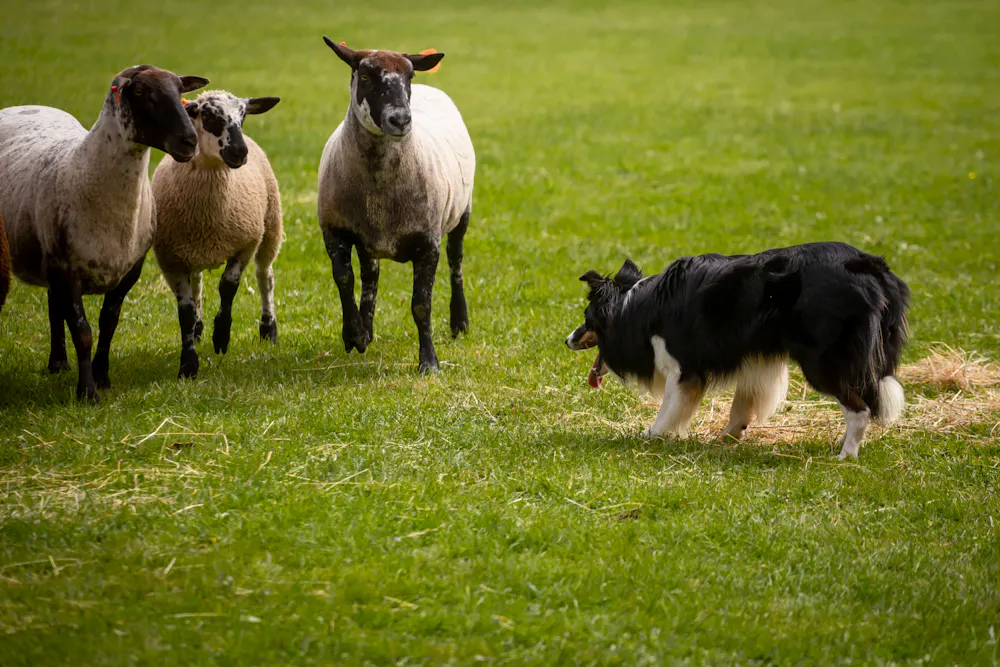
Black and white dog looks at three sheep standing on grass
Border collies are great at herding and know the best ways to keep different sheep in line. Fernando Lavoz/Nur Photo via Getty Images

I point to the border collie as a dog that exemplifies both forms of intelligence. The border collie not only knows how to herd sheep, but also which sheep to herd with patience and which sheep need a bit more sharpness.

This intelligence is something that needs to be guided and channeled. Border collies left without enough work or stimulation are famous for finding their own “jobs,” such as herding the human children, chasing shadows or inventing new mischief around the house.

Without proper direction, even brilliance can become counterproductive – another lesson leaders can keep in mind when managing their own flocks.

Kindness

Kindness is one quality that is sadly not given the amount of attention it merits in the world of management, even though it can shape whether followers feel respected, trusted and willing to contribute.

Big black dog nuzzles face of a woman kneeling in a field who is petting it
Newfoundlands are kind, gentle giants. kozorog/iStock via Getty Images Plus

Displaying kindness is a canine specialty. The dog breed that comes to mind for me here is the Newfoundland. First bred in Canada and known as a fine water rescue dog, these gentle giants are supremely kind to everyone and display a benevolent, protective nature.

Leaders similarly need to be kind to their followers, even if a team member has failed at a task. A kind response does not mean ignoring mistakes; it means correcting them in a way that preserves dignity, making followers more likely to learn, speak up and try again. Together those patterns facilitate work environments that promote what researchers call psychological safety: a shared belief that people can ask questions, admit mistakes and raise concerns without fear of embarrassment, rejection or punishment.

Resilience

Resilience is not just toughness; it is the ability to recover from setbacks, adapt under pressure and keep moving forward when things don’t go as planned. Leaders rely on it during crises, failed projects, public criticism or periods of organizational change, all moments when uncertainty is high and confidence can falter.

Brown dog looks alertly to the distance while standing in a field
A Rhodesian ridgeback bounces back from failure in order to be ready for the next challenge on the horizon. Ines Arnshoff/iStock via Getty Images Plus

Any leader can look to the Rhodesian ridgeback as a resilience role model. This breed hails from South Africa and was originally used to assist in lion hunting – an activity fraught with peril and with high prospects of failure. Rhodesian ridgebacks are dauntless dogs, always ready to try another dangerous hunt even in the wake of repeated failures.

Like these dogs, leaders often must confront perilous tasks with a high likelihood of failure, and they must be ready to bounce forward so they can eventually seize success. Without resilience, leaders may panic, withdraw or become overly reactive, especially during a crisis. When that happens, uncertainty spreads, confidence erodes and teams are less likely to stay focused or move forward effectively.
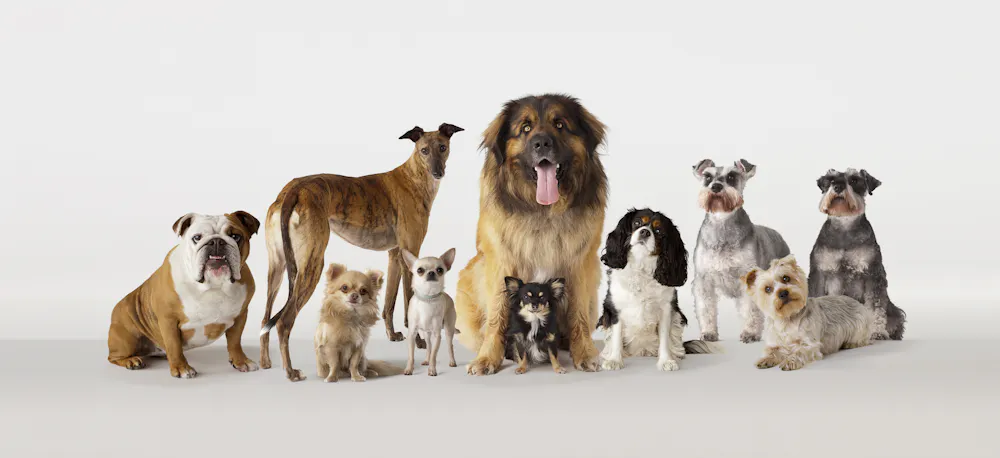
Portrait against a white background of a group of dogs of many sizes
Different breeds have different personalities – but they’re all good boys and girls. Compassionate Eye Foundation/David Leahy/Digital Vision via Getty Images

Dogs are the most popular choice of pet in the United States and worldwide. You probably don’t need to look far to find some furry friends who can inspire you with their admirable characteristics. Dogs may never author a leadership book, but they live out leadership lessons in courage, kindness and joy every day.

This article originally appeared on The Conversation. You can read it here.
  • Air Force graduate tears up when friend steps in to ‘tap him out’ during graduation
    Photo credit: CanvaA lone soldier and friends celebrating.

    Sometimes the biggest moments in our lives might slip by unnoticed. That’s exactly what was happening to Airman Joel Usher. At his United States Air Force graduation ceremony, he stood alone, already knowing that no family members were coming to celebrate the occasion.

    Many people know what it feels like to hit a major milestone and wish someone were there. Usher was visibly emotional as fellow graduates reunited with cheering family members. Suddenly, a friend he made during training stepped forward. Phone in hand, recording the moment, he walked up to “tap him out.”

    @slimgudda305

    1 year ago today. it’s been a journey man still can’t believe i’ve made it this far but is only the beginning more blessing to come💫#fypシ #militarytapout #explorepage

    ♬ Gods creation – daniel.mp3

    A teary-eyed moment defined by friendship

    Caught completely off guard, a teary-eyed Usher smiles, turning what could have been a lonely memory into one defined by friendship. He posted the video on TikTok with a title overlay reading, “i had no one at my graduation to tap me out but that one good friend i met during training found me and come through for me…”

    At military graduations, there’s a tradition known as “tapping out.” Family members or close supporters step forward at the end of the ceremony to officially greet and escort the graduates away. According to the AF WingMoms, it can be an emotional experience, but the Air Force views its military purpose as a productive way to maintain orderly disbursement.

    An overwhelming gesture

    In an exclusive interview with People, Usher described how important that kind act was, leaving him holding back tears:

    “When my friend tapped me out, I was overwhelmed in the best way possible. It wasn’t just about finishing, it was about having someone there who truly had my back in that moment.”

    Usher went on to explain that the achievement was important, but the friendship and support shown to him are what he remembers most. After sharing the moment online, he was surprised by all the feedback. He believes the overwhelming response was a strong reminder of the beauty behind meaningful acts of kindness.

    airman graduation, military support, chosen family, military friendship, tapping out, tap him out
    Best friends take a group selfie.
    Photo credit: Canva

    TikTok post resonates

    After 4.6 million views, people flooded the comments with emotional reactions. For some, the small gesture perfectly captured the kind of bond people form while going through difficult experiences together. This wasn’t a performative moment—just someone refusing to let another person experience an important occasion alone.

    For others, it was heartbreaking. Often, soldiers don’t have family members who are able to make the trip, or they find themselves on a solitary journey. Either way, the idea that people can accomplish something amazing and still be left to stand alone afterward can be difficult to swallow.

    Here are some of the comments:

    “i’m glad you made a good friend along the way who came looking for ya. those are the meaningful connections you make while in the military”

    “now this just broke my heart”

    “Those teary eyes”

    “This just breaks my heart! Everyone should have someone tap them out. So much respect for the military”

    “The pain in bros eyes. Went to my soul. Brother we are here for u! Ty for serving”

    “sometimes thats all we need! Just one good friend”

    “I’m so sorry no one from your bloodline was there for you in that moment but you have all of TikTok cheering you on and we are so proud of your accomplishments”

    “Ex military that tap means more than you think.”

    “i really wish they had a volunteer program for something like this… let other mamas and dads come and be there for these young men and women.. we never know how bad they just need SOMEONE to be there for them”

    “Been there my man. But you’re going to be an amazing soldier. Use that to be the best you can be”

    The mix of responses shows why meaningful moments shouldn’t be faced alone. Friendship and community are defined by simple choices: stepping in, showing up, and refusing to let a proud day also become someone’s loneliest. These small acts turn milestone accomplishments into memories carried forward with a tearful, joyful smile.

  • Foreign aid’s hidden benefit: Recipients are more likely to pay the generosity forward
    Photo credit: Kim Hong-Ji/Getty ImagesSouth Korean soldiers oversee the arrival of a batch of Johnson & Johnson’s Janssen COVID-19 vaccines donated by the U.S. government on June 5, 2021.

    Foreign aid may not improve how recipients view donor countries – but it can set off a chain of goodwill that spreads far beyond the original act of giving.

    That is what a colleague and I found when we studied how South Koreans responded to COVID-19 vaccines donated by the United States.

    The South Korean government reserved donated Johnson & Johnson vaccines for military reservists and, for medical reasons, excluded anyone under 30. As a result, we could compare the views of South Koreans just above and below that threshold.

    We found that the donated vaccines did not improve people’s views of the United States. South Koreans who received American vaccines reported similar views of the U.S. as those who had not been vaccinated.

    Yet the results were striking in another way. Those who received donated American vaccines became more supportive of their own government sending aid abroad. Recipients shifted from neutrality on the matter to expressing moderate support for foreign aid, scoring about one point higher on a seven-point scale than those who didn’t make the eligibility cutoff.

    There is also evidence that these effects extend beyond direct recipients. South Koreans who were simply told that the U.S. was providing vaccine aid to developing countries also became more supportive of their own government doing the same – though this effect was concentrated among political moderates.

    Together, these patterns point to what social scientists call “generalized reciprocity” – the impulse not to repay kindness directly but to pass it on. In this way, one act of aid can prompt another, and spread across borders.

    Why it matters

    From Washington and London to Berlin and Tokyo, foreign aid budgets have been cut. In November 2020, former U.S. Agency for International Development Administrator Samantha Power invoked a common assumption when she argued that providing vaccines abroad would restore American leadership – that the value of aid lies in the goodwill it generates toward the donor.

    Our findings suggest this is one way aid can matter, but not necessarily the most important.

    Instead, aid may foster a form of international cooperation that does not depend on treaties or direct reciprocity between nations but emerges from ordinary people’s willingness to pass on goodwill.

    A nurse administers a vaccine shot to an elderly lady.
    A South Korean woman receives a COVID-19 vaccine on April 1, 2021. Chung Sung-Jun/Getty Images

    If aid can trigger chains of giving across borders, then how we assess its value may need to change. Current frameworks tend to emphasize donor nations’ direct returns or strategic benefits, but the cooperative effects we identify are largely invisible to those metrics.

    This suggests that current cuts may be shutting down effects that policymakers have not yet learned to measure – a form of international cooperation that, once set in motion, can generate cascading effects well beyond what any single donor nation could achieve alone.

    What we don’t know

    Important questions remain: Do similar patterns emerge with other forms of aid – such as disaster relief, food assistance or long-term development programs? And how long do these effects last?

    There are also hints that the threshold for triggering this response may be lower than previously thought. The effect persisted even when using eligibility for donated vaccines, rather than actual receipt, as the measure – suggesting proximity to aid, not just receipt, may be enough to activate the impulse to give.

    If evidence that past recipients of aid have themselves become donors strengthens public support for giving in donor countries, then aid may be more self-sustaining than critics assume – reinforced not just by its immediate effects, but by the example it sets.

    This article originally appeared on The Conversation. You can read it here.

Explore More Work Stories

Society

This elementary school banned screens in the middle of the year. Will it solve their reading crisis?

Society

10 conversation starters that actually work, according to communication experts

Society

Worrying about being a perfect mother makes it harder to be a good parent

Society

Are women board members risk averse or agents of innovation? It’s complicated, new research shows