
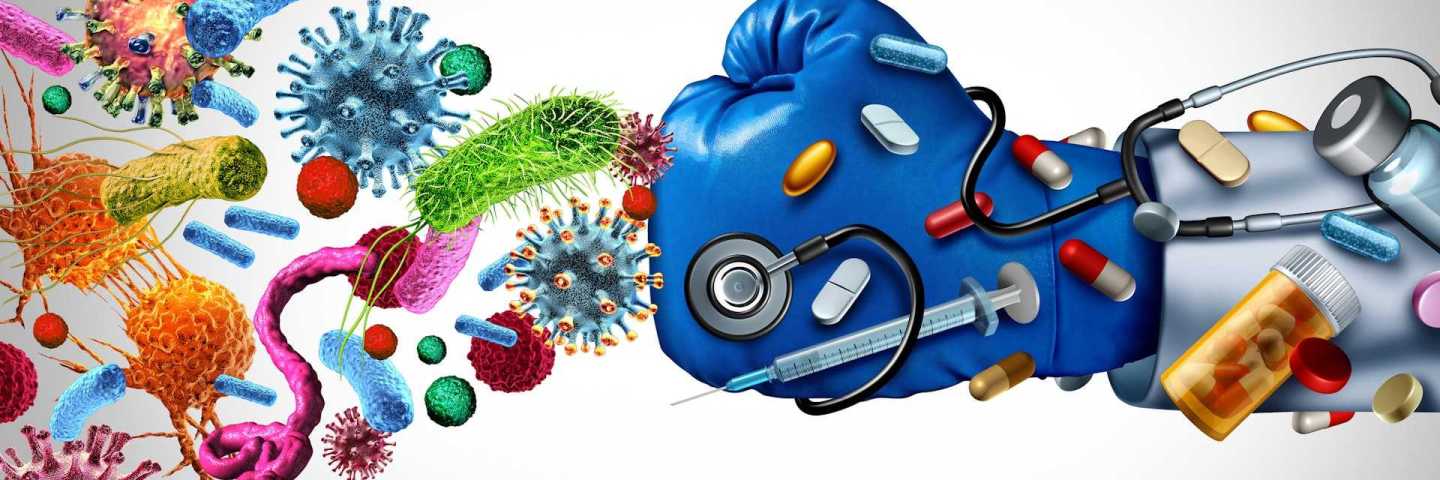
Imagine going to the hospital for a bacterial ear infection and hearing your doctor say, “We’re out of options.” It may sound dramatic, but antibiotic resistance is pushing that scenario closer to becoming reality for an increasing number of people. In 2016, a woman from Nevada died from a bacterial infection that was resistant to all 26 antibiotics that were available in the United States at that time.

The U.S. alone sees more than 2.8 million antibiotic-resistant illnesses each year. Globally, antimicrobial resistance is linked to nearly 5 million deaths annually.

Bacteria naturally evolve in ways that can make the drugs meant to kill them less effective. However, when antibiotics are overused or used improperly in medicine or agriculture, these pressures accelerate the process of resistance.

As resistant bacteria spread, lifesaving treatments face new complications – common infections become harder to treat, and routine surgeries become riskier. Slowing these threats to modern medicine requires not only responsible antibiotic use and good hygiene, but also awareness of how everyday actions influence resistance.

Since the inception of antibiotics in 1910 with the introduction of Salvarsan, a synthetic drug used to treat syphilis, scientists have been sounding the alarm about resistance. As a microbiologist and biochemist who studies antimicrobial resistance, I see four major trends that will shape how we as a society will confront antibiotic resistance in the coming decade.

1. Faster diagnostics are the new front line

For decades, treating bacterial infections has involved a lot of educated guesswork. When a very sick patient arrives at the hospital and clinicians don’t yet know the exact bacteria causing the illness, they often start with a broad-spectrum antibiotic. These drugs kill many different types of bacteria at once, which can be lifesaving — but they also expose a wide range of other bacteria in the body to antibiotics. While some bacteria are killed, the ones that remain continue to multiply and spread resistance genes between different bacterial species. That unnecessary exposure gives harmless or unrelated bacteria a chance to adapt and develop resistance.

In contrast, narrow-spectrum antibiotics target only a small group of bacteria. Clinicians typically prefer these types of antibiotics because they treat the infection without disturbing bacteria that are not involved in the infection. However, it can take several days to identify the exact bacteria causing the infection. During that waiting period, clinicians often feel they have no choice but to start broad-spectrum treatment – especially if the patient is seriously ill.

Amoxicillin is a commonly prescribed broad-spectrum antibiotic.
Amoxicillin is a commonly prescribed broad-spectrum antibiotic. TEK IMAGE/Science Photo Library via Getty Images

But new technology may fast-track identification of bacterial pathogens, allowing medical tests to be conducted right where the patient is instead of sending samples off-site and waiting a long time for answers. In addition, advances in genomic sequencing, microfluidics and artificial intelligence tools are making it possible to identify bacterial species and effective antibiotics to fight them in hours rather than days. Predictive tools can even anticipate resistance evolution.

For clinicians, better tests could help them make faster diagnoses and more effective treatment plans that won’t exacerbate resistance. For researchers, these tools point to an urgent need to integrate diagnostics with real-time surveillance networks capable of tracking resistance patterns as they emerge.

Diagnostics alone will not solve resistance, but they provide the precision, speed and early warning needed to stay ahead.

2. Expanding beyond traditional antibiotics

Antibiotics transformed medicine in the 20th century, but relying on them alone won’t carry humanity through the 21st. The pipeline of new antibiotics remains distressingly thin, and most drugs currently in development are structurally similar to existing antibiotics, potentially limiting their effectiveness.
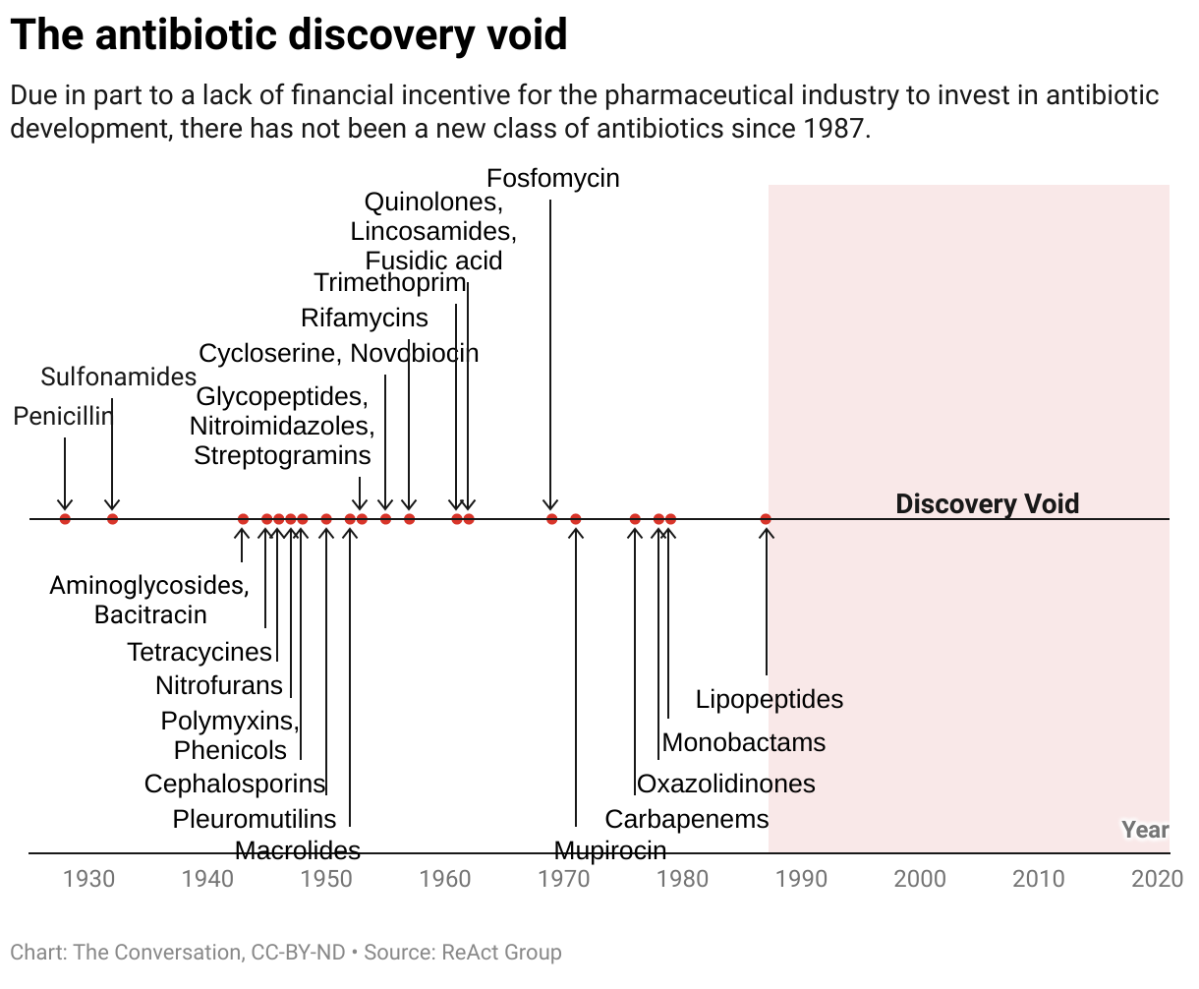
Chart: The Conversation, CC-BY-ND ReAct Group

To stay ahead, researchers are investing in nontraditional therapies, many of which work in fundamentally different ways than standard antibiotics.

One promising direction is bacteriophage therapy, which uses viruses that specifically infect and kill harmful bacteria. Others are exploring microbiome-based therapies that restore healthy bacterial communities to crowd out pathogens.

Researchers are also developing CRISPR-based antimicrobials, using gene-editing tools to precisely disable resistance genes. New compounds like antimicrobial peptides, which puncture the membranes of bacteria to kill them, show promise as next-generation drugs. Meanwhile, scientists are designing nanoparticle delivery systems to transport antimicrobials directly to infection sites with fewer side effects.

Beyond medicine, scientists are examining ecological interventions to reduce the movement of resistance genes through soil, wastewater and plastics, as well as through waterways and key environmental reservoirs.

Many of these options remain early-stage, and bacteria may eventually evolve around them. But these innovations reflect a powerful shift: Instead of betting on discovering a single antibiotic to address resistance, researchers are building a more diverse and resilient tool kit to fight antibiotic-resistant pathogenic bacteria.

3. Antimicrobial resistance outside hospitals

Antibiotic resistance doesn’t only spread in hospitals. It moves through people, wildlife, crops, wastewater, soil and global trade networks. This broader perspective that takes the principles of One Health into account is essential for understanding how resistance genes travel through ecosystems.

Researchers are increasingly recognizing environmental and agricultural factors as major drivers of resistance, on par with misuse of antibiotics in the clinic. These include how antibiotics used in animal agriculture can create resistant bacteria that spread to people; how resistance genes in wastewater can survive treatment systems and enter rivers and soil; and how farms, sewage plants and other environmental hot spots become hubs where resistance spreads quickly. Even global travel accelerates the movement of resistant bacteria across continents within hours.

Together, these forces show that antibiotic resistance isn’t just an issue for hospitals – it’s an ecological and societal problem. For researchers, this means designing solutions that cross disciplines, integrating microbiology, ecology, engineering, agriculture and public health.

4. Policies on what treatments exist in the future

Drug companies lose money developing new antibiotics. Because new antibiotics are used sparingly in order to preserve their effectiveness, companies often sell too few doses to recoup development costs even after the Food and Drug Administration approves the drugs. Several antibiotic companies have gone bankrupt for this reason.

To encourage antibiotic innovation, the U.S. is considering major policy changes like the PASTEUR Act. This bipartisan bill proposes creating a subscription-style payment model that would allow the federal government up to US$3 billion to pay drug manufacturers over five to 10 years for access to critical antibiotics instead of paying per pill.

Global health organizations, including Médecins Sans Frontières (Doctors Without Borders), caution that the bill should include stronger commitments to stewardship and equitable access.

Still, the bill represents one of the most significant policy proposals related to antimicrobial resistance in U.S. history and could determine what antibiotics exist in the future.

The future of antibiotic resistance

Antibiotic resistance is sometimes framed as an inevitable catastrophe. But I believe the reality is more hopeful: Society is entering an era of smarter diagnostics, innovative therapies, ecosystem-level strategies and policy reforms aimed at rebuilding the antibiotic pipeline in addition to addressing stewardship.

For the public, this means better tools and stronger systems of protection. For researchers and policymakers, it means collaborating in new ways.

The question now isn’t whether there are solutions to antibiotic resistance – it’s whether society will act fast enough to use them.

This article originally appeared on The Conversation. You can read it here.

  • New Russian research suggests that the human lifespan could be up to 156 years
    Photo credit: CanvaResearchers found what's preventing us from living longer.
    ,

    New Russian research suggests that the human lifespan could be up to 156 years

    Humans can live much longer if certain barriers are addressed.

    According to the Guinness Book of World Records, the oldest person lived to the ripe age of 122 years old. Such a lifespan is an incredible feat, but what if the average person could beat that record by 34 years? Recent research done in Russia has led scientists to believe that the average human lifespan could be up to 156 years.

    The researchers at Skoltech Biomed Technologies Center developed a mathematical model that allowed them to “switch on” a variety of aging mechanisms. This allowed them to calculate a human’s lifespan where mortality risk never increased with age. After experimenting with different scenarios and conditions, they found the biggest barriers to longevity were caused by non-renewable tissues and somatic mutations.

    What are these barriers against longer life?

    Somatic mutations are DNA changes within a cell. They accumulate over time during a human’s life and cannot be reversed with any existing therapy. These DNA errors that pile up in our cells contribute to the aging process.

    Many human organs like the liver and skin continually replace cells and regrow damaged portions of themselves. However, there are two organs that can’t do this: the brain and the heart. Brain tissue (neurons) and heart tissue (cardiomyocytes) cannot regenerate. This proves to be the most prominent biological limit that shortens our lifespans. This explains why issues like dementia and heart disease are prominent causes of death and morbidity later in life. Since those organs’ tissues don’t replace damaged cells, they’re prone to irrevocably decline over time.

    “The key finding of the study is the discovery of substantial differences between tissue types. Neurons and cardiomyocytes, which lack the ability to divide, turned out to be the main limiting factors: when all other causes of aging are eliminated, somatic mutations alone reduce the theoretical median lifespan from 1,759 years (for a hypothetical non-aging human organism) to 156 years,” said Evgeny Efimov, a research intern at the Skoltech Biomed Technologies Center, researcher at AIRI, and one of the key authors of the study.

    This suggests that somatic mutations and DNA damage is what ultimately prevents humans from living indefinitely, even if our brains and hearts regenerated cells like other organs.

    So what’s next?

    Now knowing these biological limitations, the researchers hope to study other areas of aging impacting the human lifespan that could plausibly be reversed. This includes mitochondrial dysfunction, telomere shortening, epigenetic drift, and loss of proteostasis. 

    The hope is to have a clearer priority list of issues for future therapies to tackle. This is not just to possibly extend life, but to improve lives in general. By developing a fully comprehensive theory of aging, Skoltech hopes to pinpoint which aspects of aging are within our scope to address. After all, thoroughly studying each puzzle piece that makes up human life gives us a better understanding of the whole.

    Of course, other impactful factors in a person’s lifespan can be addressed today. As most know, things like diet, sleep, and exercise are among them. A person’s living environment can also negatively impact their lifespan if it doesn’t have clean air, access to clean water, and so on.

    For now, the best method for living long is to follow instructions from your physician. Whether you make it to 156 years or not, living well is best for whatever time you’re given.

  • Screen time guidelines for kids and adolescents have shifted as research paints a more nuanced picture
    Photo credit: PeopleImages/iStock via Getty ImagesWhat kids are doing on tablets seems to matter more than how long they use them.

    Concerns surrounding young people’s screen time are widespread.

    Australia became the first country to ban social media for users under 16 in December 2025, and DenmarkFrance and the U.K. have since announced similar restrictions to begin this year.

    In the U.S., as of mid-2026, more than 30 states have passed laws banning or restricting cellphones in K–12 classrooms; in 2023, the U.S. surgeon general issued a formal advisory on social media and children’s and adolescents’ mental health; and bestselling books tell parents that smartphones are “rewiring” their children’s brains.

    These concerns and policies are part of a quickly changing national and international conversation around how young people spend time on screens and its relationship to their overall health and development. My reading of the mounting research on this issue across disciplines is that the popular narrative blaming screens and smartphones for an adolescent mental health crisis runs well ahead of the current evidence.

    I study adolescent digital media use and its influence on social, emotional and academic outcomes. A growing body of research suggests that one-size-fits-all solutions are not the answer and that managing appropriate use of digital media needs to take into account a child’s developmental milestones, how parents and adults around them use media, and the ways kids use it to connect and learn with friends and family.

    Screen time: From monolith to multifaceted

    Wide adoption of digital media and the internet broadened the range of experiences young people could have online. At the same time, the digital age introduced newfound uncertainties. As with the advent of radio, comic books and arcades, adults worried about how children might interact with or be affected by internet use.

    In response, the American Academy of Pediatrics first recommended in 1999 that parents and caregivers keep children under 2 away from screens. In the decades since, professional guidance largely treated children’s media use as a behavior to be mitigated.

    Policies introduced by the academy in 2013 and 2016 continued to advise that school-age kids and adolescents – those ages 5 to 18 – be restricted to no more than two hours of “entertainment” screen time a day. The goal was to curb risks associated with heavy media use, among them disrupted sleep, online safety, cyberbullying and physical inactivity.

    Originally created for young people’s engagement with stationary media that tend to be confined to one room or context – for example, watching television – these hourly limits became outdated with the integration of smartphones and other digital devices into everyday life. Compared with watching television, online media was far more difficult to track and define, and more nuanced in its use.

    Developmentally beneficial activities such as educationsocializing and leisure have come to rely on the internet to extend and maintain face-to-face connections. Remote schooling and social distancing during the COVID-19 pandemic only accelerated this digitization of daily life.

    In my view, adopting strict time limits and restrictions could pose risks to children’s well-beingautonomy and development, for example, by harming adolescent self-esteem.

    The latest guidelines

    In January 2026, the American Academy of Pediatrics retired its decade-old framework that had largely organized its advice around hourly screen limits. The new policy statement on children, adolescents and digital media diverges from this blanket approach. Instead, it suggests parents consider the larger picture in which this media use exists rather than lumping all screen use together.

    Similar to the World Health Organization’s 2019 guidance for children under 5, the American Academy of Pediatrics still advises that parents avoid screen media for children younger than 18 months. This recommendation is largely because extended use by children by themselves can be problematic for many young children, crowding out important developmental milestones.

    Both the World Health Organization and the American Academy of Pediatrics also recommend that when children under 24 months use screens, they should be limited to content and devices that encourage children and caregivers to interact. For ages 2 to 5, screen time – including TV and interactive apps on devices – may be extended to more solo use, provided it’s high-quality digital media designed around learning goals in mathematics and reading. But recreational use should be limited to roughly an hour per day.

    For school-age children and teens, the newest guidance has begun to step away from fixed screen time limits and asks families to weigh online activity in the context of everyday life.

    Doing so recognizes that a child’s digital experiences are shaped by diverse factors rather than the hours spent online. Current guidelines call on caregivers to distinguish among types of media, from television and social media to video games and interacting with artificial intelligence chatbots. They also call for taking into account a child’s individual characteristics, such as their interests and personality, family members’ own use of screens, and the type of content children are spending time on.

    Rethinking screen time

    Moving beyond strict screen time limits includes questioning the kind of digital activities kids and adolescents participate in. Do the activities encourage time spent interacting with others online, which can help young people develop important skills and competencies?

    Scrolling an algorithm-based, auto-playing video feed likely does not equate to the same opportunities as video-chatting with friends, creating digital art or working with teammates in a multiplayer game. Research suggests these different uses relate to development in different ways and can help kids develop varying skill sets pertaining to everyday life and schooling.

    Indeed, a large review of current research found that young people who take part in a range of digital activities, such as browsing the web, online gaming or interacting on social media, show positive associations with social connection, identity exploration, civic participation and learning.

    A woman and two small children look at tablet screen
    Parental involvement in young children’s screen time has developmental benefits. Cultura Creative/Tetra images via Getty Images

    Using these guidelines at home

    The current evidence suggests parents and caregivers are best positioned to be digital instructors. Cutting children off altogether can carry its own risks for social and emotional development. Caregiver mediation of children’s screen time can produce widely different outcomes and effects, depending on whether the guidance is supportive or controlling.

    Considering your own digital media use is the first step: Are family members engaging in problematic or heavy media use that children in the household might emulate? What applications and uses are most common in the family, and what positive or negative effects might they have, depending on the child’s age? How could these digital activities be safely integrated with other everyday experiences to increase their benefit for children? Conversely, what online time might be better spent on face-to-face experiences?

    The American Academy of Pediatrics’ Family Media Plan tool turns these ideas into concrete questions. For example, it recommends working out what each child needs from digital technology, what activities screens might be crowding out, and where their family or household can build in screen-free time. The recommendation is to talk with each child about why they are drawn to particular apps or online activities, what they encounter while browsing, and what might be lost when kids bring phones to gatherings such as mealtimes.

    The debate over young people’s screen time is not going away. But the most up-to-date guidelines, and the growing body of research behind them, make a strong case for a more holistic approach. The guidelines treat digital media as a complex, diverse and evolving environment that children need to learn to navigate in the digital age. The risks and rewards depend, as with any developmental setting, on the child, the content and what online time might be crowding out.

    This article originally appeared on The Conversation. You can read it here.

  • ER doctor and mom sets the record straight for parents of kids with e-bikes and e-scooters
    Photo credit: CanvaA boy rides an e-scooter, left, while a girl is examined in an emergency room.

    An emergency room doctor and fellow mom has been noticing a troubling trend: Many parents are giving their kids something more powerful than bicycles to get around the neighborhood. As a result, she’s seeing more children come into the ER with injuries sustained in e-bike and e-scooter crashes. She recently went online with a plea to parents and young riders.

    Dr. Meghan Elizabeth Beach Martin, known online as Dr. Beachgem, posted a video in her scrubs discussing her concerns after seeing so many children come into the hospital with e-bike injuries during the summer months. She’s worried that too many kids and parents don’t understand the proper safety precautions. As a mother herself, she even questions why children are allowed to ride these devices at all.

    In the video, the doctor explains that some e-bikes can reach speeds of up to 28 mph. She says that if an e-bike goes any faster than that, it’s technically classified as a motorcycle. At those speeds, she regularly sees children with traumatic injuries and broken bones after hitting bumps, cracks in the road, or other vehicles. Many of them aren’t wearing helmets or protective pads, and some are even riding barefoot, making their injuries even more severe. Martin’s video has gained traction on Reddit and elsewhere online.

    E-bikes and e-scooters, examined

    Martin isn’t the only professional seeing a growing problem. The American College of Surgeons reports that there are more than 20,000 e-bike-related injuries each year. Meanwhile, a University of California, San Francisco study found that e-bike injuries doubled annually from 2017 to 2022. The same study found that e-scooter injuries increased by 45% each year during the same period.

    Before riding an e-bike, it’s important to follow proper safety procedures. Make sure you and your child understand your area’s laws regarding e-bikes, including any minimum age requirements. Always wear a helmet and other protective gear when riding. Consider choosing an e-bike with safety features such as motor-interrupt brake levers and disc brakes. These are just a few of the many safety tips experts recommend.

    The U.S. Consumer Product Safety Commission has similar safety tips for e-scooter riders. Wearing a helmet is one of its top recommendations, along with taking other basic precautions. The agency also recommends checking the brakes before riding and slowing down for bumps, cracks, and other road hazards.

    The vast majority of e-scooters and e-bikes are designed for only one rider, so avoid doubling up. Although laws vary by state and locality, wearing more protective gear is always the safer choice. Riders should also review local e-bike and e-scooter laws to make sure they are operating the vehicles safely and legally.

    A little research goes a long way toward making sure you and your children can ride safely. It’s also important for parents to understand that many e-bikes and e-scooters can travel at speeds that make them very different from a traditional bicycle. The last thing you want is for you or your child to become another emergency room statistic.

Explore More Health Stories

Health

Screen time guidelines for kids and adolescents have shifted as research paints a more nuanced picture

Care

ER doctor and mom sets the record straight for parents of kids with e-bikes and e-scooters

Health

May cause joy: The full-spectrum health benefits of dance 

Research

Why we crave company