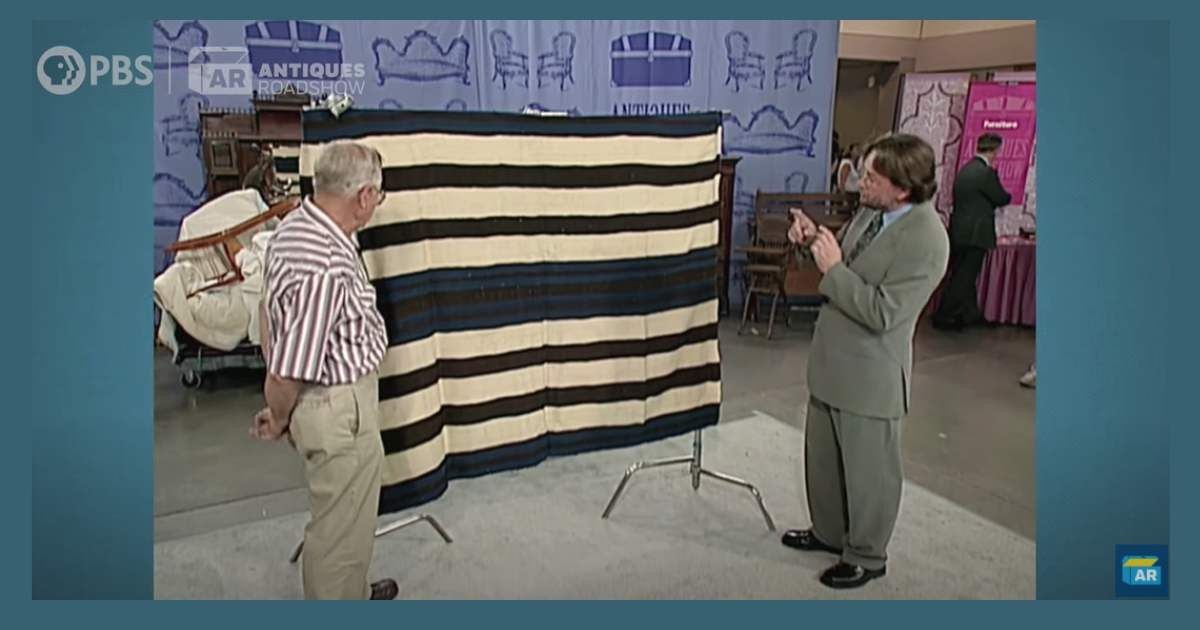
All heirlooms are old and antique, but some are truly timeless. In 2001, Ted Kuntz from Tucson, Arizona appeared on PBS’s “Antique Roadshow” with an heirloom blanket he had found “at the back of a chair.” As the episode unfolded, it was revealed that the blanket was not only highly valuable but a “national treasure.” When Ted learned its actual worth, his eyes welled up with tears, something he had never expected, even in his dreams.
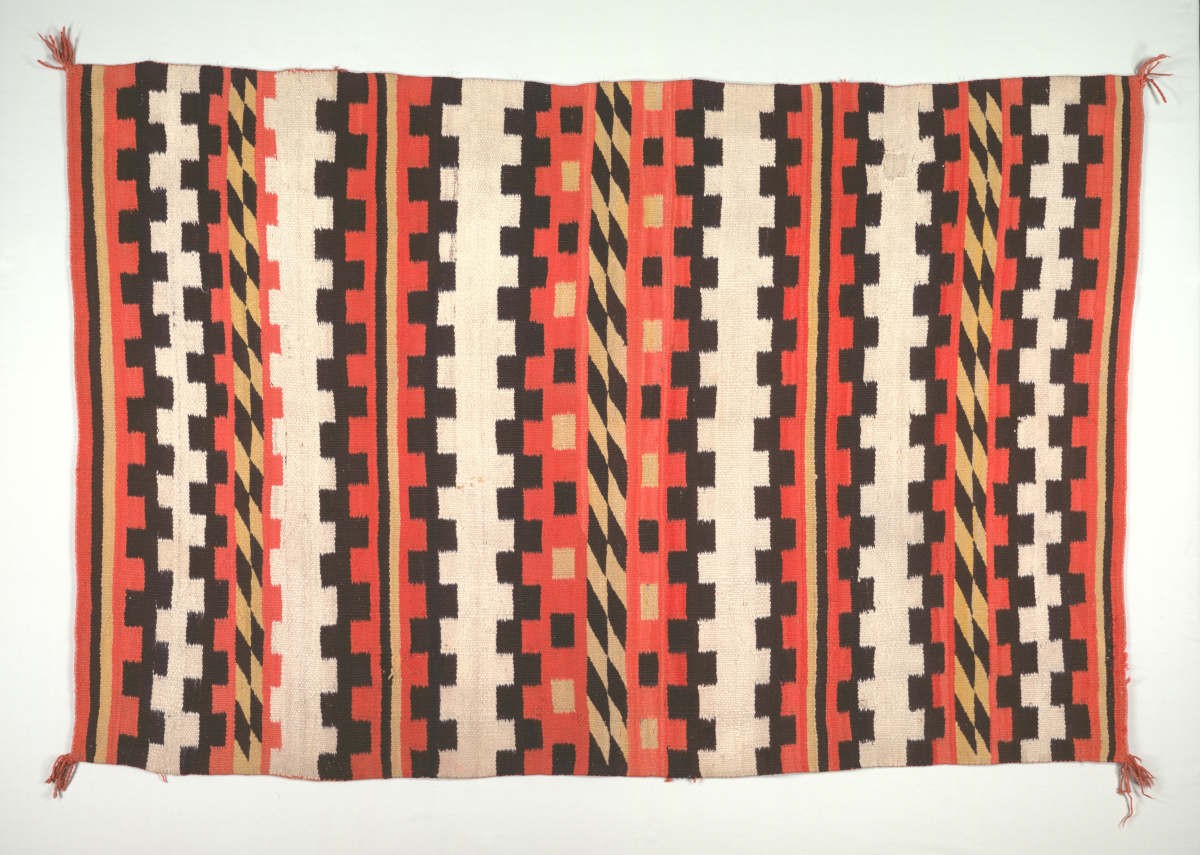
Representative Image Source: Rug (banded pound blanket style), circa 1895-1910. Creator Unknown. (Photo by Heritage Arts/Heritage Images via Getty Images)

Antiques Roadshow” is PBS’s most-watched series, combining history with adventure and treasure hunting. The show features specialists from leading auction houses and independent dealers who offer free appraisals of antiques and collectibles. Cameras document tales of family heirlooms, flea market finds, and items saved from attics and basements, as experts reveal fascinating truths about these items. These items capture sweet family memories and serve as interesting historical time capsules.


via GIPHY


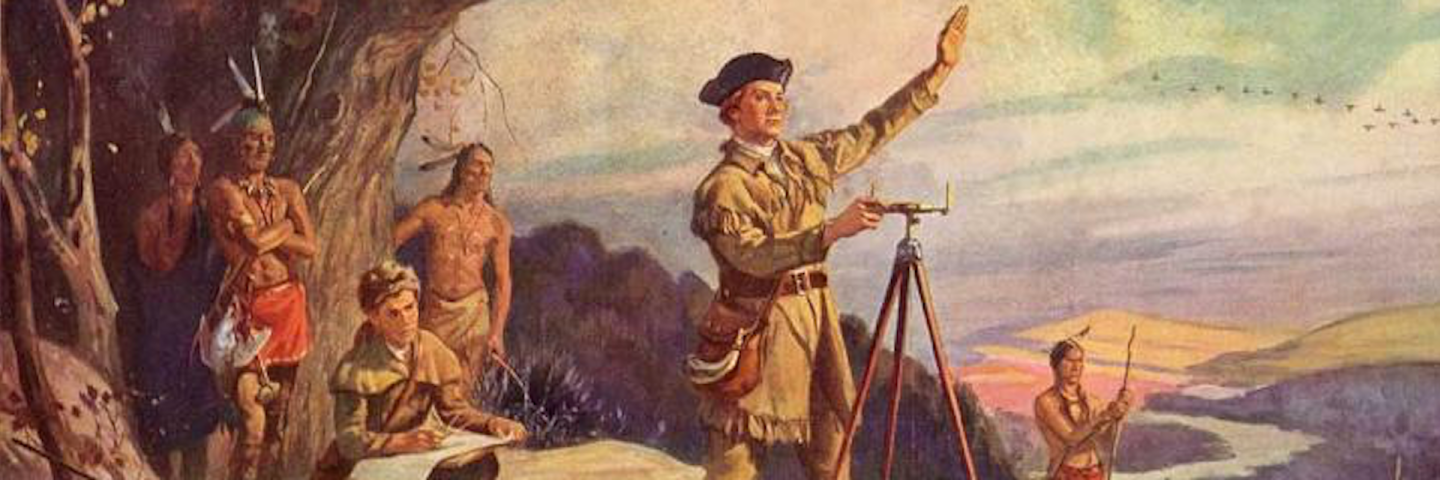
At the beginning of the episode, Ted revealed that the blanket belonged to his grandmother and was gifted by Kit Carson to her foster father. Kit Carson was a renowned American mountain man and trapper. According to the National Park Service, he explored and traveled through many parts of the American West during his lifetime, and became one of the main frontiersmen who helped expand the United States’ territories on the west side of the Rocky Mountains. In an interview, Ted shared that Carson gave this blanket to a man named Marc Bedell, with whom her grandmother “had grown up.”
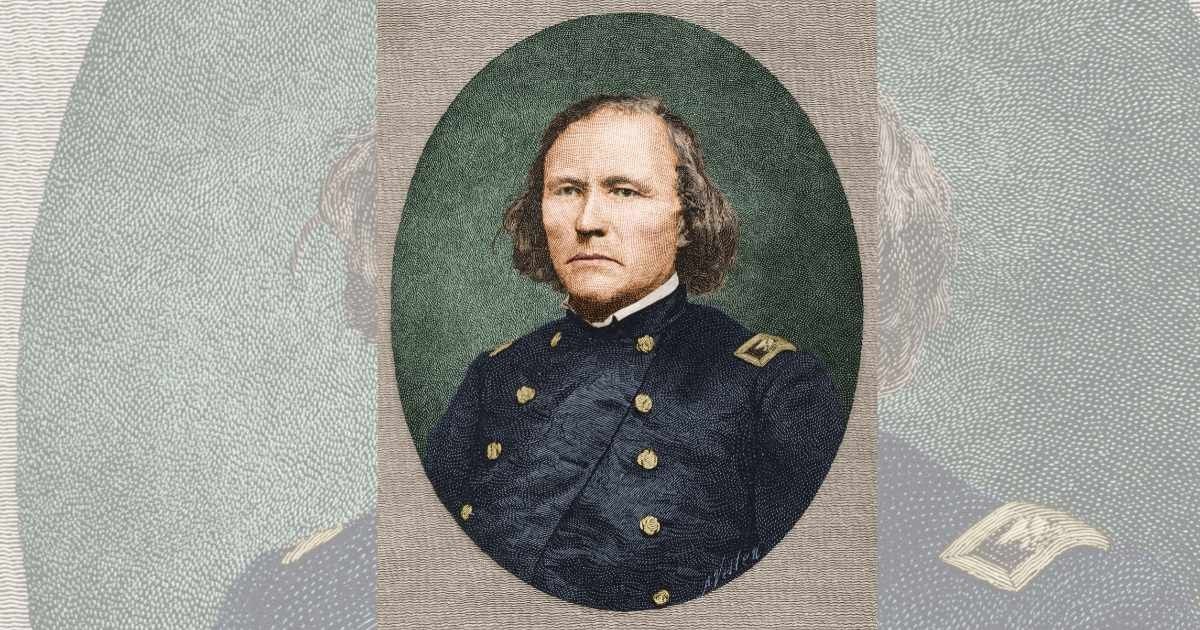
Image Source: Colorized portrait of American soldier, explorer, and scout Kit Carson (1809 - 1868) (born Christopher Houston Carson), 1860s. (Photo by Stock Montage/Getty Images)
Image Source: Colorized portrait of an American soldier, explorer, and scout Kit Carson (1809 – 1868) (born Christopher Houston Carson), the 1860s. (Photo by Stock Montage/Getty Images)

The show’s appraiser, Donald Ellis asked, “Do you know who made this weaving? What kind of blanket is this?” To this, Ted said, “Probably a Navajo,” guessing. Although it was just a guess, there is a good possibility that the blanket was Navajo. This is because Carson was well known for leading a destructive war against the Navajos.
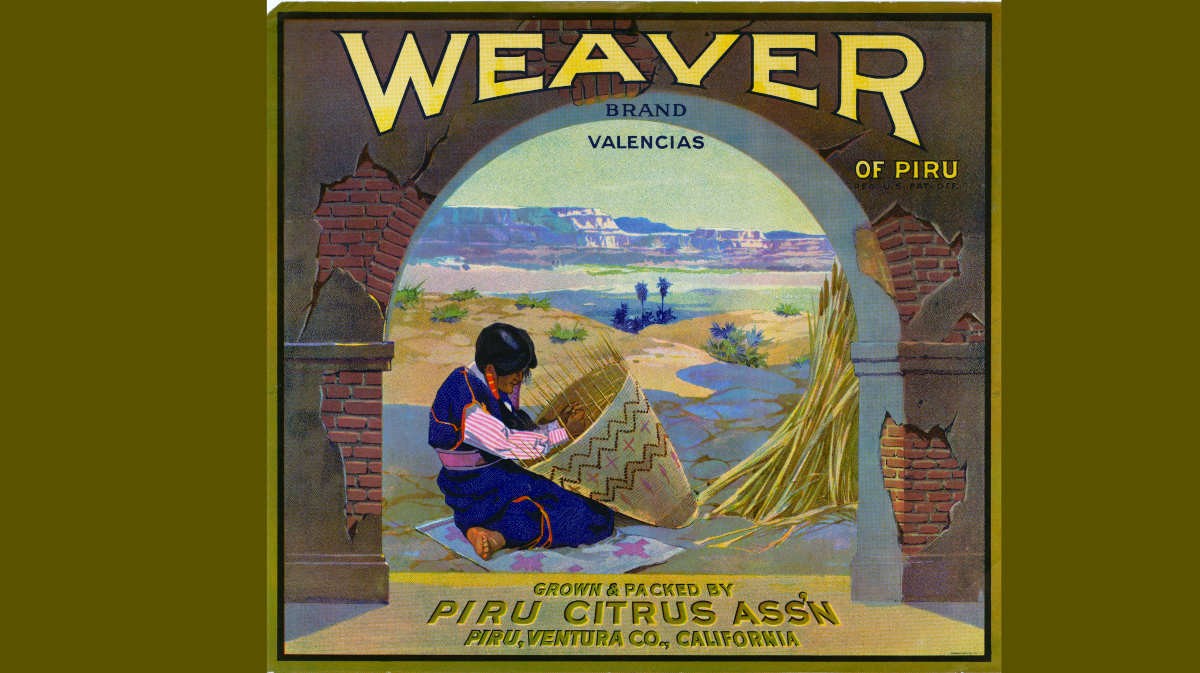
Image Source: A Navajo weaver (Photo by Transcendental Graphics/Getty Images)

In the spring of 1864, Carson forced the surrender of the Navajos, leading 8,000 men, women, and children to march 300 miles from Fort Canby to Fort Sumner, New Mexico. His connection with the Navajos adds to the probability that he could have taken this blanket from some Navajo individual. “Well Ted, did you notice, when you showed this to me, that I kind of stopped breathing a little bit?” Ellis said. “Yeah you did,” replied Ted, and both men burst into laughter. At this moment, Ellis exposed a thrilling fact, about the antique blanket. “It’s not just a chief’s blanket,” he said. “It’s the first type of chief’s blanket made. These were made in about 1840 to 1860, and it’s called a ‘Navajo Ute First Phase wearing blanket.’”
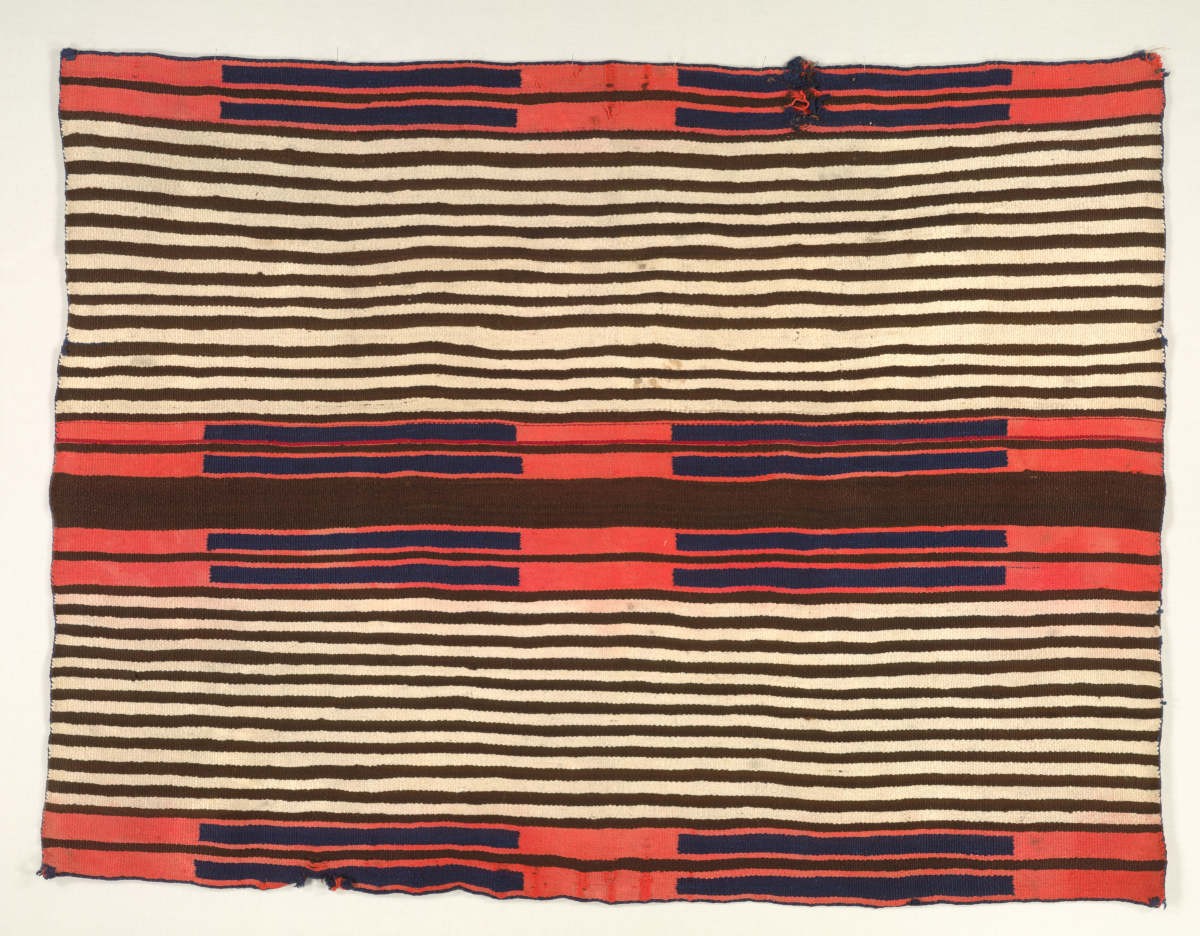
Representative Image Source: Woman's Wearing Blanket, circa 1875-1880. Creator Katsukawa Shuncho (Japanese). (Photo by Heritage Arts/Heritage Images via Getty Images)

“They were made for Ute chiefs and they were very, very valuable at the time,” he explained, adding, “This is Navajo weaving in its purest form. This is the beginning of Navajo weaving. The condition of this is unbelievable. It is made from handwoven wool but it’s so finely done it’s like silk. This would repel water. And this here is dyed with indigo dyes,” he continued while pointing to a dark blue strip in the blanket, ”It was a very valuable dye at that time.”


via GIPHY


“And what’s really interesting, is right here we have an old repair that was probably done in 1860s,” the screen showed a tiny red strip of fabric on the blanket, “And it was done with raveled bayetta, which is in itself a very important thing in Navajo weaving. So all involved, it’s an extraordinary piece of art, and it’s extremely rare. It is the most important thing that has come on the Roadshow that I have seen. Do you have a sense at all of what we’re looking at here in terms of value?” Ted shrugged saying that he had no clue.


via GIPHY


“Are you a wealthy man?” Ellis asked, to which Ted responded with a “No!” Saying that he had to tell Ted something crucial about the heirloom, he went on, “On a really bad day, this textile would be worth $350,000,” Ted’s eyeballs popped wide as he gasped in astonishment. Ellis continued, “On a good day, it’s about half a million dollars.” Ted exhaled with shock, “Oh my God!”


via GIPHY


“And you had no idea,” quipped Ellis. “I had no idea. It was just lying on the back of a chair,” said Ted. “Well Sir you have a national treasure,” said Ellis, congratulating the guest who was still unable to believe what he had heard. But there was more to it. Ellis elaborated, “If we research and know that Kit Carson actually owned this, the value of this would increase further, maybe 20%.”


Ted couldn’t hold on any longer. Tears rolled down the man’s eyes. As he was wiping them, he recalled, “My grandmother, you know, was a poor farmer. Her foster father had started gold mills and discovered gold but there was no wealth.” His voice broke in overwhelm and he could only utter the words, “I am amazed. I am flabbergasted.” The overlay text on the episode’s video shows that the price of the blanket in 2021 was estimated to be between $1,500,000 and $2,000,000.


via GIPHY


In a behind-the-scenes video of this episode, Ted said, “I didn’t think it could be worth anything like that. I thought it was maybe $5,000 to $6,000.” He said he couldn’t afford to keep it and thought of giving it away to someplace where it could be preserved properly. He contacted Ellis thinking if he’d be interested in buying it. Appraiser John Buxton revealed that Ellis sold it for about $450,000 to an anonymous buyer who donated it to the Detroit Institute of the Arts, where it is still on display. Ted used the money he received to pay the mortgage of his house.
https://youtube.com/watch?v=smwwIQBH0qo%3Fsi%3DpmL8ktznMNfkUNiB

  • Australia produces so much solar power that they’re giving three hours of it away each day for free
    Photo credit: CanvaSolar energy surpluses during the day offers Aussies free energy.

    In a time when energy costs are rising, Australia is taking a different approach. The country has acquired so much solar power that they’re giving it away. In fact, those who sign up for the program will get three free hours of energy each day.

    This comes from a government-run offer dubbed Solar Sharer. It offers a free three-hour period for those who sign up. This period runs from 11:00 a.m. to 2:00 p.m. in Queensland, Victoria and New South Wales. The period runs from noon to 3:00 p.m. in South Australia. 

    Free, but not unlimited, power

    While the power is free for those who are eligible and have a smart meter, there is a daily cap of 24 kilowatt-hours (kWh). Any amount above that will be charged. However, the energy cap is based on the Australian Energy Regulator’s assessment of what a five-person household uses each day. 

    While that free period each day provides a great window to use major appliances or charge electric cars, there are some catches. Solar Sharer isn’t yet available to residents outside those areas, but energy brokers are making similar offers. There is also no guarantee that electricity rates won’t get higher outside of those free periods either.

    Who benefits?

    The program is designed for those who are a part of a solar power grid. It also benefits people who work from home the most. If the people in the household are at their job or the office, they likely won’t be able to take advantage of the deal.  

    While Energy Consumers Australia supports this offer, they are concerned about how governments and retailers relay the information to customers. In short, they don’t want people to be surprised if their electricity rates are charged higher during the non-free periods. They’re also concerned that, by their measure, only three in 10 eligible people were aware of this offer.

    “We don’t want to have people signing up to these plans assuming it will decrease their bills, when in fact it could do the opposite,” the consumer advocacy group said to The Guardian.

    There is a chance that rates won’t get higher if more people are able to take advantage of Solar Sharer. Since most electricity use is during the evening when more people are home from work, changing up the usage towards daytime hours can benefit everyone. It would still be an uphill battle as electric light is mostly used in the evening and nighttime when it’s dark.

    Similar programs elsewhere

    While there are catches, this isn’t the first program of its type. There are similar successful free energy programs in other nations. Areas such as Germany and the Nordic countries create so much green energy through wind farms that they make similar free power offers. California has also offered government programs for low-income households and farmworkers housing cheap-to-free solar energy.

    While kinks definitely need to be sorted out, creating so much generated energy to the point that it can be given freely is a good problem to have.

  • Motorcyclist trapped under a 3,300 pound car saved by Australian car salesmen
    Photo credit: @ACurrentAffair9 on YouTubeA man was saved from being crushed under a car.

    Tyler Wiebe was on his way to work on his motorcycle in Brisbane, Australia. Then a car approached in the wrong way in traffic, colliding with another car that then hit Wiebe. The accident threw Wiebe off his bike and under a car. He was trapped under the 3,300-lb. vehicle, doomed until a group of salesmen and onlookers came to his rescue.

    “I was being dragged and when it stopped, my head and chest were under the car,” Wiebe said to the Australian Broadcasting Corporation. The crash and being pinned down under the vehicle gave Wiebe several injuries. He suffered broken ribs, a broken collarbone, and a collapsed lung.

    But that would be diagnosed later. At the time, the car’s weight was crushing Wiebe to the point that he couldn’t breathe. His heart was also unable to beat, the pressure causing his eyes, mouth, and nose to bleed.

    “Initially it was ‘can I get out?’ and then it was ‘man I am dying, this is it,’” recalled Wiebe. “[My] wife and two kids are not here, and this is it.”

    Hope comes in the form of a car salesman

    After being stuck for two minutes under the car, help arrived from the nearby Auto Request Kedron, a used car dealership.

    “I was in the office at the time, so I heard the bang [and] came running to the doors,” Mick, one of the employees, said to A Current Affair.

    “I realized there was someone trapped under the car,” fellow employee Rob added.

    They rushed into action, recruiting other coworkers to help.

    “[I] saw Rob running and he was just whistling out saying, ‘Hey, boys, hurry up,’ ” Corbin recalled. “I remember seeing him, just like two legs. They weren’t moving at that time.”

    The salesmen tried to lift the vehicle up to get Wiebe to safety, but the car wouldn’t budge.

    “We tried to lift it off. We couldn’t, and then on the second attempt, we had a couple of other good Samaritans come and help us,” said Brian, another employee of Auto Request Kedron.

    Reportedly 15 people were finally able to lift the car and free Wiebe underneath. He was rushed to the hospital where he went under emergency operations. Under hospital care, Wiebe’s condition stabilized and he survived. Had he been under that car any longer, the worst would have happened.

    Wiebe was humbled and grateful to the salesmen and others who stepped up to save him.

    “I get more time with my daughters, I get more time with my family and a second lease on life, so just thank you, thank you,” Wiebe said in his hospital bed.

    Certified legends

    When he was discharged from the hospital, Wiebe set up a reunion with the employees of the used car dealership. He was able to introduce his family to his rescuers and thank them face-to-face. Wiebe presented them with matching t-shirts, each one with a logo reading “Certified Legend” on the front and an illustration of a person lifting a car over their head on the back.

    “You guys are legends, but now you’re certified legends,” Wiebe said to his heroes.

    A father and husband was saved thanks to the alertness and quick action of the nearby community.

  • Texas engineers develop a jacket that pulls fresh drinking water out of thin air
    Photo credit: @fascinatingonX/CanvaWearing this jacket could help keep people hydrated.

    For too many, access to clean drinking water is incredibly difficult. According to the World Health Organization, over two billion people live in water-stressed areas due to pollution, climate change, or population growth. However, engineering experts in Texas have developed a possible solution: just put on a jacket.

    The engineers and researchers gathered at the University of Texas at Austin developed a prototype jacket that can pull drinking water out of thin air. The jacket could help anyone frequently in areas where drinkable water is scarce. This could be used recreationally by campers, hikers, and runners—but it could also save lives. Emergency responders, soldiers, and agricultural workers could also collect water for themselves and others simply by wearing it.

    The technology behind the jacket is similar to the materials used in netting for water harvesting of air and fog. This time, however, the idea is to collect water while also being mobile.

    “Water harvesting from air is usually imagined as a stationary device such as a box, a panel or a large sorbent bed,” said Guihua Yu, chair professor of the Cockrell School of Engineering’s Walker Department of Mechanical Engineering and Texas Materials Institute. “Here, we wanted to rethink the form of the technology. If the fabric itself can collect water from air, it opens a new direction for personal and portable water access.”

    How does this jacket collect water?

    The textile used to create the jacket was derived from a device the same team created. That device was a specially engineered hydrogel fabric made from biomass-derived materials. This hydrogel fabric takes moisture from the air and then releases it as water via condensation when it’s heated by sunlight. The water can easily be collected.

    The jacket’s textile collects moisture from the air and funnels it into detachable harvesting units. The units can be placed into a foldable collector piece where they are heated to produce water. The material and system doesn’t just absorb water like other materials. Instead, it actively converts vapor into water while functioning as a piece of protective clothing.

    The jacket is able to produce between 400 to 900 milliliters of drinkable water daily. This is a vast improvement upon other similar inventions that yielded less water and were significantly bulkier to wear. The jacket’s material could collect and produce more water over time and testing, depending on the humidity of the terrain.

    Aside from creating clothing out of the material, the researchers hope to make backpacks, tents, emergency shelters, and other outdoor gear from it. The hope is that this could create more clean water access for disaster response units and everyday people living in water-stressed areas alike.

    How much hydration do you need in the heat?

    Until water-collecting jackets are commercially available, it’s important to have drinkable water nearby at all times, especially during the summer. When out in the heat, the Center for Disease Control recommends having a drink of water before working outdoors. Then drink a cup of water every 15 to 20 minutes. This can help keep your body cool and hydrated to prevent heat stroke. That said, stay alert and stay indoors if there is a heat warning in your area.

Explore More Stories

Local

Ohio local news viewers spring into action after seeing an elderly woman threatened with jail time

Culture

In America’s sandwiches, the story of a nation

Health

Every dog has its day, but it’s not the Fourth of July

Society

Who owns the beach? It depends on state law and tide lines