

For decades, astronomers have been watching WOH G64, an enormous heavyweight star in the Large Magellanic Cloud, a galaxy visible with the naked eye from the Southern Hemisphere. This star is more than 1,500 times larger than the Sun and emitting over 100,000 times more energy. For a long time, red supergiant WOH G64 looked like a star steadily reaching the end of its life, shedding material and swelling in size as it began to run out of fuel.

Astronomers didn’t think its final demise would happen anytime soon, because no-one has ever seen a known red supergiant die. But in recent years astronomers – including our team working with the Southern African Large Telescope (SALT) – discovered that this star has started to change, growing dimmer than before and seemingly warmer. This has surprised scientists and suggests the star’s final stages of life may be more complicated, and perhaps unfold faster, than once thought.

Massive stars, more than about eight times the mass of the Sun, produce so much energy, which we see as light, that they run out of fuel within millions of years, instead of the billions of years of the Sun’s lifespan.

Most massive stars become gigantic, cool stars in the final million years or so of their life – so-called red supergiants. All red supergiants blow gaseous winds, losing weight as they do so. Some do this so strongly that the star becomes enveloped in a shroud of the ejected material containing gas and solid particles like tiny sand grains – called dust in astronomy. This makes them look dim in visual light, but very bright in the infrared where the dust shines.

In the 1960s Swedish astronomers Westerlund, Olander and Hedin discovered number 64 in their catalogue of red stars. They thought nothing of it, as it looked like an unremarkable red giant star, something the Sun and most other stars will become later in life. But when in the 1980s Nasa, the UK and The Netherlands launched the InfraRed Astronomical Satellite into space, astronomers Elias, Frogel and Schwering discovered that WOH G64 is the most luminous, coolest and dustiest red supergiant in the entire Large Magellanic Cloud, which harbours over a thousand red supergiants. More observations over the following decades showed the strong, steady modulations of the brightness expected of a pulsating star of that kind.

Then, in 2024, our team (both authors of this article and our collaborators in Germany and the US) succeeded in taking a close-up image of WOH G64 using the European Southern Observatory’s telescopes and revealed a fresh cloud of dust close to the star. It was the sharpest picture of a star in another galaxy ever taken (comparable to being able to spot an astronaut walk on the Moon from Earth). We discovered that in the last decade, unexpectedly, the star had started to eject much more dust than before. At that time, we did not have an idea about why and how.

It turns out, WOH G64 had also become dimmer, possibly because of the dust cloud it had ejected, and started to pulsate less and a little more quickly, suggesting it had shrunk. At the same time, the star seemed to look a lot warmer, leading some to believe it might have entered a new stage of its life – a so-called yellow hypergiant on its final path to doom.

All these phenomena are happening on a human time scale, which is usually not the case when we observe stars. This makes WOH G64 even more special. Is this star offering us an opportunity not to be missed to witness the final death throes of massive stars?

Now, as we start 2026, we have announced that observations we have obtained using the Southern African Large Telescope give us some clues about what is going on with WOH G64. The SALT observations show the overwhelming presence of ions in the vicinity of the star, which means that the gas is heated up to high temperatures by what must be a much hotter star. This should not have surprised anyone as the hot gas had been spotted in the 1980s and ever since. But we also found the imprint of molecules, implying cool gas (because molecules break up at high temperatures) likely in the atmosphere of the red supergiant. It did not appear to have changed into a yellow hypergiant, at least not yet.

For a long time, astronomers have suspected that the red supergiant has a smaller, hotter twin living alongside it, but they have somehow been reluctant to claim this in publications. And now it looks to be the elephant in the room. One way of making sense of our observations is that this hotter star, looking blue in contrast to its bigger, cooler, red sibling, heats gas it might have captured from the red supergiant’s wind. Now that the red supergiant has faded, the presence of the heated gas has just become more conspicuous.

If the orbit of the blue star is not a circle but quite elongated (Earth’s orbit around the Sun only slightly deviates from a circle), the distance between the blue star and the red supergiant varies. It may have got closer in recent years, and its gravity might have caused the atmosphere of the red supergiant to stretch out. This would make it more transparent overall, allowing us to see the warmer interior, but with cool, dark molecular patches left in places. That would also have made it easier for dust to form further out in its wind.

If that is true, then once the blue star starts to recede again on its orbit, WOH G64 might regain its former red supergiant glory. On the other hand, if it did throw off its coat entirely, then the molecules would disappear, and with it, the dust, and we would gain a clean view of the star. Then again, WOH G64 might do something else unexpected. It certainly teaches astronomers to be humble.

This article originally appeared on The Conversation. You can read it here.

  • How D.C.’s ‘humanure’ fertilizer creates lush gardens and big profits while improving the environment
    Photo credit: CanvaWhat you flush away could help your garden grow.

    The District of Columbia Water and Sewer Authority—now known as D.C. Water—has long provided water and sewer services to Washington, D.C. But for the past decade, the utility has also had an unexpected side hustle: turning human wastewater into fertilizer with flourishing results.

    At most wastewater treatment plants, flushed water is cleaned, while the remaining solid matter is hauled away for disposal. Over time, transporting and disposing of that waste can cost millions of dollars while increasing carbon emissions from the trucks carrying it. A decade ago, however, D.C. Water decided to invest in transforming the solid waste into “humanure” rather than throwing it away.

    Growin’ grass and makin’ gas

    At the end of the wastewater treatment process, the collected human waste solids are processed into biosolid fertilizer using technology developed by Norwegian company Cambi. The process doesn’t just produce high-quality fertilizer—it also generates biogas that can be put to good use.

    “So you get up to 40% more biogas,” Cambi CEO Eirik Fadnes said. “That biogas can be used to generate electricity to be used elsewhere in the wastewater-treatment plant or put on the grid and sold.”

    D.C. Water sells the biosolid fertilizer under the brand name Bloom, and it’s already proving to be a success. Bloom has been used throughout the Washington, D.C., area by customers including Catholic University, Mount Olivet Cemetery, and the Franciscan Monastery. It’s also used on numerous lawns, school grounds, community gardens, and golf courses.

    Success by the numbers

    The numbers underscore D.C. Water’s success. To date, nearly 400,000 tons of Bloom have been sold across Washington, D.C., Maryland, Pennsylvania, and Virginia, generating $13.6 million in revenue. D.C. Water originally estimated it would take 20 years for Bloom to pay off its investment. But thanks to strong demand from institutions, landscapers, and local garden centers, the utility is now on pace to recoup that investment in just 12 years.

    Bloom is also helping D.C. Water meet its environmental goals. By turning waste into a useful product instead of hauling it away for disposal, the utility has reduced its carbon footprint by roughly 50,000 metric tons of CO₂ emissions each year—the equivalent of taking more than 11,700 gas-powered cars off the road annually. The process also produces biogas, which can be converted into electricity to help offset the energy costs of wastewater treatment.

    Human waste works wonders

    None of this would matter if human biosolids weren’t effective at improving soil. “Humanure,” a term coined by Joseph Jenkins, refers to compost made from properly treated human waste. Because human feces can contain disease-causing pathogens, it must be handled carefully. After all, we call it “waste” for a reason.

    When human waste is composted correctly, naturally occurring microbes break down the organic material while generating enough heat to destroy harmful pathogens. Over time, the result is a nutrient-rich compost that can improve soil health. Some farmers even build specialized outdoor composting toilets to create humanure for use on their land.

    Should D.C. Water continue on this path of simultaneous profitability and environmental improvement, it’s likely other wastewater treatment plants will follow its lead.

  • A Spanish park has been free of wildfires for over a decade thanks to 18 donkeys
    Photo credit: CanvaDonkeys and other livestock could help prevent mass wildfires.

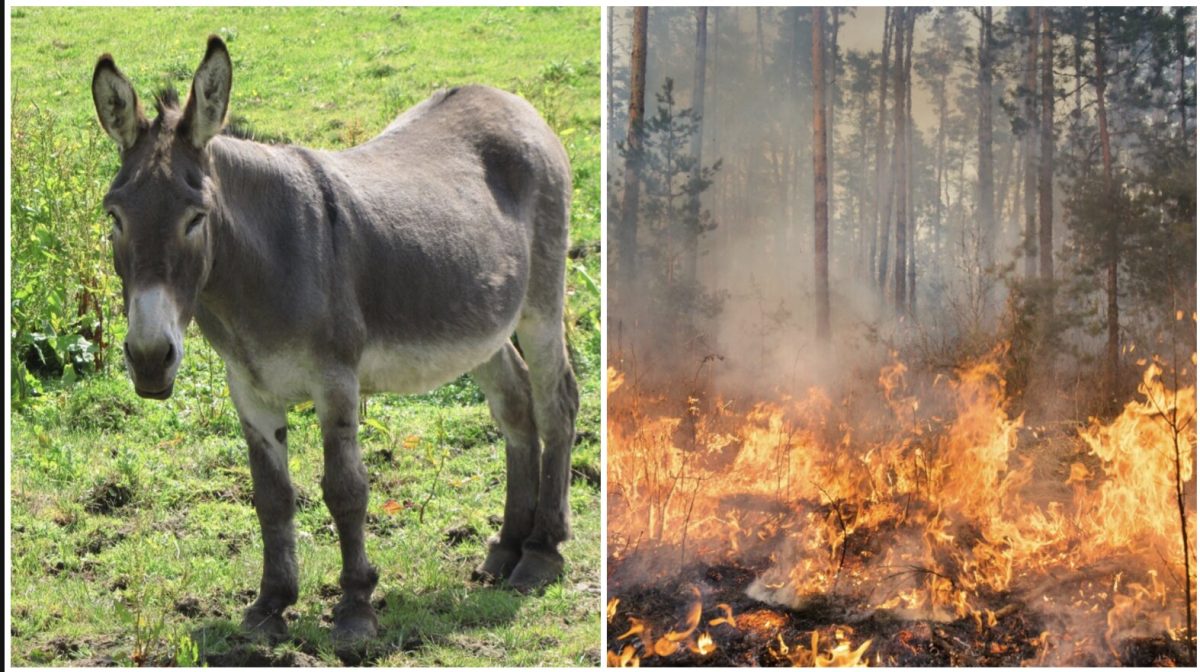
    According to NASA, wildfires have doubled worldwide due to climate change. Throughout the globe, governments and environmentalists have been trying to find ways to curb the fires. One particular national park in Spain has found a solution that has been keeping them fire-free for over a decade: donkeys.

    Since 2014, the Firefighting Donkey Battalion unit consisting of 18 donkeys has been preventing wildfires in Doñana National Park in Doñana, Spain. The mission these donkeys do is simple: eat the dry brush that usually sparks and fuels wildfires. The donkeys spend up to seven hours a day using their voracious appetites to graze and clear a 130 by 50 feet area of dried grass, scrub, and other vegetation.

    Why donkeys?

    While humans can do this type of clearing out of dry brush, using donkeys for this work is arguably more effective. While it is a slower process, it is consistent and thorough. Donkeys are able to quietly patrol in areas that are inaccessible to vehicles. In exchange for the feasting, the donkeys get about eight gallons of water and rest. No money or fuel needed.

    The donkeys’ bodies are also pretty much built for this kind of environmental work, too. Their stomachs are built to eat the same rough and dry grass repeatedly without issues. These daily grazings slowly but surely remove potential origin sources for fires. As a bonus, the donkeys are naturally disposing of the dried vegetation whereas humans would have to find a different way to dispose of it.

    Having donkeys or other livestock graze in such areas was once more common in agriculture prior to modern farming. Some argue that the machinization of farming and urbanization have reduced the number of grazing animals. This in turn allows more vegetation growth that become dry spots for more wildfires to occur.

    The method expands

    This method has been so successful that other areas of Spain have adopted it. In 2020, Tivissa launched the Burros Bomberos project with three donkeys to so much success they’ve expanded. They now have 40 donkeys grazing and clearing nearly 400 hectares of land.

    The Andrea Association in Allariz uses a team of donkeys to clear and maintain nearly 1,000 hectares of a biosphere reserve. Using GPS to monitor the donkeys’ activity, the group of grazers travel 19 kilometers per day to feed. Similar initiatives have since started in Basque Country, Catalonia, and Galicia, too.

    Other ways to combat wildfires

    In the United States, California has been using goats in a similar function. The group Fire Grazers Inc. has been contacted throughout California to bring hundreds of goats to eat dried vegetation. Much like donkeys, goats are built to eat rough and dry brush. This includes certain plants such as star thistle that are painful for human hands to grab.

    It’s important to note that donkeys or other animals that eat dry scrub are the primary solution to wildfires. The same folks behind these initiatives also advocate proper forest planning and land management. This includes reducing the amount of easily flammable species of plants and trees such as pine. It takes thought, care, work, and maybe a bunch of donkeys to make a difference.

  • Spanish zoo study suggests that giraffes can do basic math
    Photo credit: CanvaA study is showing giraffes could be using math.
    ,

    Spanish zoo study suggests that giraffes can do basic math

    These hoofed mammals can understand addition.

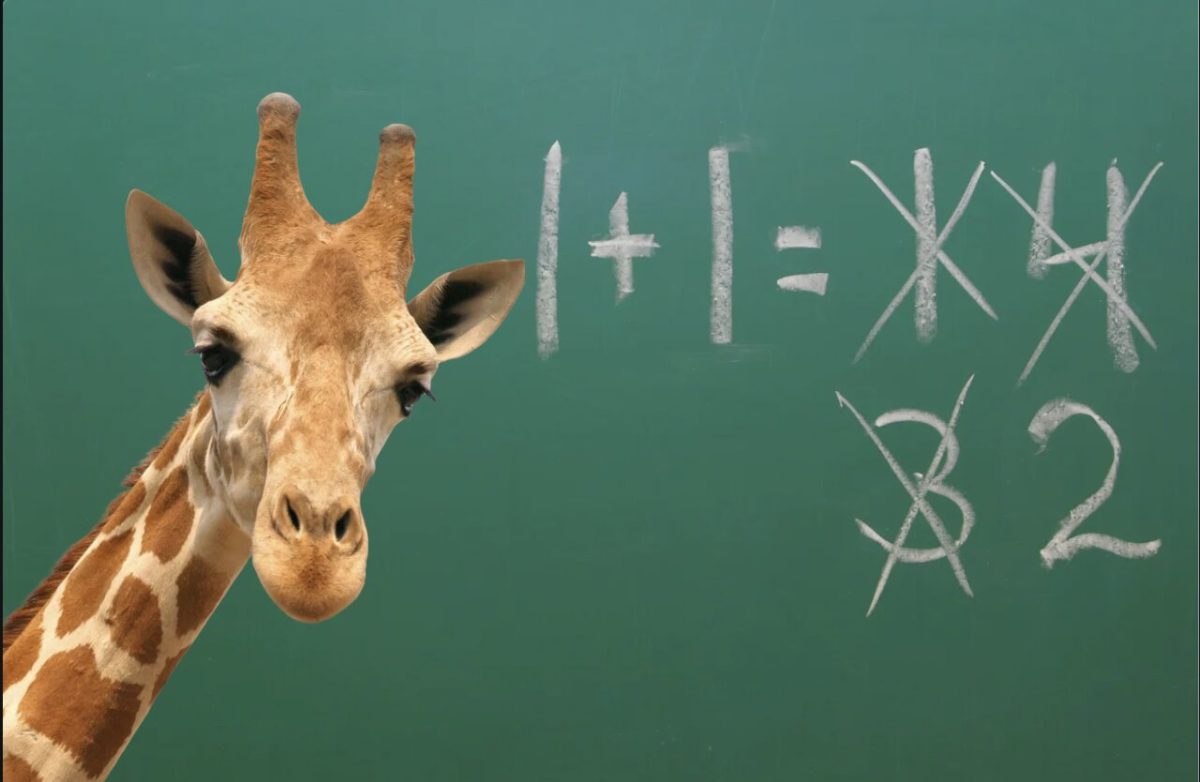
    The results of an experiment done in a Barcelona zoo suggest that giraffes are capable of doing basic mathematics.

    A group of researchers from the University of Leipzig, the Max Planck Institute for Evolutionary Anthropology, and the University of Barcelona published their study observing four giraffes at the Barcelona Zoo. The experiment involved the giraffes observing containers that had different amounts of carrot pieces inside.

    How did this experiment work?

    The researchers showed each giraffe the two yellow containers and the amount of carrots within each one. After a few seconds, they closed the containers, keeping the carrots out of sight. They then showed each giraffe a green container which had extra carrots inside. Researchers took the carrot pieces from the green container and placed them into one of the closed yellow containers. They then let each giraffe independently choose which of the two closed yellow containers they preferred, without them seeing the total number of carrot pieces within each box.

    The results found the giraffes would choose the container that had the most carrot pieces around 68% of the time. This suggests to the scientists that the giraffes were mentally adding the carrots up in each container before making their choice. After all, there have been past studies suggesting that other hoofed mammals, such as horses, had similar capability of basic quantity tracking.

    The researchers did the experiment again. Only this time they subtracted the amount of carrots in each container. The giraffes were mostly unsuccessful at finding the container with the most pieces. So while giraffes showed signs of knowing addition, they don’t quite process all forms of arithmetic.

    Math = Survival

    Scientists believe that this understanding of addition helped giraffes survive in the wild. They cite that acacia trees, a dietary staple for wild giraffes, can be spread far apart in Africa. Being able to figure out which area has the most trees and the most leaves can help them decide where to graze next.

    Giraffes also live in flexible groups that often change in size. One grouping can mix in with another group and then branch off or away. This means that the giraffes often have to keep track of those currently within their group and surroundings to survive.

    Can other animals do math?

    Giraffes are just the latest animal species known to have some form of mathematical skill. Chimpanzees displayed similar abilities to count as giraffes in a similar experiment that involved them picking the bowl with the most chocolate pieces rather than carrots. Chickens and black bears also showed aptitude in quantity tracking, too. 

    Scientists theorize that most of the animals that can do this basic math through evolutionary survival. After all, the animal that can deduce where more food is tends to live longer.

    One species that displays remarkable mathematical ability are Tunisian desert ants. An observation of their navigational skills of finding their way to food and back to their nest suggests they use the sun as a compass in combination with mentally keeping track of the number of steps they take in a three-dimensional space. In short, these desert ants possess basic geometric and trigonometry skills.

    While you wouldn’t want wild animals to calculate your taxes, it’s interesting to see how rudimentary math is a language that goes beyond species.

Explore More Science Stories

Environment

How D.C.’s ‘humanure’ fertilizer creates lush gardens and big profits while improving the environment

Environment

A Spanish park has been free of wildfires for over a decade thanks to 18 donkeys

Science

Spanish zoo study suggests that giraffes can do basic math

Environment

Beyond birds and mice, free‑ranging cats eat a surprising number of insects