
Plastic pollution is one of the most pressing environmental issues we face today. Conventional plastics are hard to replace because of their durability and low-cost production. Scientists are turning to nature to find new solutions.
Researchers in China have developed a plastic created from bamboo. It maintains the strength and versatility of traditional plastics without producing the toxic byproducts. This fast-growing, renewable plant is a promising option for making eco-friendly, affordable, recyclable, and biodegradable materials.
Biodegradable bamboo plastic
Scientists from Northeast Forestry University have developed a remarkable two-step method transforming bamboo into a reliable plastic. First, they combined bamboo cellulose with a solvent made from zinc chloride and formic acid. The process makes the bamboo flexible. Secondly, they soaked this bamboo gel in ethanol. The gel then formed into a dense material known as bamboo molecular plastic, or BM-plastic.
Using widely available chemicals at room temperature, the process produces no toxic byproducts, making for a cleaner approach to plastic production. This bamboo bioplastic is durable and still performs well for everyday plastic uses without losing performance. The 2025 study in Nature Communications reported that the eco-friendly plastic bends without snapping and is five times harder than ABS or PLA industrial plastics.
Unlike traditional plastics, BM-plastic can be recycled or biodegrade naturally. When discarded in soil, it fully breaks down within 50 days. Or, the plastic can be redissolved back into a mix, reused, and retain 90% of its original strength.
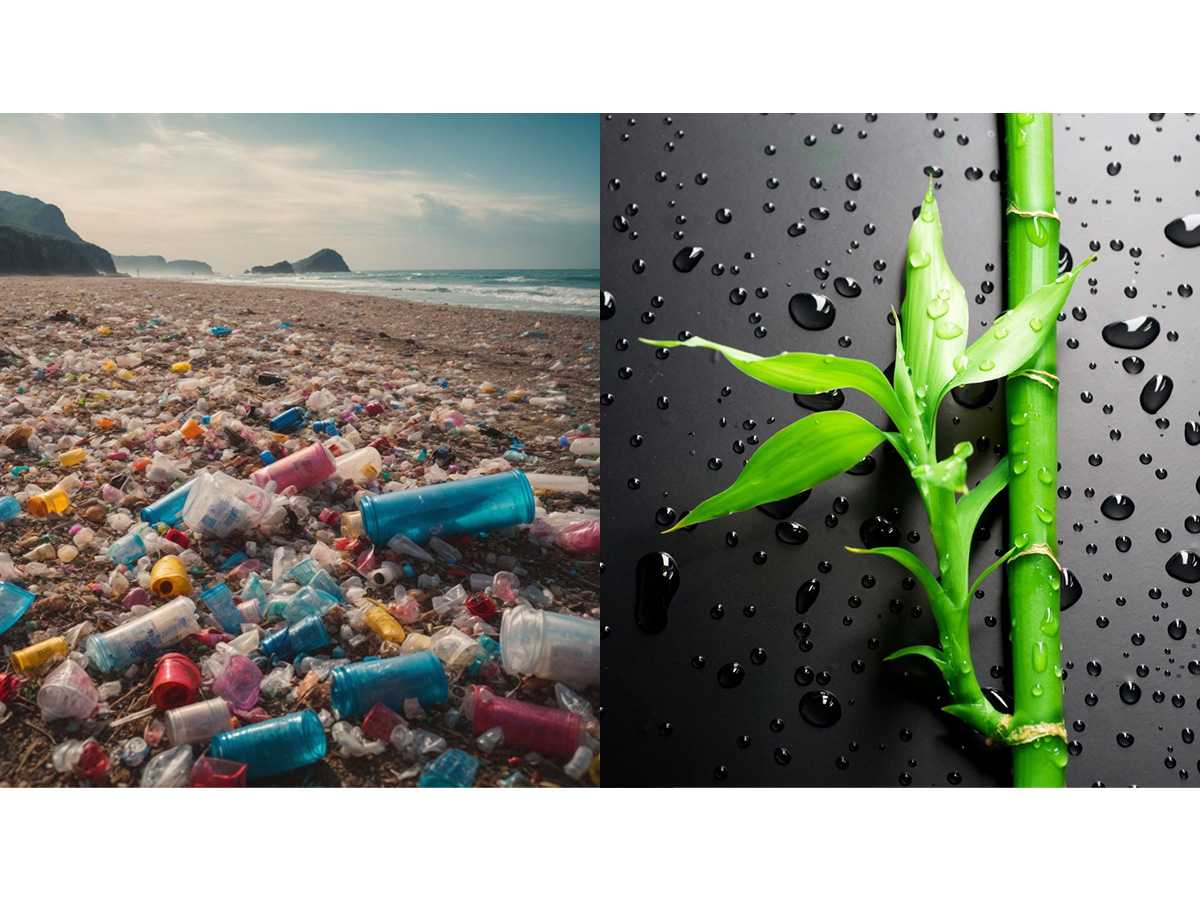
BM-plastic is versatile and sustainable
A 2025 study in MDPI highlights bamboo as one of the fastest-growing plants that are ecologically adaptable, rapidly renewable, soil-stabilizing, and have expanded industrial uses in construction and bioenergy. A 2025 study in Science Direct reported a short harvest cycle of 3-5 years compared to hardwoods, its adaptability to varied growing conditions, and a lower need for pesticides and fertilizers.
Another great benefit from using BM-plastic is that it can be used in machines already creating plastic products. Injection molds can shape the plastic even for things like lampshades, decorative packaging, and gears. The durability suggests BM-plastic could replace conventional plastics used in construction, electronics, and cars. Testing revealed that after 7 days at 100 degrees Celsius, the temperature at which water boils, it showed no cracks. Strong acids didn’t damage the surface, as it remained unaffected.

Eco-friendly and affordable
A Global Bamboo Resource Report in 2024 compiled data from governments and policymakers, revealing plantation statistics from 68 countries. It showed sustainable land-use and reliable economic development from bamboo cultivation. Grow Billion Trees reviewed bamboo farming economics that showed low establishment costs relative to traditional timber crops, fast rotation cycles, and emerging markets.
Eco-friendly resources often fail because of the high cost of production and sustainability. Analysis of BM-plastic has a production cost of about $2300 per ton. Electricity costs are minimal because the creation process occurs at room temperature. A 2025 study in Science Direct revealed that petroleum-based plastics cost about $1,200 per ton. However, the Pew Charitable Trusts suggests the damage to health and climate could raise that level to as much as $2,400 per ton by 2040.

New inventions like bamboo plastic might be one of many necessary solutions to a pressing need for more eco-friendly and affordable production. Biodegradable, recyclable, and sustainable plastics could change the landscape for electronics, construction, and packaging. If scientific advances can create more tools to reduce pollution, future generations still might inherit a habitable planet.