

Brian Wilson always had a special connection with Paul McCartney—particularly during the mid-1960s, when both The Beach Boys and The Beatles were at their most experimental, soaking in pivotal new influences. The two songwriters shared a lot of musical hallmarks: unusual chord structures, ornamental melodies, a knack for orchestrations and studio trickery. And their albums of this era engaged in a sort of cultural dialogue, each one inching popular music forward.

In his 2016 memoir, I Am Brian Wilson, the Beach Boys mastermind wrote about first meeting McCartney in the ’60s. During that in-studio encounter, Wilson learned that the band’s 1966 classic “God Only Knows” was one of the Beatle’s favorite songs. “It’s the kind of thing people write in liner notes and say on talk shows,” he reflected. “When people read it, they kind of look at that sentence and keep going. But think about how much it mattered to me when I first heard it there on Sunset Boulevard. I was the person who wrote ‘God Only Knows,’ and here was another person—the person who wrote ‘Yesterday’ and ‘And I Love Her’ and so many other songs—saying it was his favorite. It really blew my mind.”

Wilson said they kept in touch—McCartney even came over to his house and played him the new Beatles ballad “She’s Leaving Home.” That intimate moment had a profound impact: “[He]…told me about the new music he was working on,” Wilson recalled. “‘There’s one song I want you to hear,’ he said. ‘I think it’s a nice melody.’ He put the tape on and it was ‘She’s Leaving Home.’ My wife, Marilyn, was there, too, and she just started crying. Listening to Paul play a new song let me see my own songs more clearly. It was hard for me to think about the effect that my music had on other people, but it was easy to see when it was another songwriter.”

Wilson and McCartney developed a sort of mutual admiration society—one, perhaps, built on healthy competition. The commonly accepted narrative is that The Beatles’ folky 1965 LP, Rubber Soul, had a big influence on The Beach Boys’ cinematic 1966 masterpiece, Pet Sounds, which then lit a fire under McCartney for The Beatles’ psychedelic 1967 classic, Sgt. Pepper’s Lonely Hearts Club Band.

“We ended up [with] kind of like a rivalry,” McCartney told Rolling Stones guitarist Ronnie Wood in 2013. “We’d put a song out, and Brian would hear it and do one,” he said. “You’d kind of try to top each other all the time. He eventually came out with his ‘God Only Knows’ on Pet Sounds. I just think it’s a great song…It’s my favorite Beach Boys song…I got to sing it with Brian once. We did a benefit together. And I was OK on the actual performance—I held it together—but at the soundcheck I lost it. Because it’s very emotional, that song, I find. I’m thinking, ‘Oh, my god, I’m singing it with Brian.”

Wilson, sadly, died on June 11, 2025 at age 82. As tributes poured in across the music world, McCartney shared a special remembrance of his inspirational friend: “Brian had that mysterious sense of musical genius that made his songs so achingly special,” he wrote in a statement. “The notes he heard in his head and passed to us were simple and brilliant at the same time. I loved him, and was privileged to be around his bright shining light for a little while. How we will continue without Brian Wilson, ‘God Only Knows.’ Thank you, Brian.”

This article originally appeared in May.

  • Ghost stories don’t just scare us – they remind us of historical injustices
    What makes a ghost story unforgettable? Maskot/Maskot via Getty Images
    ,

    Ghost stories don’t just scare us – they remind us of historical injustices

    Behind some unforgettable hauntings are memories of exploitation, violence and people whose stories official histories overlooked.

    Professor of English, University of Maine

    Along with the pumpkins and costumes, the candles and cobwebs, Halloween is all about storytelling. From tales of haunted houses to accounts of demonic possession, ghost stories are part of the holiday’s appeal.

    As a professor at the University of Maine who specializes in ghost stories, I’ve thought a lot about what makes one unforgettable. My field research has taken me from the coast of Maine to the Amazon jungle, but some factors remain constant in an unforgettable tale.

    One factor is what I call “creep value,” which includes the scare factor but also the elements of a story that might be simply unsettling or uncanny.

    Take, for starters, the ghost of Catherine’s Hill along the Blacks Woods Road in Maine. The story warns that, against all intuition, even a lone driver at night must always stop and offer the phantom woman a ride. If not, as the story goes, she will appear when least expected in the back seat of the car to cause a fatal accident.

    But there is more to account for than creep value in an unforgettable ghost story. These stories can keep alive the memory of a dark past. In my research I have come across tales that preserve memories of injustices that might otherwise have been forgotten.

    Dark histories

    One story, about a ghost ship that can be heard but never seen, preserves the little-known history of the smuggling of enslaved people.

    A black and white photograph showing a full moon and its reflection in a body of water with silhouettes of trees along the shore.
    A full moon over Seal Harbor. Marcus Librizzi

    The legend goes that on foggy nights, during the full moon, those standing at the Cooksey Drive Overlook in Seal Harbor, just outside Acadia National Park, can hear the slaves in the hold of a sinking ship crying for help.

    The story goes back to the Pride of the Seas, a ship that smuggled enslaved Africans into the United States after the trans-Atlantic slave trade had been abolished but slavery remained legal. The account specifies that the smugglers scuttled the ship to evade the law. In ghost stories that circulate by word of mouth on Mount Desert Island, the screams of those left behind can still be heard.

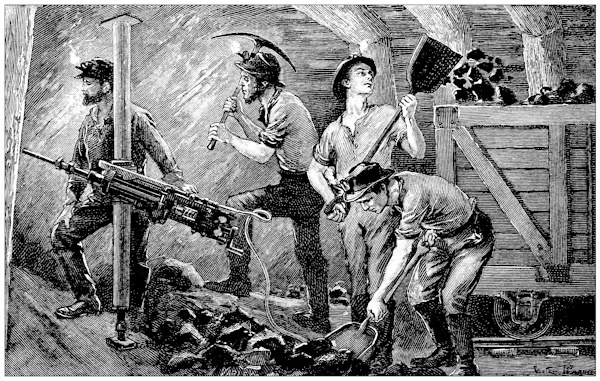
    Pennsylvania coal miners offer another example of past grievances passed down in the form of ghost stories. At the sites of deadly accidents, people have reported the sound of a pickaxe or the groans of a dying man. An extensive archive contains multiple accounts of coal miners witnessing ghostly knocking, disembodied voices and apparitions of mangled men. One story involves an innocent coal miner, condemned to death in 1877, who left a handprint in his cell at the Carbon County Jail that no amount of sanding or paint has been able to erase.

    An engraving depicting miners using picks and shovels.
    Coal miners endured brutal work conditions in the 19th and 20th centuries. ilbusca/DigitalVision Vectors via Getty Images

    Today, it is widely known that coal miners of the 19th and early 20th centuries experienced ruthless exploitation and hazardous working conditions. Years ago, their plight went unrecognized in official histories and government policies, but ghost stories helped keep these experiences in the collective memory.

    A South American perspective

    When I collected ghost stories in South America, the same pattern held true: Some tales preserved history that would otherwise be lost.

    In the Amazon jungle of northern Brazil, I traveled to a gloomy site where people, over several generations, have claimed to see the spirits of young men in the murky water. These stories keep alive injustices from the 19th century involving enslavement of Indigenous people. The location was a former sugarcane plantation notorious for cruelty, and accounts of apparitions in the water are a reminder of this history.

    In Rio de Janeiro a well-known ghost story involves the apparition of a young girl in a mansion known as the Castelinho do Flamengo. All the accounts of her story agree that this young heiress, named Maria de Lourdes Fernandes, witnessed the deaths of her parents; her guardian then locked her up and drove her to suicide to get her inheritance.

    Her soul is said to remain in the mansion she tried to escape. The tale is not just about an individual tragedy but one that exposes inequities involving the mistreatment of juveniles and the corrupting influence of power.

    The past that isn’t past

    Ghost stories don’t simply recount memories – they can revive them and bring the past back into the present.

    The unsolved 1898 murder of a 52-year-old woman, Sarah Ware, in Bucksport, Maine, illustrates how ghost stories can have historical significance and flood the present with the past.

    In the 1980s a woman and her daughter began having nightmares about a long-haired woman in a long dress struggling to rise from the bottom of a lake. When they realized they were having the same recurring dream, they partnered with an author, and their research led them to a conclusion that the apparition was the ghost of Ware.

    Official records document that when Ware’s body was recovered it was badly decomposed and her head had completely detached. Her head remained in the courthouse until the 1990s, when it was buried in Ware’s grave. According to local lore, however, Ware’s headless body is not in that grave but instead in her original grave, now located at the bottom of Silver Lake. In the oral history of the area, workers moved only the tombstones when they flooded the paupers’ graveyard – the cemetery for the poor – to make a reservoir in the 1930s.

    Ware’s ghost is believed to have appeared again in 2006. When a young woman went scuba diving in Silver Lake in Bucksport, she reported seeing a woman in a long dress struggling to rise from the bottom of the lake. When she swam over to help, the figure’s hair floated back with the movement of the water to reveal she was a faceless apparition. The sighting of the faceless ghost revived the history of the unsolved murder all over again.

    Ware’s case highlights the violence and injustice and their connection to gender and social class in 19th-century Maine. Missing evidence and recanted testimonies suggest that powerful men might have interfered with the investigation to hide their own complicity in the murder. As an independent woman of the time, Ware was the subject of gossip, and the treatment of her body shows how social class affects even the honoring of the dead. As a ghost story, the history of Sarah Ware is not past but rather part of the here and now.

    So when you’re out and about telling ghost stories this Halloween, remember that the unforgettable ones are all about creep value in the context of a dark history that flows back in again like the tide.

    This article originally appeared on The Conversation. You can read it here.

  • Boomers think these 7 habits make them polite but younger generations are begging them to stop
    Photo credit: Images via Canva – Photos by Latino Life and mariashipakina – Boomer and Gen Z

    There is nothing wrong with politeness and a particular point of view, unless, of course, your interpretation of kindness is different from everyone else’s. Case in point? Boomers and every other generation.

    What is it about Boomer energy that can just rub people the wrong way sometimes? It’s quite common for different age groups to have different needs and habits, and perhaps the Boomers you know may find 20% tips an absolute must, yet the concept of a service fee infuriating. Maybe they feel there is only one perfect way to load a dishwasher. Maybe job loyalty does have value. Whatever the topic, Boomers are likely to have a certain opinion about it that they feel is the best.

    Finding ways to communicate and connect are important dynamics to building community and bridging the generation gap, and sometimes understanding what Boomer actions bother the other generations can help start a dialogue. VegOut Magazine described seven habits that may seem thoughtful to Boomers, but are actually emotionally taxing to younger generations.

    Calling whenever they want

    Boomers largely grew up in an age of landline phones that often ran unexpectedly. Instead of the horror that Millennials experience from an unsolicited phone call, Boomers find them normal and inviting. A reach out to say “Hello!” means they care and are interested in your life.

    Younger generations feel it’s an uninvited threat. Where’s the heads up text? Nothing triggers anxiety like an unexpected ring.

    Solution: How about everyone just chill? Older people can learn to text first. Younger people can acknowledge they don’t have to answer the phone, and often don’t anyway.

    The unexpected visit

    Seth Meyers, comedy, uninvited, neighbors, visits, social norms, formality, traditional manners

    Boomers grew up in an age of the unannounced visit. There was a time when neighbors just rang a doorbell and offered up some extra muffins, freshly baked. Today, people guard their homes with intensity. A doorbell ring is terrifying, especially if pizza hasn’t been ordered.

    Solution: Boomers, just send a text first. It’s not that complicated. Younger generations, you can always hide in the closet and pretend you’re not home.

    Comments on personal appearance

    Into today’s world, unsolicited comments on someone’s appearance seem a bit risky. And yet, Boomers never seem afraid to comment on someone’s weight loss or ask questions like, “Why aren’t you smiling?” These questions and comments were once considered tools of connection. It showed interest and concern for the mental and physical health of friends and people in general.

    Younger people guard all aspects of “self” and “body image.” It’s dangerous territory leading toward hurt feelings and possible backlash.

    Solution: If you don’t have anything to say nice, don’t say it. Even if you do, probably don’t say it.

    Unsolicited advice

    unsolicited advice, hierarchy, mindset, communication, miscommunication, informality, mental health
    Unexpected advice. media0.giphy.com

    With age comes wisdom, yet sometimes nobody wants to hear it. Knowledge acquired over time and experience is valuable and should be passed on, but in certain contexts. Younger people often find unsolicited advice to be a rude personal attack, so be careful about offering a note no one asked for.

    Solution: I had a friend who used to always ask, “Do you want to hear my opinion?” before they shared it. It was a pretty amazing quality that gave me time to prepare for what might be coming. In the end, it’s best to get permission. Simple.

    Chain messages

    chain  mail, texting, emails, short-form content, emoji, digital native, culture, common ground
    Breaking chains. Image via Canva – Photo by Merydolla

    There’s nothing quite like the inspirational chain meme your grandma found. Especially when it was making the rounds eight months ago. Like everyone else, older people benefit from feeling connected. They’re just attempting to get in the digital meta. It’s easy to point out who’s out of the loop when you’re in it.

    Solution: Can we all cut one another some slack? Instead of attacks, reconnect and appreciate the meme or image you already saw months ago. Replying with, “Ha, that’s a good one” isn’t that much of a stretch, and it isn’t that much to ask when given an opportunity to share love instead of disdain. I have an aunt who gets concerned when those chain mails say, “Pass this on to 10 people…” I told her to send them my way, because I’m not afraid to dump them in the digital garbage.

    Lengthy conversations for business

    Boomers have worked networking and building relationships into their business model. A chat about what’s trending is a great way to ease into an important conversation. It’s a way to be polite and build-up camaraderie before the deal is done.

    Younger generations don’t want to waste time. A “thumbs up” emoji can be enough to get things going.

    Solution: Acumen took a look at getting generations to learn how to connect with one another. They found that “common ground” was crucial for networking. Younger people can work on patience and respecting the time offered by older generations, and Boomers can learn to fire a quick text instead of dragging every conversation into a “life lesson.”

    Checking and rechecking replies

    Boomers may not be totally confident in how the whole digital world works. It’s not uncommon to receive texts and emails asking, “Did you get that email…” or “Curious on your thoughts of the text I sent.” These follow-ups were designed to show interest and thoroughness. Younger people can just find them bothersome.

    Solution: Boomers can learn to not treat texting and emails like a personal journal. It’s okay to be brief and to the point. A short message doesn’t mean someone is being short with you. Speak with People suggested that younger generations can give Boomers the “benefit of the doubt.”

    The wrap up

    Everyone is trying to fit in the best they can. It can be difficult to adapt and move with the times. Some day, younger people will be a little out of touch with the next generation.

    Philosopher and theologian Martin Buber wrote, “All real living is meeting.” The more we can learn to help each other connect, the better. Learning to be curious about other people and their generation instead of dictating will build deeper and more mutual connections.

    This article originally appeared 1 year ago. It has been updated.

  • Only 17% of people can pass this 3-question IQ test on the first try. Can you?
    Photo credit: Canva – A woman writes on a chalkboard
    , ,

    Only 17% of people can pass this 3-question IQ test on the first try. Can you?

    Developed by a Yale professor, this simple test reveals a lot about how you think—and only 17% of people get it right.

    It’s been called the world’s shortest IQ test, and despite its apparent simplicity, only about 17% of people answer all three questions correctly on their first try. The Cognitive Reflection Test (CRT) isn’t about measuring knowledge; it’s about measuring how you think.

    The test was introduced in a 2005 paper in the Journal of Economic Perspectives by Yale professor Shane Frederick. It’s designed to test your ability to override a quick, intuitive gut reaction and engage in deeper, more analytical thought.

    Want to try it yourself?

    IQ test, cognitive reflection test, critical thinking, brain teasers, logic puzzles, psychology, System 1 thinking, problem solving
    Woman sits in front of her computer thinking Canva

    Here are the three questions:

    1. A bat and a ball together cost $1.10. The bat costs $1.00 more than the ball. How much does the ball cost?
    2. If it takes five machines five minutes to make five widgets, how long would it take 100 machines to make 100 widgets?
    3. In a lake, there is a patch of lily pads. Every day, the patch doubles in size. If it takes 48 days for the patch to cover the entire lake, how long would it take for the patch to cover half of the lake?

    The Answers and Why They’re So Tricky

    If you answered 10 cents, 100 minutes, and 24 days, you’re in the majority—and you’ve fallen for the trap. Those are the common intuitive answers. The correct answers are 5 cents, 5 minutes, and 47 days.

    IQ test, cognitive reflection test, critical thinking, brain teasers, logic puzzles, psychology, System 1 thinking, problem solving

    Woman proudly shows testy results Canva

    Here’s the breakdown:

    • The Bat and Ball: If the ball cost 10 cents, the bat (at $1.00 more) would cost $1.10, for a total of $1.20. The correct math shows the ball is 5 cents and the bat is $1.05.
    • The Widgets: The rate of production is one widget per machine every five minutes. Therefore, 100 machines can produce 100 widgets in the same five-minute timeframe.
    • The Lily Pads: Since the patch doubles in size every day, it must have been half its final size just one day before it covered the whole lake—on day 47.

    The Science of Your Brain

    IQ test, cognitive reflection test, critical thinking, brain teasers, logic puzzles, psychology, System 1 thinking, problem solving

    An artistic representation of the brain Canva

    This test brilliantly illustrates the two modes of thinking identified by Nobel Prize-winning psychologist Daniel Kahneman. System 1 is our fast, automatic, intuitive thinking, which gives us the quick (but wrong) answers. System 2 is our slower, more deliberate, and analytical thinking, which is required to solve the puzzles correctly.

    As Frederick explains, the test measures how we make decisions based on instinct versus analysis. “System 1 thinkers respond spontaneously, often making mistakes, while System 2 thinkers engage in effortful thought processes,” he wrote.

    Frederick’s research found that those with stronger cognitive reflection skills (System 2 thinkers) tend to be more patient and willing to take calculated risks. His work aims to understand the real-world impact of our cognitive styles, noting, “Despite the diversity of phenomena related to IQ, few have attempted to understand—or even describe—its influences on judgment and decision making.”

    So, whether you passed the test or not, it offers a fascinating glimpse into the constant tug-of-war between gut reaction and careful thought that happens inside our brains every day.

    This article originally appeared earlier this year.

    This article originally appeared [time-difference] ago. It has been updated.

Explore More Music Stories

Culture

The summer concert state rankings: Which states pack more festivals, shows, and tours in 2026

Music

Students go for a world record with group drumming rendition of “Beggin”

Music

Therapist shares why Justin Bieber’s duet with 13-year-old self was so incredibly moving

Music

If a song moves you, does it matter who made it?