Various people are writing about the New York Times series The Business of Green, which covers environmental trends and battles. Check out the piece on nanotechnology’s implications for a cleaner planet: “It is easy to see how the ability to manipulate matter at the scale of a few nanometers, or billionths of a meter, could…
Check out the piece on nanotechnology’s implications for a cleaner planet: “It is easy to see how the ability to manipulate matter at the scale of a few nanometers, or billionths of a meter, could lead to environmental breakthroughs. That is one reason billions of dollars are being spent on nanotechnology research.”
Whether it’s giving a presentation at work or mustering up the courage to ask someone out on a date, many people struggle with confidence. People worry about being liked or whether they can pull off certain feats. They wish they could be someone else who has the confidence they lack. Well, according to some psychologists, you can.
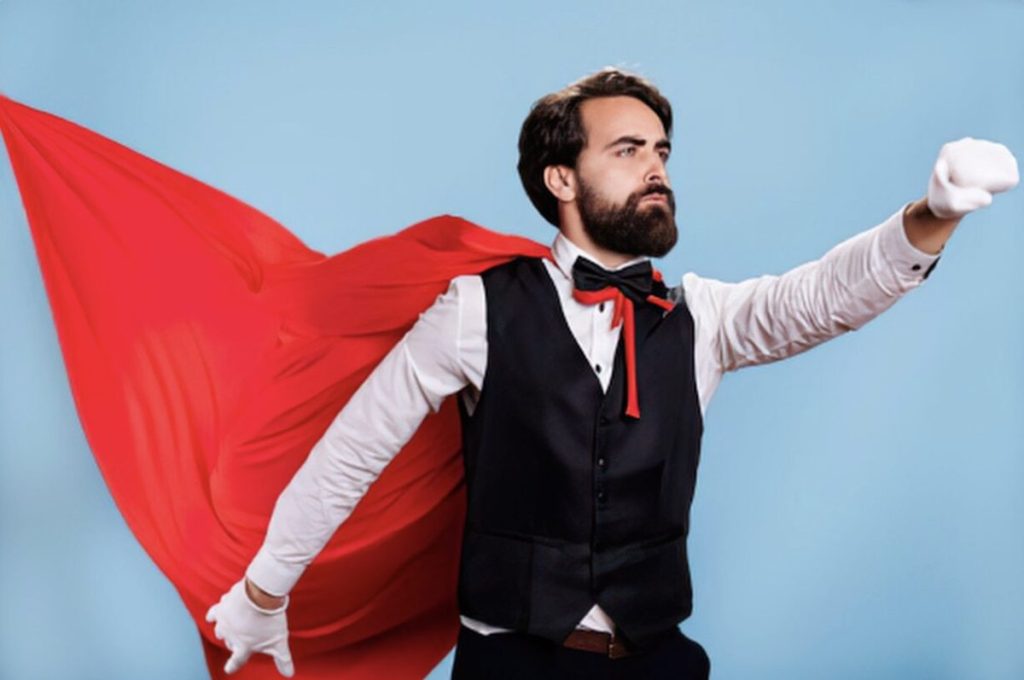
Psychologists have found that people can develop an alter ego to help boost confidence and achieve desired results.
Give yourself comic book-level confidence
“One of the least appreciated realities about confidence is that very few people develop confidence based upon how they feel before acting,” Kat Grassetti, clinical director and co-founder at Monima Wellness Center, told GOOD. “The value in an alter ego lies within giving the individual permission to leap to act before their confidence has caught up.”
This isn’t unlike modern comic book superheroes like Spider-Man. Whether in the comics, films, or television shows, Peter Parker is riddled with anxiety and struggles with confidence and self-esteem. However, when he becomes his alter ego, Spider-Man, he is outgoing and quippy. As the story progresses, Parker slowly becomes just as personable, confident, and competent as his web-slinging alter ego.
There’s science to back this up, but with different superhero labeling. Child psychologist Rachel E. White’s study of children’s perseverance and confidence found what researchers dubbed “The Batman Effect.” The study showed that children who adopted an alter ego or character, like Batman, stuck with a boring task longer than those who thought in the first or third person. White also got similar results when asking children to concentrate on a complex card game. She found that portraying a character with greater concentration improved their executive function.
You’re still you, and that’s a good thing
Having an alter ego can create self-distance and provide an outsider’s perspective on a situation or task. After all, “you” aren’t preparing for the big speech or tackling a problem; your alter ego is. But it’s important to note that, in the end, your alter ego is still you.
“The alter ego does not create a new personality; rather, it allows an individual to tap into their existing strength, which often remains hidden from them due to anxiety, self-doubt, or fear of being judged,” said Grassetti.
Putting on an alter ego has helped many celebrities when they felt their confidence dwindle or when trying something new. Beyoncé adopted her “Sasha Fierce” persona to rid herself of nerves before going onstage. Before hosting The Late Show as his true self, Stephen Colbert donned an alter ego as an over-the-top staunch conservative. This allowed him to showcase his satirical skills and confidently challenge the powerful. Over time, though, these people let those personas go after their true selves were ready to do the heavy lifting.
You are still responsible
Alter egos can only do so much for so long, though. For example, rapper Eminem (Marshall Mathers) has shared that he created his “Slim Shady” persona. It helped instill confidence and creative freedom without concern about blowback. While the alter ego is credited with helping fuel his initial success, Mathers also blamed the persona for causing strife in an interview with an AI version of “Slim Shady.”
That’s the thing Grassetti and other psychologists note: The alter ego is just a tool to help build confidence, not a crutch.
“When the gap between the alter ego and the true self closes as quickly as possible, then the confidence will be sustained,” said Grassetti. “However, if an individual relies heavily on a secondary persona for confidence, this type of confidence can also be conditional (or fragile), and therefore much harder to sustain.”
So if you struggle with confidence, it may be worth thinking about developing an alter ego that has the qualities you’re looking for. However, it’s important to realize that, in the end, the alter ego’s actions, thoughts, confidence, and other attributes are actually your own. You are responsible for your alter ego and what it does, for better or worse.
It started like a typical summer morning for 13-year-olds, Gunner Skidmore and Kohen Chick of Fruitland, Iowa. Skidmore was eating a Pop Tart and scrolling through social media when Chick invited him for a bike ride. As they biked through a local trail, they noticed something off when riding past some houses. That’s when they found an elderly woman lying on the ground.
“I went to the trail and Kohen was like, ‘You see that lady back there?’ I was like, ‘No.’ Then, we went back and looked, and it took a little while to find her, and we found her. I said ‘Hey ma’am are you OK?’ She was like ‘Yeah, I need help. Call 911,’” Skidmore told 6 KWQC News.
What happened?
According to reports, the woman fell outside at 5:00 p.m. the previous day after feeding her horse. Unable to get up, she rolled herself from the backyard to the front yard in the hope to get help. She spent the night lying outside exposed with no phone, water, or food. She’d be lying there for over 16 hours until the boys discovered her.
“She was like scared. You could just tell because like her face, she was covered in all these bugs and stuff,” said Chick.
The teens were hesitant to approach the woman at first, but quickly called Skidmore’s mother. She immediately drove to their location and called 9-1-1. The woman had an ambulance quickly transport her to a nearby Muscatine hospital for treatment. While the extent of her injuries aren’t public knowledge, the intense summer heat and lack of water could’ve turned the woman’s fall into a fatal one.
“A few more hours and she definitely like wouldn’t have made it,” said Skidmore.
Skidmore’s mom has remained in contact with the injured woman’s family. She’s also caring for the woman’s horse and plans on preparing a lasagna dinner for her when she returns from the hospital.
The teen heroes were honored
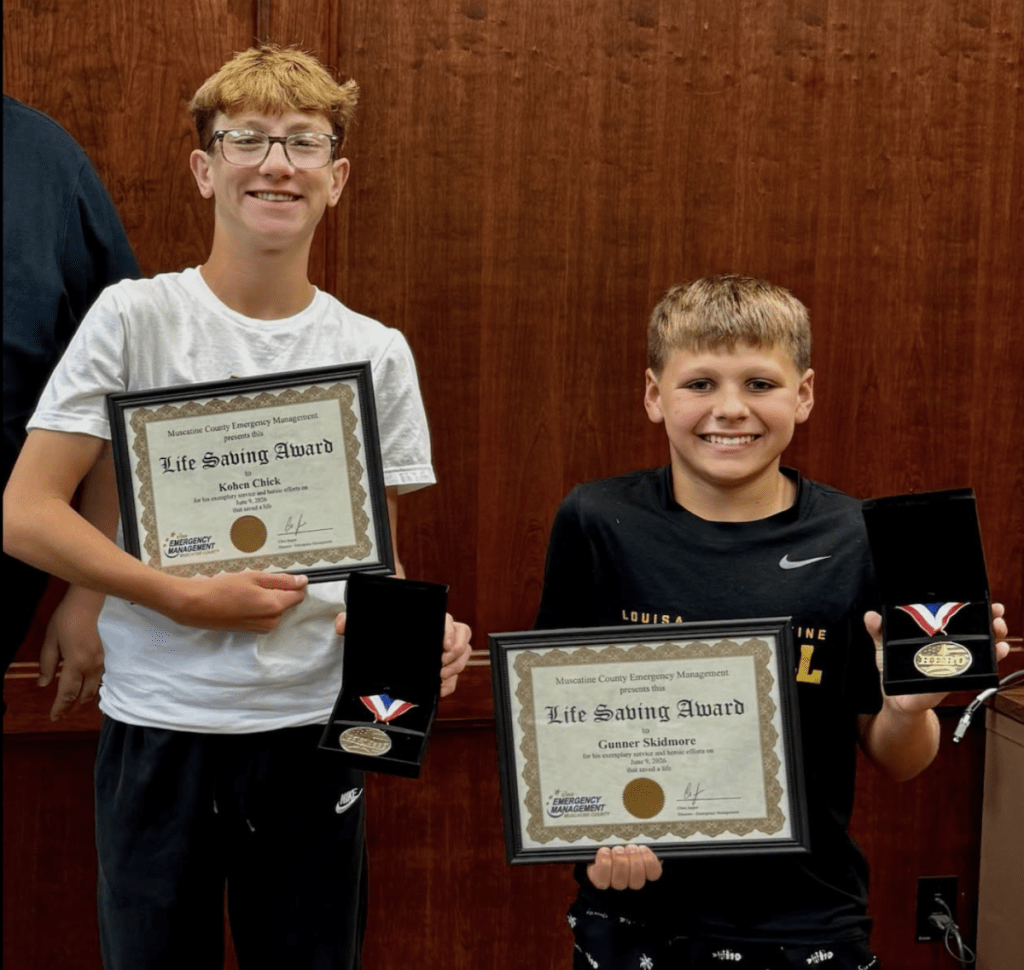
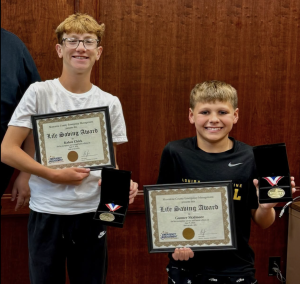
The boys were congratulated and celebrated by the community for their actions. Skidmore and Chick were given a special award courtesy of Muscatine County Emergency Management.
“Today, I would like to recognize the extraordinary actions of two young men whose quick thinking and compassion helped save a life in Muscatine County,” the MCEM director stated in a speech posted on Facebook. “Without the prompt actions of Gunner and Kohen, the outcome could have been tragic. Their awareness, compassion, and willingness to help a person in need undoubtedly made a difference and may very well have saved her life.”
“For their heroic actions and outstanding example of community service, Muscatine County Emergency Management is proud to present Gunner Skidmore and Kohen Chick with the Life Saving Award,” the speech continued. “Thank you, Gunner and Kohen, for your selfless actions and your commitment to helping a fellow citizen. Congratulations on this well-deserved recognition.”
Quick thinking and a willingness to help a neighbor is how two teens and a mom became local heroes.
We tend to associate stickers with childhood. As kids, we put them all over our rooms, furniture, books and notebooks, and wherever else our little hands could stick them. Yet, you have probably seen stickers being used and loved by adults as much, if not more, than kids. They can be found on water bottles, laptops, car bumpers, journals, and many other surfaces. You may even know an adult who uses a sticker chart like an elementary school kid does to keep track of their daily tasks. So, what gives?
Why do adults love stickers? It turns out that there is psychology behind why many adults still love to stick stickers everywhere. Psychology professionals have reached out to GOOD to share some of the reasons why adult brains benefit from having and using stickers.
Much like with children, many adults turn to stickers as an easy way to stay motivated to commit to a task or achieve a goal. While youngsters turn to sticker charts for reading goals or eating vegetables, adults can use them to motivate themselves to hit the gym or keep up with their budget. It may sound like an innocuous award, but that’s all it needs to be.
“Small simple tokens or rewards like stickers often cause an instant dopamine rush that leaves us feeling a sense of joy or happiness even if it might be small or fleeting,” said psychology professor and licensed therapist Jillian Amodio.
“In my work as a psychologist, I often encourage clients to use sticker charts, simple grids where you put stickers up when you complete a task,” said registered psychologist Rod Mitchell. “I’ve had many clients who tried positive self-talk, only to find it slid off. Stickers worked for them.”
It may sound immature on the surface, but what worked to establish good behaviors or habits as a kid can sometimes be just as effective for a grown-up.
“I had one client who was very resistant to the idea, viewing it as childish,” Mitchell added. “He came back the following week and sheepishly told me that the sticker chart had worked like a charm.”
Progress markers
“In addition to creating a sense of accomplishment, seeing a sticker placed on a calendar, chart, or planner after achieving a goal can create a visual history of success,” said Dr. Lori Bohn, medical director at Voyager Recovery Center. “This history can motivate an individual to continue to work towards additional goals.”
So the benefit of sticker charts isn’t just the dopamine rush, but encouragement. A person can look back at the progress they made, and any “failure” they see becomes an anomaly. It’s why many folks have created sticker charts for things as basic as eating healthy foods to more complex struggles like sobriety.
“The stickers on the chart serve as small badges of who you are and what you did,” said Mitchell. “A client I had who was struggling to make time for his kids now looks back on a chart full of stickers and knows that he’s become the family man he wanted to be.”
An easy form of expression
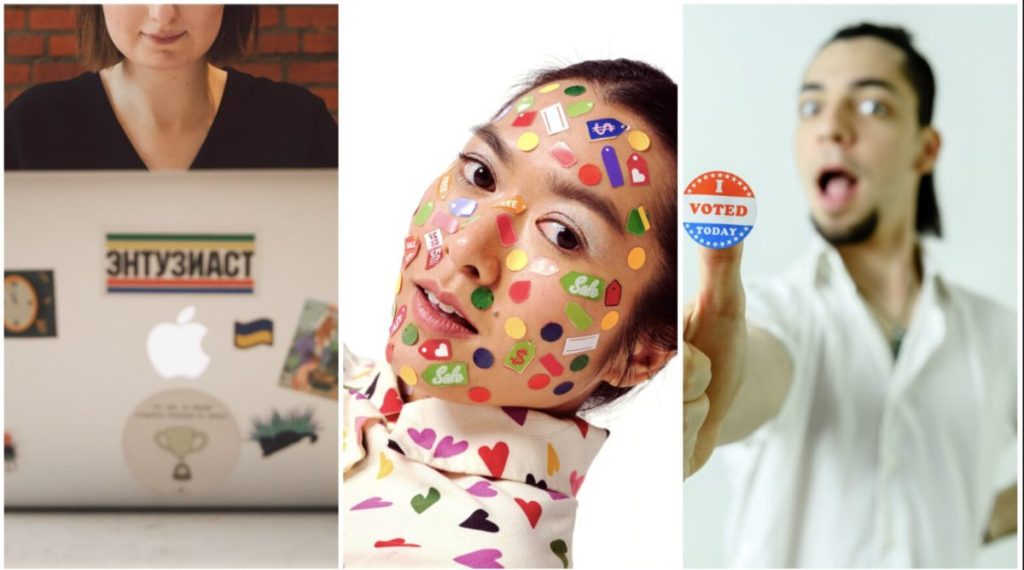
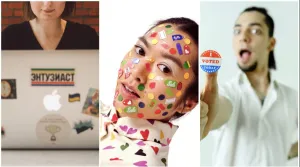
Placing a sticker on a laptop or water bottle you use daily also allows us to express ourselves. That expression can be as insightful as a political message or as simple as “I like SpongeBob.” It can communicate to others what you’re all about without even speaking a word.
“Stickers appeal to adults because they often offer an opportunity for self expression and trigger a sense of nostalgia,” said Amodio. “They can also serve social purposes when they speak to people who share similar interests, values, or devotion to a cause.”
The same logic applies to why many people use digital stickers and emojis when texting or posting on social media.
Psychologically instill civic duty
So how powerful are stickers? According to extensive research, very. One sticker standout is they get people to the polls. The “I Voted” sticker folks receive after they vote is a great motivator. They allow folks to feel that dopamine hit after voting, while advertising to others to vote. Stickers can be a reward for voters, a reminder to those who plan on submitting their ballot, or provide FOMO (fear of missing out) to those who don’t vote.
“It tells other individuals what the person did (voted), what the person values (voting), and what type of individual they perceive themselves to be (a voter),” said Dr. Bohn. “Social psychologists have shown that people are heavily influenced by social norms. In many cases, people rely on other people to help them understand if their behavior is acceptable or not.”
It may feel like mental manipulation to get people to vote (because it is) but it’s important to note that the sticker doesn’t endorse any particular bill or candidate. It just endorses participation.
Affordable artwork
“Stickers are also visually appealing which creates a pleasurable response in the brain as well,” said Amodio.
Stickers are used by adults because they like how they look. They’re an inexpensive and convenient form of artwork to display. They can easily be put in a book, on a wall, or most other surfaces. They don’t take too much space and are cheaper than paintings, sculptures, and other artwork.
Many independent artists have turned their work into stickers. It’s a way to keep making a living while also making it affordable for people to purchase their art. Sticker art also benefits the brains of the artists and their supporters alike. It’s just like any other art piece you can display.
There are many valid and beneficial reasons why grown adults happily use stickers. The act as a boost, a motivator, and a way to express yourself in one. If you’re already a fan, keep on stickin’.