
Due to the rising price of gas and other issues, more people are looking for various hacks to make the most out of their purchases and cut down costs. As a result, more people are brewing coffee at home rather than grabbing a latte to-go from Starbucks. Now, making coffee at home doesn’t just save money on caffeine fixes; it can also save money on dishwashing soap, facial scrubs, pest control, and many other household needs.

Coffee grounds are the secret cleaning supply you brew each morning. It sounds odd, but it’s true, effective, and reduces expenses. Whether you use a French press or a can of Folgers, coffee grounds could do the job that several other cleaning or home products can. 

Here are five reasons you keep your coffee grounds around:

1. They help scrub cookware (and yourself) better

You’ve likely seen ads for dish soap that specialize in cutting through grease or burned on stains on pots and pans. It turns out dried coffee grounds can be just as, if not more, effective when paired with cheap dish soap. 

After used coffee grounds are dried up (if you’re impatient, you can use your oven to bake them dry), they become incredibly fine and coarse. Paired up with basic dish soap, the coarse grounds gently scrape off grease, grime, and tough-to-scrub burn stains. This can apply to nearly any metal or porcelain cookware. Since coffee grounds are so refined, they can do heavy-duty cleaning without damage. If a food stain is incredibly stubborn, adding salt to your coffee grounds with the dish soap can act as a safer sandpaper for those stains.

While great for dishes, coffee grounds can do the same thing with stains and gunk clinging to grills, sinks, tubs, kitchen floors, and other surfaces. 

Coffee grounds aren’t just safe for scrubbing dishes; they’re also safe for scrubbing you. If you’ve been handling sticky or greasy items while cleaning the kitchen, coffee grounds can reduce the amount of hand soap needed to wash it off. 

Leftover coffee grounds can also be DIY’d into an effective exfoliant for your face. In fact, there could be health benefits, too. A 2013 study found that caffeic acid in coffee facial scrubs may increase collagen production to reduce wrinkles and signs of aging. Like any exfoliant, it sloughs off extra oils and dead skin cells. The difference is in the cost: used coffee grounds do the trick just as well (if not better) than expensive store-bought scrubs.

2. Coffee grounds deodorize everything, everywhere

While many people can enjoy the scent of coffee, the grounds can eliminate other scents in your home. This doesn’t mean that you’re covering up bad smells with coffee smells. Far from it. Coffee contains nitrogen which neutralizes odors much more effectively than sprays and air fresheners. 

The good thing is that coffee grounds can help improve or remove smells in almost any part of the home. Place a small bowl of coffee grounds in the refrigerator and freezer to remove food smells. Put a small cup of grounds in your closet to reduce odor from the laundry hamper. Pour some dry grounds in some old socks and put them in your shoes to deodorize them overnight.

Here’s the other benefit: While humans tend to like the scent of coffee, pests don’t.

3. Most bugs hate coffee

No one wants a bug infestation of any kind in their home, and one of the best nontoxic ways of keeping them out is with coffee. No sprays, no traps, and no need for an additional purchase. Just coffee grounds.

The scent of coffee is intense to many insects’ heightened sense of smell, so they tend to shy away from its source. Affected insects include ants, wasps, bees, slugs, and fleas among others.

In moderation, used coffee grounds can help deter outdoor pests in your garden while also acting as fertilizer for some plants. If you enjoy the outdoors, burning dry coffee grounds like incense can also keep mosquitoes away.

4. They can buff out scratched wooden furniture

Before you spend money on wood filler, scratch repair kits, or the like to fix surface scratches on dark wooden furniture, you may want to try coffee grounds instead. Spread a paste made from dried grounds and water onto the scratches. Let it “soak” for a few minutes and then wipe the coffee ground paste away. It may take a few tries, but many light scratches look better. Some outright disappear after absorbing the coffee and its color into the surface of the wood.

Coffee grounds are a waste product for sure, but they’re a waste product that could save money in the long term—and hat shouldn’t go to waste!

  • Should paper checks be abolished like the penny?
    Photo credit: CSA Images/Getty ImagesWhile Americans are writing fewer checks, they haven’t abandoned this means of payment.
    ,

    Should paper checks be abolished like the penny?

    Billions are still written each year, even as digital payments take over.

    Germany is getting rid of paper checks at the end of 2027Australia is bidding them farewell by 2030. U.S. President Donald Trump followed up his order killing off the penny with an executive order stopping check writing by the federal government.

    Should the U.S. follow these other countries and broadly eliminate the ability to write checks?

    Years ago, experts predicted that checks would have disappeared by now. However, they are still around, and billions are written each year in the United States.

    Why? The quick answer is that businesses love them. And plenty of Americans still use checks for good reasons. But there is more to the story.

    I am a business school professor and one of the few academics who advocates for the use of cash. While I have long told everyone about the benefits of paper money, I didn’t give paper checks much thought or use them until my mother’s recent death. Then I found myself writing checks to the cemetery, funeral home, gravestone engraver and a host of other places. Plus, I started getting refund checks back from her landlord and insurance companies.

    These experiences made me look more deeply into this form of payment to understand what was happening.

    Fewer checks for bigger bucks

    Every three years the U.S. government runs the Federal Reserve Payments Study by asking banks and credit unions for internal information. This survey tracks everything from how often credit cards are used to the number of checks written.

    While check usage has sharply declined in the U.S., a significant number – about 9.2 billion in 2024 – are still written, the data shows. The face value of those checks is probably bigger than you’d expect: more than US$24 trillion, not adjusted for inflation. That is almost as large as U.S. gross domestic product of $29 trillion that year.

    Not everyone can imagine numbers in billions or trillions, so let’s put those figures in more manageable terms.

    A little over 150 checks were written per person in 2000. By 2024, the average had plummeted to 27 checks – slightly more than two per month. However, over that time, the amounts typically scribbled or printed on the face of those checks rose.

    In 2000, the typical check was worth less than $1,000. By 2024, the average amount had more than doubled to $2,600.

    Trends elsewhere are similar. The Bank for International Settlements, which serves as a bank for central banks like the Federal Reserve, has tracked check usage in 25 countries since 2012. Its data shows that in only two other countries is payment by check still commonplace.

    And in both of those countries, check usage has fallen more sharply than in the United States.

    The value amounts are not adjusted for inflation, and the data is collected and released once every three years.

    Who uses checks today?

    While check payments have declined, there are still two big groups of check writers in the United States.

    The Federal Reserve Bank of Atlanta runs the Survey and Diary of Consumer Payment Choice. This survey asks people, rather than banks, for information on their payment habits. Roughly one-third of all respondents stated they used a paper check in the past 30 days.

    An older lady writes out checks to pay bills.
    Older Americans write more checks than younger people. Jupiterimages/The Image Bank via Getty Images

    Not surprisingly, the answers vary by age. About 60% of people 65 and over say they wrote a check. Among those 18 to 24, under 6% said they did.

    It also turns out that a lot of people who think they never write checks actually unknowingly do it all the time. If you pay your bills online, your bank tries to pay them electronically. If it cannot electronically make the payment, the bank cuts a paper check on your behalf. Any online bill payment taking more than a couple of business days to post is being sent by check.

    Another important factor is that small businesses love checks. Over 80% of businesses with sales between $1 and $10 million make payments using checks. Why? Small businesses often require two signatures on a check. The need for signatures means owners have to sign their name before any money goes out the door. This gives them control over money and a clear idea who is getting paid and how much.

    Small businesses also like receiving checks. I wrote a lot of checks after my mother’s death because many of those small businesses I dealt with wanted an extra 3% and sometimes more to cover the cost to them of a credit card payment. Writing paper checks saved me and the businesses a lot of money.

    The future

    While many Americans still write checks, their declining usage clearly underscores that they are not ideal for making payments in all situations.

    One of the biggest problems with checks is that you never know if the check writer has sufficient funds to cover the amount. When an account doesn’t have enough money, the check bounces. The Federal Reserve, which clears about one-third of all U.S. checks, returned about 22 million checks, with a total face value of around $80 billion. While these numbers are large, over 99% of all checks written don’t bounce.

    Another problem with checks is forgery. Thieves steal checks from mailboxes, alter information and then cash them. The most recent figures show about 500,000 annual cases of check fraud in the U.S. Again, while a half-million is large, it is a tiny fraction of the 9.2 billion checks written annually.

    Because of these problems, the Federal Reserve is contemplating leaving the check processing business. In early 2026, it accepted public comments on whether it should wind down, improve or leave alone its check processing unit.

    The unit, which costs about $100 million a year to run, turned a $6.6 million profit in 2024. But its machines need replacing, and the Federal Reserve is wavering on spending the money.

    Front and back of a U.S. half-cent coin.
    The U.S. government stopped minting its half-cent coin in 1857 due to its lack of usefulness. Mark Kostich/iStock via Getty Images Plus

    Should checks be killed off like the penny, which the federal government stopped minting in 2025, and the haypenny, which was worth half a cent and hasn’t been produced since 1857?

    For me, the answer is a clear no. While checks are clearly less important today than in the past, the numbers show that the American people and businesses still use and need checks.

    This article originally appeared on The Conversation. You can read it here.

  • The states with the highest rates of uninsured drivers and what it costs everyone else
    Photo credit: mojo cp // ShutterstockAn insurance agent explaining a policy to a customer.
    ,

    The states with the highest rates of uninsured drivers and what it costs everyone else

    Coverage gaps leave insured drivers and taxpayers footing the bill.

    Jeff Temple

    Nearly every state requires drivers to carry auto liability insurance, yet millions of motorists are still on the road without it.

    In 2023, 15.4% of U.S. drivers were uninsured, according to the Insurance Research Council, meaning more than 1 in 7 motorists lacked coverage that could pay for injuries or damage they caused in a crash. The rate has increased since 2017 and remains elevated after a pandemic-era jump that affected nearly every state.

    The burden is not limited to those driving without coverage. When an uninsured driver causes a crash, costs can shift to injured people, insured drivers, insurers, public systems, and households already dealing with higher auto insurance prices.

    Temple Injury Law, a Las Vegas personal injury law firm, examined national insurance and crash-cost data to understand where uninsured driving is most common and how those costs ripple beyond the crash scene.

    Mississippi, New Mexico, and D.C. had the highest uninsured-driver rates

    The highest uninsured-driver rate in 2023 was in Mississippi, where 28.2% of motorists were uninsured, according to the IRC. New Mexico followed at 24.1%, and the District of Columbia ranked third at 23.1%. At the other end of the spectrum, the lowest rates were in Maine at 5.7%, Utah at 6.2%, and Idaho at 6.4%.

    Those gaps show how differently the uninsured-driver problem plays out across the country. In Mississippi, the share of uninsured motorists was nearly five times Maine’s rate. Nationally, the National Association of Insurance Commissioners notes that uninsured-motorist rates range from 5.7% in Maine to 28.2% in Mississippi, despite near-universal legal requirements to carry coverage.

    The Insurance Research Council says several factors are associated with state-to-state differences, including economic conditions, insurance costs, and state insurance laws and regulations. That makes uninsured driving both a compliance issue and an affordability issue: A state can require insurance, but that does not guarantee every driver can afford or maintain it.

    Most states require insurance, but enforcement varies

    Auto liability insurance is compulsory in 49 states and the District of Columbia. New Hampshire is the only state without a compulsory auto insurance law, though drivers there must meet financial responsibility requirements in certain circumstances.

    Liability coverage is meant to protect other people when a driver causes a crash. But minimum coverage requirements vary by state, and so do enforcement systems. Some states use electronic insurance verification programs, registration checks, fines, license suspensions, or other tools to discourage uninsured driving. Others rely more heavily on proof-of-insurance checks after traffic stops or crashes.

    The result is a system in which uninsured driving can remain undetected until a collision occurs. By then, the financial problem has already moved from a compliance question to a question of who pays.

    The cost often shifts to insured drivers

    The NAIC describes uninsured motorists as a cost burden on drivers who comply with compulsory insurance laws. When uninsured drivers cause crashes, some of those costs are integrated into uninsured-motorist coverage purchased by insured drivers, which can help pay for injuries or vehicle damage caused by someone without insurance.

    That does not mean uninsured drivers are the only reason premiums rise. Auto insurance prices are affected by many factors, including accident rates, traffic density, vehicle theft, repair costs, medical and legal costs, population density, weather, and state liability requirements, according to the NAIC’s 2023 Auto Insurance Database report.

    Still, uninsured driving adds another layer of risk to an already expensive system. The NAIC reported that the countrywide average auto insurance expenditure was $1,281 in 2023, up 13.98% from the previous year. The countrywide combined average premium rose 14.41% to $1,438.

    For households living close to the edge, those increases can matter. In its 2023 household well-being survey, the Federal Reserve found that not all adults could cover an unexpected $400 emergency expense with cash or its equivalent, underscoring how a relatively small financial shock can force trade-offs for some families.

    Crash costs reach far beyond insurance claims

    The financial consequences of uninsured driving sit inside a much larger crash-cost system. The Bureau of Transportation Statistics estimated that motor vehicle crashes in 2019 incurred $340 billion in economic costs, including medical care, lost productivity, legal and court costs, emergency services, insurance administration, congestion, property damage, and workplace losses. Public revenues covered roughly 9% of all motor vehicle crash costs in 2019, amounting to about $30 billion, or $230 in added taxes for every U.S. household.

    Those figures are not limited to crashes involving uninsured drivers. But they help explain why insurance gaps matter: When the person responsible for a crash lacks coverage, the costs do not disappear. They are absorbed elsewhere. It can be through another driver’s insurance, out-of-pocket expenses, health coverage, legal systems, public services, or uncompensated losses.

    Underinsurance is growing, too

    Uninsured driving is only part of the problem. In 2023, 18% of U.S. drivers were underinsured, meaning they had liability insurance but not enough to cover the injury costs caused by a crash, according to the Insurance Research Council. Combined, IRC found that about 1 in 3 drivers was either uninsured or underinsured.

    That distinction matters for crash victims and insured motorists. A driver may technically comply with state insurance requirements and still carry limits too low to cover serious injuries, medical bills, lost income, or long-term care. IRC noted that rising underinsured-motorist rates are driven by upward pressure on the severity of bodily-injury claims.

    For drivers, the practical risk is similar: Even when another motorist has some insurance, the available coverage may fall short of the crash’s actual cost.

    What the numbers show now

    The latest public data points to a persistent national problem: Uninsured driving remains common, the highest-rate states have uninsured-driver shares above 20%, and underinsurance is rising alongside it.

    For insured drivers, the issue is not only whether another motorist is following the law. It is whether the financial safety net that is supposed to follow every vehicle on the road is strong enough when a crash happens. In states with the highest uninsured-driver rates, that safety net is missing for roughly one-quarter of motorists.

    This story was produced by Temple Injury Law and reviewed and distributed by Stacker.

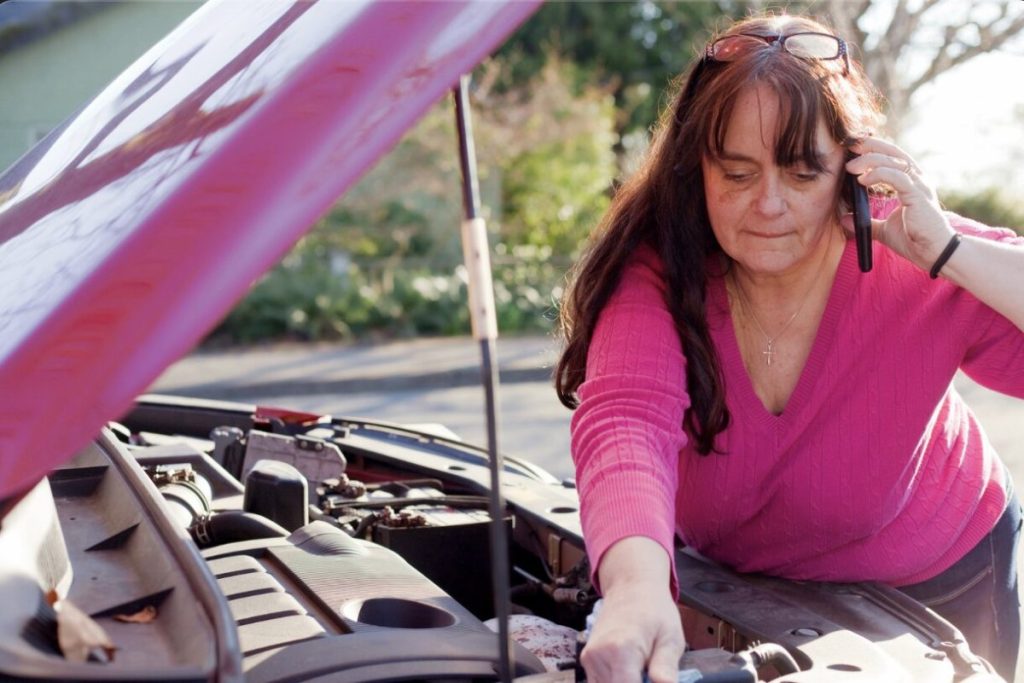
  • 5 things to do when the car’s check engine light comes on before spending money at the mechanic
    Photo credit: CanvaThe check engine light can turn on for a wide range of reasons.

    Imagine you’re driving around and all of the sudden you see that orange light appear on your dashboard. That light delivers a message of mystery and dread: “Check engine.” It could mean something very wrong is happening to your car. Then again, it could just be a loose gas cap

    Sure, a loose gas cap is usually the best case scenario, but you still wasted time and may even be saddled with an unnecessary bill from your mechanic. Still, ignoring the check engine light entirely is dangerous. It could mean you vehicle is unsafe or damaged. The longer you ignore it, the more damage (and cost) can build up. So, what can you do?

    Luckily, there are things you can investigate yourself when the check engine light comes on. When you know what to do, you have a better chance of identifying and eliminating easy-to-solve problems. thus saving yourself a trip to the mechanic and any big bills that might come with it. If you find the problem is over your head, you then know without a doubt an expert’s eye is needed.

    That said, here is what to check for when your check engine light suddenly comes on:

    Make sure the gas cap is tightly on

    As mentioned above, the check engine light could be on when your gas cap isn’t. Double check to make sure it’s screwed on tight every time you fill up the tank. If the light pops back on after you tighten the gas gap, check it again. Examine the gas cap’s rubber seal for any debris, cracks, or hardening. If it’s sealed tight and the light’s still on, you’ve got a different issue on your hands.

    Check your oxygen sensors

    Oxygen sensors help keep the air-fuel mixture in balance in modern engines. If there is a problem with it, it can’t accurately measure exhaust oxygen which can lead to inefficient combustion, higher emissions, and other issues. Other telltale signs of an oxygen sensor issue include more frequent fill-ups, rough idling when the engine is already warmed, and rotten egg-like smell coming from the tail pipe.

    Take a look at your oxygen sensors for corrosion or damage. They’re typically in the exhaust system near the catalytic converter or exhaust manifold, but look through your car’s manual to make sure. Make sure the wires connected to them aren’t cut or damaged either. If everything looks good but the oxygen sensor looks dirty, clean it with the proper cleaner. That might do the trick.

    However, if the oxygen sensor is damaged, it might be time for a pro or a trip to the autoparts store if you’re handy. But if they look good and you’re not experiencing any of the symptoms, it could be a different problem.

    Examine the car battery

    The check engine light can come on if there is an issue with your car battery. Check to see if everything is connected and make sure there’s no corrosion. You’ll also want the battery tested, perhaps at an auto parts shop or through services like AAA. If the battery is clean, connected, and powered-up, then your search for what’s causing the check engine light continues.

    See if it’s a dirty catalytic converter

    A check engine light can come on when the catalytic converter is damaged. If it is ,then there are likely other issues with your car that helped cause that damage. Sometimes, though, the catalytic converter isn’t damaged—it could just be dirty. If so, a good cleaning could fix the issue. 

    You’ll have to purchase a cleaner specialized for catalytic converters from an auto parts store or online. It should cost you around $30 (and will likely be cheaper than a visit to the auto repair shop.) 

    If the clean catalytic converter doesn’t do the trick, there’s something more that’s causing the check engine light.

    Analyze your mass air flow (MAF) sensor for dirt, bugs, and leaves

    The mass air flow (MAF) sensor is installed in the air cleaner duct or housing so it can meter the air that enters your engine. Depending on your car’s make and model, it could have a VAF Signal Voltage style sensor or the less common Karman Vortex air flow sensor. If there is no sign of damage but the sensor is dirtied by the elements, the check engine light could be resolved by giving it a good clean. However, know which type of MAF sensor you have because a Karman Vortex air flow sensor should NOT be cleaned.

    It’s important to note that the MAF sensor is delicate and requires a cleaner that is specifically made for it. An auto parts store can help you find the right cleaner and provide you with additional tips. Depending on your handiness, it might not be worth doing this yourself.

    Know when you need to pay a pro for safety’s sake

    If you have done these checks and the light is still on, it’s time to get a professional. Ignoring a check engine light can be incredibly dangerous. It could lead to further damage to the car and possibly an accident if left unattended.

    “Never ignore a warning light. It’s the biggest mistake car owners make and if it’s left too long, a small fix can quickly become a big bill,” automotive specialist Luke Oswald tells GOOD.

    If it’s time for a mechanic, be sure to be extra cautious driving your vehicle to them. You may want to get your car towed to them, especially if the check engine light is flashing. Many cars also have built-in diagnostic capabilities that can report trouble codes and even schedule service appointments through them, saving you time.

    No one wants to pay more than they need to, however safety should always be a top priority.

Explore More Everyday Economics Stories

Everyday Economics

The states with the highest rates of uninsured drivers and what it costs everyone else

Everyday Economics

5 things to do when the car’s check engine light comes on before spending money at the mechanic

Everyday Economics

Coloradans can now fight against a weaker economy and hunger through the ‘Tamale Act’

Everyday Economics

What a roommate can save you in 100 US cities: 2026 study