Adalie Phillips is just a first grader, but she’s already living out a rom-com plotline that’s captivated TikTok. In a now-viral video, her mom, Allie Phillips (aka @.allie.phillips), shares the fun and slightly shocking story of how her daughter broke up with her elementary school boyfriend after receiving a diamond ring, yes, a real one, from another suitor on the playground.

It all started when Adalie came home and gave her mom a very serious warning.

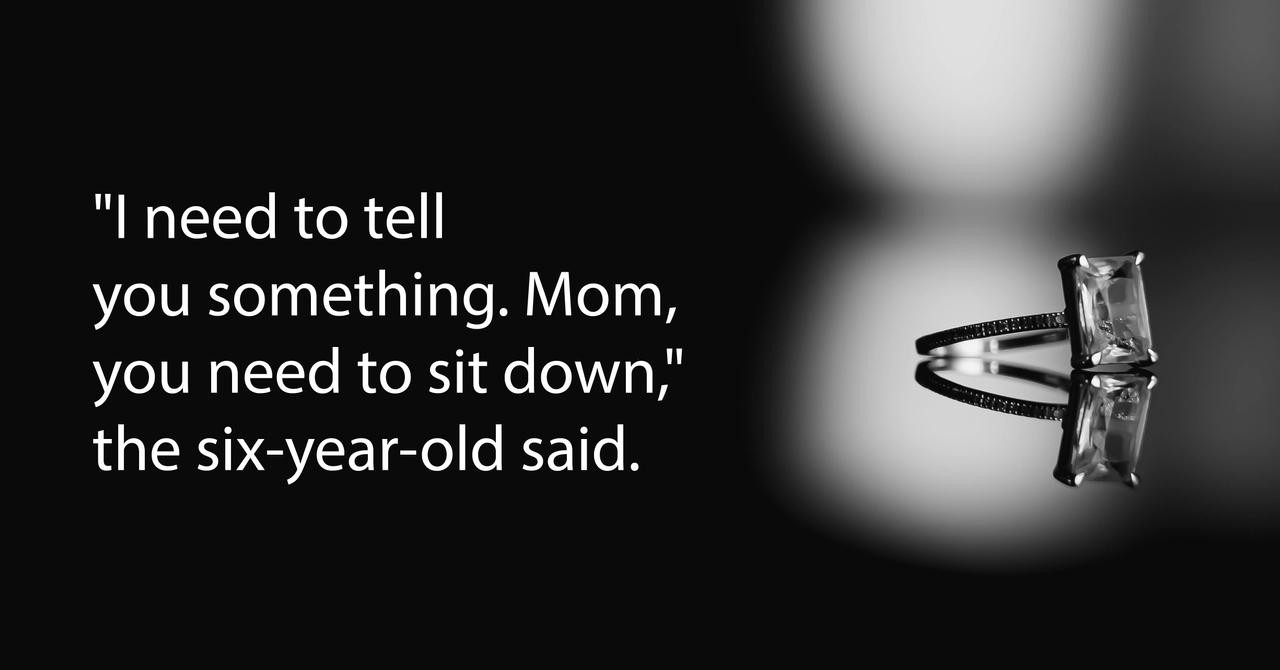
“One day she came home and said, ‘I need to tell you something. Mom, you need to sit down,’” Phillips shared in the video, barely able to contain her laughter.

Apparently, Adalie had been “in love” with a classmate named Brandon. The two had even talked about getting married one day. That is, until Trevor showed up.

“He rolled up with a ring.”

— @.allie.phillips

Playground drama and an unexpected proposal

Trevor’s approach was nothing short of bold. During recess, he walked up to Adalie and handed her a diamond ring. Taken aback and clearly impressed, Adalie made a swift decision. She broke up with Brandon on the spot.

“Trevor told her he ‘buys it all the time.’” Phillips recalled.

tiktok story, real diamond ring, kid love story, schoolyard crush, young love, funny kid story, elementary drama, kids on tiktok, heartwarming news, social media viral, parenting humor
Representative Image: It's not common for a first-grader to have their love life on lock. Canva

Of course, it didn’t take long for Phillips to realize the ring probably wasn’t a toy. The sparkling surprise looked suspiciously real. That’s when the mom instinct kicked in, and she posted a photo of the ring to her daughter’s school Facebook group, asking if anyone knew a boy named Trevor.

The mystery of the missing diamond

Soon enough, Trevor’s mom chimed in with the truth. The ring didn’t come from a toy store or a costume jewelry bin. It belonged to Trevor’s great-grandmother, who lives in Alabama. Apparently, Trevor had pocketed the heirloom during a recent family visit—clearly with grand romantic intentions.

Phillips, understandably stunned, made arrangements to return the ring right away. She confirmed in a follow-up TikTok that the jewelry was safely on its way back to Alabama, and everyone had a good laugh about the whole situation.

“Update! Great Gram leaves the ring to Trevor and 20 years from now he gives it to her again! …For keeps this time.”

— @tracynbt

TikTok can’t get enough

The video struck a chord with parents, romantics, and anyone who’s ever been through a love triangle—real or imagined. Comments flooded in with people sharing their own adorable or ridiculous tales of childhood romance.

“Your daughter out here with a more active dating life than I’ve had in the past decade.”

— @same0823

Another user, @lisaprice82, added a heartwarming twist:
“One of my friend’s little boyfriend gave her a plastic ring from a gumball machine. They got married 23 years later.”

“They got married 23 years later.”

— @lisaprice82

From viral moment to local headlines

Adalie’s tale didn’t just take TikTok by storm—it made it all the way to the local news. Phillips said reporters reached out to share the story of the diamond ring that caused a grade-school breakup. And through it all, she’s maintained a sense of humor and perspective.

It’s a reminder that kids may be small, but their emotions—and their gestures—can be grand. Sometimes all it takes to turn a schoolyard crush into internet gold is a little bling and a whole lot of imagination.

And if this is how first grade is going, Trevor and Adalie’s high school prom is going to be legendary.


  • A 6-year-old girl thought skateboarding was just for boys. One stranger at the skate park spent an hour proving her wrong.
    A young skater performs a trickPhoto credit: Canva

    According to data tracked by the Duke of Edinburgh’s Award program, the number of young women and girls who identify skateboarding as their chosen activity rose 800% between 2017 and 2022. At the international competition level, according to a peer-reviewed study published in early 2025, the number of female competitors has quadrupled since 2016. Right now, the best skaters on the competitive circuit are teenage girls, some as young as 15.

    None of that was true yet when Jeanean Thomas (@JeaneanThomas) took her 6-year-old daughter Peyton to a skate park in Cambridge, Ontario, in October of 2015. But the moment that happened that afternoon has been quietly circulating the internet ever since, and it keeps finding new audiences because the thing it’s really about hasn’t changed at all.

    Thomas, a firefighter, had spent months convincing Peyton that skateboarding wasn’t just for boys. “She’d only ever seen boys skateboard so she just assumed that it was a boy sport,” Thomas told Today. When they finally arrived at the park, her resolve nearly broke. It was full of teenage boys, smoking and swearing. Peyton wanted to turn around immediately.

    Thomas did too, if she’s being honest. “I secretly wanted to go too,” she later wrote, “because I didn’t want to have to put on my mom voice and exchange words with you. I also didn’t want my daughter to feel like she had to be scared of anyone, or that she wasn’t entitled to that skate park just as much as you were.”

    So they stayed. Peyton slipped onto the board and started falling. And then one of the boys skated over.

    “I heard you say, ‘Your feet are all wrong. Can I help you?’” Thomas wrote in a letter she posted to X that night, addressed to the teenager she never got to thank in person. “You proceeded to spend almost an hour with my daughter showing her how to balance and steer and she listened to you. I even heard you tell her to stay away from the rails so that she wouldn’t get hurt.”

    skate park kindness viral story, girls skateboarding, Jeanean Thomas skate park letter, Ryan Carney Cambridge Ontario, teenage boy helps girl skate, female skateboarders rising, skateboarding gender stereotypes, heartwarming parenting story, kids and kindness, breaking gender stereotypes skateboarding
    A young woman on roller skates flies off the ramp. Photo Credit: Canva

    His friends made fun of him for it. He kept going anyway.

    “I want you to know that I am proud that you are part of my community and I want to thank you for being kind to my daughter,” Thomas wrote. “She left with a sense of pride and with the confidence that she can do anything, because of you.”

    The letter went viral almost immediately. It later emerged, through reporting by the Cambridge Times, that the young man wasn’t a teenager at all. His name was Ryan Carney, a 20-year-old skate coach who worked at an indoor park in nearby Kitchener. He was baffled by the attention. “If I didn’t know what the heck I was doing, and I was in a place that could be intimidating at that age, I’d want someone to help me,” he told CBC News. “That’s all I did.”

    When they left the park, Peyton had gone from slipping off the board entirely to riding up and down ramps. She asked to go back every day after that.

    The culture Peyton stepped into that afternoon was one that had actively excluded girls for decades. What Carney did, without thinking much of it, was exactly the kind of thing that changes a kid’s relationship to a sport before she’s old enough to know she was supposed to be excluded from it. The 800% participation increase didn’t come from nowhere. It came from moments like this one, scaled up, repeated, normalized.

    “I just seen a little girl struggling to enjoy her time there,” Carney said. “I wanted to see her leaving wanting to skateboard again.”

    She did.

    This article originally appeared last year. 

  • Scientists say reducing one brain protein may reverse age-related memory loss
    A neurologist looks at brain scans on a computerPhoto credit: Canva
    ,

    Scientists say reducing one brain protein may reverse age-related memory loss

    “It is truly a reversal of impairments. It’s much more than merely delaying or preventing symptoms.”

    Navigating the complexities of brain health as we age can be a daunting experience. From the mild frustrations of general forgetfulness to the devastating impacts of Alzheimer’s and Dementia, cognitive decline affects millions of families across the country. However, a groundbreaking 2025 study from the University of California, San Francisco (UCSF) suggests that we may finally have a way to do more than just manage symptoms. Researchers believe they have found a method to truly reverse age-related memory loss.

    The study, published in Nature Aging and reported by MSN, focused on a specific protein found in the brain called ferritin light chain 1 (FTL1). By studying the memory centers of aging mice, the team at the UCSF Bakar Aging Research Institute discovered that FTL1 tends to accumulate over time.

    When they successfully reduced the levels of this protein in older mice, something remarkable happened: their cognitive performance improved back to levels typically seen in much younger mice.

    memory loss reversal, FTL1 protein, brain health, cognitive decline, UCSF research, aging breakthroughs, MIND diet, neuroscience, alzheimers prevention, neuroplasticity
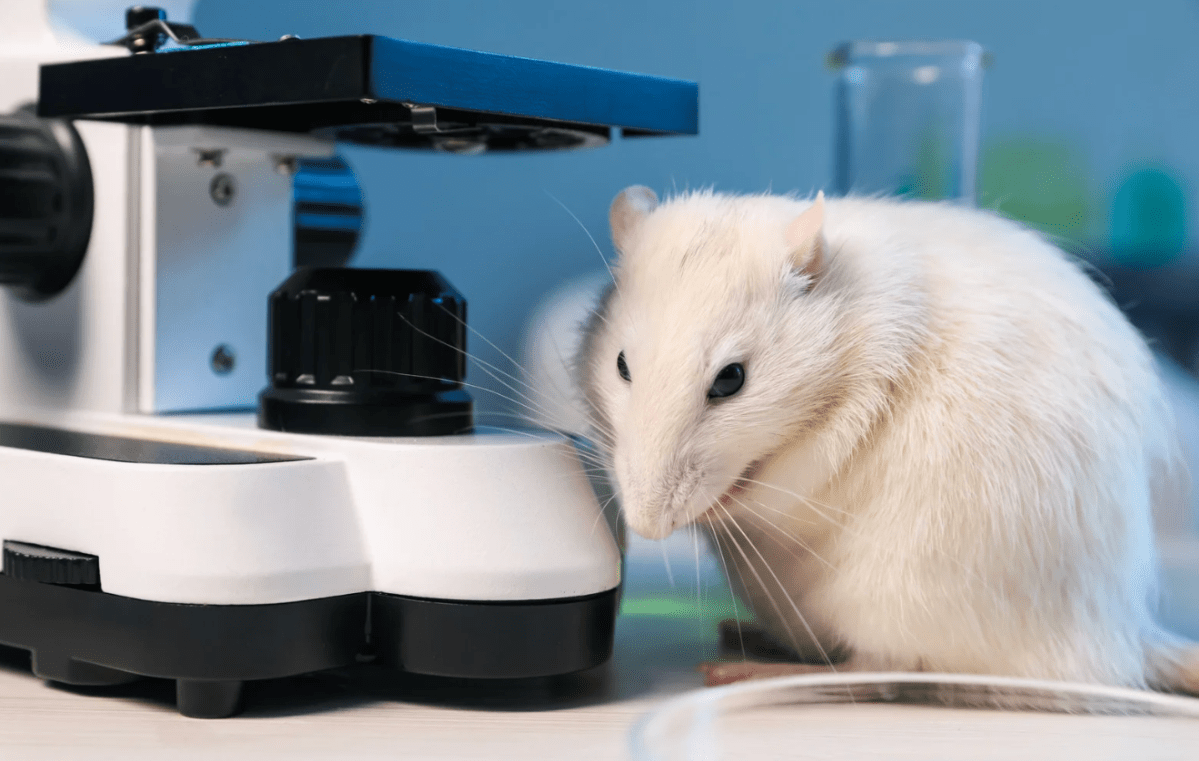
    A labratory mouse checks out a microscope Canva

    The Role of FTL1 and Iron Storage

    To understand why this protein matters, it helps to look at how the brain manages iron. Iron is essential for the body, as it assists in distributing energy to cells and keeping the brain functioning at its peak. FTL1 acts as a storage container for this iron. Without it, iron would move freely and cause damage; however, too much FTL1 can disrupt neurons and deprive them of the energy they need to form and recall memories.

    The researchers tested this theory by increasing FTL1 levels in healthy young mice, which caused them to immediately experience memory impairments. When they did the opposite with older mice, the results were definitive. “It is truly a reversal of impairments. It’s much more than merely delaying or preventing symptoms,” said Saul Villeda, the senior author of the paper. This suggests that FTL1 is a primary driver of typical age-related decline, even in the absence of specific diseases like Alzheimer’s.

    Proactive Steps for Brain Health

    While the medical world waits for these “frontier medicine” applications to move toward human trials, there are science-backed ways to protect your cognitive function today.

    As the field of neuroscience continues to unlock the secrets of proteins like FTL1, the prospect of maintaining a sharp, youthful mind well into old age is becoming more of a reality. While we wait for technology to catch up, the foundation of a healthy brain remains built on the daily choices we make regarding how we eat, move, and rest.

    This article originally appeared last year.

  • His memory resets every 30 seconds. A look inside his 1990 diary shows what he never forgot.
    An older man writes in his journalPhoto credit: Canva
    ,

    His memory resets every 30 seconds. A look inside his 1990 diary shows what he never forgot.

    He was a brilliant musician until a viral infection left him with a memory span of only 30 seconds.

    In 1985, the life of British musicologist Clive Wearing changed forever. After contracting herpesviral encephalitis, a rare virus that attacked the memory-forming regions of his brain, Wearing was left with what is considered the most extreme case of amnesia ever recorded. For four decades, his life has been lived in a loop lasting between seven and 30 seconds.

    Recently, a page from Wearing’s diary dated January 13, 1990, surfaced online via Diaries of Note, offering a haunting and beautiful look into a mind that cannot retain the past. The diary is filled with entries made just minutes apart, each one declaring that he has just woken up for the very first time.

    At 7:46 am, he wrote, “I am awake for the first time.” Just one minute later, at 7:47 am, he crossed that out and wrote again, “This illness has been like death till NOW. All senses work.” Because he cannot trust his own handwriting or remember writing the previous line, his diary is a chaotic map of scratched-out sentences and desperate attempts to grasp consciousness.

    A Rare Neurological Intersection

    Wearing’s condition is unique in the world of neurology because he suffers from both retrograde and anterograde amnesia simultaneously. According to Study.com, most patients only experience one form. Because he cannot retain any new information (anterograde) and has lost most of his past (retrograde), he lives in a perpetual state of confusion.

    Currently residing in an assisted living facility, Wearing understands his immediate surroundings but has no idea how he arrived there. Tragically, while he knows he has children, he cannot remember their names or faces. He knows he was a musician, yet he cannot recall ever playing or hearing a single piece of music—though, remarkably, his muscle memory remains intact, allowing him to play the piano and conduct with the same brilliance he possessed before the illness.

    The Bond That Defied Science

    While the virus destroyed his ability to form new memories, it failed to erase his connection to his wife, Deborah. Through decades of “restarting” his conscious mind, his first instinct upon seeing her is always one of pure joy and recognition.

    Deborah has documented their life in her memoir, Forever Today: A Memoir Of Love And Amnesia. She describes their relationship as a “story of a marriage, of a bond that runs deeper than conscious thought.” According to Historic Flix, she has worked closely with the Amnesia Association to help the NHS develop better rehabilitation protocols for those with severe brain injuries.

    In an interview with The Guardian, Deborah shared a perspective that challenges our traditional understanding of the human brain. She explained that even when her husband was in his most acute state, his love for her remained the one constant.

    “I realized that we are not just brain and processes. Clive had lost all that and yet he was still Clive,” she told the publication. “Even when he was at his worst… he still had that huge overwhelming love for me. That was what survived when everything else was taken away.”

    This article originally appeared two years ago.

Explore More Past Events Stories

Past Events

Scientists say reducing one brain protein may reverse age-related memory loss

Culture

His memory resets every 30 seconds. A look inside his 1990 diary shows what he never forgot.

Culture

This Gen Zer just shared their budget on a full-time job, and millennials are losing it in pure rage

Humor

Doctors stunned after ​groggy woman wakes up from surgery and asks why they forgot her Brazilian butt lift