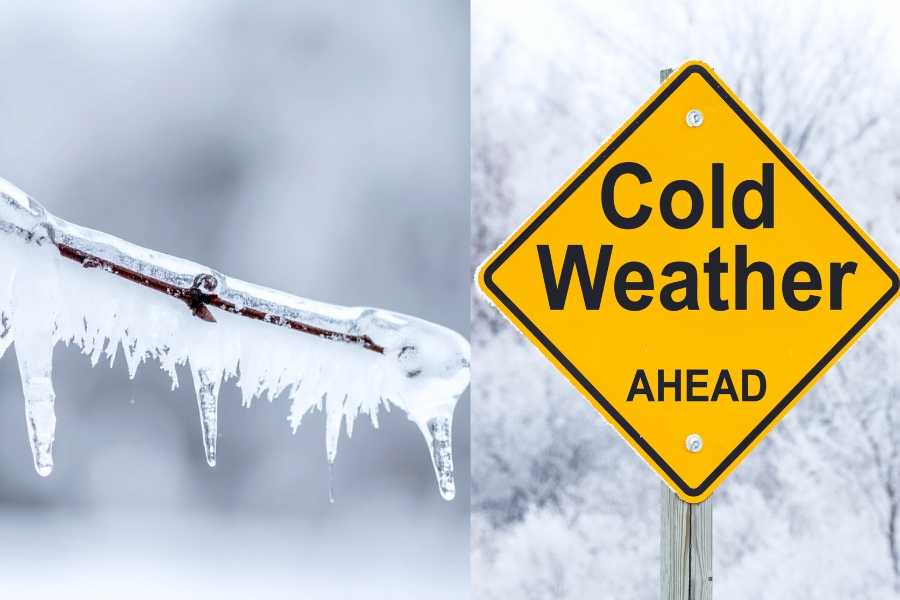

An intense and devastating winter storm swept across the eastern U.S. in late January 2026, bringing massive amounts of snow, ice, and wind. It also appears to have brought the more rare—and possibly confusing—phenomenon of cryoseisms, more commonly known as “frost quakes.” According to The Tennessean, lots of people in the Nashville area reported hearing thunderous “booms,” and naturally assumed these were earthquakes. But many reports suggest they were actually encountering this strange weather event.
I live a few hours away in Knoxville, and I experienced something similar. While eating dinner, my wife and I were startled by a super loud crash—we assumed someone was pounding on our door, but no one was there. When I looked around on social media, I noticed a few other people in my area posting their own stories. So what exactly is happening here?
“Frost quakes: “startling but harmless”
The National Weather Service of Louisville, Kentucky addressed the issue playfully on X, writing, “Are you troubled by strange noises in the middle of the night? These loud booms aren’t paranormal—they’re cryoseisms (Frost Quakes)! Water in the soil is freezing, expanding & cracking under pressure. Startling but harmless.” Evan Webb, a meteorologist with the Louisville NWS, told The Associated Press that his office had received reports about these unusual sounds: “I think some people initially wonder if it’s an exploding tree or something,” he said, noting that they’re “relatively rare, especially in Kentucky.” He continued, “[W]e don’t get quite cold enough very often to have saturated soil in the winter time to be able to freeze that quickly.”
Accuweather offered a deeper dive in a full feature on frost quakes, explaining there are four primary contributing factors: deeply saturated soil, “quick-freeze regions,” rapid temperature drops to below zero, and “only a small amount of snow” being present. In a video from December 2025, Louisiana TV station KNOE said they’re most common in the Midwest and Northeast. The Maine Geological Survey notes that a few cases have been reported in the northeastern U.S., “where people have been able to find a small crack in the ground where the cryoseism occurred.”
They’re “mostly surface level” and “not nearly as destructive”
“These booms have been reported to be loud enough to wake people up from a deep sleep in nearby homes in some instances,” Accuweather wrote. These vibrations, however, can often be detected on a seismometer or seismograph, which measures ground movement.
The January storm had a notable impact on Kentucky, and a Lexington resident wrote local TV station WKYT to inquire about our topic. “Has anyone else been hearing loud booms or cracking noises inside their house tonight?” they asked. “Are these legit frost quakes?” The station’s Chief Meteorologist, Chris Bailey, confirmed that hunch was correct, offering some more perspective. “Unlike regular earthquakes, which start deep underground, frost quakes are mostly surface level,” he said. “They also are not nearly as destructive. They may be loud, but they generally do not cause any damage.”