

Do you have anxiety? Have you tried just about everything to get over it, but it just keeps coming back? Perhaps you thought you had got over it, only for the symptoms to return with a vengeance? Whatever your circumstances, science can help you to beat anxiety for good.

Anxiety can present as fear, restlessness, an inability to focus at work or school, finding it hard to fall or stay asleep at night, or getting easily irritated. In social situations, it can make it hard to talk to others; you might feel like you’re constantly being judged, or have symptoms such as stuttering, sweating, blushing or an upset stomach.
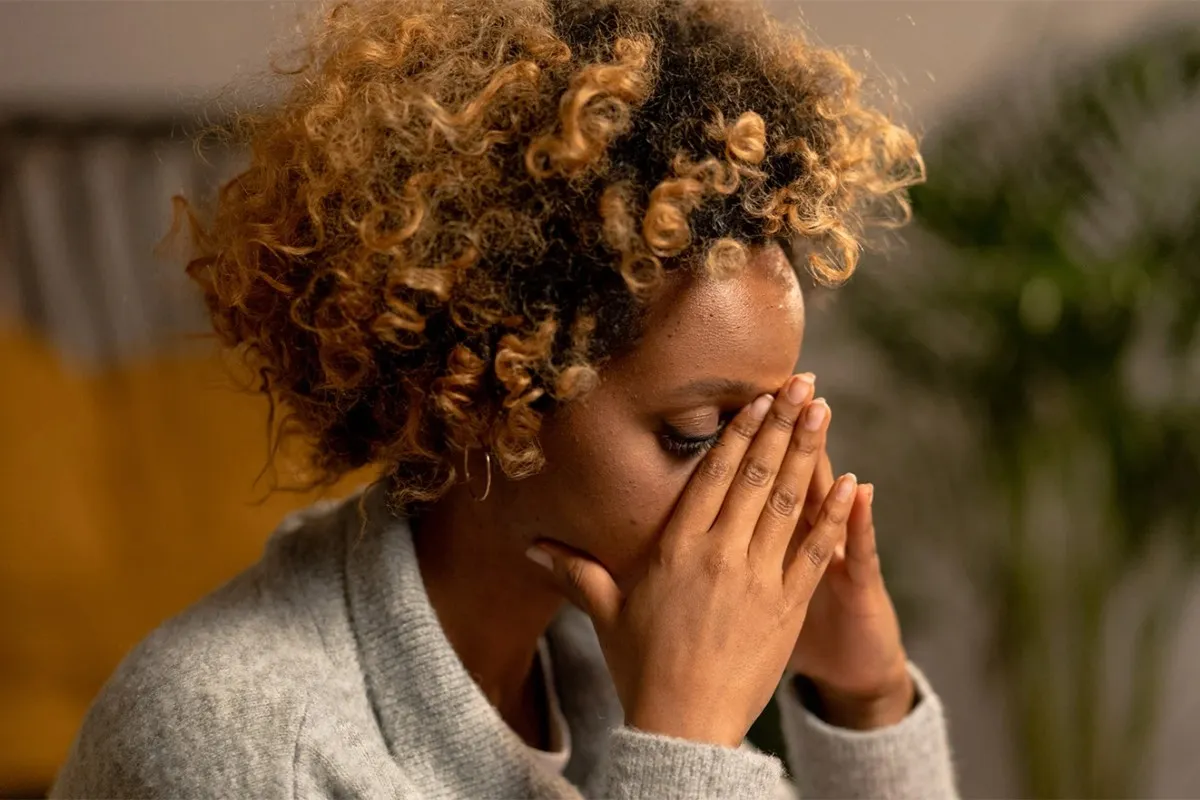
do it badly, perfectionism, procrastination, wait to worry, self forgiveness, helping others, anxiety symptoms, generalized anxiety disorder
Representative Image: Anxiety can manifest in many different ways. Canva

It can appear out of the blue as a panic attack, when sudden spikes of anxiety make you feel like you’re about to have a heart attack, go mad or lose control. Or it can be present all the time, as in generalized anxiety disorder, when diffuse and pervasive worry consumes you and you look to the future with dread.

Most people experience it at some point, but if anxiety starts interfering with your life, sleep, ability to form relationships or productivity, you might have an anxiety disorder.
Research shows that if left untreated, anxiety can lead to depression, early death and suicide. And while it can indeed lead to such serious health consequences, the medication that is prescribed to treat anxiety doesn’t often work in the long-term. Symptoms often return and you’re back where you started.

How science can help

The way you handle things in life has a direct impact on how much anxiety you experience. By tweaking your coping strategy you can lower your anxiety levels. Here are some of the top coping skills that have emerged from our study at the University of Cambridge, which will be presented at the 30th European Congress of Neuropsychopharmacology in Paris.

This may sound strange, but the writer and poet GK Chesterton said, “Anything worth doing is worth doing badly.” And he has a point. This works so well because it speeds up your decision-making process and catapults you straight into action. Otherwise, you could spend hours deciding how or what you should do, which can be very time-consuming and stressful.

“Anything worth doing is worth doing badly.”

— GK Chesterton

People often want to do something “perfectly” or wait for the “perfect time” before starting. However, this can lead to procrastination, long delays, or even prevent us from doing it at all, which causes stress and anxiety.

Instead, why not just start by “doing it badly” and without worrying about how it’s going to turn out? This will not only make it much easier to begin, but you’ll also find that you’re completing tasks much more quickly than before. More often than not, you’ll also discover that you’re not doing it that badly after all—even if you are, you can always fine-tune it later.

Using “do it badly” as a motto gives you the courage to try new things, adds a little fun to everything, and stops you worrying too much about the outcome. It’s about doing it badly today and improving as you go. Ultimately, it’s about liberation.

Forgive yourself and ‘wait to worry’

Are you particularly critical of yourself and the blunders you make? Well, imagine if you had a friend who constantly pointed out everything that was wrong with you and your life. You’d probably want to get rid of them right away.

But people with anxiety often do this to themselves so frequently that they don’t even realize it anymore. They’re just not
kind to themselves.

So perhaps it’s time to change and start forgiving ourselves for the mistakes we make. If you feel like you’ve embarrassed yourself in a situation, don’t criticize yourself – simply realize that you have this impulse to blame yourself, then drop the negative thought and redirect your attention back to the task at hand or whatever you were doing.

Another effective strategy is to
“wait to worry.” If something went wrong and you feel compelled to worry (because you think you screwed up), don’t do this immediately. Instead, postpone your worry – set aside 10 minutes each day during which you can worry about anything.

If you do this, you’ll find that when you come back to the situation that triggered the initial anxiety, you won’t perceive it as bothersome or worrisome. Our thoughts actually decay very quickly if we don’t
feed them with energy.

Find purpose in life by helping others

It’s also worth considering how much of your day is spent with someone else in mind? If it’s very little or none at all, then you’re at a high risk of
poor mental health. Regardless of how much we work or the amount of money we make, we can’t be truly happy until we know that someone else needs us and depends on our productivity or love.

This doesn’t mean that we need people’s praise, but doing something with someone else in mind takes the spotlight off of us (and our anxieties and worries) and places it onto others – and how we can make a difference to them.

Being connected to people has regularly been shown to be one of the most potent buffers
against poor mental health. The neurologist Viktor Frankl wrote:

“For people who think there’s nothing to live for, nothing more to expect from life — the question is getting these people to realise that life is still expecting something from them.”

“…the question is getting these people to realise that life is still expecting something from them.”

— Viktor Frankl

Knowing that someone else needs you makes it easier to endure the toughest times. You’ll know the “why” for your existence and will be able
to bear almost any “how”.

So how can you make yourself important in someone else’s life? It could be as simple as taking care of a child or elderly parent, volunteering, or finishing work that might benefit future generations. Even if these people never realize what you’ve done for them, it doesn’t matter because
you will know. And this will make you realize the uniqueness and importance of your life.

Olivia Remes is a PhD Candidate at the University of Cambridge.

This article first appeared on The Conversation. You can read it here.

This article originally appeared four years ago.

  • Expert shares ancient monk’s mindset for keeping your composure when life ‘bumps’ you
    Coffee spill (LEFT). Man upset with shirt stain (RIGHT).Photo credit: Canva

    A snap reaction in a heated moment can be difficult to control. Sometimes an unexpected experience brings out the best in us—or, all too often, the worst. The Mindset Mentor Podcast, hosted by personal coach Rob Dial, explains how cultivating a healthy mindset can help you stay calm and composed when life “bumps” into you.

    Using a story of an ancient monk teaching his students about enlightenment, Dial highlights that whatever we carry within ourselves rises to the surface when life gets hard. Beginning the day with a healthy mindset matters.

    Dial shares a monk’s story about enlightenment

    A monk teaches his students about enlightenment. He asks them to imagine holding a cup of coffee when someone bumps into them, causing it to spill. When he asks why the coffee spilled, the students quickly reply that it was because someone bumped into them.

    The monk responds, “You spilled the coffee because that’s what was in your cup. Had there been water in the cup, you would have spilled water. Had there been tea in the cup, then you would have spilled tea.”

    Dial goes on to explain the impactful meaning behind the monk’s simple philosophy:

    “When life shakes you, which it will, whatever you carry inside of you will spill out. So if you’re carrying anger, or fear, or hatred, or jealousy, then that is what is going to spill out of you in those moments. But, if you’re carrying love and kindness and compassion and empathy, then that is what is going to spill out you.”

    morning practice, mediation, mindset, mental health
    An early morning stretch.
    Photo credit: Canva

    A question to ask before your day

    If this is the challenge we face each day, the real question becomes: how do we prepare ourselves for what life might throw our way? Dial suggests the answer lies in an intentional pause. “Each morning,” he says, “it’s important for you to stop and close your eyes and ask yourself, ‘What am I carrying inside of me today?’”

    That small act of self-awareness can shape everything that follows. If we choose to bring despair, judgment, and negativity, those emotions will most likely surface when things don’t go as planned. But if we choose to center ourselves in kindness and compassion, we’re far more likely to respond with those qualities instead.

    Positive thinking, affirmations, skills,
community
    Good Morning.
    Photo credit: Canva

    The advantages of morning preparation and a healthy mindset

    Significant time and research have gone into understanding the benefits of a morning routine. These practices help build a kind of “spiritual armor” that prepares us to face the day with confidence. Simple habits like getting sunlight, drinking water, moving our bodies, and practicing mindfulness can boost energy and improve mood.

    A 2024 study found that morning activities like loving-kindness meditation can positively affect people’s mental health. Individuals with a regular practice tend to be more positive, mindful, and compassionate. The length or specific details of the practice have little effect on outcomes when compared with one another.

    Another 2024 study found that framing problems in a positive way helps people recover faster from stress. Staying motivated during difficult situations and feeling more emotionally stable are skills that can be built through mindset. The simple fact is that study after study demonstrates that positive thinking directly supports mental health during difficult periods in life.

    Dial offers a simple concept: what we carry within ourselves influences how we respond to life’s challenges. The students say it’s because they were bumped. The monk explains it’s what’s in the cup. The real preparation for the day isn’t just what we do, it’s what we choose to carry. “What am I carrying today?”

    You can watch this short video on starting a morning meditation practice:

  • The Tsimané people of Bolivia have almost no dementia. Scientists say modern life is our problem.
    A tribe sharing a mealPhoto credit: Canva

    Deep in the Bolivian Amazon, researchers studying two indigenous communities have found something that stopped them in their tracks: among older Tsimané adults, the rate of dementia is roughly 1%. In the United States, the figure for the same age group is 11%.

    The finding, published in the journal Alzheimer’s & Dementia, is part of nearly two decades of research on the Tsimané and their sister population the Mosetén, communities who have been recorded as having some of the lowest rates of heart disease, brain atrophy, and cognitive decline ever measured in science. A subsequent study from the University of Southern California and Chapman University, published in the Proceedings of the National Academy of Sciences, used CT scans on 1,165 Tsimané and Mosetén adults to measure how their brains age compared to populations in the US and Europe. The answer was striking: their brains age significantly more slowly.

    The researchers’ explanation centers on what they call a “sweet spot” — a balance between physical exertion and food availability that most people in industrialized countries have drifted far from. “The lives of our pre-industrial ancestors were punctuated by limited food availability,” said Dr. Andrei Irimia, an assistant professor at USC’s Leonard Davis School of Gerontology and co-author of the study. “Humans historically spent a lot of time exercising out of necessity to find food, and their brain aging profiles reflected this lifestyle.”

    The Tsimané people of Bolivia posing for a photograph.
    The Tsimané people of Bolivia posing for a photograph. Photo credit: Canva

    The Tsimané are highly active not because they exercise in any structured sense but because their daily lives demand it. They fish, hunt, farm with hand tools, and forage, averaging around 17,000 steps a day. Their diet is heavy on carbohydrates — plantains, cassava, rice, and corn make up roughly 70% of what they eat, with fats and protein splitting the remaining 30%. It is not a low-carb or protein-heavy regimen. It is, essentially, the diet of people who burn what they consume. CNN’s Dr. Sanjay Gupta, who visited a Tsimané village in 2018 for his series “Chasing Life,” noted that they also sleep around nine hours a night and practice what might be called intermittent fasting — not by choice, but by necessity during lean seasons.

    The research also included the Mosetén, who share the Tsimané’s ancestral history and subsistence lifestyle but have more access to modern technology, medicine, and infrastructure. Their brain health outcomes fell between the Tsimané and industrialized populations, better than Americans and Europeans, but not as strong as the Tsimané. Researchers describe this gradient as especially revealing because it suggests a continuum rather than a binary, and that even partial movement toward a more active, less calorically abundant lifestyle appears to have measurable effects on how the brain ages.

    “During our evolutionary past, more food and less effort spent getting it resulted in improved health,” said Hillard Kaplan, a professor of health economics and anthropology at Chapman University who has studied the Tsimané for nearly 20 years. “With industrialization, those traits lead us to overshoot the mark.”

    The researchers are careful to note that the Tsimané lifestyle is not simply transferable. Their longevity in absolute terms is lower than Americans’ because of deaths from trauma, infection, and complications in childbirth, hazards of living without a healthcare system. The point of the research is not that modern medicine is unnecessary but that the environments it’s embedded in may be undermining the brain health it’s trying to protect.

    “This ideal set of conditions for disease prevention prompts us to consider whether our industrialized lifestyles increase our risk of disease,” Irimia said.

    This article originally appeared earlier this year.

  • Doctors couldn’t explain the pain in her daughter’s foot. Then a nurse looked closer and spotted something that led to a devastating diagnosis.
    A nurse checks out an x-rayPhoto credit: Canva

    Elle Rugari is a nurse. So when her 4-year-old daughter Alice started complaining about foot pain one evening in late September of last year, Elle did what most parents do first: she gave her some children’s paracetamol, a wheat bag for warmth, and put her to bed. Alice had just had a normal day at childcare. There was no obvious injury.

    But Alice woke up screaming that night, and the pain kept coming back over the following days. She started limping. She cried more often than usual. “She doesn’t like taking medicine or seeing doctors,” Elle, who is from South Australia, told Newsweek. “So I knew it was something serious” when Alice started asking for both.

    At the emergency department, doctors X-rayed Alice’s foot. It showed nothing. But as they continued their assessment, a nurse noticed something else: tiny pinprick bruises scattered along Alice’s legs. Blood tests were ordered. While they waited for results, Elle pointed out something she’d spotted too: swollen lumps along her daughter’s neck.

    @elle94x

    Battling Leukaemia with all her might! ‼️VIDEO EXPLAINING IS ON MY PAGE‼️ Instagram & GoFundMe linked in bio 💛🎗️ #cancer #medical #hospital #help #cancersucks

    ♬ original sound – certainlybee

    The blood results, in the doctor’s words, came back “a bit spicy.” When Elle asked him directly whether he was thinking leukemia, he said yes. She and her partner Cody were transferred to the women’s and children’s hospital, and the diagnosis was confirmed the following day by an oncologist.

    For parents who aren’t medical professionals, those tiny bruises might easily have been overlooked. They’re called petechiae, and they’re caused by small capillaries bleeding under the skin when platelet counts drop. According to the American Cancer Society, bruising and petechiae appear in more than half of children diagnosed with leukemia, often alongside bone or joint pain and swollen lymph nodes. The limping, the foot pain, the bruises, the lumps on the neck: in retrospect, they were telling a clear story. In the moment, without blood work, they’re easy to miss.

    Nurse, patient, medicine, hospital
    A nurse embraces a young cancer patient. Photo credit: Canva

    As Newsweek reported, Alice is now three months into a three-year treatment plan on a high-risk protocol, meaning her course of therapy is more intensive than standard. She is losing her hair. She has hard days. And she sings Taylor Swift songs every single day.

    “She lets everyone around her know that she has leukemia and that she’s going to get rid of it,” Elle said. “She’s honestly the most amazing child.”

    Under the handle @elle94x, Elle shared Alice’s story on TikTok in December 2025, and the response has been overwhelming, with the video drawing over 1.3 million views. Many of the comments came from parents who recognized the pattern from their own experience. “My daughter was changing color and having fevers and complaining of leg pain and arm pain, and hospitals all kept saying it was her making it up,” wrote one user. “I didn’t give up, and it was leukemia.” Another wrote: “I thought my son had strep throat because he is nonverbal with autism. We got admitted that night for leukemia.”

    @elle94x

    … This song is 100% about superstitions and trees 👀 Do not tell my 4 year old who’s battling leukaemia otherwise. @Taylor Swift @Taylor Nation @New Heights @Travis Kelce #taylorswift #swifties #swiftie #fyp #taylornation

    ♬ original sound – elle94x

    Medical experts recommend that parents seek urgent evaluation for any child with unexplained bruising that appears in unusual places, doesn’t heal normally, or comes alongside other symptoms like fatigue, bone pain, or swollen lymph nodes. Norton Children’s Hospital pediatric oncologist Dr. Mustafa Barbour advises that if symptoms don’t improve or don’t have a clear explanation, it’s always worth making an appointment.

    Elle said there are still days when the weight of it hits hard. But Alice’s attitude keeps pulling her forward. “There are still days where it feels so, so overwhelming,” she said. “But she’s such a little champion.”

    This article originally appeared earlier this year.

Explore More Health Stories

Health

The Tsimané people of Bolivia have almost no dementia. Scientists say modern life is our problem.

Health

Doctors couldn’t explain the pain in her daughter’s foot. Then a nurse looked closer and spotted something that led to a devastating diagnosis.

Well-being

Licensed therapist says these 3 steps stop rude people from hijacking your mind

Well-being

Love educator shares how awkward flirting can be turned into a romantic superpower