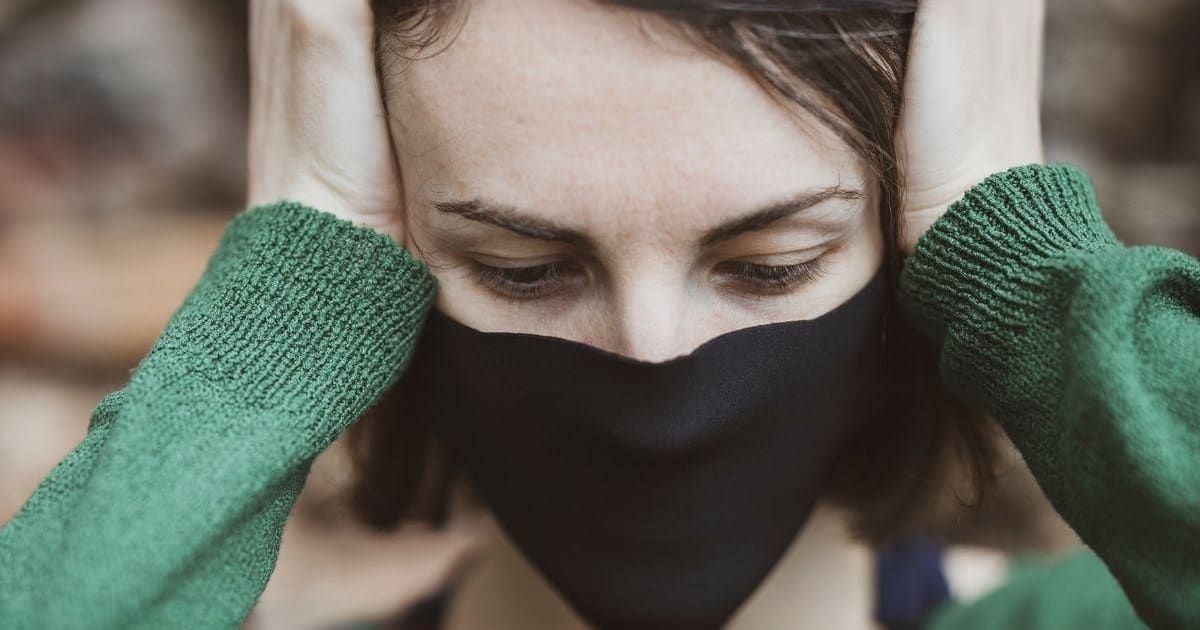
A friend stops by and rings our doorbell. I hop off the couch, put on my mask, and open the door to greet her. She has set a bag of goodies just outside the door and is standing back several feet. “Just dropping these off,” she says through her own mask before adding, “How are you?”

I stare for a brief moment at my dear friend and take stock of the scene. This is someone I’d normally greet with a great big hug. Pre-pandemic, we’d visit in-person several times a week. Our families were used to having potlucks and playing games and watching movies together regularly before the pandemic hit. That personal closeness is still there, so the physical distance hits hard. This scene sucks. How do I even answer the question?


I miss the days when I could simply answer, “I’m fine, thanks. How are you?” It wasn’t always true, of course—we all go through things sometimes—but the question itself was a pleasantry far less loaded than it is now. Under normal circumstances, there’s a baseline of okay-ness that we assume of ourselves and others. Unless we’re going through a particularly rough patch, we normally can say “I’m fine” and basically mean it.

Looking at my friend in her mask at the bottom of our front steps, I don’t know what to say. After years of pandemic life and political and social unrest, I’m not fine. Nobody is. Even those of us who aren’t struggling financially, who are in good physical health, who have a network of supportive friends and loved ones really aren’t fine. And we all know it.

It’s been a year, to say the least. Far more intensely than usual, things are very much not okay in our country and the world in general, so how can we expect ourselves to be? Saying “I’m fine” under these circumstances makes you sound like a psychopath. When so many people are suffering and the country has been through so much upheaval and nothing is normal and everything is wonky, “fine” is just not a word that fits.

Even if you actually are doing well on a personal level somehow, you can’t really say that without feeling kind of guilty, right? “The world is on fire, but I’m great!” just doesn’t land well. And again, even if we’re doing okay ourselves, empathy for others who are dealing with the loss of loved ones, financial hardship, severe illness, kid struggles, etc. is a lot to handle. Maybe others aren’t as bothered by it, but the weight of other people’s struggles weighs heavily on me, even on days when I’m technically “fine.”

So do you tell the truth? “Physically I’m okay, but mentally I’m drowning, and emotionally I’m a wreck, and I’d give my right pinky finger to sit in a crowded coffee shop without worrying about killing anyone” doesn’t land all that well either. We don’t want to burden other people with our problems, we don’t want to complain when there are people that have it worse, and we don’t want to bring other people down. But at least an answer like that would be honest.

The one silver lining to all of this is that we’re all experiencing the heaviness of the world on some level, so that kind of raw honesty can actually bring us together. We’re not supposed to be fine during a global pandemic and attempted overthrow of our government. We’re not supposed to be fine when we have to choose between bonding in person with friends and saving the lives of the vulnerable. We’re not supposed to be fine, so we certainly don’t have to pretend to be.

Unlike normal times, when “fine” is an expected and accepted answer to the “How are you?” question, right now it’s expected and accepted that we’re not. And that’s a relief in a way. We all know we’re not fine, so why put up the pretense? Let’s just acknowledge that we’re all going through a rough period as a people, be ready to lend a listening ear if someone needs it, and share whatever we’re experiencing ourselves.

Personally, I’m past the point of even wanting to vent. My go-to response has become, “All things considered, I’m hanging in there.” Most days, that’s the truth. Most days, that’s about all we can reasonably expect of ourselves. With vaccines being rolled out and a shift in political leadership, there is some much-needed light on the horizon, but we still have a ways to go and it looks like a pretty treacherous landscape between here and there. So we hang in there.

Maybe instead of figuring out how to answer the “How are you?” question, we can just change the question to reflect reality. “You hanging in there?” seems like a better question right now than “How are you?” The latter is just too loaded, and few of us have the energy for more than a basic yes or no answer.

We’re all starting from a baseline of not-okayness now, and we can find solidarity in that. Let’s just acknowledge that truth, embrace the fact that we’re all not fine, and do our best to be helpful and stay hopeful however we can together.


This article originally appeared on 01.30.20.

More on Good.is

Community Gardens Can Improve Your Mental Health, Study Shows …

Why one boss’s response to an employee’s mental health request …

Kristen Bell shares how her battle with mental illness exposes a …
  • Arizona firefighter donates her kidney to a fellow firefighter—her husband
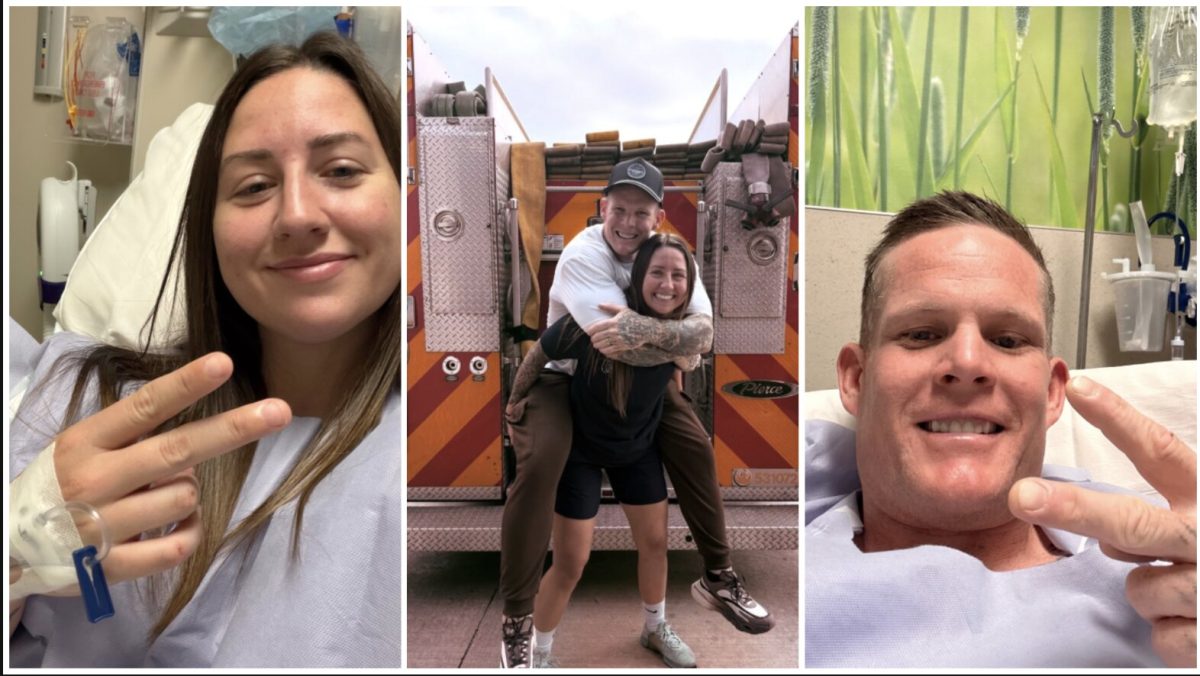
    Photo credit: The Coleman Family via Caitlyn Driscoll on GoFundMeFirefighter Maddie Geer saved the life of her husband, firefighter Robert Coleman Jr.
    ,

    Arizona firefighter donates her kidney to a fellow firefighter—her husband

    Husband and wife firefighters go through a kidney transplant together.

    Firefighter Maddie Geer was shocked when she heard the news. Another firefighter was diagnosed with stage five kidney failure out of nowhere. She rushed to volunteer her kidney to save her colleague’s life. That colleague also happened to be her husband.

    Geer and her husband, Robert Coleman Jr., fell in love while training to become firefighters at different stations. Last year, they got married. This year, after visiting a doctor to address fatigue issues, Coleman found that he was diagnosed with a rare kidney disease. 

    It was a total surprise

    “What really threw us for a loop, though, is the fire department does very thorough physicals, and nothing was caught with my blood pressure,” Coleman told Action News 5. “Blood pressure was good when I was going into my doctor’s meetings, but at night, my blood pressure was just going out of control. So, that’s what the scary part is.”

    Not only that, but Coleman had stage five kidney failure. He needed a new kidney as soon as possible. Geer leapt to volunteer.

    “Ever since he got diagnosed with it, I was like‚ ’If I’m a match, it’s meant to be because I’m going to give you my kidney,’” said Geer.

    “(Maddie) was just itching to help me in any kind of way. It ended up being the most miraculous way,” Coleman told 12 News.

    A perfect match

    Geer took the necessary tests and found she was a perfect donor match for her husband. They underwent the transplant to rounds of cheers from friends, family, and hospital workers. After the transplant, Coleman immediately felt the change.

    “Once I saw him, he looked like a new person,” said Geer. “His face was lit up; he had a smile I hadn’t seen in a while.”

    “I felt alive again,” he said. “She gave me a chance at a second life.”

    While the two are itching to get back to their jobs, they have to wait until they’re fully recovered. Knowing that taking the proper time off to heal impacts their income, Geer’s sister Caitlyn has set up a GoFundMe for the couple. The money will be used to help with household expenses and follow-up doctor’s visits.

    Check for signs, see your doctor regularly

    There’s one thing that Robert Coleman Jr. hopes people do after hearing his story. He’s advocating that everyone gets their annual physical and regular checkups with their doctors. 

    “No one is invincible, and I learned the hard way,” he said.

    It’s important to be mindful and alert about any changes in your body. The signs for kidney disease can be pretty mundane. Symptoms include swelling in the ankles and feet, frequent urination, and trouble sleeping among others. If you are experiencing any of these symptoms, it’s probably best to check with your doctor. It may be scary, but it’s best address any issue you may experience for the best chance of an optimal outcome.

  • After 40 years in a Portuguese circus, elephant retires to become the first resident of a new sanctuary
    Photo credit: Pangea Elephant Sanctuary/YouTubeJulie at the Pangea Elephant Sanctuary.

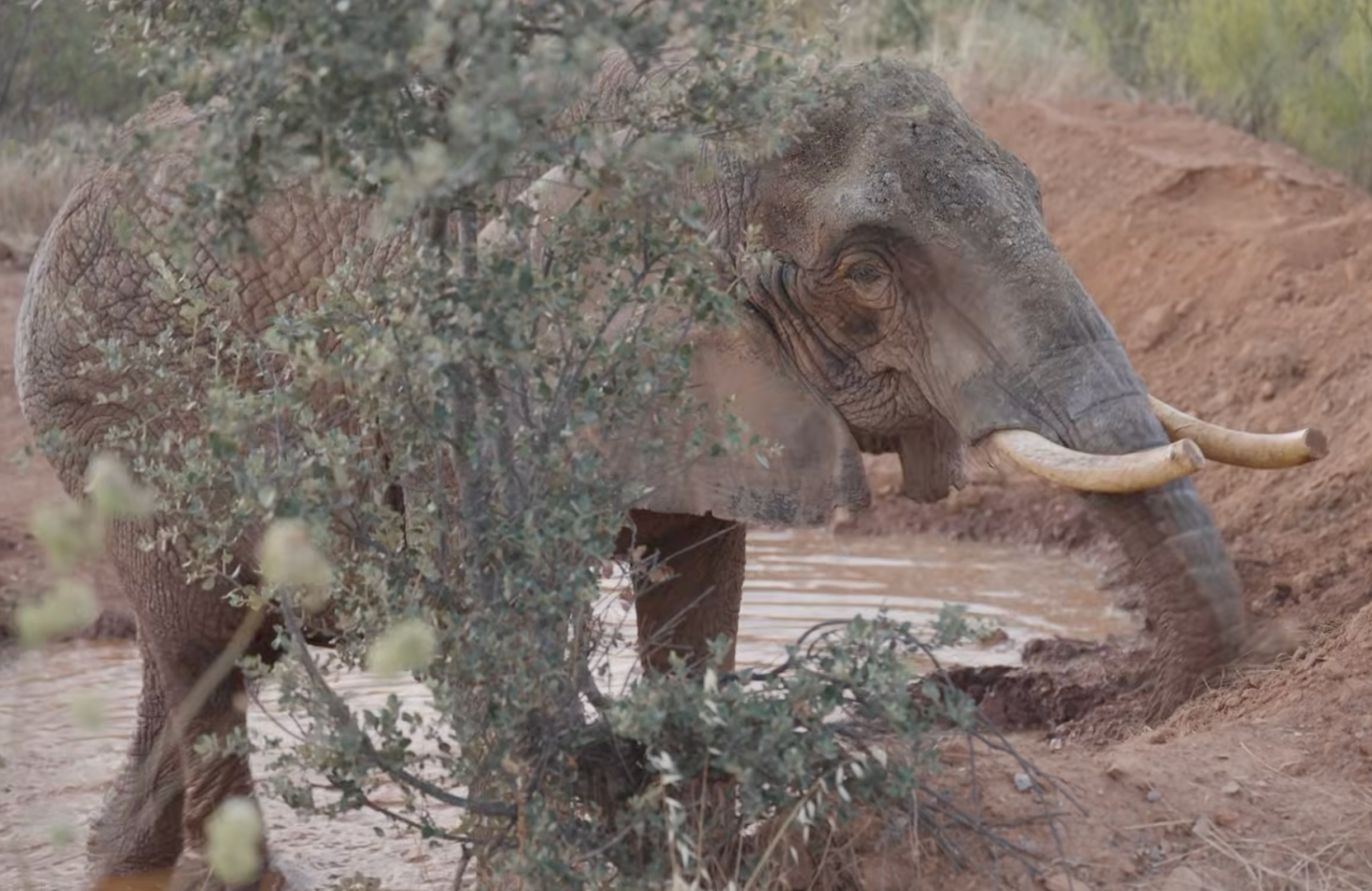
    Around 40 years ago, a young elephant named Julie was captured in Africa. Since 1988, she has performed with the Victor Hugo Cardinali Circus. Now, as the last circus elephant in Portugal, she’s finally getting the retirement she deserves—becoming the first resident of the Pangea Elephant Sanctuary.

    In 2018, Portugal officially banned wild animals from performing in circuses. The law was fully implemented in 2024 with the circus’s full cooperation. Since then, the circus has continued caring for Julie while Pangea built a home for her and other elephants.

    Getting Julie to her new home

    “This has not been an easy decision, as she has been a member of our family for nearly forty years,” Vítor Hugo Cardinali told The Portugal News. “But we believe it is the right decision for Julie. Working with Pangea on her transition to her new home was a critical factor in our deliberations.”

    Now Julie is enjoying mud baths and her new surroundings at the sanctuary in Alentejo, Portugal. Pangea’s officials hope to make Julie’s final years the best they can provide.

    “We cannot be sure; elephants in the wild live for more than 70 years,” Kate Moore, Pangea’s director-general, told The Associated Press. “Unfortunately, elephants born in captivity have half the life expectancy of an elephant born in the wild, so we cannot know exactly how much time she has left. She has had a hard life, but I must say she has been very energetic at Pangea this week, so we remain hopeful.”

    About the sanctuary

    The elephant sanctuary spans 400 hectares and is designed to welcome up to 30 elephants, giving them space to live and thrive. Later in 2026, the sanctuary will welcome a second elephant, Kariba, who is also around 40 years old and currently lives at a zoo in Belgium. Until more elephants arrive, socialize, and get settled, the sanctuary will remain closed to visitors.

    Students adopt and support Julie’s new living space

    Julie also has some little human friends cheering her on as she settles into her new home. The pupils at Wenhaston Primary School near Halesworth, Suffolk, England, are keeping track of Julie’s progress during their science lessons. After learning about Julie’s life in the circus, they wanted to show their support. They were delighted to hear that Julie was enjoying her new life at the sanctuary.

    “I was a bit upset that Julie was taken away from her mum when she was really young,” 9-year-old Mars told BBC News. “[I am] really happy [she’s been given a new life] because in the wild it’s their natural habitat. I think she feels really happy.”

    The children’s teacher, Emma Skinner, added, “[The students are] just completely in love with the fact that she’s been released and is in a wonderful place, doing all these wonderful things that she’s not been able to do for such a long time.”

    With the support of schoolchildren, her former trainer, and Pangea, Julie’s golden years are looking brighter than ever.

  • 14-year-old Montana kid rescues a drowning man with his lasso and rodeo skills
    Photo credit: CanvaYoung Jory Thomas saved a life with his roping skills.

    A teenager is being praised for pulling off a heroic act straight out of an American western film. The boy saved a man from drowning by lassoing him like a cowboy.

    Fourteen-year-old Jory Thomas was just visiting with his grandparents on their campground near Yellowstone River. Jory had his lariat to practice the roping skills he’d been learning for the past year. That’s when he heard cries for help from the nearby river.

    “We all heard, ‘Help, help,’” Jory said to KTVQ News. “There’s two or three people floating down the river, one hanging on to the cooler, and he wasn’t saying anything.”

    A raft carrying four people crashed into a bridge pillar, knocking them all into the Yellowstone River. While three of them made it to shore, the fourth was drifting quickly downstream as he clung to a cooler. Jory emptied his pockets and grabbed his lariat, immediately rushing to help.

    Practice prepared him for this moment

    “This current was pretty fast then, and he was moving pretty quickly,” said Jory. “Only thing I could focus on was helping him get out of the water because I didn’t want to see anyone go in front of me.”

    Jory had been practicing using a lariat to rope a dummy on his parents’ ranch nearly every afternoon when the weather was fair. Ready for action, Jory ran into the shallower part of the river, getting chest-deep into the water. Letting his training do the work, Jory took his 12-foot lariat and lassoed the drowning man.

    “Luckily, I caught him first try,” he said.

    Jory slowly pulled the man to shore as first responders arrived.

    “I felt pretty good afterwards that I knew he was okay and was out of the water,” he said. “God was basically putting me in the place of all this. God was just telling me all of this at the time and saying, ‘Go get him, you got it, and I believe in you.’”

    Jory’s instinct was to help

    Jory’s family was proud but not too surprised that he leapt into action. To them, being helpful was just Jory being Jory.

    “His first instinct always is to help other people. He’s always been that way,” said Sandy, Thomas’ grandmother. “The whole community is proud of him. We’ve had a lot of feedback, but that’s Jory. He’s always there to help somebody else.”

    “We’ll be in town at the grocery store, and you’ll see an elderly person,” Jase, Jory’s father, told Cowboy State Daily. “They can’t pack the groceries, and he never says a word. He goes over and gets their groceries and packs them out. That’s just who he is.”

    The local police also praised Jory for taking action.

    “My opinion, Jory saved the individual’s life, 100%,” said Sweet Grass County Sheriff Alan Ronneberg. “Had Jory not acted, I believe the chances of this individual making it to shore were very slim.”’

    “Jory saw another in trouble and acted, not for himself but for another,” Ronneberg added. “Jory is a lesson for all of us in this day and age and showed us what is courageous and right.”

Explore More News Stories

World

After 40 years in a Portuguese circus, elephant retires to become the first resident of a new sanctuary

Local

14-year-old Montana kid rescues a drowning man with his lasso and rodeo skills

Nation

One man’s bad day led to a legacy of love from the ‘Kissing Tree’ for the whole Victoria community

Local

11-year-old Kentuckian rescues man drowning in apartment complex pool