This article originally appeared on 05.07.19


Grieving in the technology age is uncharted territory.

I’ll take you back to Saturday, June 9, 2012. At 8:20 a.m., my 36-year-old husband was pronounced dead at a hospital just outside Washington, D.C.

By 9:20 a.m., my cellphone would not stop ringing or text-alerting me long enough for me to make the necessary calls that I needed to make: people like immediate family, primary-care doctors to discuss death certificates and autopsies, funeral homes to discuss picking him up, and so on. Real things, important things, time-sensitive, urgent things.

Doctor consoling a loved one.
Photo from Pexel. | Doctor consoling a loved one.

At 9:47 a.m., while speaking to a police officer (because, yes, when your spouse dies, you must be questioned by the police immediately), one call did make it through. I didn’t recognize the number. But in those moments, I knew I should break my normal rule and answer all calls. “He’s dead??? Oh my God. Who’s with you? Are you OK? Why am I reading this on Facebook? Taya, what the heck is going on?”

Facebook? I was confused. I hadn’t been on Facebook since the day before, so I certainly hadn’t taken the time in the last 90 minutes to peek at the site.

“I’ll call you back”, I screamed and hung up. I called my best friend and asked her to search for anything someone might have written and to contact them immediately and demand they delete it. I still hadn’t spoken to his best friend, or his godsister, or our godchild’s parents, or a million other people! Why would someone post it to Facebook SO FAST?

While I can in no way speak for the entire planet, I certainly feel qualified to propose some suggestions — or, dare I say, rules — for social media grieving.

How many RIPs have you seen floating through your social media stream over the last month? Probably a few. Death is a fate that we will each meet at some point. The Information Age has changed the ways in which we live and communicate daily, yet there are still large voids in universally accepted norms.

This next statement is something that is impossible to understand unless you’ve been through it:

There is a hierarchy of grief.

Yes, a hierarchy. It’s something people either don’t understand or understand but don’t want to think or talk about — yet we must.

There is a hierarchy of grief.

Hierarchy is defined as:

  1. a system or organization in which people or groups are ranked one above the other according to status or authority, and
  2. an arrangement or classification of things according to relative importance or inclusiveness.

What does this mean as it relates to grief? Let me explain. When someone dies — whether suddenly or after a prolonged illness, via natural causes or an unnatural fate, a young person in their prime or an elderly person with more memories behind them than ahead — there is one universal truth : The ripples of people who are affected is vast and, at times, largely unknown to all other parties.

A death is always a gut punch with varying degrees of force and a reminder of our own mortality. Most people are moved to express their love for the deceased by showing their support to the family and friends left behind.
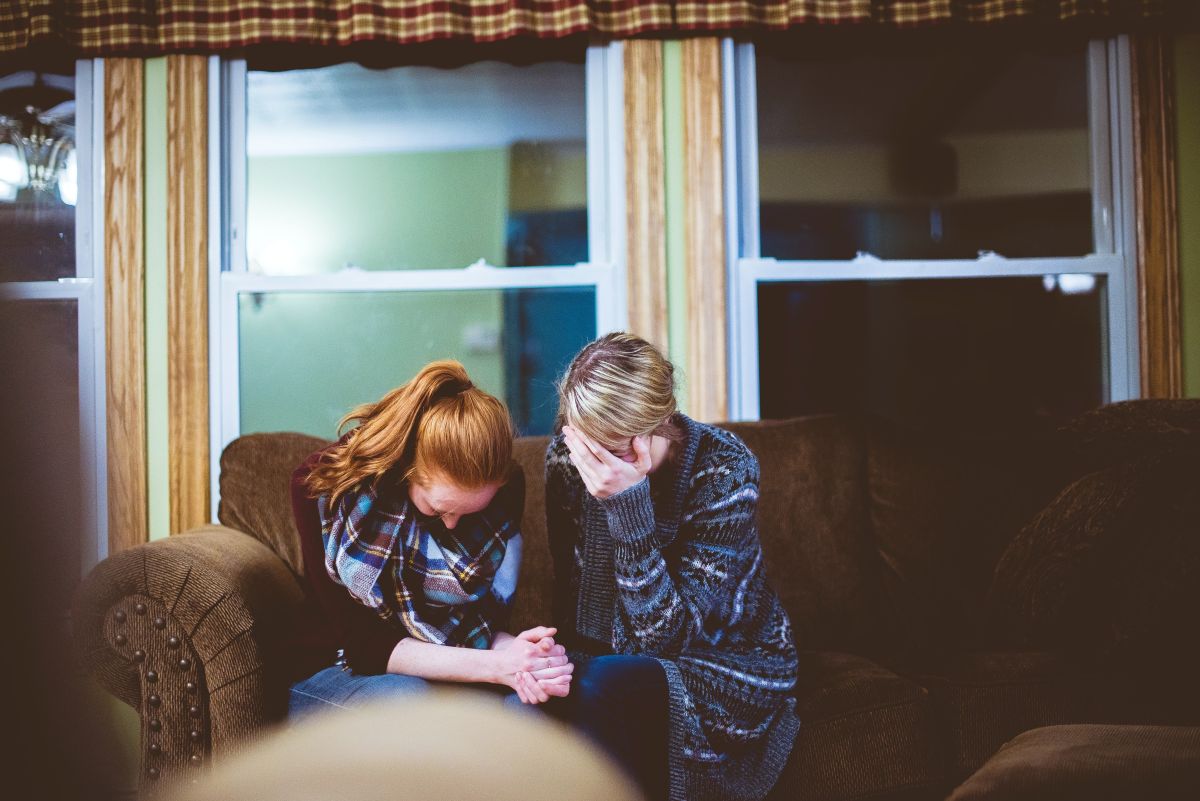
Trying to cope with grief.
Photo by Ben White on Unsplash. | Trying to cope with grief.

In the days before social media, these expressions came in the form of phone calls, voicemail messages, and floral deliveries.

If you were lucky enough to be in close proximity to the family of the newly deceased, there were visits that came wrapped with hugs and tears, and deliveries of food and beverages to feed all the weary souls.

Insert social media. All of those courtesies still occur, but there is a new layer of grief expression — the online tribute in the form of Facebook posts, Instagram photo collages, and short tweets.

What’s the problem with that? Shouldn’t people be allowed to express their love, care, concern, support, and prayers for the soul of the recently deceased and for their family?

Yes.

And no.

Why? Because there are no established “rules,” and people have adopted their own. This isn’t breaking news, and you’re not trying to scoop TMZ. Listen, I know you’re hurt. Guess what? Me too. I know you’re shocked. Guess what? Me too. Your social media is an extension of who you are. I get it. You “need” to express your pain, acknowledge your relationship with the deceased, and pray for the family.

Yes.

However…

Please give us a minute.

We are shocked.

We are heartbroken.

Give the immediate family or circle a little time to handle the immediate and time-sensitive “business” related to death. In the minutes and early hours after someone passes away, social media is most likely the last thing on their minds. And even if it does cross their mind, my earlier statement comes into play here.

There is a hierarchy of grief.

Please pause and consider your role and relationship to the newly deceased. Remember, hierarchy refers to your status and your relative importance to the deceased. I caution you to wait and then wait a little longer before posting anything. This may seem trivial, silly, and not worth talking about, but I promise you it isn’t.

If the person is married, let the spouse post first.

If the person is “young” and single, let the partner, parents, or siblings post first.

If the person is “old” and single, let the children post first.

If you can’t identify the family/inner circle of the person, you probably shouldn’t be posting at all.

Do you get where I’m going with this?

In theory, we should never compare grief levels, cast the grief-stricken survivors into roles, or use words like status and importance. But maybe we need to at this moment (and for the next few weeks and months).

The “RIP” posts started hitting my timeline about an hour after my husband’s death, and I certainly didn’t start them. This created a sense of confusion, fear, anxiety, panic, dread, and shock for the people who knew me, too. What’s wrong? Who are we praying for? Did something happen? Did someone pass? Why are there RIPs on your wall and I can’t reach you? Call me please! What’s going on?

That’s a small sample of messages on my voicemail and text inbox. I had to take a minute in the midst of it all to ask a friend to post a status to my Facebook page on my behalf.

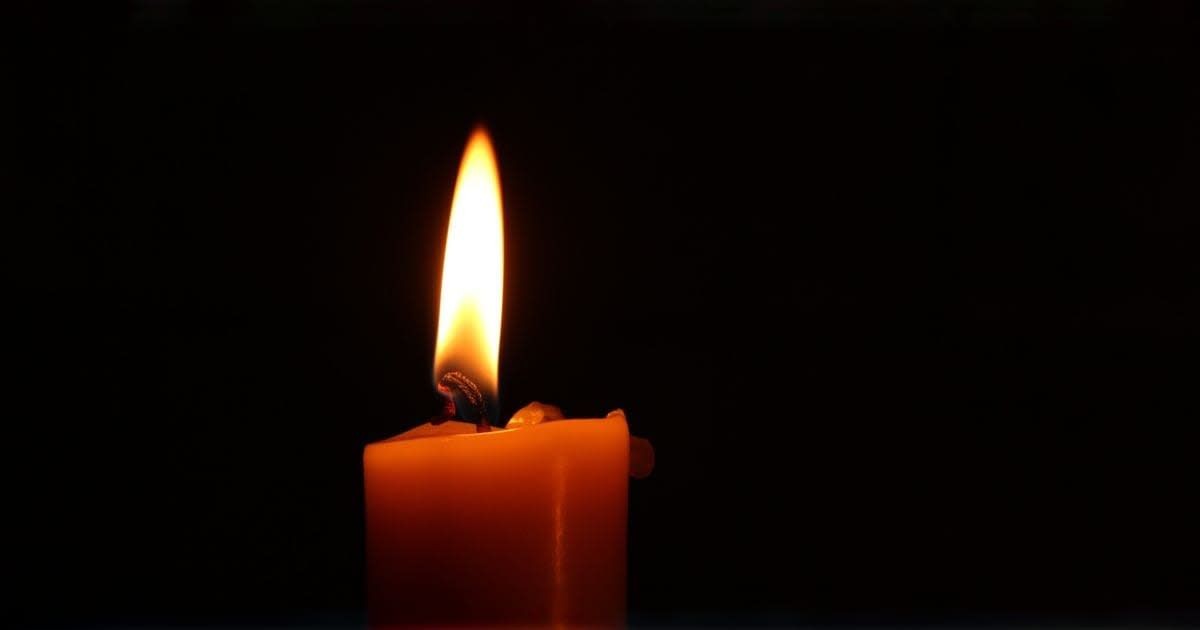
A lighted candle in dark room.
Photo by Sixteen Miles Out on Unsplash | A lighted candle in dark room.

Your love and expressions of support are appreciated and needed, but they can also be ill-timed and create unintended additional stress.

The person is no less dead and your sympathy no less heartfelt if your post, photo, or tweet is delayed by a few hours. Honestly, the first couple of hours are shocking, and many things are a blur. Most bereaved people will be able to truly appreciate your love, concern, prayers, and gestures after the first 24 hours.

I’ve learned this from the inside — twice within the last four years. And I assure you that if we each adopted a little patience and restraint in this area, we would help those who are in the darkest hours of their lives by not adding an unnecessary layer of stress.

A few extra hours could make all the difference.

More on Good.is

Should There Be a Statute of Limitations on Offensive Social Media Posts?

Data Shows that Positive Content Does Better on Social Media

Exhausted mom posts a letter begging husband for help. And then it went viral.

Taiwanese model speaks out about the meme that ruined her life. – GOOD
A guy asked why his dog had suddenly become so protective of his wife — the Internet guessed the right reason. – GOOD

  • Arizona firefighter donates her kidney to a fellow firefighter—her husband
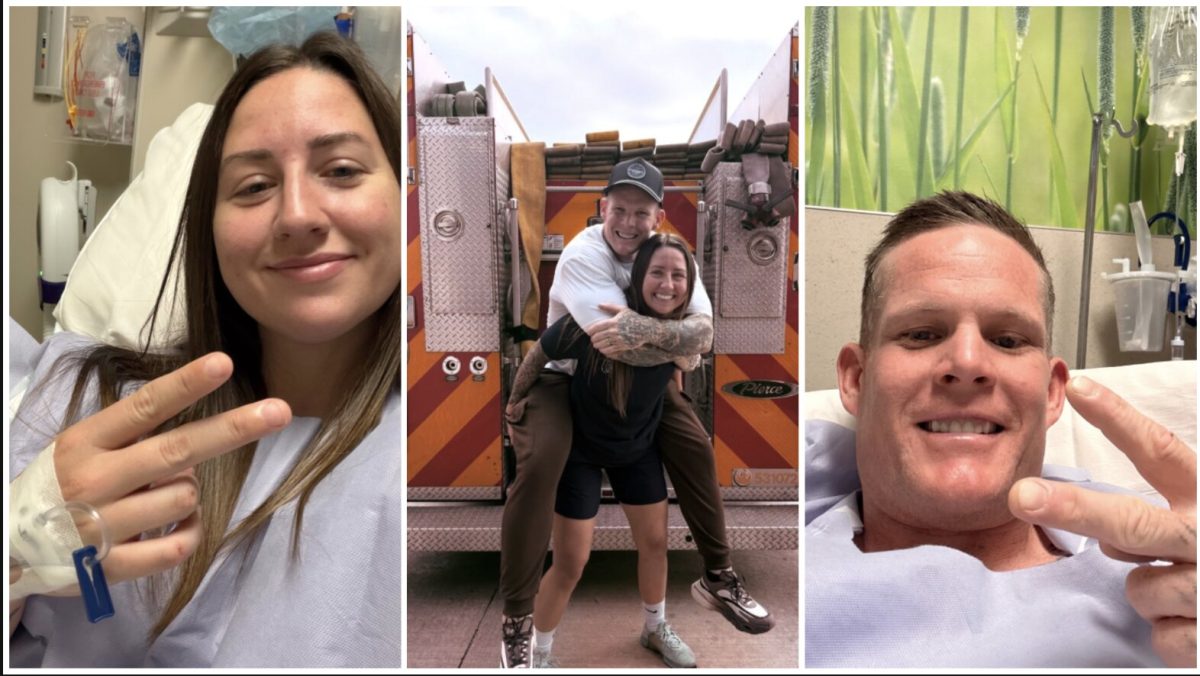
    Photo credit: The Coleman Family via Caitlyn Driscoll on GoFundMeFirefighter Maddie Geer saved the life of her husband, firefighter Robert Coleman Jr.
    ,

    Arizona firefighter donates her kidney to a fellow firefighter—her husband

    Husband and wife firefighters go through a kidney transplant together.

    Firefighter Maddie Geer was shocked when she heard the news. Another firefighter was diagnosed with stage five kidney failure out of nowhere. She rushed to volunteer her kidney to save her colleague’s life. That colleague also happened to be her husband.

    Geer and her husband, Robert Coleman Jr., fell in love while training to become firefighters at different stations. Last year, they got married. This year, after visiting a doctor to address fatigue issues, Coleman found that he was diagnosed with a rare kidney disease. 

    It was a total surprise

    “What really threw us for a loop, though, is the fire department does very thorough physicals, and nothing was caught with my blood pressure,” Coleman told Action News 5. “Blood pressure was good when I was going into my doctor’s meetings, but at night, my blood pressure was just going out of control. So, that’s what the scary part is.”

    Not only that, but Coleman had stage five kidney failure. He needed a new kidney as soon as possible. Geer leapt to volunteer.

    “Ever since he got diagnosed with it, I was like‚ ’If I’m a match, it’s meant to be because I’m going to give you my kidney,’” said Geer.

    “(Maddie) was just itching to help me in any kind of way. It ended up being the most miraculous way,” Coleman told 12 News.

    A perfect match

    Geer took the necessary tests and found she was a perfect donor match for her husband. They underwent the transplant to rounds of cheers from friends, family, and hospital workers. After the transplant, Coleman immediately felt the change.

    “Once I saw him, he looked like a new person,” said Geer. “His face was lit up; he had a smile I hadn’t seen in a while.”

    “I felt alive again,” he said. “She gave me a chance at a second life.”

    While the two are itching to get back to their jobs, they have to wait until they’re fully recovered. Knowing that taking the proper time off to heal impacts their income, Geer’s sister Caitlyn has set up a GoFundMe for the couple. The money will be used to help with household expenses and follow-up doctor’s visits.

    Check for signs, see your doctor regularly

    There’s one thing that Robert Coleman Jr. hopes people do after hearing his story. He’s advocating that everyone gets their annual physical and regular checkups with their doctors. 

    “No one is invincible, and I learned the hard way,” he said.

    It’s important to be mindful and alert about any changes in your body. The signs for kidney disease can be pretty mundane. Symptoms include swelling in the ankles and feet, frequent urination, and trouble sleeping among others. If you are experiencing any of these symptoms, it’s probably best to check with your doctor. It may be scary, but it’s best address any issue you may experience for the best chance of an optimal outcome.

  • After 40 years in a Portuguese circus, elephant retires to become the first resident of a new sanctuary
    Photo credit: Pangea Elephant Sanctuary/YouTubeJulie at the Pangea Elephant Sanctuary.

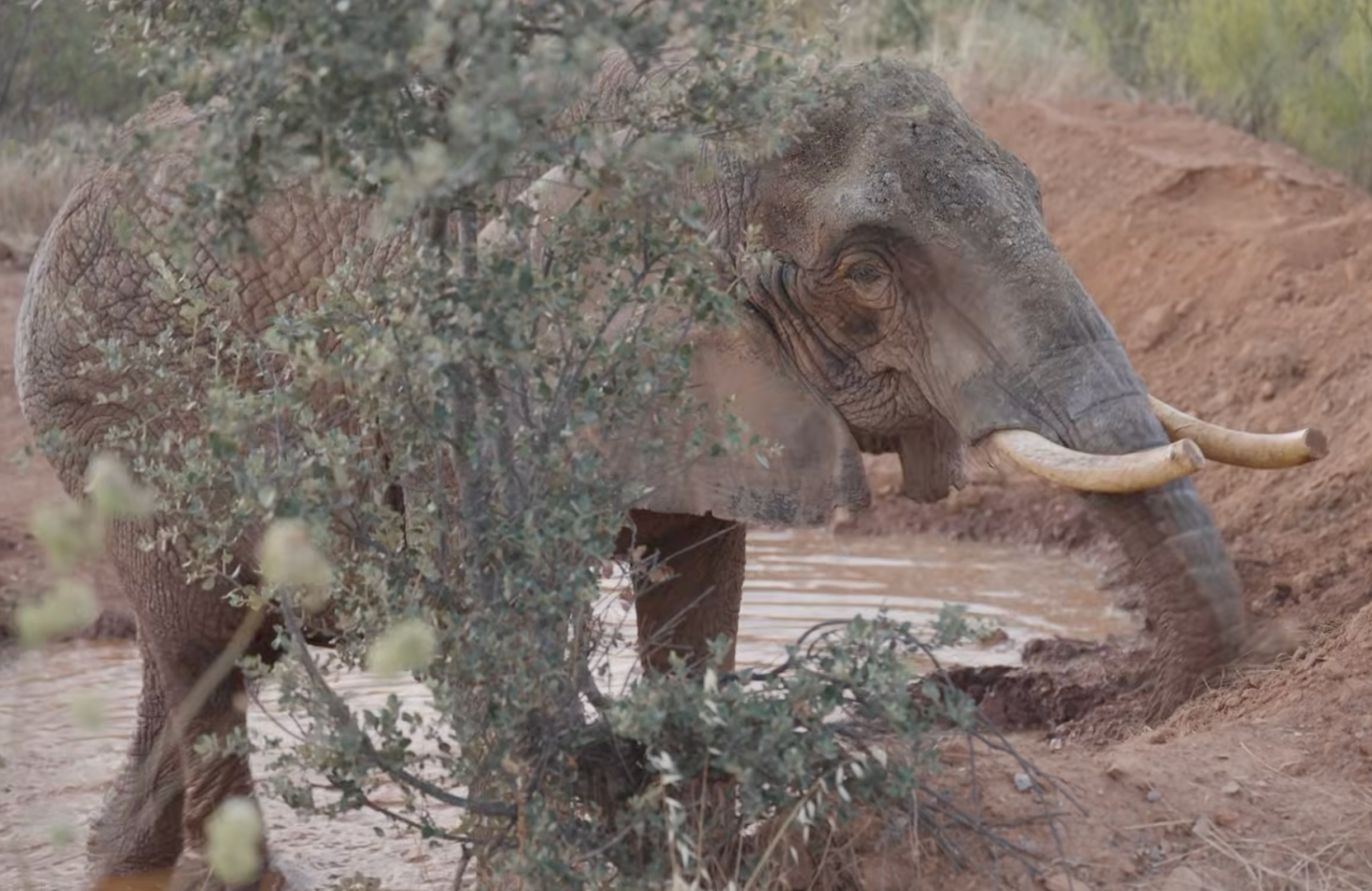
    Around 40 years ago, a young elephant named Julie was captured in Africa. Since 1988, she has performed with the Victor Hugo Cardinali Circus. Now, as the last circus elephant in Portugal, she’s finally getting the retirement she deserves—becoming the first resident of the Pangea Elephant Sanctuary.

    In 2018, Portugal officially banned wild animals from performing in circuses. The law was fully implemented in 2024 with the circus’s full cooperation. Since then, the circus has continued caring for Julie while Pangea built a home for her and other elephants.

    Getting Julie to her new home

    “This has not been an easy decision, as she has been a member of our family for nearly forty years,” Vítor Hugo Cardinali told The Portugal News. “But we believe it is the right decision for Julie. Working with Pangea on her transition to her new home was a critical factor in our deliberations.”

    Now Julie is enjoying mud baths and her new surroundings at the sanctuary in Alentejo, Portugal. Pangea’s officials hope to make Julie’s final years the best they can provide.

    “We cannot be sure; elephants in the wild live for more than 70 years,” Kate Moore, Pangea’s director-general, told The Associated Press. “Unfortunately, elephants born in captivity have half the life expectancy of an elephant born in the wild, so we cannot know exactly how much time she has left. She has had a hard life, but I must say she has been very energetic at Pangea this week, so we remain hopeful.”

    About the sanctuary

    The elephant sanctuary spans 400 hectares and is designed to welcome up to 30 elephants, giving them space to live and thrive. Later in 2026, the sanctuary will welcome a second elephant, Kariba, who is also around 40 years old and currently lives at a zoo in Belgium. Until more elephants arrive, socialize, and get settled, the sanctuary will remain closed to visitors.

    Students adopt and support Julie’s new living space

    Julie also has some little human friends cheering her on as she settles into her new home. The pupils at Wenhaston Primary School near Halesworth, Suffolk, England, are keeping track of Julie’s progress during their science lessons. After learning about Julie’s life in the circus, they wanted to show their support. They were delighted to hear that Julie was enjoying her new life at the sanctuary.

    “I was a bit upset that Julie was taken away from her mum when she was really young,” 9-year-old Mars told BBC News. “[I am] really happy [she’s been given a new life] because in the wild it’s their natural habitat. I think she feels really happy.”

    The children’s teacher, Emma Skinner, added, “[The students are] just completely in love with the fact that she’s been released and is in a wonderful place, doing all these wonderful things that she’s not been able to do for such a long time.”

    With the support of schoolchildren, her former trainer, and Pangea, Julie’s golden years are looking brighter than ever.

  • 14-year-old Montana kid rescues a drowning man with his lasso and rodeo skills
    Photo credit: CanvaYoung Jory Thomas saved a life with his roping skills.

    A teenager is being praised for pulling off a heroic act straight out of an American western film. The boy saved a man from drowning by lassoing him like a cowboy.

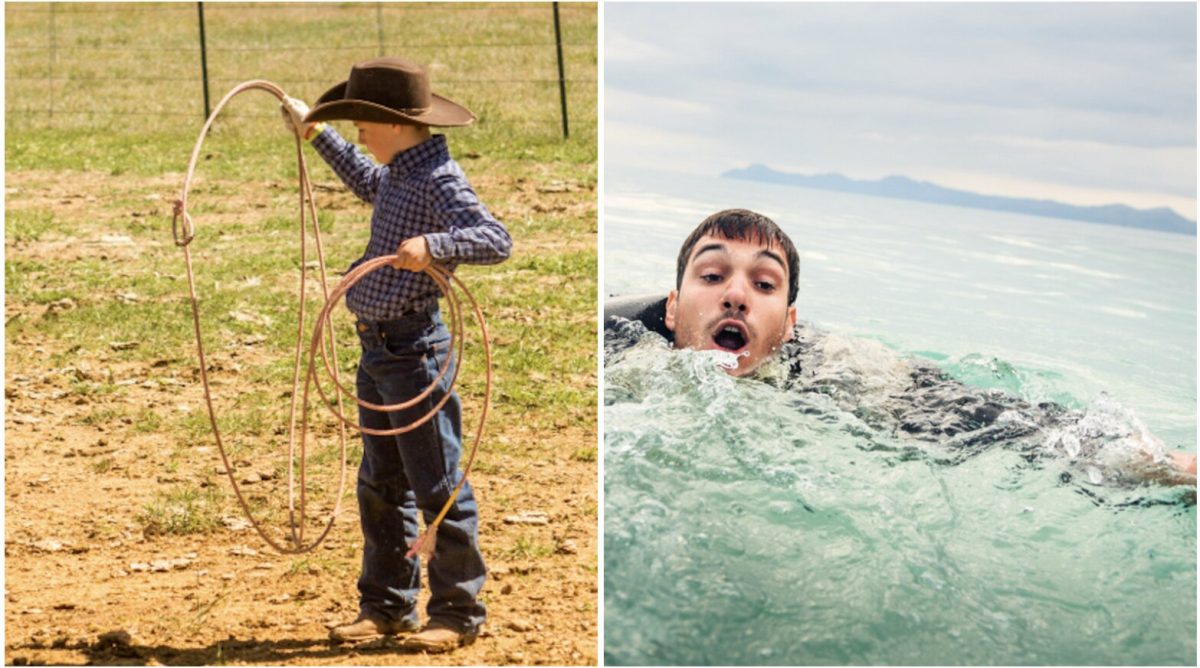
    Fourteen-year-old Jory Thomas was just visiting with his grandparents on their campground near Yellowstone River. Jory had his lariat to practice the roping skills he’d been learning for the past year. That’s when he heard cries for help from the nearby river.

    “We all heard, ‘Help, help,’” Jory said to KTVQ News. “There’s two or three people floating down the river, one hanging on to the cooler, and he wasn’t saying anything.”

    A raft carrying four people crashed into a bridge pillar, knocking them all into the Yellowstone River. While three of them made it to shore, the fourth was drifting quickly downstream as he clung to a cooler. Jory emptied his pockets and grabbed his lariat, immediately rushing to help.

    Practice prepared him for this moment

    “This current was pretty fast then, and he was moving pretty quickly,” said Jory. “Only thing I could focus on was helping him get out of the water because I didn’t want to see anyone go in front of me.”

    Jory had been practicing using a lariat to rope a dummy on his parents’ ranch nearly every afternoon when the weather was fair. Ready for action, Jory ran into the shallower part of the river, getting chest-deep into the water. Letting his training do the work, Jory took his 12-foot lariat and lassoed the drowning man.

    “Luckily, I caught him first try,” he said.

    Jory slowly pulled the man to shore as first responders arrived.

    “I felt pretty good afterwards that I knew he was okay and was out of the water,” he said. “God was basically putting me in the place of all this. God was just telling me all of this at the time and saying, ‘Go get him, you got it, and I believe in you.’”

    Jory’s instinct was to help

    Jory’s family was proud but not too surprised that he leapt into action. To them, being helpful was just Jory being Jory.

    “His first instinct always is to help other people. He’s always been that way,” said Sandy, Thomas’ grandmother. “The whole community is proud of him. We’ve had a lot of feedback, but that’s Jory. He’s always there to help somebody else.”

    “We’ll be in town at the grocery store, and you’ll see an elderly person,” Jase, Jory’s father, told Cowboy State Daily. “They can’t pack the groceries, and he never says a word. He goes over and gets their groceries and packs them out. That’s just who he is.”

    The local police also praised Jory for taking action.

    “My opinion, Jory saved the individual’s life, 100%,” said Sweet Grass County Sheriff Alan Ronneberg. “Had Jory not acted, I believe the chances of this individual making it to shore were very slim.”’

    “Jory saw another in trouble and acted, not for himself but for another,” Ronneberg added. “Jory is a lesson for all of us in this day and age and showed us what is courageous and right.”

Explore More News Stories

Local

Arizona firefighter donates her kidney to a fellow firefighter—her husband

World

After 40 years in a Portuguese circus, elephant retires to become the first resident of a new sanctuary

Local

14-year-old Montana kid rescues a drowning man with his lasso and rodeo skills

Nation

One man’s bad day led to a legacy of love from the ‘Kissing Tree’ for the whole Victoria community