This month heralds the dawn of product placement on British television. For those of you who have been living in blissful, media-free ignorance, product placement is a form of embedded marketing in which companies will spend money to have people on TV and in the movies use their product.

It became commonplace in the United States in the 1980s, and has remained so ever since—hence the reason why American Idol judges drink from Coca-Cola cups, Top Chef contestants rely on Glad products, and characters in the West Wing say lines like: “Good scotch sits in a charcoal barrel for 12 years. Very good scotch gets smoked for 29 years. Johnnie Walker Blue is 60-year-old scotch,” while pouring themselves a drink.


Meanwhile, until just a week ago, things have been very different in the United Kingdom, as The Guardian reports:

Program-makers have to jump through some absurd hoops to avoid featuring products, though it’s done so discreetly you may not have noticed. In dramas a canned drink is always held in such a way that the logo is obscured by the actor’s hand; products appearing in shot during “reality” shows often have their labels obscured in post-production by patches of blur. In both EastEnders and Coronation Street [popular soap operas] where the narrative depends on regular sequences in bars, they have gone as far as to invent their own brands. Avid beer nerd bloggers have spotted Thames Bitter, North Export, Fordham’s Ale, Stolenberg 1940, Holmes Lager, Hopborg, Chambers Best Bitter and Devlins on the pumps at the Queen Vic along with bottled Jenkins or Skoe.

Last Monday, daily news magazine This Morning became the first British TV program to feature a paid-for product: the Nescafé Dolce Gusto Melody II coffeemaker, which retails for about $130 in the United States, and which the company reportedly paid £100,000 ($162,000) to feature on the show over a three-month period.

Reactions in the United Kingdom were mixed, with Guardian readers voting 64 to 36 percent not in favor of the new development, while TV companies, predictably, welcomed the new rule, telling The New York Times that it would give them the “flexibility to respond to changes in the marketplace.”

To get some perspective on the impact and scope of product placement in the United States, and its gradual spread around the rest of the world, I called Morgan Spurlock. Spurlock, who you may recall from his McDonald’s eating adventures in Super Size Me, has just completed a new film, POM Wonderful Presents: The Greatest Movie Ever Sold, all about—and completely financed by—product placement. Our conversation is below.

GOOD: What kinds of changes would you expect to see in the United Kingdom, now that product placement is allowed, based on what you’ve seen in the United States?

Morgan Spurlock: I think the biggest thing that will start to happen is that product placement will begin to influence storylines. It will begin to have an impact on story-tellers’ ability to tell particular stories. Here, in the States, you now have people writing in dialogue where characters are holding up Pepsi cans and mentioning how refreshing they are. It’s completely ridiculous. That sort of influence is the biggest concern from the creative side. And once the floodgates are open, they’re open. I don’t believe that there’s going to be any turning back. It will just become more pervasive and widespread over time.

GOOD: What’s the impact on viewers, apart from distorted storylines?

Spurlock: Ultimately, I think that product placement is just an incredibly subversive form of marketing and advertising. That’s one of the things we really talk about in The Greatest Movie Ever Sold: Product placement is a commercial announcement, but a lot of people don’t realize that they are being marketed to. People in the industry love to say, “Oh no, everybody knows how product placement works and everybody knows it’s happening all the time.” I don’t think that’s 100 percent true.

GOOD: In the United Kingdom, programs that contain examples of product placement have to show a little “P” symbol in the opening credits. How effective do you think that will be in warning viewers?

Spurlock: I think that’s spectacular. In some ways, I wonder, why wouldn’t they just do that here?

But, that said, personally, I don’t think anybody pays attention to these things. You just sort of block all that kind of information out after a certain point. I mean, here in the US, I know those PG-13 or 18 ratings are there but I don’t know the last time that I actually consciously saw one. So I think if they put that “P” rating here in the States, it would be noticeable for roughly two weeks, and then it would be invisible.

GOOD: The United Kingdom has put limitations on the types of products that can receive paid placement in TV programming. Tobacco, alcohol, gambling, foods or drinks that are high in fat, salt or sugar, medicines, and baby milk are all banned under the current legislation. What limitations exist in the United States, if any?

Spurlock: There still are some limitations here. But with alcohol, for example, what will happen a lot of times is that the brands will give away a tremendous amount of product. If you walk up to the back of any prop truck in Hollywood, they’ve got cases and cases of all kinds of beers and liquor that are given to them directly. And then, if they’re doing a bar scene, the prop guy will think, “Great, I’ll put a Budweiser in his hand, because so-and-so gives it to me all the time.” So there’s also that kind of massaged relationship that is behind the curtain and that you don’t see or notice.

In terms of children’s programming, they’ve done a lot to try to curb advertising in the States, but there’s still a lot of open ground. And now, with these incredible powerhouses of entertainment coming out of Disney—things like the Hannah Montana show that have real economic impact in the lives of tweens and their families— I think we’ll start to see an increase in product placement using these stars as a vehicle.

GOOD: What’s the status of product placement globally?

Spurlock: When I premiered the movie at Sundance, I talked to a lot of different filmmakers and they told me that product placement is really starting to happen in their countries too—in France, and all over Europe, in fact. It blew up in the United States and it’s now starting to make its way round the world and into a lot of different entertainment forms.

As commercials continue to get fast forwarded through and as we continue to seek out and consume entertainment in multiple places, the thing is that is constant is that companies making widgets have to figure out a way to let people know about their widgets. I just personally think there’s a better and more creative way to do it than have somebody say “Boy, that’s a great widget!” in the middle of a show. Leave the storytelling to the creative people and let the people who make widgets keep making widgets.

For example, OK Go is a band that’s in my film and State Farm sponsored one of their videos. And at the end of the video, it says, “Brought to you by State Farm.” Nothing else. They didn’t do anything to pitch the product, they didn’t do anything to steer the idea, and ultimately I think they came out looking really great because of that. This is a company that is investing in the talent and that’s it. They have no other say other than associating themselves with someone who they think is going to get eyeballs and say smart, funny things and really engage an audience. For me, I find that to be much more attractive model.

And now, for a little product placement of our own: If you’re curious to learn more, POM Wonderful Presents: The Greatest Movie Ever Sold opens on April 22nd, and should be in wide distribution by the beginning of May.

Images: (1) Pizza Hut in Wayne’s World, back in 1992, via; (2) Coca-Cola in American Idol, via; (3) Nescafé Dolce Gusto coffeemaker placed on British TV, via PSFK; (4) The Greatest Movie Ever Sold poster, via; (5) Budweiser in The Fighter, via Brandcameo; (6) Borders in Wall Street: Money Never Sleeps, via Brandcameo.


  • New York passes SAFE for Kids Act to protect children from social media addiction
    Photo credit: CanvaNew York hopes to improve children's usage of social media.
    ,

    New York passes SAFE for Kids Act to protect children from social media addiction

    New York hopes to curb social media’s access to young kids.

    “Kids and their phones these days” has been a complaint ever since the first cellular phone was introduced. However, there has been growing concern over the amount of time children spend not just on their phone, but scrolling through social media. The state of New York is hoping to address this issue through their finalized SAFE for Kids Act.

    The Stop Addictive Feeds Exploitation (SAFE) for Kids Act aims to hold social media companies more accountable for the time children spend on their apps. It also seeks to limit kids’ exposure to their algorithms. Officials believe that constantly scrolling through social media feeds negatively impacts a child’s sleep and overall mental health.

    What are the restrictions?

    The new law requires social media companies to obey the following rules:

    • No addictive, algorithm-driven feeds for minors without explicit parental consent
    • No notifications about addictive feeds to minors between midnight and 6 a.m. without parental consent
    • No tricky website designs, called “dark patterns,” that manipulate or nag parents into giving consent
    • No degrading service, increasing prices, or retaliating against minors who don’t have parental consent for addictive feeds
    • Use certified age-assurance methods to distinguish minors from adults
    • Immediately encrypt data collected for age verification, use it only for age determination, and delete it immediately after use
    • Hire an accredited, independent third party to test and certify age-assurance methods every year

    Social media companies have until January 25, 2027 to comply. Failure to do so may result in a $5,000 fine per violation.

    New York Governor Kathy Holchul and Attorney General Letitia James made a public announcement to social media companies affected by this law, specifically Instagram, TikTok, YouTube, Facebook, Snapchat, and X.

    “What changes is the default,” said James. “Platforms cannot automatically place minors into feeds engineered to maximize engagement. This is not a question of privacy, this is a question about content. This is not about the First Amendment. Again, this is about protecting children.”

    “Social media companies, you’re now on notice,” said Holchul. 

    Critics and the issues that still need to be addressed

    There are some criticisms of this law, particularly around age-verification. The law offers the option of using government-issued identification along with another proof of identity (such as an email address or an uploaded photo of the user). This complicates things aside from First Amendment rights. It would require millions of adults to share private information to scroll and post on social media after hours. While the law states that the companies must encrypt and erase such information upon age verification, that’s not guaranteed. This is especially concerning as social media companies already deal with users’ private information being hacked and leaked.

    Governor Holchul still believes this criticism isn’t a governmental issue but a business one that social media companies need to resolve.

    “Social media companies tell me, ‘We have no way of knowing whether someone’s under 18 or not,’” Holchul claimed. “I said, ‘You’re smart people. Use [artificial intelligence] to figure it out. Ask how you do it.’ And you’re not supposed to allow underage gaming anyhow—sports betting—so you must have some metric. So don’t tell me you can’t do it. Figure it out.”

    How parents can help their children on social media

    Regardless of where people stand on this law, experts offer some advice for parents who feel social media is negatively affecting their children. They recommend setting personal screen time limits for their children and taking advantage of built-in parental controls on their platforms. Parents limiting their own social media use can also influence how kids use it, too.

    Psychologists also recommend talking with children about how and why they use social media. Specifically, discuss the fantasy that social media showcases from influencers versus the real lives of those people. Talk about why there was a social media post (advertisement, sharing joy, hoping for engagement, etc.) along with the content of it. Asking how they feel after watching or reading content in their feed helps as well. Such practices, along with limiting exposure, creates trust between child and parent without judgement.

    Though how we fix screen and social media addiction is still largely in the air, take comfort knowing brilliant minds are exploring methods to address the growing issue.

  • New Russian research suggests that the human lifespan could be up to 156 years
    Photo credit: CanvaResearchers found what's preventing us from living longer.
    ,

    New Russian research suggests that the human lifespan could be up to 156 years

    Humans can live much longer if certain barriers are addressed.

    According to the Guinness Book of World Records, the oldest person lived to the ripe age of 122 years old. Such a lifespan is an incredible feat, but what if the average person could beat that record by 34 years? Recent research done in Russia has led scientists to believe that the average human lifespan could be up to 156 years.

    The researchers at Skoltech Biomed Technologies Center developed a mathematical model that allowed them to “switch on” a variety of aging mechanisms. This allowed them to calculate a human’s lifespan where mortality risk never increased with age. After experimenting with different scenarios and conditions, they found the biggest barriers to longevity were caused by non-renewable tissues and somatic mutations.

    What are these barriers against longer life?

    Somatic mutations are DNA changes within a cell. They accumulate over time during a human’s life and cannot be reversed with any existing therapy. These DNA errors that pile up in our cells contribute to the aging process.

    Many human organs like the liver and skin continually replace cells and regrow damaged portions of themselves. However, there are two organs that can’t do this: the brain and the heart. Brain tissue (neurons) and heart tissue (cardiomyocytes) cannot regenerate. This proves to be the most prominent biological limit that shortens our lifespans. This explains why issues like dementia and heart disease are prominent causes of death and morbidity later in life. Since those organs’ tissues don’t replace damaged cells, they’re prone to irrevocably decline over time.

    “The key finding of the study is the discovery of substantial differences between tissue types. Neurons and cardiomyocytes, which lack the ability to divide, turned out to be the main limiting factors: when all other causes of aging are eliminated, somatic mutations alone reduce the theoretical median lifespan from 1,759 years (for a hypothetical non-aging human organism) to 156 years,” said Evgeny Efimov, a research intern at the Skoltech Biomed Technologies Center, researcher at AIRI, and one of the key authors of the study.

    This suggests that somatic mutations and DNA damage is what ultimately prevents humans from living indefinitely, even if our brains and hearts regenerated cells like other organs.

    So what’s next?

    Now knowing these biological limitations, the researchers hope to study other areas of aging impacting the human lifespan that could plausibly be reversed. This includes mitochondrial dysfunction, telomere shortening, epigenetic drift, and loss of proteostasis. 

    The hope is to have a clearer priority list of issues for future therapies to tackle. This is not just to possibly extend life, but to improve lives in general. By developing a fully comprehensive theory of aging, Skoltech hopes to pinpoint which aspects of aging are within our scope to address. After all, thoroughly studying each puzzle piece that makes up human life gives us a better understanding of the whole.

    Of course, other impactful factors in a person’s lifespan can be addressed today. As most know, things like diet, sleep, and exercise are among them. A person’s living environment can also negatively impact their lifespan if it doesn’t have clean air, access to clean water, and so on.

    For now, the best method for living long is to follow instructions from your physician. Whether you make it to 156 years or not, living well is best for whatever time you’re given.

  • Woman documents her nephew’s late night culinary quests as the viral ‘Midnight Chef’
    Photo credit: @midnightchef_amir on InstagramAmir Jackson's late night cooking is going viral.
    ,

    Woman documents her nephew’s late night culinary quests as the viral ‘Midnight Chef’

    A 15-year-old cooking late night snacks is inspiring the Internet.

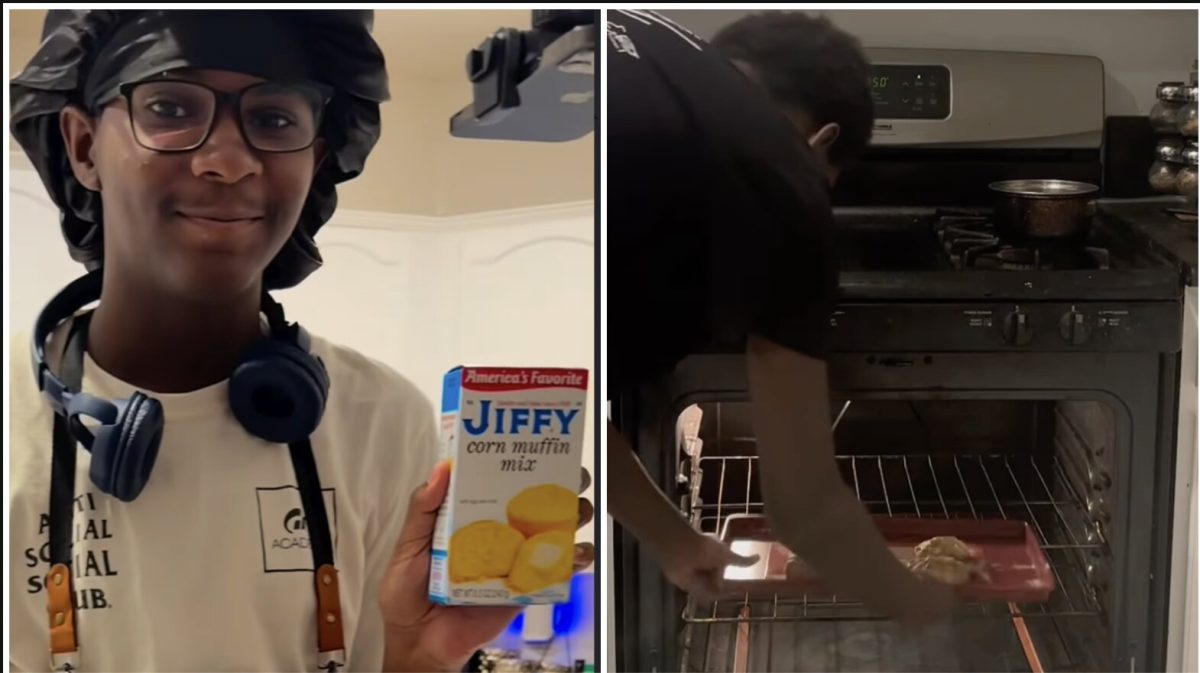
    One night in Apple Valley, California, Morgan Graham rose in the middle of the night. A smell had woken her up. It was pleasant, but at 11:28 p.m. she wasn’t expecting to smell delicious cooking. She went down into the kitchen to see her 15-year-old nephew, Amir Jackson, baking cookies.

    This was the first of several viral videos of Graham’s nephew cooking up a storm late at night. Jackson, who has been staying with his aunt during the summer, is taking advantage of her kitchen to whip up some sumptuous snacks.

    Birth of a Midnight Chef

    Nearly every night, Graham wakes up around midnight to the smell of cookies, cornbread, tacos, or whatever her nephew wants to prepare.

    “I don’t care,” said Graham in the initial video. “He’s very responsible. He’s not gonna burn the house down, so therefore, cook whatever you want.”

    Graham further explained in the video that Jackson looks at recipes daily. He also rummages through her pantry during the day to search for ingredients for his nightly cooking fest. 

    “In his world, he’s having the time of his life. In my world, I just want to stop waking up close to midnight to the smell of food,” Graham joked.

    Graham’s videos featuring her nephew have racked up millions of views on TikTok and Instagram. The commenters soon bestowed the nickname “Midnight Chef” upon Jackson, to general delight. In another video, Jackson explained he liked the peace and quiet of the night while preparing his dishes.

    “I was like, ‘Man, I could go for some cookies right now.’ I saw they had cookie dough, so I started just making them, just randomly,” Jackson told TODAY. “I was trying to make sure nobody was up. My thought process was just like, ‘Man, why not?’”

    Graham is encouraging her nephew to keep cooking even though it wakes her. In fact, Graham set up Jackson’s own Midnight Chef Instagram page for him to post his latest recipes.

    “I just want to experiment while I still got the chance to experiment. I’ll maybe like branch into different fields,” said Jackson. “Explore what I can do while I still got time to.”

    Why do we indulge in late night snacking?

    Jackson’s popularity has brought up a commonly asked question: Why do we crave food randomly in the middle of the night?

    Well, there’s actually a bit of science behind it. Turns out that late night snacking is a result of our circadian rhythm system. As part of our now-defunct survival mechanism, our ancestors would eat large meals at night to store energy in times of famine. This is also why most midnight snackers crave foods higher in fat, salt, and sugar compared to what they’d usually eat during the day. While there’s nothing inherently wrong with late night snacking, it could curb certain health goals if a person is trying to trim down.

    If you find yourself getting up in the middle of the night with a hankering for a snack, it may be worth taking a peek at Jackson’s videos. Who knows what kind of late night cooking it can inspire? Perhaps you’ll become a Midnight Chef yourself.

Explore More Stories

World

After 40 years in a Portuguese circus, elephant retires to become the first resident of a new sanctuary

Public Good

Oakland officials open ‘play-lending library’ to offset the cost of equipment for youth sports

Public Good

After a field trip for 100 low-income kids was canceled, police officer rents a whole movie theater for them

Local

14-year-old Montana kid rescues a drowning man with his lasso and rodeo skills