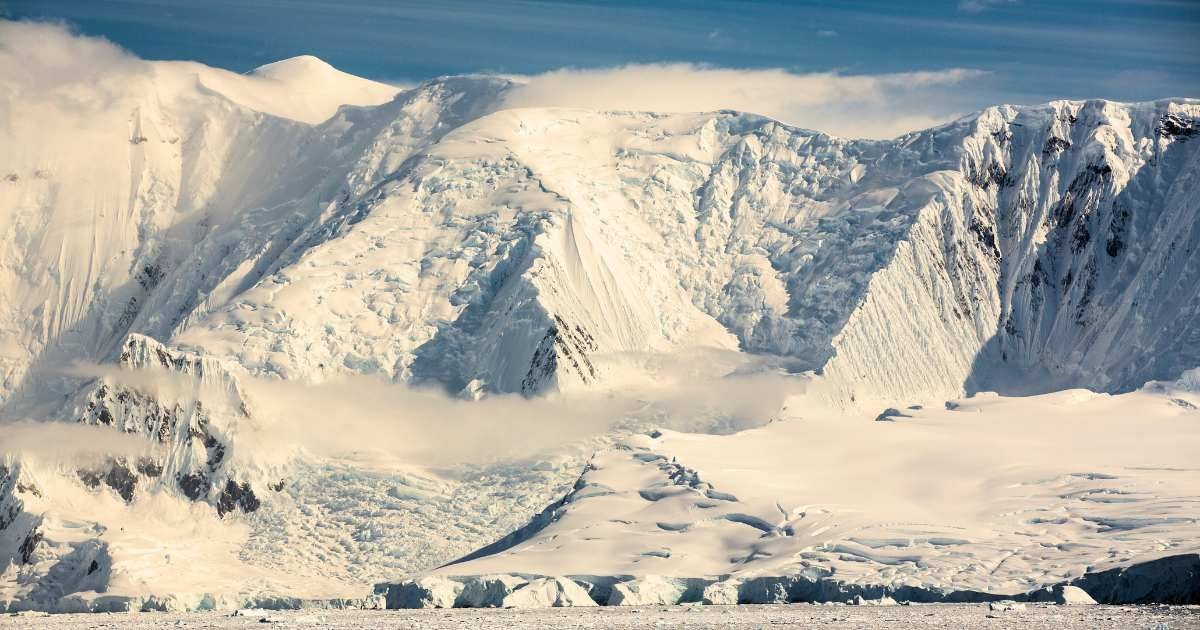
Photo credit: Representative Cover Image Source: The Gerlache Strait separating the Palmer Archipelago from the Antarctic Peninsular off Anvers Island. The Antarctic Peninsular is one of the fastest warming areas of the planet. (Getty Images) – Array
In April 2022, PBS reported that many Miami residents living in waterfront homes were considering relocation due to frequent flooding. At the time, scientists believed it was unlikely that Miami would be severely impacted by sea level rise. But now, those residents may have to follow through on their plans. One of the major drivers of rising sea levels is the Thwaites Glacier in West Antarctica, located roughly 7,000 miles from Miami. During a September 2024 British Antarctic Survey (BAS), a team of US-UK scientists discovered something deeply concerning about the glacier.
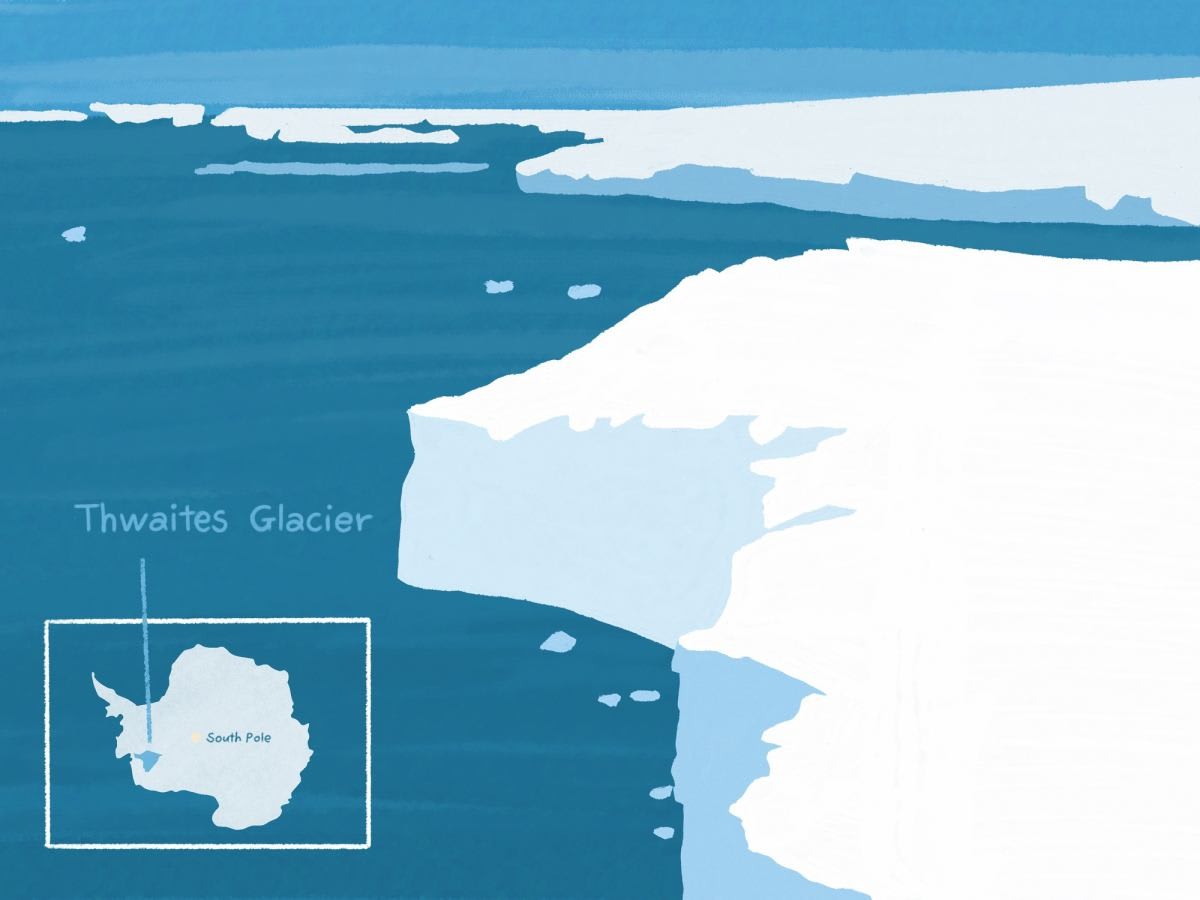
Image Source: Thwaites Glacier in Antarctica, melting due to the climate crisis. (Getty Images)
The researchers warned that the Thwaites Glacier is on the brink of irreversible collapse, posing a catastrophic threat to the world. It is melting so rapidly that scientists estimate the entire Antarctic Ice Sheet could disappear within the next 200 years. Dubbed the “Doomsday Glacier,” Thwaites is not only one of the largest and fastest-changing glaciers but also one of the most dangerous. Its collapse could cause sea levels to rise by 65 centimeters—or potentially even several meters—triggering disastrous consequences for coastal cities around the globe.
Speaking to PBS, glaciologist Kiya Riverman, who has been actively studying Doomsday Glacier for years, said that glaciers usually respond to climate change over a timeframe of a couple of years. This is particularly true in the case of glaciers that are especially weak and vulnerable, and the Doomsday Glacier is one of them. Riverman explained that the ice sheet floating in the ocean acts “like a dam” that holds the bulk volume of water within it. But when this ice experiences cracking and melting, it becomes sensitive and unable to hold that much water, leading to rapid flooding.
Given that the glacier poses a major concern, researchers have been investigating it since 2018 as part of a project called “International Thwaites Glacier Collaboration (ITGC).” In 2019, a team of researchers, including Riverman, used a robot called Icefin to drill a 2,000 feet (600-meter) hole in Thwaites ice, so they could collect images of what was going on beneath the glacial ice. The instrument was supposed to reach at a point where ice met the ocean water. What they found was nothing short of horror.
#ThwaitesGlacier is set to retreat further and faster, affecting all of West Antarctica.
Our latest models predict: ? accelerating ice loss in the 21st/22nd centuries ? collapse of the West Antarctic Ice Sheet in the 23rd
Lurking beneath a hundred-mile-long patch of cracked glacial ice and glassy pieces was a thermal reservoir that threatened the surrounding ice. Adding to this, they discovered a whole new landscape encapsulated under ice. Cracks and crevasses ran down in stairlike formations, piercing deep into the ice sheet. Peter Davis, a researcher, told CNN in 2023 that their study revealed “a very nuanced and complex picture.” However, the rate at which the ice was melting wasn’t that much a figure of concern.
New results give an unexpected view of melting under #ThwaitesGlacier, one of the fastest-changing areas in Antarctica.@GlacierThwaites scientists say melting isn’t even or as fast as feared – but is still rapid in cracks and crevasses.
But the latest revelation has changed all the previous proportions and made the “Doomsday Glacier” a source of worry. “Thwaites has been retreating for more than 80 years, accelerating considerably over the past 30 years, and our findings indicate it is set to retreat further and faster,” Rob Larter from the Science Coordination of the ITGC and a marine geophysicist at BAS, said.
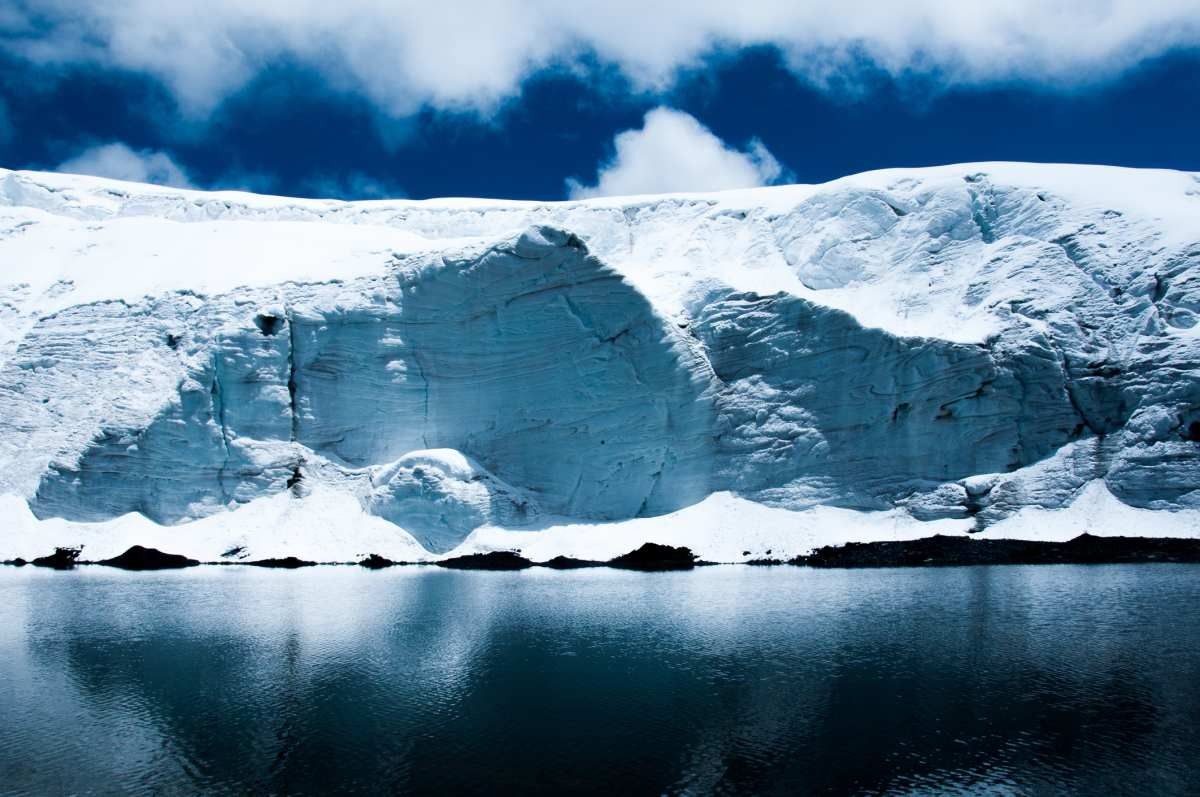
According to BAS, the accelerating melting of this glacier could put hundreds of millions of people on coasts from Bangladesh to low-lying Pacific islands, from New York to London, in danger. “It’s concerning that the latest computer models predict continuing ice loss that will accelerate through the 22nd century and could lead to a widespread collapse of the West Antarctic Ice Sheet in the 23rd,” said Ted Scambos, US science coordinator of the ITGC.

Across Appalachia, rust-colored water seeps from abandoned coal mines, staining rocks orange and coating stream beds with metals. These acidic discharges, known as acid mine drainage, are among the region’s most persistent environmental problems. They disrupt aquatic life, corrode pipes and can contaminate drinking water for decades.
However, hidden in that orange drainage are valuable metals known as rare earth elements that are vital for many technologies the U.S. relies on, including smartphones, wind turbines and military jets. In fact, studies have found that the concentrations of rare earths in acid mine waste can be comparable to the amount in ores mined to extract rare earths.
Scientists estimate that more than 13,700 miles (22,000 kilometers) of U.S. streams, predominantly in Pennsylvania and West Virginia, are contaminated with acid mine discharge.
We and our colleagues at West Virginia University have been working on ways to turn the acid waste in those bright orange creeks into a reliable domestic source for rare earths while also cleaning the water.
Experiments show extraction can work. If states can also sort out who owns that mine waste, the environmental cost of mining might help power a clean energy future.
Rare earths face a supply chain risk
Rare earth elements are a group of 17 metals, also classified as critical minerals, that are considered vital to the nation’s economy or security.
MP Materials’ Mountain Pass Rare Earth Mine and Processing Facility, in California near the Nevada border, is one of the few rare earth mines in the U.S. Tmy350/Wikimedia Commons, CC BY-SA
China controls about 70% of global rare earth production and nearly all refining capacity. This near monopoly gives the Chinese government the power to influence prices, export policies and access to rare earth elements. China has used that power in trade disputes as recently as 2025.
The United States, which currently imports about 80% of the rare earth elements it uses, sees China’s control over these critical minerals as a risk and has made locating domestic sources a national priority.
The U.S. Geological Survey has been mapping locations for potential rare earth mining, shown in pink. But it takes years to explore a locations and then get a mine up and running. USGS
Although the U.S. Geological Survey has been mapping potential locations for extracting rare earth elements, getting from exploration to production takes years. That’s why unconventional sources, like extracting rare earth elements from acid mine waste, are drawing interest.
Turning a mine waste problem into a solution
Acid mine drainage forms when sulfide minerals, such as pyrite, are exposed to air during mining. This creates sulfuric acid, which then dissolves heavy metals such as copper, lead and mercury from surrounding rock. The metals end up in groundwater and creeks, where iron in the mix gives the water an orange color.
Expensive treatment systems can neutralize the acid, with the dissolved metals settling into an orange sludge in treatment ponds.
For decades, that sludge was treated as hazardous waste and hauled to landfills. But scientists at West Virginia University and the National Energy Technology Laboratory have found that it contains concentrations of rare earth elements comparable to those found in mined ores. These elements are also easier to extract from acid mine waste because the acidic water has already released them from the surrounding rock.
Acid mine drainage flowing into Decker’s Creek in Morgantown, West Virginia, in 2024. Helene Nguemgaing
Experiments have shown how the metals can be extracted: Researchers collected sludge, separated out rare earth elements using water-safe chemistry, and then returned the cleaner water to nearby streams.
It is like mining without digging, turning something harmful into a useful resource. If scaled up, this process could lower cleanup costs, create local jobs and strengthen America’s supply of materials needed for renewable energy and high-tech manufacturing.
But there’s a problem: Who owns the recovered minerals?
The ownership question
Traditional mining law covers minerals underground, not those extracted from water naturally running off abandoned mine sites.
Nonprofit watershed groups that treat mine waste to clean up the water often receive public funding meant solely for environmental cleanup. If these groups start selling recovered rare earth elements, they could generate revenue for more stream cleanup projects, but they might also risk violating grant terms or nonprofit rules.
To better understand the policy challenges, we surveyed mine water treatment operators across Pennsylvania and West Virginia. The majority of treatment systems were under landowner agreements in which the operators had no permanent property rights. Most operators said “ownership uncertainty” was one of the biggest barriers to investment in the recovery of rare earth elements, projects that can cost millions of dollars.
Not surprisingly, water treatment operators who owned the land where treatment was taking place were much more likely to be interested in rare earth element extraction.
Map of acid mine drainage sites in West Virginia. Created by Helene Nguemgaing, based on data from West Virginia Department of Environmental Protection, West Virginia Office of GIS Coordination, and U.S. Geological Survey
West Virginia took steps in 2022 to boost rare earth recovery, innovation and cleanup of acid mine drainage. A new law gives ownership of recovered rare earth elements to whoever extracts them. So far, the law has not been applied to large-scale projects.
Across the border, Pennsylvania’s Environmental Good Samaritan Act protects volunteers who treat mine water from liability but says nothing about ownership.
Map of acid mine drainage sites in Pennsylvania. Created by Helene Nguemgaing, based on data from Pennsylvania Spatial Data Access
This difference matters. Clear rules like West Virginia’s provide greater certainty, while the lack of guidance in Pennsylvania can leave companies and nonprofits hesitant about undertaking expensive recovery projects. Among the treatment operators we surveyed, interest in rare earth element extraction was twice as high in West Virginia than in Pennsylvania.
The economics of waste to value
Recovering rare earth elements from mine water won’t replace conventional mining. The quantities available at drainage sites are far smaller than those produced by large mines, even though the concentration can be just as high, and the technology to extract them from mine waste is still developing.
Still, the use of mine waste offers a promising way to supplement the supply of rare earth elements with a domestic source and help offset environmental costs while cleaning up polluted streams.
Early studies suggest that recovering rare earth elements using technologies being developed today could be profitable, particularly when the projects also recover additional critical materials, such as cobalt and manganese, which are used in industrial processes and batteries. Extraction methods are improving, too, making the process safer, cleaner and cheaper.
Treating acid mine drainage and extracting its valuable rare earth elements offers a way to transform pollution into prosperity. Creating policies that clarify ownership, investing in research and supporting responsible recovery could ensure that Appalachian communities benefit from this new chapter, one in which cleanup and clean energy advance together.
Photo credit: Mickey Pullen/Smithsonian Environmental Research Center –
A long-running experiment is testing tree mixes to develop the healthiest forests.
Around the world, people plan to plant more than 1 trillion trees this decade in an ambitious effort to slow climate change and reduce biodiversity loss. But if the past is prologue, many of those planted trees won’t survive. And if they do, they could end up as biological deserts that lack the richness and resilience of healthy forests.
However, many tree-planting commitments have a critical flaw: They rely too heavily on monoculture plantations – vast areas planted with just a single tree species.
A grove of commercially grown poplar trees, planted in lines with not much active beneath them. Mint Images via Getty Images
Rather than gambling on a single species and hoping for the best, science now points to a smarter path that captures both ecological and economic benefits while minimizing risk: mixed-species plantings that mirror the biodiversity of a natural forest, ultimately creating forests that grow faster and are more resilient in the face of constant threats.
The long-running BiodiversiTREE study compares forest plots containing several tree species with single-species monocultures. The results, illustrated here, show that mixed-species plots, right, produce 80% larger trees compared with monocultures, left, resulting in denser canopy growth that creates cooler understory microclimates, leading to more abundant and species-rich communities of insects, spiders and birds. Sergio Ibarra/Smithsonian Environmental Research Center
We are community and landscape ecologists at the Smithsonian Environmental Research Center. Since 2013, we and our colleagues have been rigorously testing this idea in a large, ecosystem-scale experiment called BiodiversiTREE. The verdict is striking: Trees in mixed forests don’t just survive – they outgrow their monoculture counterparts and support dramatically more biodiversity.
Trees with diverse neighbors grow larger
Thirteen years ago, we teamed up with volunteers to plant nearly 18,000 tree seedlings on 60 acres of fallow fields on the Smithsonian Environmental Research Center campus near the Chesapeake Bay.
We didn’t plant just a single species. We planted 16 different native species from all walks of tree-life. Some species were fast-growing timber species, some were mid-story species, and some were slow-growing species that might not reach full size for a century or more.
Some plots we planted with just a single species – homogenous rows of the same species over and over again. But others were planted with random allotments of four and 12 species, reflecting the middle and upper ends of tree diversity in similar-sized areas of our local forests.
We asked a simple question: What would happen if we tried to mirror nature and plant a mixture of species instead of a monoculture?
A drone image shows some of the BiodiversiTREE plots, including monocultures, outlined in white, and mixture plantings, outlined in green. Mickey Pullen/Smithsonian Environmental Research Center
The monoculture plots – those that survived – resemble traditional plantation forestry that historically has dominated rural lands in the Southeast and Pacific Northwest in the U.S. They contain rows of tall, narrow trees with sparse canopies and little life below.
The mixed-species plots, by contrast, are layered, complex and dynamic, with foliage filling the canopy and a diversity of plants and animals thriving underneath.
These visual contrasts reflect real ecological gains. Trees grown in mixtures, including important timber species like poplar and red oak, are up to 80% larger than the same species when grown alone. Mixed plots supported fewer leaf pathogens, more abundant caterpillar communities that provide food for birds, and increased phytochemical diversity in their leaves. We hypothesize that these leaf chemicals, some of which deter animals from eating them, reduced browsing damage from hungry deer, ultimately leading to higher tree growth in the mixed plots.
Plots with several tree species also had much fuller, denser leaf canopies, leading to cooler, shadier conditions that help understory plants flourish and support up to 50% more insects, spiders and birds.
The fuller canopy of 12-species forest plots like the one above supports more insects and birds than the monoculture plots. John Parker/Smithsonian Environmental Research CenterA sycamore monoculture plot at the BiodiversiTREE project provides little canopy cover. John Parker/Smithsonian Environmental Research Center
This pattern isn’t unique to our site. The BiodiversiTREE project is part of TreeDivNet, a global network of large-scale experiments spanning more than 1.2 million trees and hundreds of species. Across continents and climates, the results are consistent: Forests with a mix of species tend to grow larger, store more carbon and better withstand stress from drought, pests and disease.
So why are monocultures still common?
Despite decades of evidence, mixed-species plantings remain relatively rare in practice. Most commercial forestry operations still rely on monocultures, and these plantations are counted toward international planting campaigns aimed at slowing climate change and reversing biodiversity loss.
Technician Shelley Bennett uses high-resolution GPS to lay out plots for an experiment at the Smithsonian Environmental Research Center in Maryland. Regan Todd/Smithsonian Environmental Research Center
A new experiment at the Smithsonian Environmental Research Center called “Functional Forests” aims to bridge some of the gaps between science and practice. We’re developing intentionally designed combinations of trees to test whether specific mixtures of species can contribute ecological benefits while also providing timber and other services that humans need to support a thriving, sustainable economy.
Each of the 20 tree species in the Functional Forests project was chosen to provide one or more benefits, including timber, wildlife habitat, food for people, resistance to deer and climate resilience. But no single species provides all of these benefits.
Some of the nearly 200 plots will contain a single species, while others include carefully selected combinations of five species assembled based on the functions they provide. Some plots are protected from deer browsing, while others are left exposed.
The Functional Forests project includes trees with edible fruits like the pawpaw (Asimina triloba), one of 20 different tree species being planted there. Jamie Pullen/Smithsonian Environmental Research Center
By comparing these approaches, we can test how different planting strategies perform across a range of goals, from timber production to food production and from biodiversity to climate resilience.
Landowners and communities have different priorities, whether that’s producing wood, supporting wildlife or creating forests that can withstand a changing climate. The idea behind Functional Forests is to design plantings that can deliver these multiple benefits all at once, rather than optimizing for just one, essentially leveraging the positive effects of biodiversity to achieve real-world goals.
Planting 1 trillion trees wisely
The stakes are high. Restoration has become a major global investment, with hundreds of billions of dollars already being spent annually. Getting it wrong means wasted resources and missed opportunities to address some of the most pressing environmental challenges of our time.
If the world is going to plant a trillion trees, we believe it needs to do more than just put seedlings in the ground. It needs to rethink what a forest should be.
The goal isn’t just to grow trees. It’s to grow forests that last.
Plastic pollution has been a serious problem since the rise of fossil fuel-based manufacturing. As tiny plastic particles find their way into something as essential as drinking water, the world needs a solution quickly.
The answer may be simpler than we expect. Researchers testing a salt-based extract from Moringa oliefera seeds were able to remove over 98% of microplastics from drinking water. The study published in ACS Omega showed that the simple filtration system could be adapted for water treatment facilities at a lower cost and requires less energy.
A father shares drinking water with his son. Photo credit Canva
‘Miracle Tree’ produces miracle seeds
The Moringa oleifera is a tropical tree native to parts of South Asia. Today, it’s cultivated on a global scale. Thriving in harsh, drought-prone regions, this “miracle tree” has been used to treat hundreds of conditions. Healthline reported that it contains 90+ bioactive compounds that help combat everything from inflammation to stress. A 2023 study in MDPI showed medicinal properties could be utilized in nearly every part of the tree, from its leaves to its roots.
However, the solution to the plastic problem comes from its seeds. Researchers ground and mixed the seeds with a salt solution to pull out positively charged proteins. This mix attracts impurities, including microplastics, like a natural magnet. Clumping and binding with the impurities in a process called “coagulation,” they then sink to the bottom.
Microplastics on top of a father’s and a daughter’s fingers. Photo credit Canva
Microplastics removed from drinking water
Researchers tested this plant-based method against the industry-standard chemical alum: aluminium sulfate. The moringa extract worked across a wider range of conditions than alum, demonstrating reliability in real-world applications. As concerns grow over the long-term impact of chemicals used in water treatment, there is a clear need to shift toward safer alternatives.
Simplifying the filtration process can significantly reduce both costs and energy demands typically required on an industrial level. This approach enables communities lacking resources to have an effective solution for plastic pollution.
An industrial water treatment plant. Photo credit Canva
Treating plastic pollution is a global problem
Developing countries face major environmental and health threats from plastic pollution. A 2024 study in Science Direct showed 60% of global plastic consumption and production comes from countries lacking proper quality control. A 2023 study in MDPI revealed that even where infrastructure exists, it’s limited and overwhelmed. Facing 120 million tons of waste annually, the situation suggests pollution is widespread and underreported.
Offering a cheap and efficient option, Moringa oliefera seeds could be an invaluable solution. But it’s still not a perfect system. The seed extract is an organic material. That means proteins and fats can remain in the water after filtration.
A 2025 study in Scientific Reports found organic matter reacting with disinfectants like chlorine is linked to health risks, including cancer. Also, stored water would be susceptible to bacterial regrowth and become contaminated over time. Researchers on the study believe this is an area of ongoing work that requires more research.
Microplastics are everywhere. With inconsistent water treatment, less monitoring, and weaker waste systems, exposure is high and poorly controlled. Moringa oleifera isn’t a flawless fix, but it’s a promising study. The seeds could eventually work alongside modern systems, bringing us closer to tackling the complex problem of plastic pollution in our water.