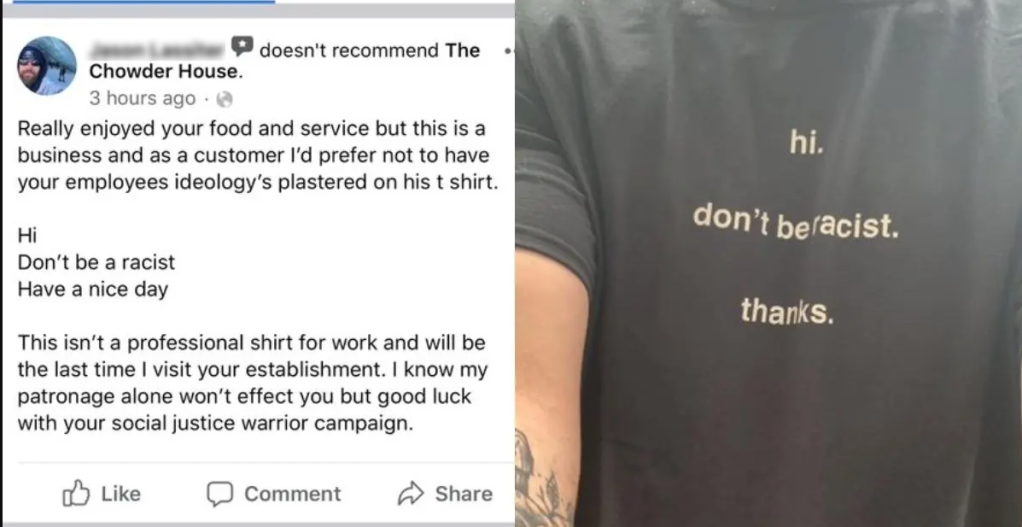
When a customer left a negative review of a restaurant because of a server’s shirt that said “Hi. Don’t be racist. Thanks,” he probably didn’t expect the internet to clap back quite this hard.

The incident took place at The Chowder House in Fairbanks, Alaska, where a server—who goes by @bryantinak on X—wore a shirt carrying that short and powerful message. After the review was posted, @bryantinak shared it on social media along with a selfie in the now-famous shirt. “Someone complained about me wearing my favorite shirt today on our Facebook page, now I can’t wear it at work anymore :.(,” they wrote.

The reviewer, Jason Lassiter, complained, “As a customer I’d prefer not to have your employees’ ideologies plastered on his t-shirt… This isn’t a professional shirt for work and will be the last time I visit your establishment.”


That might’ve been the end of it—except the internet had other plans.

“Someone complained about me wearing my favorite shirt today on our Facebook page, now I can’t wear it at work anymore :.(“
— @bryantinak

As soon as Lassiter’s review hit Facebook, commenters began roasting him for taking issue with a message as basic as “don’t be racist.” According to @bryantinak, “So many people direct messaged the guy that he deleted his bad review.”

anti-racism, restaurant review, fairbanks alaska, viral tweet, social justice, etsy shirts, black-owned businesses, racism, chowder house, positive backlash
Ashamed man hides media1.tenor.com

Some couldn’t help but point out the irony of calling a shirt that politely discourages racism “unprofessional.” One user wrote, “That’s actually an extremely professional shirt. How much more professional can you get?”

What made things more confusing was that @bryantinak initially thought they were being reprimanded by management for wearing the shirt—understandably so, given the timing of the comment during a busy shift. But they later clarified:

“Talked to my bosses. They were upset at the customer for making an absurd complaint… They have no problem with me wearing the shirt and actually urge me to continue to if I wish to do so.”
— @bryantinak

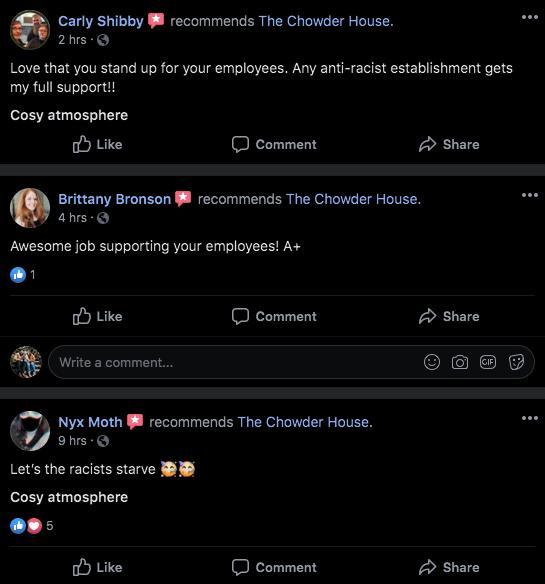
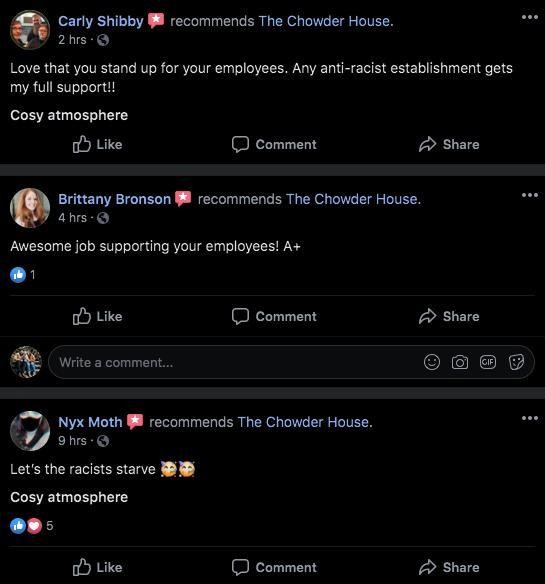
That’s when the tide really turned. Not only did Lassiter’s comment disappear, but The Chowder House’s Facebook page began receiving a flood of positive reviews. One person wrote, “Great place. Lets its employees be decent human beings.”
anti-racism, restaurant review, fairbanks alaska, viral tweet, social justice, etsy shirts, black-owned businesses, racism, chowder house, positive backlash
Commenters had thoughts Reddit

Another praised the food and the message: “Came for the anti-racism, stayed for the chowder… I had delicious racism-free salmon chowder and I’ll certainly be back next time I visit.”

“Came for the anti-racism, stayed for the chowder.”
— Facebook reviewer

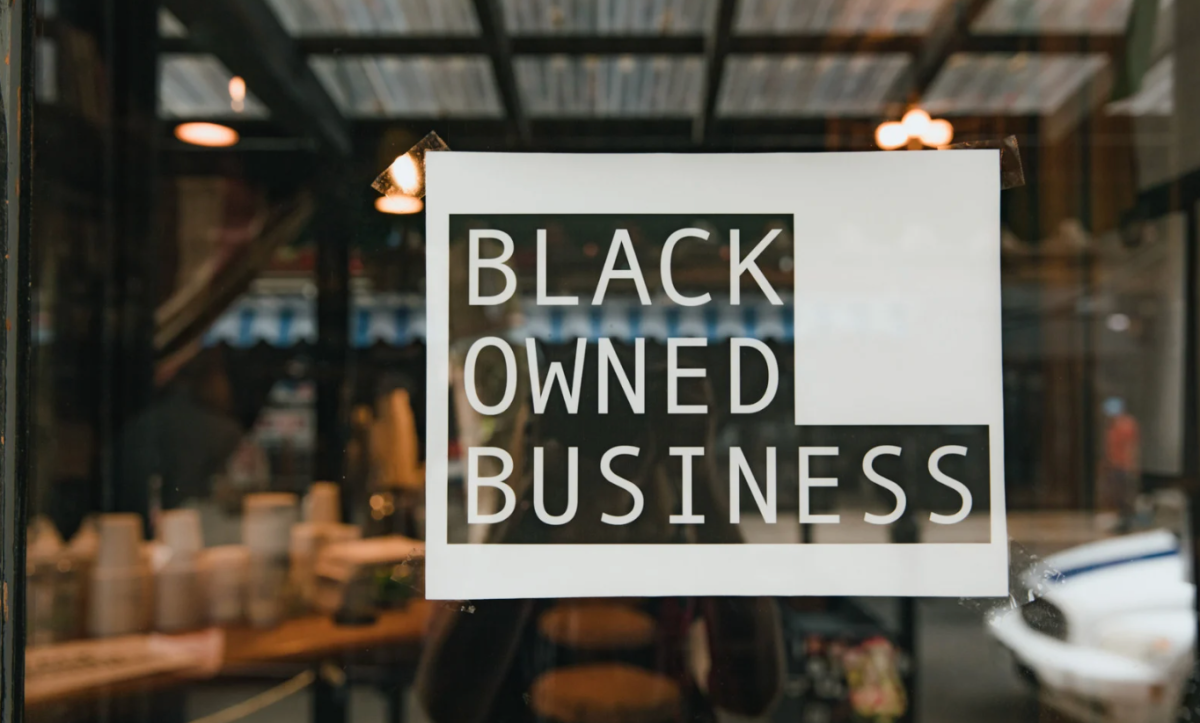
@bryantinak mentioned they originally got the shirt from an Etsy shop, but that it seemed like “some fast fashion Etsy bulls–t.” They recommended instead buying similar designs from Black-owned businesses and even shared links to several apparel fundraisers and activist shops.
black owned business, anti-racism, restaurant review, fairbanks alaska, viral tweet, social justice
Black owned business sign Canva

The backlash to Lassiter’s review raises an important point—why is saying “don’t be racist” considered “ideological” or “controversial” by some people? If a simple request for basic human decency reads as offensive, it’s worth pausing to consider why.

Thankfully, it sounds like The Chowder House knows where it stands. And so does its staff.

This article originally appeared five years ago.
  • Psychotherapist explains why Gen Z slang may be harder to decode than previous generations
    Photo credit: CanvaGen Z attached to their phones.

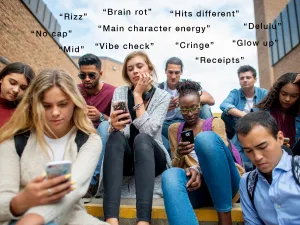
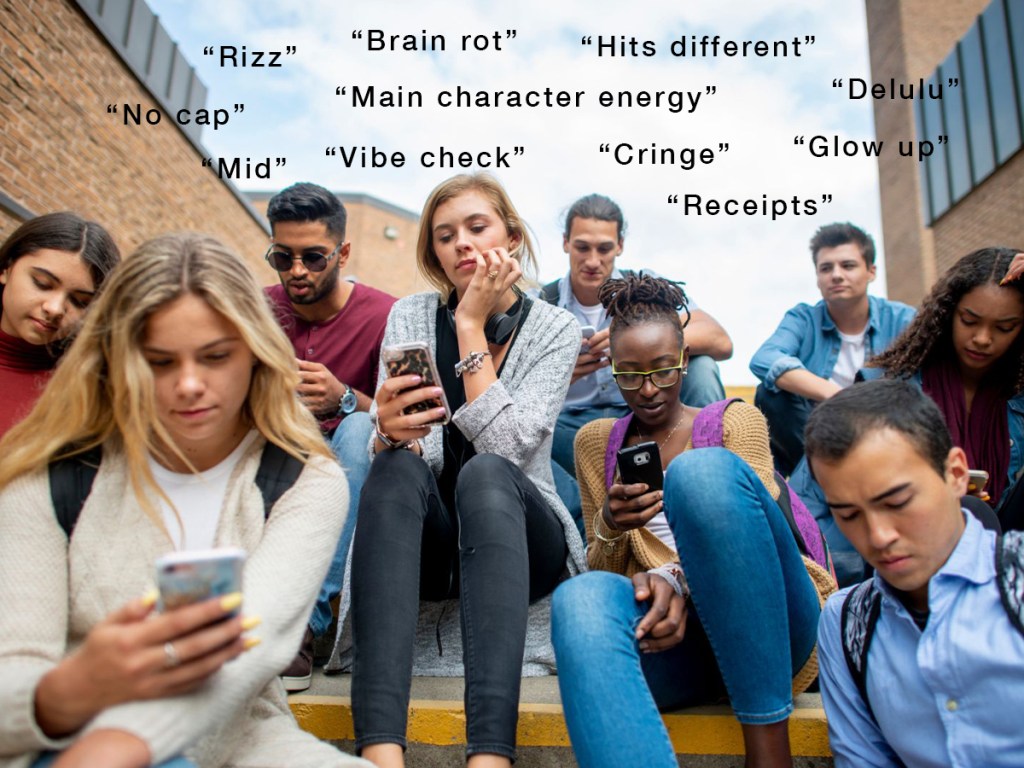
    Phrases like “that’s mid” or “no cap, sus” are common forms of slang used by Gen Z. Even when words might be technically familiar, conversations with teenagers can feel like there’s a real barrier to entry.

    According to Duygu Balan, a psychotherapist and mother of a teen, Gen Z slang is harder for many adults to decode because the language is emotionally layered and evolves rapidly online. In a recent story for Psychology Today, Balan explained that slang serves as a social signal separating one generation from the previous one, but digital culture has accelerated the process.

    emotional slang, digital language, social media slang, youth language
    A woman is confused at her computer.
    Photo credit Canva

    Slang evolving in real time

    Every age group develops informal language to signal belonging and shared cultural understanding. But the way slang spreads and functions today has changed dramatically.

    Digital platforms like TikTok, Instagram, Discord, YouTube, and Snapchat have language transforming in real time. A phrase can appear in a viral post, be remixed by thousands of users, and shift definition within days. By the time it navigates to general consumption, the meaning might have evolved again.

    Speed is only part of the story

    The way slang quickly changes is only part of the story. What makes Gen Z slang even harder to decode is that it often compresses emotional meaning into short phrases. These terms do more than describe something. They signal how it feels.

    In fast-moving digital environments, where attention spans are short and communication happens through texts and memes, this kind of conversation becomes incredibly efficient,” shared Balan.

    A 2024 study in Springer Nature Link explained that with shrinking attention spans and the evolution of reaction-based commentary, complex messages are conveyed through shorter expressions.

    Gen Z slang compresses emotional reactions

    Young people use digital shorthand to express emotion quickly. Social media relies on fast interpretation, and specific slang allows people to share tone, identity, and attitude instantly.

    Many of these phrases are used to compress complicated feelings such as discomfort, anxiety, longing, sadness, and skepticism into bite-sized constructs that can be communicated in seconds,” Balan adds.

    Irony plays a major role in Gen Z slang. Expressions can blur sincerity, making it difficult to tell what is meant literally and what is meant playfully. A phrase can carry real emotional weight framed as a joke, allowing the speaker to maintain distance.

    The phrase “brain rot” captures how it feels when the mind becomes overly stimulated. “Delulu” is short for delusional, and it’s a playful way to describe a person’s hopeful thinking. Another common slang term, “low-key,” allows someone to agree without fully committing.

    Trying to interpret these terms can take time and patience since context means so much with them.

    These phrases are not meant to be clearly translated, so they aren’t. They stem from experiences that someone who wasn’t born with an iPhone in their hand will never fully understand,” explains Balan.

    slang psychology, complex feelings, compressed ideas, social media
    Gen Z plays for the camera.
    Photo credit Canva

    Slang that signals peer approval

    Historically, slang remained consistent long enough for people outside a generation to eventually understand. Today’s slang is far more situational, shaped by online culture and social context. Words like “radical” once meant something was cool. Meanwhile, a term like “sick” not only signals it’s good, but also conveys social meaning, such as admiration from peers.

    This helps explain why adults often find Gen Z slang harder to decode. The challenge is not only vocabulary, but the combination of context, irony, emotional layering, and rapid evolution. Slang words now mean looking past the surface of the reference and paying more attention to the weight of the feelings underneath.

  • A Cornell study says smart people are less likely to hide behind corporate buzzwords
    Photo credit: CanvaA man meditates at the center of a work meeting.

    If you ever sat through a business meeting where someone calls out, “We need to circle back and socialize this cross-functionally,” and thought, “You could have just said let’s talk more before deciding anything,” congratulations: science is on your side.

    A new study from Cornell University suggests that people who are less impressed by corporate jargon may actually think more clearly and make better decisions. Cognitive psychologist Shane Littrel introduced something called a Corporate Bullshit Receptivity Scale (CBSR), which is exactly as amazing as it sounds.

    business meeting, leadership, critical thinkers
    A woman leading the business meeting is unimpressed.
    Photo credit Canva

    Strongest thinkers in the room

    The study, published in the Journal of Personality and Individual Differences, examined how workers responded to vague corporate language intended to sound impressive. The research revealed that people who rate jargon-heavy phrases as especially “profound” or “informative” also tended to score lower on analytical thinking and workplace decision making.

    In other words, the people most impressed by phrases like “all hands on deck” and “this is mission critical” probably aren’t the strongest thinkers in the room. Anyone who’s ever rolled their eyes during a meeting full of corporate buzzwords and thought, “This is nonsense,” the findings are validating.

    confusion, terminology, clarification, jargon
    A boring meeting.
    Photo credit Canva

    Why some people are impressed by buzzwords

    The CBSR scale was created to measure how easily people are impressed by polished but meaningless corporate language. In a story for the Cornell Chronicle, Littrell described this workplace talk as “a specific style of communication that uses confusing, abstract buzzwords in a functionally misleading way.” He added, “Unlike technical jargon, which can sometimes make office communication a little easier, corporate bullshit confuses rather than clarifies. It may sound impressive, but it is semantically empty.”

    What’s perhaps more troubling is that coworkers, the most susceptible to the BS, rated supervisors higher. They also reported improved job satisfaction and were more likely to spread it themselves. A reality that helps explain why this language survives.

    Every profession has terminology that serves a purpose. Doctors or engineers use specialized language because precision matters. However, language designed to sound strategic only makes the feebleminded happy, according to the study.

    frustration, translation, professionalism
    Receiving a frustrating email.
    Photo credit Canva

    The study validates relatable frustration

    The Cornell study validates a frustration that many workers have struggled with throughout their careers. People can tell the difference between someone trying to explain something and someone trying to sound important.

    A 2022 study in Springer Nature Link found that clarity improves comprehension. Experts who truly grasp a topic are far better at translating it. The people who communicate the most clearly are often those who understand what’s going on the best.

    The World Economic Forum shared a survey of 1,000 American workers, which found widespread irritation with corporate buzzwords. More than a quarter of the workers reported hearing corporate jargon every day. People generally found these interactions more annoying and less professional.

    celebrating, research, clarity, honesty
    Celebrating at work with a High 5.
    Photo credit Canva

    Potential benefits of implementing CBSR

    Implementing tools like CBSR may help companies recognize communication habits that aren’t working. It offers a measurable way to examine how incorporating shorthand speech affects decision-making. In theory, the scale could encourage workplaces to prioritize clarity over sounding impressive.

    If organizations become more aware of how often buzzwords replace direct communication, they can reduce misunderstandings while building trust between employees and leadership. Language influences the perception of leadership. When the critical thinkers secretly revolt over current expectations and practices, that’s probably a real problem.

    For people exhausted by an endless procession of buzzword-filled meetings, the research suggests that the annoyance probably comes from valuing plain English and practical thinking. Simply put, sometimes the smartest response is asking people to say what they really mean.

Explore More Civic Life Stories

Civic Life

Psychotherapist explains why Gen Z slang may be harder to decode than previous generations

Civic Life

A Cornell study says smart people are less likely to hide behind corporate buzzwords

Society

Teens aren’t as disengaged as you may think: What adults get wrong about adolescents’ civic contributions

Civic Life

17 everyday things we do now that the future will find utterly bizarre