
There are few greater feelings than the sense of heartfelt gratitude to another human being who has done you a solid. Sincere thanks and reciprocation are part of the glue that binds us in human relationships.

But sometimes you’re just not feeling it. You know that you have benefited from what someone has done for you, but you don’t really feel grateful to them for doing it. Most teenagers go through this period with their parents. Maybe you take your partner or colleague for granted.

For me, 14 years ago, it was my mother-in-law. She had upended her life to move from South Dakota to California to live with my wife and me to assist with childcare after our daughter was born; no other source of childcare fit with our demanding work schedules and my commute. She made a huge sacrifice that transformed our lives, but there were moments when I really struggled to feel grateful.

Since that time, I’ve come to devote much of my research as a philosopher to studying how the way that we interpret each other as people shapes our relationships. That work has helped me to understand why I struggled to be grateful – and taught me a little bit about how to do better.

Personal gratitude

I’ve found that the hardest part of feeling grateful to someone is the “to” part. It is one thing to be impersonally grateful that something happened and another thing to be personally grateful to someone for doing it. These are not the same.

Both forms of gratitude require seeing something as a benefit. And they both require a humble recognition of how easily things could have been otherwise. When the rain ends a drought, an atheist can feel grateful that the tomatoes will survive. But the atheist isn’t grateful “to” anyone for the rain.

A line of around a dozen men wearing white sarongs stand in waist-high water, holding their hands up in prayer.
Priests offer prayers to Varuna, the Hindu god of rain, as they stand in the Osman Sagar on the outskirts of Hyderabad, India, on July 16, 2013. AP Photo/Mahesh Kumar A

Personal gratitude requires more than impersonal gratitude. It is an example of what the philosopher Peter Strawson calls a “participant” attitude: an attitude that we have toward people, but not toward things. And a large theme in my work is that participant attitudes such as gratitude involve giving someone credit for what the attitude responds to.

But which benefits we give people credit for is complicated. As philosophers such as Tony Manela have argued, actions motivated primarily by money, self-interest or insecurity don’t merit personal gratitude, even when they benefit you. Actions motivated by love, generosity or concern, on the other hand – or other “pro-social” motives – do.

Sometimes people fail to feel gratitude because they take someone for granted, not noticing how easily they could have done otherwise. This wasn’t my problem with my mother-in-law. It was obvious that she didn’t have to move across the country to live with us.

But it was hard to avoid noticing that she had always wanted to live in California. Sometimes it is hard to feel grateful because of how we interpret someone’s motives. They could have done otherwise, but we don’t think their action was really “about us.”

Bad motives are easy to find

Sometimes ungenerous motives can help people to be generous. Your child’s kindergarten teacher isn’t a volunteer. They may be a naturally generous person – but still, they probably wouldn’t be working with your child on spelling, arithmetic and handling adversity if they weren’t getting a paycheck.

It’s still appropriate to be grateful to them. Their financial incentive to show up for work enables their generosity, rather than competing with it.

A row of young children sit on the floor, clapping, as they face a seated teacher in a striped yellow shirt.
Your child’s teacher might be generous, but their job enables them to act on that generosity every day. svetikd/E+ via Getty Images

Elementary school teachers are not alone. After all, people’s decisions are often driven by many factors: some that merit gratitude and others that don’t. So if you go looking for selfish motives, you are bound to find some.

Take your partner, for example. They do something that benefits you: buying you flowers, filling your tank with gas or finally taking their turn to wash the dishes. They are partly motivated by generosity, love or communal spirit. But, as in any close relationship, sometimes they may be hoping to get something out of it: reciprocation, maybe, or getting you off their back.

It matters which of these you interpret as their “true” motive: Seeing it one way opens you up to gratitude, while the other precludes it.

What are ‘true’ motives?

The distinction between someone’s “true” motive and the other motives that enable it looks like the distinction between causes and enabling conditions. For example, when you drop a wine glass, the fragility of the glass enables the drop to cause the break, but it isn’t itself a cause of the break – the drop is.

In the case of the falling glass, there’s a clear, objective answer to what caused the break and what merely enabled it. But I believe that relating to people is deeply different than understanding physical things.

The key question in whether to be grateful to someone isn’t about which motives count as “causes.” It is about which cause we need to bring into focus in order to see the other person more clearly for who they are.

See it their way

In other words, it’s at least partly a matter of perspective. If someone does you a favor, but you know they’re hoping for something in return, you can see that as their “true” motive. But you don’t have to see it that way. Instead, you could see that motive as the condition they need for their generosity to thrive.

Shifting perspectives isn’t easy. When you’re doubting someone’s motives, their lack of generosity can feel obvious. But it helps to remember that people tend to believe they’re acting generously. If you want to respond with gratitude, try seeing them as they see themselves.

What if that doesn’t work?

Well, the next best thing to being grateful to someone is being grateful for them. Starting there is a good way to remind yourself of why you value this relations

This article originally appeared on The Conversation. You can read it here.
  • A connection to nature fuels well‑being worldwide, according to a study of 38,000 people
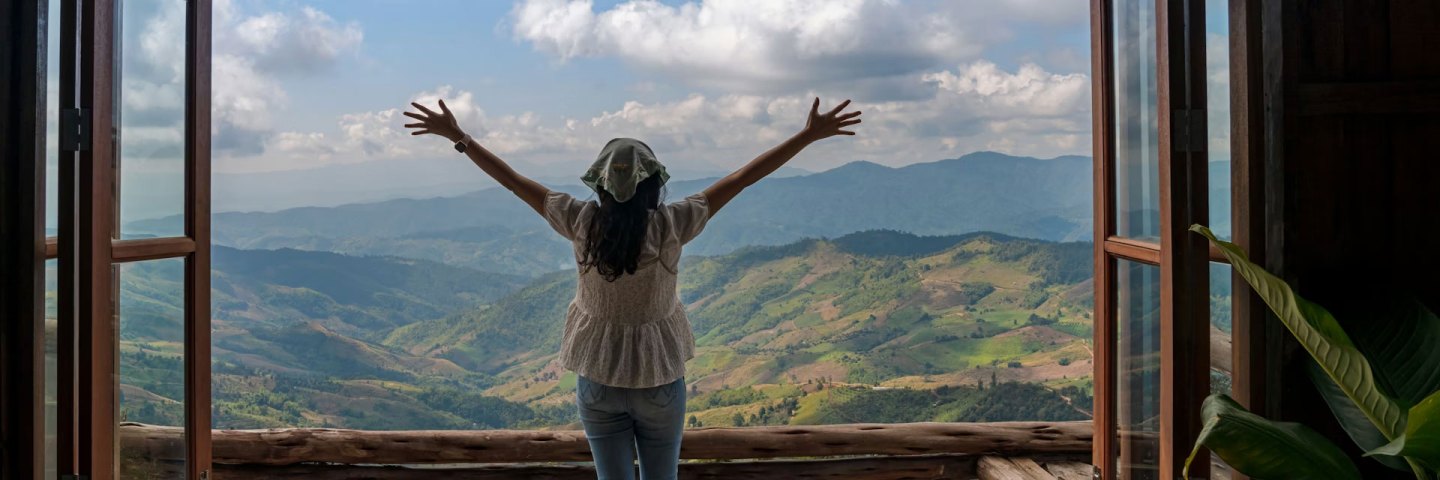
    Photo credit: nymphoenix/iStock via Getty Images PlusAcross cultures, languages and economic systems, feeling connected to the natural world is consistently linked to living a more hopeful, purposeful and resilient life.
    ,

    A connection to nature fuels well‑being worldwide, according to a study of 38,000 people

    Why we understand ourselves better through our closest friends

    When life feels overwhelming, many people instinctively turn to nature. A walk in a park. Sitting by the ocean. Watching a sunset. Is this just a pleasant feeling, or is there something deeper at work?

    A multitude of studies have linked spending time in nature with different aspects of mental health and wellness. For example, immersing oneself in outdoor natural spaces seems to lift depression and influence brain activity patterns. The effect may be especially relevant in children. But most research on this question has looked at people living in so-called WEIRD societies – Western, educated, industrialized, rich and democratic.

    As environmental psychologists based in the U.S. and in Germany, we were part of a team of more than 100 researchers who set out to examine this phenomenon on a global scale and determine how consistent it is around the world.

    Across countries as diverse as Brazil, Japan, Nigeria, Germany and Indonesia, we saw a clear pattern: People who felt more connected to nature also reported higher well-being.

    Worldwide oneness with nature

    Researchers who study people’s relationship with the natural world often use the term “nature connectedness.” This phrase doesn’t simply mean going hiking or visiting a park. Nature connectedness refers to the extent to which people see nature as part of who they are – whether they feel an emotional bond with the natural world and experience a sense of oneness with it.

    Someone who has a high degree of nature connectedness might agree with statements like, “My relationship to nature is an important part of who I am.” It reflects identity and meaning, not just exposure.

    We drew on data collected between 2020 and 2022 from more than 38,000 participants through a large international collaboration that was established to gauge how people responded to the COVID-19 pandemic. Participants came from 75 countries and were on average in their teens, 20s or 30s. They completed questionnaires that explored the link between people’s bond with nature and several aspects of well-being.

    The questionnaires probed people’s sense of purpose in life; their feelings of hope, life satisfaction and optimism; their sense of resilience and their ability to cope with stress they felt; as well as whether they practice mindfulness as they go through their everyday life.

    Across this large international sample, we found that people who felt more connected to nature consistently reported higher levels of well-being and mindfulness. This was true not just for feeling satisfied with life but also for deeper aspects of flourishing, such as having a sense of direction and meaning. And these associations held even when accounting for age and gender.

    Does national context matter?

    We also explored whether specific characteristics of a country strengthen the benefits of feeling connected with nature.

    For example, we looked at things such as how well countries take care of their air, and water systems and ecosystems, as well as whether citizens have equal access to education, democratic participation, and other key social and financial resources, and whether cultures tend to prioritize collective well-being over individual priorities. There were some differences, but the main takeaway was pretty clear: A connection with nature and well-being shows up across a wide range of economic, cultural and environmental contexts.

    In other words, the psychological benefits of feeling connected to nature do not appear to be limited to wealthy Western nations or specific cultural worldviews.

    A child plays with sand in in front of a rock formation in Monument Valley
    Bonding with nature may make people more resilient. Mike Tauber/Tetra Images via Getty Images

    Why might connection matter?

    One reason why feeling a connection with nature may be linked to well-being is that nature connectedness fosters mindfulness – the ability to be present and attentive.

    In our data, people who had a stronger sense of nature connectedness tended to have a higher degree of mindfulness, which is itself strongly linked to mental health.

    Another possibility is that bonding with nature may also make people more resilient. People who feel connected to something larger than themselves may find it easier to cope with stress and uncertainty. A sense of belonging – even to the natural world – can provide psychological grounding in a world characterized by stressors. There may also be a feedback loop: Feeling better may encourage people to engage more deeply with nature, strengthening the bond over time.

    Implications for policy and everyday life

    These findings matter beyond academic debates. Around the world, policymakers are increasingly recognizing the links between human health and environmental sustainability. International agreements such as the Convention on Biological Diversity, a landmark treaty signed by 196 countries in 1992, emphasize the importance of restoring humanity’s relationship with nature.

    These policy actions seek to protect Earth’s ecosystems, but our results suggest they may also benefit people’s psychological well-being. Similarly, designing cities with accessible green spaces, incorporating nature-based experiences into schools and supporting community engagement with local environments may do more than beautify neighborhoods – they may also help people flourish.

    Across cultures, languages and economic systems, feeling connected to the natural world is consistently linked to living a more hopeful, purposeful and resilient life. At a time when mental health challenges are rising globally, reconnecting with nature is not a luxury but a fundamental – and widely shared – human need.

    This article originally appeared on The Conversation. You can read it here.

  • Making good choices when life gets messy – practical wisdom relies on human judgment, not rules
    Photo credit: Cavan Images/Cavan via Getty ImagesThis virtue helps you figure out when and how to apply the other virtues in real, varying situations.

    A few semesters into my teaching career as a psychology professor, I uncovered a cheating ring. I determined who the ringleader was and called him to my office.

    He admitted that he had illicitly obtained a copy of the exam and shared it with other students. He began to cry, telling me he was from a single parent family, the first in his family to go to college, and that his mother would be crushed if he was dismissed from the university for academic dishonesty.

    I did not know what to do. I was angry at what he had done, but I also felt sorry for his situation. For reasons I still don’t fully understand, I decided to call his mother. When I told her what he had done, she apologized repeatedly, then said coldly, “Let me speak to him.”

    I don’t know what she said, but as the color drained from his face and he was reduced to repeatedly saying, “Yes, ma’am,” I assumed he was being read the riot act. After he hung up, he headed home to, I suspect, more severe punishment than the university could have given. He received a “0” on the exam and an official reprimand in his student file, but I’m willing to bet that the most important lesson he learned didn’t come from the university or me.

    Though I didn’t yet know the word, the decision to call his mother was an example of phronesis, an ancient Greek word usually translated as “practical wisdom.” It refers to the ability to make good decisions in real-life situations, especially when there are no clear rules or easy answers.

    black-and-white engraving of an ancient Roman man standing in chariot holding reigns of four horses
    Like a charioteer steering the horses, phronesis guides you in how to apply the other virtues, like courage, justice and generosity. pictore/DigitalVision Vectors via Getty Images

    Charioteer of the virtues, guiding them all

    Phronesis provides you with the ability to deliberate well about what is good and bad in specific circumstances. Unlike theoretical knowledge (sophia) or technical skill (techne), phronesis is about judgment – how to choose the right action at the right time for the right reasons.

    When you think about wisdom, maybe you imagine a philosopher pondering big questions or a scientist unlocking the secrets of the universe. But phronesis is a different kind of wisdom, one that is less about abstract ideas and more about navigating the messy, unpredictable realities of everyday life. Phronesis helps you live well, not by following rules, but by making wise choices in the face of complexity. It’s what allows you to turn knowledge into action that is then beneficial.

    Phronesis is a central component of the virtue approach to character development and morality first described by Aristotle. Virtues like courage, generosity, justice and temperance tell you what goals you should aim for, but they don’t tell you how much, when or in what way you should act in a specific situation. Phronesis helps you think through and decide the right means to achieve the right ends in the moment.

    Aristotle called phronesis “the charioteer of the virtues” because it provides the guidance system that ensures the other virtues are applied correctly in real life. As he put it, “It is impossible to be good in the strict sense without practical wisdom.”

    Let’s take the example of courage. Everyone wants to be brave and stand up for their values. However, without phronesis, too much courage may become recklessness, or too little courage could result in cowardice. Phronesis allows you to know when to take a risk and when to hold back.

    Or consider justice, the virtue of treating others fairly. Phronesis allows you to choose what is fair in a specific situation. Virtues set the goals – for instance, “be courageous” or “be just” – but phronesis determines the right way to achieve them.

    Practice phronesis in the face of complexity

    Developing phronesis takes time and effort. It requires experience, reflection and careful reasoning. Because phronesis is social, it thrives in environments where people share their perspectives and challenge each other’s assumptions.

    You don’t have to be a philosopher or a scientist to practice phronesis. Modern life is full of complexity. We are regularly faced with questions that don’t have clear answers.

    child, woman and man in pajamas seated on couch looking out of frame
    Staying up past bedtime to watch a big game as a family has value that a strict adherence to rules would overlook. AzmanL/E+ via Getty Images

    Picture a parent who must decide whether to enforce bedtime or allow a child to stay up for a special family occasion. The rule says bedtime is nonnegotiable, but practical wisdom reminds us of the value of shared family experiences.

    Or consider a manager who notices an employee missing deadlines. Instead of simply reprimanding them, they might ask what’s going on and discover a family emergency. They could adjust expectations and offer support, balancing fairness with compassion.

    These kinds of decisions reflect practical wisdom because they anticipate future needs, not just rules or consequences.

    In a world obsessed with data and efficiency, phronesis reminds us that human judgment still matters. Algorithms can optimize processes, but they can’t weigh moral values or capture the subtleties of human relationships. Whether in education, health care, business or politics, decisions that affect lives require more than technical expertise. They require wisdom.

    Phronesis counters the illusion that life’s problems have simple, one-size-fits-all solutions. It helps us realize that good judgment takes time, empathy and reflection. So, the next time you face a tough decision, pause and ask: What’s the wise thing to do?

    This article originally appeared on The Conversation. You can read it here.

  • Persuasion expert shares the one strategy that’s actually effective at changing people’s minds
    Photo credit: CanvaA woman is unsure how to respond.
    ,

    Persuasion expert shares the one strategy that’s actually effective at changing people’s minds

    It’s nearly impossible to change someone’s mind. So let them do it for you.

    Learning how to communicate effectively and change people’s minds rarely succeeds by forcing your opinion. People are far more likely to adopt beliefs when they feel like they came up with them. Understanding this can make parenting, leading a team, or even trying to win an argument with a friend more effective.

    Chase Hughes, a former United States Navy chief and behavioral expert, told The Diary of a CEO podcast why self-persuasion is an effective strategy for influencing others. He believes it’s “maybe the most dangerous persuasion skill there is.”

    Changing people’s minds

    The most effective communicators influence others by offering small pieces of information that allow the other person to connect the dots themselves. Ideas we feel are our own carry far more weight in decision-making than those given to us by others. Hughes explains the simple approach behind changing people’s minds:

    “I’m gonna put a LEGO right here on the table in front of you. [He points to the right of the table.] And I’m going to put another LEGO right here in front of you. [He points to the left of the table.] And I’m just going to keep having the conversation until eventually your brain is going to go, ‘Oh, I bet those things go together.’ So the idea came from you.”

    Hughes further explains the pattern:

    “I’m going to give you one piece of information and another piece of information, but I will never put them together for you. And the reason is that any idea that you think came from your own mind, you have no ability to resist it.”

    conversations, debate, advocacy, direct persuasion
    Crafting a convincing idea.
    Photo credit: Canva

    Self-persuasion in a real-world situation

    The idea Hughes refers to is called self-persuasion. This form of psychological influence stems from the fact that people are more likely to adopt new beliefs when they feel those beliefs come from within. They are far less likely to be persuaded by external pressure.

    Hughes’ example of placing two LEGO bricks offers a clear visual explanation, but what would a real-life scenario look like? Hughes explains:

    “Let’s say you’re watching the news and they say, ‘Local Austin woman has been reported missing. Neighbors said that earlier this day, people saw her arguing with her boyfriend. Details after the break.’ And your brain is like, ‘I know what happened.’”

    In this example, it’s easy to infer that the boyfriend is likely involved in her disappearance.

    change minds, motivation, inoculation theory, effective strategies
    A couple attempts to convince a skeptical woman.
    Photo credit: Canva

    Self-persuasion is effective at changing people’s minds

    Self-persuasion is powerful because it creates a self-generated process. Individuals feel more personally connected, and even justified. A 2022 study found that people are more influenced when arguments align with their values and beliefs. Messages they may know little about can feel true and even self-driven when they aren’t imposed on them.

    A 2022 study examined self-persuasion as an influence on social norms. When people were given options that aligned with their values, the messages felt more personal and were therefore more convincing.

    Another 2022 study found that when people were asked to argue one side of a debate, they eventually came to believe that side was correct—even if they didn’t believe it at first. This form of self-persuasion can make disagreements harder to resolve because people naturally feel more confident in their own perspective.

    work, mental health, framing effects, conclusions, narrative
    That’s a brilliant idea.
    Photo credit: Canva

    People rarely resist their own conclusions

    Self-persuasion works because it changes who is doing the persuading. Telling a child what to do is very different from a parent explaining why it matters. In business, people are more motivated when they help generate ideas than when they’re given even simple instructions.

    The most effective communication isn’t about delivering perfect arguments. When people connect the dots on their own, the idea doesn’t just land—it sticks. Hughes suggests letting a person’s brain fill in the gaps. Once they do, the conclusion feels like their own. Studies show that this sense of ownership is a powerful motivator for changing minds.

    Watch the full interview with Chase Hughes:

Explore More Ideas Stories

Impact

Men were stunned when asked the same types of career questions women regularly face

Voices

Young boy struggles through painful stutter until his singing videos change everything 

Ideas

Homeowners swear by this simple ice cold hack that thoroughly makes your toilets cleaner

Ideas

Facebook group helps families without a ‘village’ find surrogate grandparents