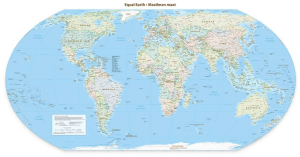
The Japanese government announced yesterday that it would sign a free trade agreement with India that would eliminate 94 percent of trade tariffs over the next decade. The partnership between two of Asia’s leading innovators runs much deeper than sending goods across the boarder though. It’s also sprouting a network of “green cities.”


Historically, India and Japan have had strong relations politically and commercially, a result of the spread of Buddhism coming from India via China to Japan in the 6th century A.D. During World War II, the Indian National Army was employed by the Japanese Imperial Army in Japan’s efforts against British forces. Japanese commercial giants like Honda, Sony, and Toyota have long been operating manufacturing plants in India and one of Japan’s most successful companies, Suzuki, has a strong partnership with the largest car manufacturer in India, Maruti.

In December, 2006, India and Japan signed the Joint Statement Towards Japan-India Strategic and Global Partnership. Since then, the two countries have participated in annual summits, which have culminated in projects such as the Delhi Metro and the JET Program.

In November, 2010, India and Japan unveiled a plan to launch 24 green cities along the Delhi-Mumbai Industrial Corridor. These green cities will have optimized energy supplies, 24-hour potable water supply, bicycle and walking paths, and water and waste recycling systems. Preparatory work has begun on pilot projects in seven green cities expected to be part of the DMIC. “Green cities and green technologies will be an important part of the DMIC. It will be like forging a sort of a green alliance between India and Japan,” said Aftab Seth, a former Indian ambassador to Japan.

Japan’s reputation as a world leader in green technologies adds tremendous credibility to the possibilities of these green cities. Companies like Hitachi, Mitsubishi, and Toshiba are all expected to participate in the design and construction of eco-friendly towns in seven states. Because Japan is more energy efficient than India, the development of green cities will allow knowledge sharing across the nations, with the end goal being improved energy efficiency and overall quality of life for citizens of the green cities and, eventually, all of India.

India has a lot to learn from Japan: despite the massive difference in size of the two countries, Japan at one point was the shining star of Asia and now, even after all its economic woes, is still the world’s third largest economy. India’s potential though seems to supersede what global expectations were of Japan twenty years ago.

It cannot be denied that part of the motivation for strengthening the tie between India and Japan is to counter China’s progress. But the two countries are capitalizing on a unique opportunity to set a worldwide example of the future of urban planning and development. The combination of state-of-the-art infrastructure supporting transportation functions and the modernity of “green” living is an innovative idea and can very well change the way the world—both developed and developing—will view international relations in the context of readying for the future.

Nisha Kumar Kulkarni is a Senior Associate at Beyond Profit where a version of this article appears.

Image: (cc) by Flickr user Ivan Walsh.

  • She called it a green flag when her date cooked a healthy meal for her. But then he explained which organ he was protecting.
    Photo credit: CanvaA man cooks for his date at home.
    ,

    She called it a green flag when her date cooked a healthy meal for her. But then he explained which organ he was protecting.

    “I am dating a dummy. But he is my little dummy, and no one can take that away from me ever.”

    Alexandra Sedlak had been seeing a man for over a month and things were going well. He was thoughtful, attentive, and one day invited her over for a homemade dinner. She immediately catalogued this as a green flag.

    She was right to be touched. He had actually thought about what she would like. She’s health-conscious, so he tailored the meal to her preferences. As they sat down he proudly explained what he’d made and why.

    It was designed, he told her, for her prostate health.

    dating, relationships, viral video, humor, couples
    A visibly confused woman tries to think. Photo credit: Canva

    Sedlak asked him if he meant his prostate health.

    He confidently said no. He meant hers.

    Sedlak, an actress and filmmaker with 145K Instagram followers, shared the moment in a video posted on November 22, 2025 under her handle @alexandrasedlak. She described the progression from delight to confusion with great precision. “I am dating a dummy,” she concluded in the video. “But he is my little dummy, and no one can take that away from me ever.”

    For reference: the prostate is a gland in the male reproductive system, located below the bladder. Women do not have one. A study published in PMC found that men’s knowledge of gynecologic anatomy tends to be significantly lower than women’s, which at least provides some scientific context for this particular gap running in the other direction.

    The comments were predictably delighted. One person suggested she invite him over and cook a meal focused on his ovulation health, then casually ask what part of his cycle he’s in. Another compared him to a golden retriever who should be given head scratches and told he’s a good boy.

    He is very caring. He cooked her a whole meal. The organ was wrong but the intention was right.

    For more relationship-based content, follow @alexandrasedlak on Instagram.

  • Plastic pollution in drinking water could be solved by a simple seed from a ‘Miracle Tree’
    Photo credit: Canva(Left)Plastic pollution from the ocean and (Right) Moringa oleifera seeds.

    Plastic pollution has been a serious problem since the rise of fossil fuel-based manufacturing. As tiny plastic particles find their way into something as essential as drinking water, the world needs a solution quickly.

    The answer may be simpler than we expect. Researchers testing a salt-based extract from Moringa oliefera seeds were able to remove over 98% of microplastics from drinking water. The study published in ACS Omega showed that the simple filtration system could be adapted for water treatment facilities at a lower cost and requires less energy.

    safe drinking water, parenting, microscopic plastic, health concerns
    A father shares drinking water with his son.
    Photo credit Canva

    ‘Miracle Tree’ produces miracle seeds

    The Moringa oleifera is a tropical tree native to parts of South Asia. Today, it’s cultivated on a global scale. Thriving in harsh, drought-prone regions, this “miracle tree” has been used to treat hundreds of conditions. Healthline reported that it contains 90+ bioactive compounds that help combat everything from inflammation to stress. A 2023 study in MDPI showed medicinal properties could be utilized in nearly every part of the tree, from its leaves to its roots.

    However, the solution to the plastic problem comes from its seeds. Researchers ground and mixed the seeds with a salt solution to pull out positively charged proteins. This mix attracts impurities, including microplastics, like a natural magnet. Clumping and binding with the impurities in a process called “coagulation,” they then sink to the bottom.

    family, biology, microplastics, life
    Microplastics on top of a father’s and a daughter’s fingers.
    Photo credit Canva

    Microplastics removed from drinking water

    Researchers tested this plant-based method against the industry-standard chemical alum: aluminium sulfate. The moringa extract worked across a wider range of conditions than alum, demonstrating reliability in real-world applications. As concerns grow over the long-term impact of chemicals used in water treatment, there is a clear need to shift toward safer alternatives.

    Simplifying the filtration process can significantly reduce both costs and energy demands typically required on an industrial level. This approach enables communities lacking resources to have an effective solution for plastic pollution.

    water treatment, health, industrial plant, plastic pollution
    An industrial water treatment plant.
    Photo credit Canva

    Treating plastic pollution is a global problem

    Developing countries face major environmental and health threats from plastic pollution. A 2024 study in Science Direct showed 60% of global plastic consumption and production comes from countries lacking proper quality control. A 2023 study in MDPI revealed that even where infrastructure exists, it’s limited and overwhelmed. Facing 120 million tons of waste annually, the situation suggests pollution is widespread and underreported.

    Offering a cheap and efficient option, Moringa oliefera seeds could be an invaluable solution. But it’s still not a perfect system. The seed extract is an organic material. That means proteins and fats can remain in the water after filtration.

    A 2025 study in Scientific Reports found organic matter reacting with disinfectants like chlorine is linked to health risks, including cancer. Also, stored water would be susceptible to bacterial regrowth and become contaminated over time. Researchers on the study believe this is an area of ongoing work that requires more research.

    Microplastics are everywhere. With inconsistent water treatment, less monitoring, and weaker waste systems, exposure is high and poorly controlled. Moringa oleifera isn’t a flawless fix, but it’s a promising study. The seeds could eventually work alongside modern systems, bringing us closer to tackling the complex problem of plastic pollution in our water.

  • Illustrator says the best way to stay motivated when learning a new hobby is to spend money
    Photo credit: CanvaThere's a way to stay motivated while continuing to enjoy your hobby.

    Starting a hobby and keeping at it can be difficult. A person might feel discouraged because they aren’t good at it from the get-go. Another person might enjoy it fully but think their time and/or money could be put to better use. Embroidery illustrator and author Sara Barnes offers a tip that can help people stay motivated in their pastime: investing in professional resources and equipment.

    Barnes argues that, while experimenting with a new hobby on your own can be fulfilling, putting money towards classes taught by professionals can help a hobbyist stay motivated to grow and further enjoy it. Depending on your hobby, purchasing professional-grade equipment can keep you interested and invested. The thought process behind it is that, if a person spends money on a hobby, they’re more likely to stick with it to justify the cost.

    @artist.mackenzie

    Always buy the best art materials ❤️ Top tips for artists. Buy the best you can afford. Like all things in life there are levels and I truly believe that the better quality of tools can help in no end. There are times when I look at the colours I’m able to make with my pastels and think ‘how is that possible’ it amazes me. ❤️ Same goes for my paper, sculptures etc etc. ❤️ This if from a list in the book of top tips for artists ❤️ Art for all ❤️

    ♬ original sound – Artist Mackenzie

    Spending money literally makes you more invested

    A painting class taught by a pro means person-to-person input and lessons. These advantages expand your knowledge and skill, encouraging you to play around with more techniques as you learn and grow. After all, it’s hard to keep a hobby without a sense of growth or accomplishment attached to it.

    Signing up for professional boxing training forces you to get off the couch and grab your gloves. In return, you’ll learn more about boxing, get quality exercise, and have fun incorporated into your schedule. Also, investing in quality gloves will similarly motivate you to be intentional about your training.

    Purchasing expensive gear and supplies for a simple hobby you might not maintain may sound risky or foolish, especially given the current state of the US economy. On the contrary, it can be a quality investment of both money and time. During the peak of the COVID-19 pandemic and its economic uncertainty, hobbies were necessary investments to promote good physical, mental, and social health.

    @edwina.co

    JUNE 2025: hobby costs + me realising why I still need to work my corporate job 🫠 Money can’t buy happiness, but it can fund all your interests and hobbies #hobby #hobbies #corporatemillennial #adultmoney #corporategirlies #hobbygirlsummer

    ♬ Bossa Nova jazz that seems to fit in a cafe(1433079) – TAKANORI ONDA

    Pricier classes and equipment might actually save money on hobbies

    Even financial experts recommend investing in your hobbies as long as you’re not taking on debt to pursue them. They say it might even improve your budget. 

    After all, budgeting for an expensive pair of high-quality running shoes only once will end up being less expensive than paying for monthly streaming services you barely watch. Getting a pricier but sturdier table saw for woodworking will save money  compared to frequently buying replacement parts when cheaper models break. Taking a cooking class can encourage you to cook more at home and eat out less in the long term.

    On the surface, it may look silly to spend money on a weird color of paint, professional-grade ice skates, or a Thai recipe cooking class, but what you’re really spending money on is your well-being. Hobbies not only provide mental breaks from the stress in life, they offer opportunities to socialize with and befriend others who share your interests.

    With time and experience, the initial investment in your hobby will become cheaper. You’ll either already own the equipment needed to do the hobby, have enough expertise to pursue it without attending a class, or both. It depends on what hobbies you pursue and enjoy, but this philosophy can apply to almost anything.

    So, while figuring out where to invest your money, consider making your hobby a priority. It not only keeps you motivated, but can provide a positive impact on your body, mind, and long-term finances, too.

Explore More Stories

Health

It’s a myth that baby boys are less social than girls – a new look at decades of research shows all babies are born to connect

Science

Scientists discover that a New York cemetery is the underground home for over 5 million bees

Ideas

A Texan moved to England and shared 3 things nobody warned her about. The one about cereal is painfully relatable.

Culture

10 boys and 10 girls were left alone in separate houses and the different results are just wild