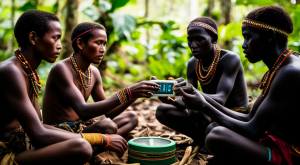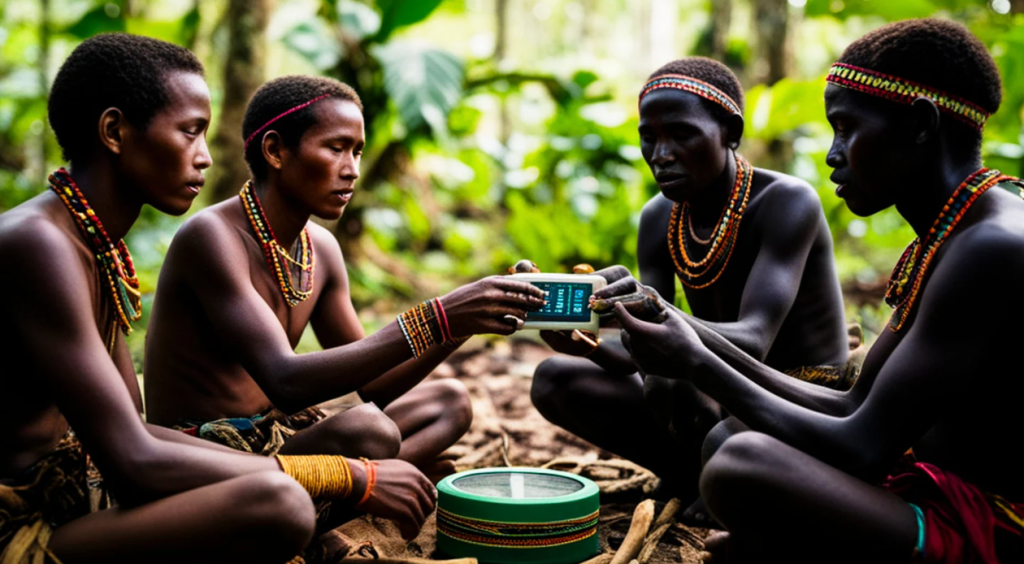
Deep in the Bolivian Amazon, researchers studying two indigenous communities have found something that stopped them in their tracks: among older Tsimané adults, the rate of dementia is roughly 1%. In the United States, the figure for the same age group is 11%.
The finding, published in the journal Alzheimer’s & Dementia, is part of nearly two decades of research on the Tsimané and their sister population the Mosetén, communities who have been recorded as having some of the lowest rates of heart disease, brain atrophy, and cognitive decline ever measured in science. A subsequent study from the University of Southern California and Chapman University, published in the Proceedings of the National Academy of Sciences, used CT scans on 1,165 Tsimané and Mosetén adults to measure how their brains age compared to populations in the US and Europe. The answer was striking: their brains age significantly more slowly.
The researchers’ explanation centers on what they call a “sweet spot” — a balance between physical exertion and food availability that most people in industrialized countries have drifted far from. “The lives of our pre-industrial ancestors were punctuated by limited food availability,” said Dr. Andrei Irimia, an assistant professor at USC’s Leonard Davis School of Gerontology and co-author of the study. “Humans historically spent a lot of time exercising out of necessity to find food, and their brain aging profiles reflected this lifestyle.”
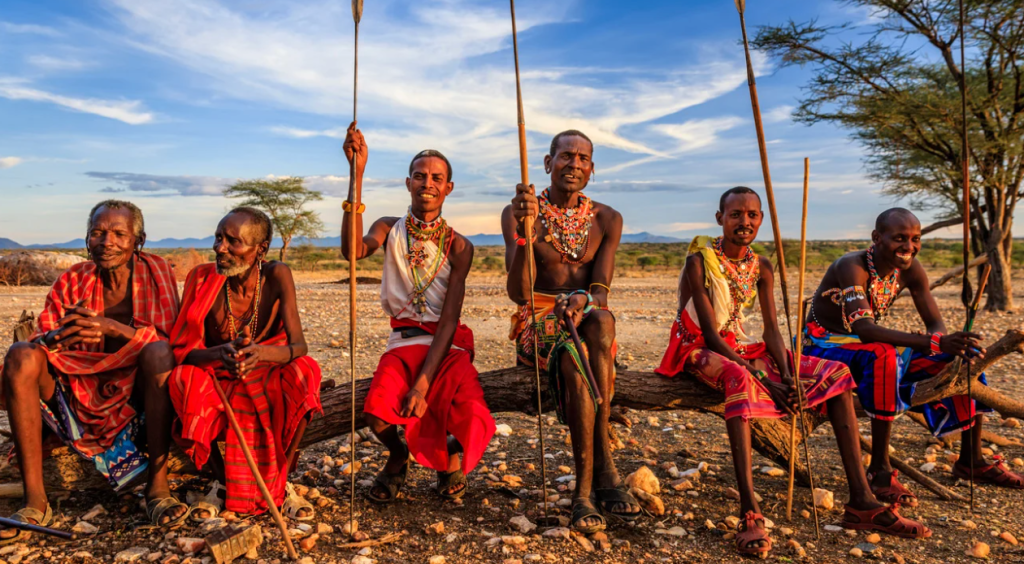
The Tsimané are highly active not because they exercise in any structured sense but because their daily lives demand it. They fish, hunt, farm with hand tools, and forage, averaging around 17,000 steps a day. Their diet is heavy on carbohydrates — plantains, cassava, rice, and corn make up roughly 70% of what they eat, with fats and protein splitting the remaining 30%. It is not a low-carb or protein-heavy regimen. It is, essentially, the diet of people who burn what they consume. CNN’s Dr. Sanjay Gupta, who visited a Tsimané village in 2018 for his series “Chasing Life,” noted that they also sleep around nine hours a night and practice what might be called intermittent fasting — not by choice, but by necessity during lean seasons.
The research also included the Mosetén, who share the Tsimané’s ancestral history and subsistence lifestyle but have more access to modern technology, medicine, and infrastructure. Their brain health outcomes fell between the Tsimané and industrialized populations, better than Americans and Europeans, but not as strong as the Tsimané. Researchers describe this gradient as especially revealing because it suggests a continuum rather than a binary, and that even partial movement toward a more active, less calorically abundant lifestyle appears to have measurable effects on how the brain ages.
“During our evolutionary past, more food and less effort spent getting it resulted in improved health,” said Hillard Kaplan, a professor of health economics and anthropology at Chapman University who has studied the Tsimané for nearly 20 years. “With industrialization, those traits lead us to overshoot the mark.”
The researchers are careful to note that the Tsimané lifestyle is not simply transferable. Their longevity in absolute terms is lower than Americans’ because of deaths from trauma, infection, and complications in childbirth, hazards of living without a healthcare system. The point of the research is not that modern medicine is unnecessary but that the environments it’s embedded in may be undermining the brain health it’s trying to protect.
“This ideal set of conditions for disease prevention prompts us to consider whether our industrialized lifestyles increase our risk of disease,” Irimia said.
This article originally appeared earlier this year.