Brenda and Brian Marquis are part of a growing senior population with mental and physical ailments. In particular, Brian has dementia from a brain injury he sustained in 2012. Brenda would help Brian remember to wash himself, eat lunch, and other tasks. On top of that, both live with other physical, cognitive, and emotional disabilities that make day-to-day living difficult. Then came “Robbie.”

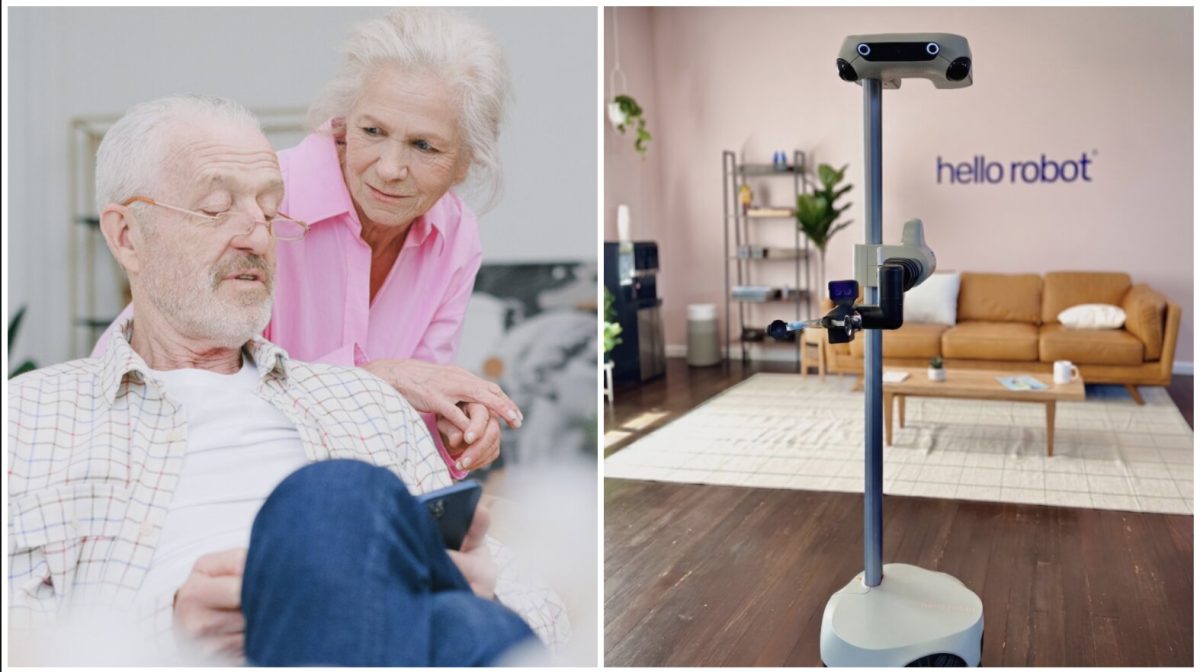
“Robbie” is the robot that helps the Marquis family with their daily routines at home. Resembling a coat rack, the robot was presented to the Marquis family after Brenda sent an email to the University of New Hampshire inquiring about robotic service dogs. Booker T. Bones, the family’s service dog, had passed away and Brenda was looking for similar support. The university saw this as an opportunity for its computer science center to experiment with “socially assistive” robots.

“Our goal is not to replace a human caregiver but to use technology such as robots to provide complementary care,” Sajay Arthanat, a professor in UNH’s Department of Occupational Therapy told WMUR. “We know that caregivers often have to perform a lot of repetitive, mundane tasks.”

What exactly is “Robbie”?

“Robbie” is a Stretch 4 robot model invented by Hello Robot. While a very simple in design, the robot is able to help Brian with a number of tasks. It reminds him to eat meals at specific times, fetches items such as water bottles out of the fridge, reads the fine print of prescription medications, and more. Stretch 4 also has prompts that activate when he enters certain rooms of the home, such as the bathroom.

“I was never into technology,” Brian Marquis said to Sentinel Colorado. “Then I realized I can’t remember to wash my face and my armpits. So, it just really kind of set me free almost.”

Robbie hasn’t just helped Brian live more independently, but Brenda as well. She doesn’t have to be by Brian’s side 24/7. Now, she can go out and play mahjong with her friends without worrying about leaving Brian alone for several hours.

A growing issue for older Americans

Per the Department of Health and Human Services, the majority of older adults are projected to need long-term care and service. This could range from basic needs to extreme health cases. In addition, a 2025 report released by the Bureau of Labor Statistics found that 38.2 million people provided unpaid elder care. Around 28% of those people provided nearly four hours of unpaid elder care per day.

The number of people who need such help is projected to grow exponentially. By 2030, the number of Americans over 65 is expected to surpass the number under 18 for the first time in U.S. history. The number of Americans over 65 years old is projected to reach 82 million, a 40% growth from 2022.

This is, in part, why there has been such massive investment in robots and A.I. specializing in caring for elderly people. It’s not just to ensure that the elderly have the assistance they need for day-to-day tasks. Eldercare robots also boost their patient’s confidence by allowing them to live as safely and independently as they can. In addition to task-oriented robots like Stretch 4, there are also robots to assist with mobility.

Robotics are helping improve the lives of the elderly as a new and exciting care option. With the help of medication, personal care from a human, community, and more, the growing elderly population can thrive through their golden years. For more eldercare resources, visit the National Institute on Aging.

Whether through use of a robot or not, finding solutions to aid and care for our older populations ultimately benefits society as a whole.


  • Who are hospital ethics consultants, and why should you care?
    Photo credit: LPETTET/E+/Getty Images End-of-life decisions can be complicated, and ethics consultants may help families and care teams navigate them.
    ,

    Who are hospital ethics consultants, and why should you care?

    Helping families face the hardest medical choices.

    Imagine the following scenarios:

    A surgeon prepares to amputate a patient’s foot to save his life, but the patient refuses the procedure. His decline in thinking and memory raises doubts about his ability to consent, and he has no family or friends to help with the decision.

    A 17-year-old declines a liver transplant, while her mother insists on going forward with the lifesaving surgery.

    Siblings stand divided at the bedside of their 85-year-old mother with dementia, one rejecting a feeding tube, the other calling it a basic human necessity.

    I am a hospital ethics consultant, and these are the kinds of situations my colleagues and I regularly encounter. Yet many people are unaware that hospital ethics consultants even exist – or that they can ask for one.

    Who are hospital ethics consultants?

    Healthcare ethics consultants are trained to help patients, families and clinicians navigate difficult medical decisions.

    They could be called in situations where healthcare staff struggles with providing procedures such as cardiac resuscitation that are unlikely to benefit the patient and might even cause more pain and suffering. They could also be called when it is unclear who has authority to consent for a patient’s care, or when end-of-life decisions are complicated and resources are limited – such as ICU beds and ventilators during COVID-19.

    Ethics consultants come from a range of disciplines: physicians, nurses, social workers, chaplains, lawyers and philosophers who have specialized training and experience in clinical ethics. Since 2018, ethics consultants are increasingly pursuing formal certification through the American Society for Bioethics and Humanities.

    What is their origin?

    The modern field of bioethics emerged from the 1947 Nuremberg Doctors’ Trial, where Nazi physicians were prosecuted for conducting brutal medical experiments on imprisoned people.

    This led to the 1947 framework outlining ethically acceptable human research called the Nuremberg Code, written by a panel of American judges. The 1979 Ethical Principles and Guidelines for Protections of Human Subjects of Research, called the Belmont Report, followed the Nuremberg Code. The Belmont Report turned the ethical ideals of respect for persons, beneficence – to do good – and justice into a regulatory framework to protect vulnerable and marginalized medical research participants in the U.S.

    In the 1980s, many of these ethics protections moved from the research lab to the patient bedside. During this time, lifesaving technologies such as the ventilator, dialysis machine and organ transplantation created new, difficult ethical questions: When should life support end? Who decides? And what happens when there aren’t enough resources?

    A series of court cases and laws expanded patients’ rights, with the Patient Self-Determination Act, a 1990 law which upheld patient rights to refuse or accept medical treatment, marking the key turning point.

    A ventilator connected to a patient shows vital readings on a blue screen in a hospital room.
    Lifesaving technologies have revolutionized medicine, but they also raise ethical questions about who receives care when resources are scarce. Jackyenjoyphotography/Moment via Getty Images

    High-profile court cases exposed the ethical dilemmas around end-of-life care and patient self-determination. The 1976 case, In re Quinlan, involved Karen Ann Quinlan, a young woman in a persistent vegetative state whose family sought permission from the court to withdraw her ventilator.

    Following In re Quinlan was the 1990 case, Cruzan v. Director, Missouri Department of Health, which affirmed that adults have the right to refuse life-sustaining treatment.

    Both cases became touchstones for how ethics consultants and care teams navigate the life‑and‑death decisions that have become routine in an era of life‑sustaining technology.

    Today, most hospitals have some formal process for addressing ethical concerns in patient care.

    What do ethics consultants actually do?

    A member of the healthcare team usually requests an ethics consult when they face conflict or uncertainty about the care of a patient. Patients and families can also request an ethics consultation, but in reality, few know this option exists or feel empowered to use it.

    The ethics consultant’s first task is to gather as much information as possible from everyone involved to understand the full context of the case. Importantly, ethics consultants do not make treatment decisions; they assist the people who do.

    Imagine a loved one with advanced dementia who is in the intensive care unit with respiratory failure and is on a ventilator. The physician believes further treatment will prolong suffering; the family is not willing to let him go.

    An ethics consultant would be called by the family or healthcare team to slow things down, provide space to reflect, and help navigate the situation. The ethics consultant will often meet with everyone involved to ensure that all voices are heard and that the patient’s wishes remain central to the discussion.

    As part of the ethics review, the ethics consultant would draw on their knowledge of policies, laws and ethical precedent about withdrawing life-sustaining treatment to provide some guardrails for the situation. In this case, a legal guardrail might be that the physician cannot remove the ventilator without the family’s consent.

    Rather than making a decision, the ethics consultant would then outline the ethical options available from which the patient, family, and healthcare team can choose.

    Why are ethics consultants a valuable resource?

    Ethics consultants are trained to help people work through not just the medical facts, but the deeply human questions beneath them: What counts as an acceptable quality of life? How do we weigh hope against suffering? How can we know what a patient would want if they cannot speak for themselves?

    In these moments, decisions can feel urgent and heavy, and communication can easily break down. Ethics consultants don’t take decisions away from patients or families, and they don’t replace the role of clinicians. Instead, they help ensure that everyone understands the situation, that different perspectives are heard and that the conversation stays grounded in the values and goals of the patient.

    They also bring something that families often don’t realize they need until tensions rise: a calm, measured presence. By clarifying misunderstandings, naming sources of conflict and guiding difficult conversations, they help families and care teams find a way forward together.

    The choices may still be painful – and there may be no perfect answer – but with the right support, those decisions can feel more thoughtful, more shared and more aligned with what matters most.

    This article originally appeared on The Conversation. You can read it here.

  • Is rubbing your eyes bad for you? 2 eye specialists explain what’s behind the urge to rub and what to do about it
    Photo credit: klebercordeiro/iStock via Getty Images PlusEye rubbing may feel good, but it comes with risks.

    You know the feeling – the itchy eye that is just begging to be scratched.

    Before you start rubbing your eyes, you may want to think twice about the potential consequences.

    While eye rubbing may seem harmless, people who rub their eyes are at risk of infections or damage to their cornea.

    Fortunately, there are a number of common causes of itchy eyes that can be treated to reduce the urge to rub.

    We are a board-certified ophthalmologist and optometrist who provide comprehensive eye care.

    Itchy and irritated eyes are some of the most common reasons that patients visit eye doctors. We have experience in treating the causes of eye rubbing and the consequences, which can require specialized contact lenses or corneal transplantation.

    Causes of eye rubbing

    Rubbing your eyes is often a reaction that occurs when your eyes feel uncomfortable or itchy.

    The most common reason for that itchy sensation is allergic conjunctivitis, which accounts for nearly 50% of itching cases. Allergic conjunctivitis is an inflammatory reaction of the conjunctiva, the clear skin on the surface of the eye. Allergens bind to the surface of cells, ultimately leading to the release of inflammatory chemical molecules that trigger the sensation of itching. People may experience redness, swelling and little bumps on the inside of the eyelids.

    Sometimes the urge to rub happens if there is a gritty sensation, dryness or something stuck in our eyes. This is often a symptom of dry eye syndrome, or blepharitis.

    The urge to rub the eyes can also occur because the eyelids feel itchy, often from other conditions such as dermatitis, which is an inflammation of the eyelid skin.

    Because of the anatomy of the eyelid and the thin outer layer, called the epidermis, it is more vulnerable to irritation from the environment or from contact lenses.

    Close-up of a human eye showing detailed iris, pupil and eyelashes.
    The outer layer of the eyelid, called the epidermis, is highly sensitive to environmental allergens and other irritants. Francesco Riccardo Iacomino/Moment via Getty Images

    Eye rubbing is a risk factor for corneal disease

    The most serious risk that has been associated with eye rubbing is the development of keratoconus, a condition in which the cornea – the clear window in the front of the eye – becomes progressively thinner and more irregular in shape.

    While healthy corneas have a more spherical shape, those with keratoconus become steeper and cone-shaped. Keratoconus often causes high degrees of irregular astigmatism, which is an imperfection in the curvature of the cornea that leads to blurry vision.

    Fortunately, keratoconus can now be treated with a procedure called corneal cross-linking, which can halt further progression in many cases. During this procedure, collagen strands are cross-linked together, strengthening the cornea. Many patients with keratoconus need specialized contact lenses to achieve optimal vision, even after treatment.

    In the most advanced cases, patients may need corneal transplantation to remove the damaged corneal tissue and replace it with healthy donor tissue.

    Other conditions associated with eye rubbing

    corneal abrasion is a scratch in the thin, clear skin that covers the cornea and can be triggered by aggressive eye rubbing or a fingernail that inadvertently touches the cornea. An abrasion is exquisitely painful and usually causes blurry vision. Corneal abrasions require treatment with antibiotics to prevent infection.

    Eye rubbing can also cause a subconjunctival hemorrhage. This occurs when rubbing breaks a small blood vessel on the surface of the eye and makes the eye appear very red. While it can look and feel alarming, a conjunctival hemorrhage is essentially a bruise on the surface of the eye and does not cause lasting damage. This condition typically resolves in one to two weeks without any intervention.

    Conjunctivitis, commonly known as pink eye, is an infection of the conjunctiva that can be spread by eye rubbing. It can be caused by viruses or bacteria. If you must touch your eyes, washing your hands first is a good practice to prevent the spread of infection. Viral forms of conjunctivitis are highly contagious, so you should be particularly careful about rubbing your eyes if you have had contact with someone with pink eye.

    Young adult woman applying eye drops.
    Eye drops can provide some relief from itchy eyes. milorad kravic/E+ via Getty Images

    Treatments for itchy eyes

    Most people rub their eyes without even realizing it. But there are ways to address underlying conditions that might trigger eye rubbing.

    Often, over-the-counter treatments and home remedies can be quite helpful. One treatment that helps address most underlying causes of the urge to itch is to use artificial tears. Pro-tip: Cooling them in the refrigerator helps too!

    In cases of allergic conjunctivitis, it’s important to try to avoid the allergen that triggers the symptoms. For example, if allergies are due to pollen, staying indoors, using sunglasses or rinsing off your face after exposure can help decrease allergen load around your eyes.

    The next option is to try over-the-counter artificial tears to rinse out the allergens. In general, it’s best to avoid the drops that advertise “get the red out,” which provide temporary relief but carry risks of side effects. Cool compresses can also provide some relief from itching, decreasing the urge to rub your eyes.

    If you still find no relief from the itch, the next step would be to try allergy eye drops, which are available with or without a prescription. There are topical treatments that are antihistamines, mast cell stabilizers or a combination of both. Antihistamine eye drops help block the release of histamines, a substance that the body releases after exposure to allergens. Mast cell stabilizers block the breakdown of mast cells – part of the body’s immune system – which helps reduce the release inflammatory chemicals. Combination eye drops help by targeting both mechanisms.

    Since there are many options available, it’s helpful to discuss with your eye doctor which one is the best for you. In cases where there are other symptoms of allergies, such as sneezing or a runny nose, an oral allergy medication could be effective for treating all these symptoms. If you have persistent symptoms, a prescription steroid eye drop can be helpful.

    If the urge to rub your eyes is not improving with artificial tears, cool compresses or over-the-counter allergy eye drops, it’s time to schedule an appointment with your eye doctor for an evaluation.

    This article originally appeared on The Conversation. You can read it here.

  • More women are rejecting ‘optimization culture’ for realistic wellness plans
    Photo credit: CanvaA woman intensely exercises, left, and a morning stretch, right.

    Being fit used to mean getting enough sleep, drinking more water, and moving your body, perhaps in a daily walk. With the explosion of social media and digital self-help trends, finding an acceptable level of wellness can feel like stepping into a full-time job with daily performance reviews.

    For many women, what started as self-care has slowly become another exhausting form of self-optimization. And increasingly, they’re pretty much done with it. According to Women’s Business Daily, one of the biggest wellness shifts happening right now is a move away from extreme routines. Women want habits that actually fit into real life.

    fitness culture, self-optimization, realistic wellness, mindful living
    An intense workout.
    Photo credit: Canva

    Wellness feels like a full-time job

    Instead of chasing perfection, more women are choosing what can be described as a more realistic approach to wellness, incorporating sustainable routines built around balance and emotional well-being rather than climbing a never-ending ladder of constant improvement.

    The shift comes after a solid decade of what many refer to online as “optimization culture.” This exhausting idea assumes that every part of life needs to be carefully measured, improved, and optimized.

    Experts believe this mindset is not only making people miserable; it’s unsustainable.

    wellness overload, social wellness, health fatigue, hustle culture
    An exhausting routine.
    Photo credit: Canva

    A backlash against the “always improve yourself” culture

    A recent article in Psychology Today found that “wellnessmaxxing” trends turn self-care into another form of anxiety. This is especially true when routines become so demanding that people feel more guilt than relief. As creators post TikToks showing themselves “maxing out” in some kind of self-congratulation, they spread unhelpful expectations that no longer promote self-care.

    Verywell Health explains that these influencers broadcast an all-consuming performance metric. People now face a painful realization that they can never do enough. It’s hard to miss the irony that wellness has begun to feel unhealthy.

    Women are increasingly embracing low-pressure routines instead of overly aspirational ones. Think walks instead of cross-training, and a morning meditation instead of a week-long stay at a Tibetan monastery. It’s okay to just eat more vegetables instead of a perfectly balanced daily nutrition plan of 150 grams of protein, wheatgrass smoothies, and specifically rated pH-balanced alkaline water.

    After all the extreme exercises, self-help books, and sophisticated meal plans, it’s time to get back to basics. Here’s one version of a realistic plan: drink some water, get outside, and try to sleep a little better.

    anti-hustle, performance pressure, happiness, lifestyle
    A casual walk with a dog.
    Photo credit: Canva

    Getting back to the basics

    A beauty editor writing for Who What Wear documented her attempt to follow a social-media-inspired wellness reset. With all the expensive and complicated habits she hoped would unlock the “incredibly high-functioning, ultra-productive version” of herself, she came away understanding that she should stick with the basics.

    Modern life already asks women to juggle careers, caregiving, appearance standards, finances, and relationships. Somewhere along the journey, wellness became just one more category to add to the pile.

    work life balance, culture, community, women wellness
    Maintaining a perfect life balance.
    Photo credit: Canva

    Women are choosing simple, sustainable routines

    Finding realistic wellness is a trend that reflects a growing desire for community-centered wellness rather than isolated self-improvement. Instead of wellness looking like a solo pursuit for an achievement award, many women are leaning toward connection: walking groups, shared meals, accountability with friends, and being honest about feeling burned out on all of it.

    The Times reports that people feel walking groups are less intimidating and more emotionally supportive. People don’t just want fitness; they want to belong to something.

    A 2025 study in Frontiers in Psychology focused on the benefits of women finding social support groups. Programs that incorporated women’s preferences into their daily lives were more likely to be enjoyed and maintained.

    Wellness cultures have told women the answer is to do more: more discipline, more self-reflection, more perfect sleep, more work dedication, more family direction, more effort.

    Making life more enjoyable and realistic can help well-being feel easier to maintain. A joyful life is better lived “in” than constantly measured “against” unrealistic expectations.

Explore More Care Stories

Health

Is rubbing your eyes bad for you? 2 eye specialists explain what’s behind the urge to rub and what to do about it

Health

More women are rejecting ‘optimization culture’ for realistic wellness plans

Care

Health care sticker shock has become the norm, but talking to your doctor about costs can help you rein it in

Health

What does the appendix do? Biologists explain the complicated evolution of this inconvenient organ