
A recent study conducted on adults in the UK found that people with higher cognitive ability scored lower on moral foundations. The study, published this summer in the journalIntelligence, sought to gage people’s response to the Moral Foundations Theory based on their overall intelligence. After two different studies, no difference was found between genders, but a person’s intelligence revealed a different story.

The research suggests that analytical thinkers tend to override their baseline moral intuitiveness. But what does that actually mean? First, cognitive ability refers to problem solving, abstract thinking, memory, logic, language comprehension, and basic critical thinking. This isn’t only IQ, but a person’s ability to process and apply their knowledge. Think of it as a living scholastic aptitude test (SAT.)

intelligence, moral psychology, cognitive science, empathy, human behavior
Man embraces a sunset. Photo Credit: Canva

After testing to rate cognitive ability, subjects were then tested against The Moral Foundations Theory. The idea behind the theory is that, despite different cultures and populations, people tend to follow a similar set of themes and intuitive ethics. The theory follows six core ideas: care, equality, proportionality, loyalty, authority, and purity.

Surprisingly, the results of the tests found that people with higher intelligence found the moral foundations to be less important.

Care

Care has to do with the virtues of kindness, gentleness, and nurturing. This is the foundation of empathy. By feeling connected and emotionally attached to the community, people gain purpose and a strong feeling of belonging.

Equality
intelligence, moral psychology, cognitive science, empathy, human behavior
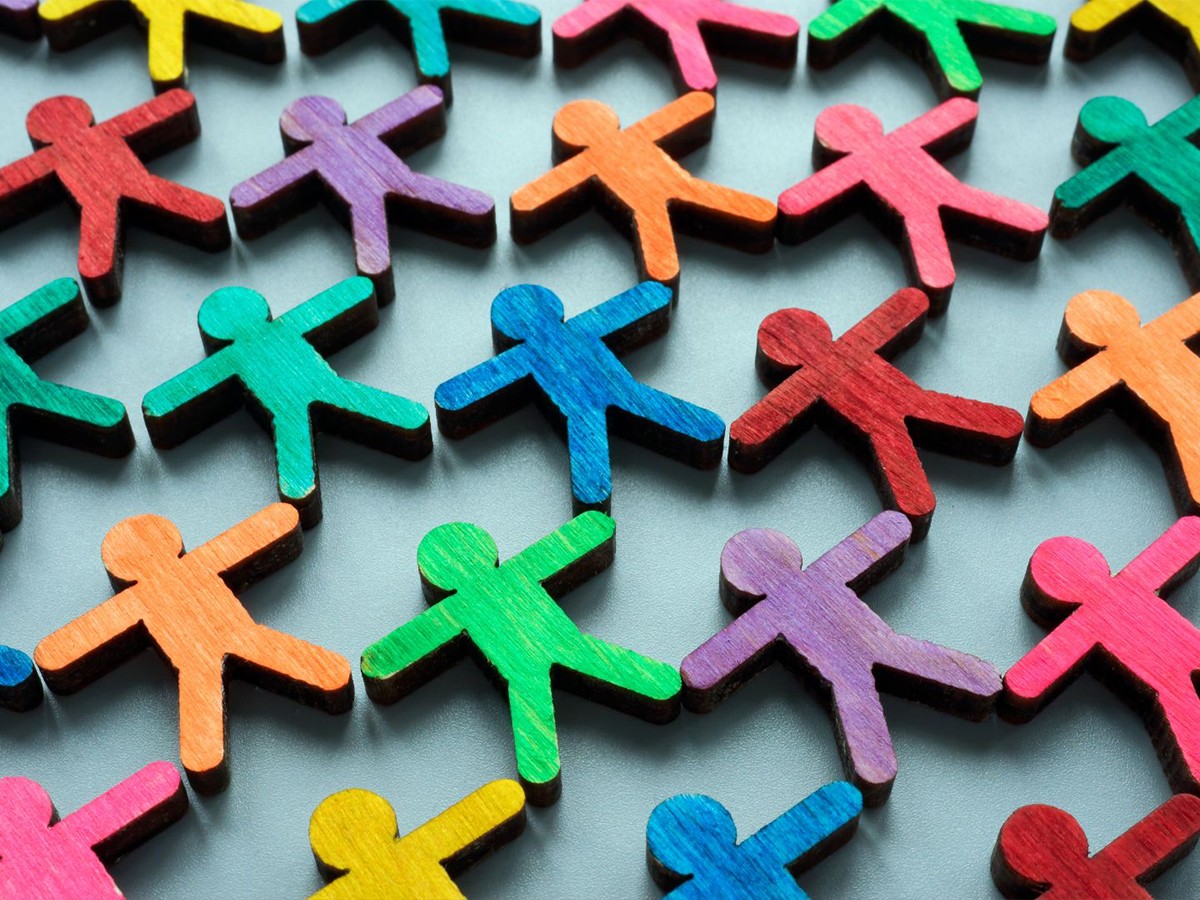
Symbols for equal diversity. Photo credit: Canva

Always a hot topic on the political playing field, equality looks to create fair circumstances. The idea is all people have equal opportunity and treatment. Communities offering equality have reduced resentment and foster a cooperative environment where people feel respected and included.

Proportionality

This concept is based on fairness and merit. People should get what they deserve and be treated by what they do, not just who they are. What you put in, you get out. This is a driving principle underlying a core belief of this country: that anyone can achieve most anything if they are willing to put in the work. Many would argue for its merit while others would call it wishful thinking.

Loyalty

intelligence, moral psychology, cognitive science, empathy, human behavior
Hands come together. Photo credit: Canva

This is another popular topic of political leaders and followers. We are tribal by nature and greatly benefit from a feeling of belonging. Sacrificing the individual wants for the needs of the group, this is one of the foundational cornerstones of building communities.

Authority

leaders, leadership, hierarchy, traditions, genetics, authority, groups, UK adults, social groups
Leader in front of group. Photo credit: Canva

Authority encompasses the concepts of hierarchy and respect for traditions. Research shows we are genetically programmed to seek a social hierarchy. As much as many fight to climb to the top, feeling a part of the system is often enough to supply someone with a great amount of emotional security.

Purity

Perhaps you’ve heard the phrase, “Your body is a temple.” The ideal is expressed through self-discipline, self-improvement, and spirituality. Striving to be noble and less carnal, people try to be the best version of themselves. The moral advancement and the elevation of the social consciousness of the community is believed to have incredible value.

These core values are believed to be inherent in all people, but are they? At least according to this most recent study, the more intelligent you are, the less you might care about them. However, author and literary genius Leo Tolstoy once famously claimed that kindness is one sure sign of a highly intelligent person and other studies back up his views. Maybe when it comes down to it, it depends on the person.

This article originally appeared last year. It has been updated.

  • Researchers capture sperm whales headbutting on camera, validating what sailors have said for centuries
    Sperm whales headbutting.Photo credit: University of St Andrews/YouTube
    ,

    Researchers capture sperm whales headbutting on camera, validating what sailors have said for centuries

    “It’s exciting to think about what as-yet unseen behaviours we may soon uncover”

    For centuries, sailors have told wild tales of whales ramming ships. Reports of a sperm whale smashing and sinking the Essex in 1820 inspired Herman Melville to write Moby-Dick. Scientists had never witnessed it themselves—until now.

    Researchers have captured the first-ever drone footage of sperm whales headbutting each other. During fieldwork off the coast of the Balearic Islands, they recorded three separate incidents between 2020 and 2022.

    Drone footage captures sperm whales headbutting

    The new study was published in the journal Marine Mammal Science. Using drones, researchers from the University of St Andrews, the University of the Azores, and Asociación Tursiops captured video evidence of sperm whales headbutting. They found that most of the whales were young, immature males. In one incident, a young male circling near a female suddenly charged and slammed into her, knocking her off course. After the impact, she broke away from the group and did not return.

    The researchers estimated impact speeds ranging from 1.8 to 8 miles per hour, with collisions generating forces of up to 20 tons of pressure. The impacts captured on video were not necessarily considered aggressive. In fact, researchers believe the behavior reflects rough play or forms of mock combat. Similar behaviors can be seen in other mammals, like dolphins and lions.

    sperm whales, Moby Dick, literature, history, whaling
    A depiction of Moby-Dick.
    Photo credit: Canva

    Observations of sperm whale behavior

    Using their large heads, sperm whales have been reported by whalers to strike and move objects since the 19th century. “It was really exciting to observe this behaviour, which we knew had been hypothesised for such a long time, but not yet documented and described systematically,” said Dr. Alec Burslem, lead author of the study.

    “It’s exciting to think about what as-yet unseen behaviours we may soon uncover, as well how more headbutting observations may help us to shed light on the functions the behaviour may serve,” Burslem added.

    Documented, unprovoked attacks on humans by sperm whales are exceedingly rare, with most occurring during historical whaling incidents. Research indicates that sperm whales do not naturally exhibit aggression toward humans. While they can be curious, they often avoid vessels and observers. Historical accounts of whales ramming ships are likely defensive reactions rather than predatory attacks.

    ocean mammals, sperm whales, non-aggressive behavior, language, social structures
    A sperm whale.
    Photo credit: Canva

    Language and cultural identities

    Whales use clicks like letters, combining them into sequences that function like words in a complex form of communication. A 2024 study found that sperm whales use a highly sophisticated communication system with structures resembling a phonetic alphabet. These audio cues are used for coordination, caregiving, and social interaction.

    A 2022 study found that specific click patterns serve as symbolic markers that help establish cultural identities within sperm whale pods. Researchers identified seven distinct clans, each with its own unique dialect. This provided quantitative evidence of whale social structures known as identity codas.

    Studying this new drone footage offers fresh insights into whale social groups and behavior. While the headbutting may look aggressive, researchers interpret it as rough play. With technologies like drones giving scientists unprecedented access to these interactions, it’s exciting to think of what discoveries are yet to be made.

  • Body language experts reveal the secret truth about people who walk with their hands behind their backs​
    A man and a woman walking with their hands behind their backsPhoto credit: Canva
    , ,

    Body language experts reveal the secret truth about people who walk with their hands behind their backs​

    It isn’t just an old-fashioned habit; experts say this specific posture signals confidence, deep thought, and openness.

    The way a person walks is a silent broadcast of their current state of mind. A fast pace with swinging arms suggests determination; a slow shuffle with eyes downcast suggests detachment or aimlessness.

    But what about the person strolling with their hands clasped firmly behind their back?

    Well, body language experts believe that walking with your hands behind your back reveals a great deal about your mindset and your personality. They believe that, by keeping your hands behind your back while walking, a person is removing a distraction from their field of vision. This can allow a person to better process complex ideas, difficult emotions, or mentally work through problems as they walk. In short, walking with your hands behind your back indicates deep overall thoughtfulness.

    @the.mcfarlands

    not an ounce of stress in that walk ? follow us on IG: itsthemcfarlands ? #dad #dan #dadsoftiktok

    ♬ original sound – notrigby


    It’s not just deep thinking either. Other experts believe that walking with your hands clasped behind your back shows off confidence but without intimidation. By walking with your hands away from your torso, you’re fully exposing your chest and belly rather than being in a traditionally defensive position. While you may be walking deep in thought, it also allows people around you to know that you can be approached and will respond without malice. This is in contrast to body language in which the arms are in front of the body, indicating that you’re closed off or not in the mood for interaction.

    @yajairarh40

    Old people know what they are doing with this walk. #walks #saturdaymorning #carync #fy

    ♬ original sound – ar1esluver

    However, while walking with your arms behind your back can be seen as an invitation, it can come off as authoritative, too. By walking tall with your chest fully exposed, it mentally communicates that you’re calm and in control of the situation, not worrying about any incoming threat. This is partially why you see world leaders, military folks, teachers, and other persons in such roles walk this way in order to appear authoritative yet approachable. By having your arms behind you, your defense appears down but your authority appears up simultaneously.

    Alongside the psychological body language aspects of this type of walk, it also has some physical benefits. While walking with your hands behind your back shows a more confident posture, it improves your posture overall, too. Putting your arms behind your back naturally pulls your shoulders back and opens your chest, allowing your spine to straighten up and align. While it won’t improve your posture instantly, habitually walking with your hands behind your back can turn proper posture into an instinctual habit as well.


    So, if you’re heading to and from places and your mind’s racing with stress, you may want to try putting your hands behind your back. The posture helps reset your mind and keeps it calm while searching for solutions to your every day problems. Will it work? Maybe. Maybe not. Some things cannot be willed into existence. However, you’ll at least appear like you have your act together (and great posture, too!).

    This article originally appeared earlier this year.

  • Dogs can recognize a bad person and now there’s science to prove it
    A little dog looks at the camera suspiciously Photo credit: Canva
    , ,

    Dogs can recognize a bad person and now there’s science to prove it

    A study from Kyoto University confirms that if you lie to your dog, they will remember it—and stop trusting you.

    Dog owners have long suspected their pets are excellent judges of character, often joking that if their dog doesn’t like someone, they shouldn’t either. As it turns out, that intuition is backed by hard science.

    Research led by Akiko Takaoka of Kyoto University in Japan has confirmed that dogs are surprisingly adept at detecting untrustworthiness in humans. The study, which focused on “social intelligence,” revealed that dogs can quickly determine if a person is reliable—and they hold a grudge if they aren’t.

    The study involved tricking dogs in the name of science. Humans have known for a long time that if you point at an object, a dog will run to it. Researchers utilized this information in their study. During the experiment, they pointed at a container that was filled with hidden food. Sure enough, the dog ran towards the container. Then, they pointed at a container that was empty. The dogs ran towards it, but found that it had no food.


    dog intelligence, Akiko Takaoka, Kyoto University, dog psychology, animal cognition, trustworthy, dogs and liars, canine science, pet behavior, animal studies
    Cute dog looks off camera at someone Canva

    The third time the researchers pointed at a container with food, the dogs refused to go to the container. They knew the person pointing wasn’t reliable based on their previous experience. 34 dogs were used in the experiment, and every single dog wouldn’t go towards the container the third time. This experiment either proves that dogs can spot a liar or that dogs have major trust issues.

    In other words, if you lie to your dog, your dog forms the opinion that your word isn’t good and will behave accordingly. “Dogs have more sophisticated social intelligence than we thought. This social intelligence evolved selectively in their long life history with humans,” said Takaoka, who was also surprised that dogs were quick when they devalued the reliability of a human.”

    John Bradshaw of the University of Bristol in the UK, who wasn’t involved in this study, says that the results indicate that dogs prefer predictability. When gestures are inconsistent, dogs tend to become nervous and stressed. The researchers have plans to repeat the experiment swapping out the dogs with wolves because wolves are closely related to dogs. The point of this isn’t to get bitten by wolves, but rather, to see the “profound effects of domestication” on dogs.

    A similar experiment was conducted on preschool-aged children by a team of researchers led by Kimberly Vanderbilt of the University of California, San Diego. The experiment was conducted over different ages and it was found that 3-year-olds accepted advice from established liars just as much as they did from truthful people. The test found older children making the distinction between truthful people and liars. While four-year-olds were more skeptical, 5-year-olds leaned towards truthful people.

    This article originally appeared six years ago.

Explore More Exploration Stories

Exploration

Body language experts reveal the secret truth about people who walk with their hands behind their backs​

Exploration

Psychologists reveal 10 signs that someone is secretly super intelligent and may not even know it

Exploration

Dogs can recognize a bad person and now there’s science to prove it

Exploration

Two baseball players have the same name, height, and surgery scar. A DNA test revealed the truth.