On January 31, 2007, the long, narrow alleys and wide boulevards of Mexico City were filled with typical early morning sounds: children running through open doors; families preparing for the day; and street vendors cooking up tortillas, one of Mexico’s main food staples.


Yet this was to be no ordinary day. On this day, the price of corn— the main ingredient in tortillas—would hit an all-time high of 35 cents a pound, a price that would have been unfathomable just a year before. Corn was suddenly 400 percent more expensive than it had been just three months earlier. With half of all Mexicans living below the poverty line, a sudden increase of this magnitude was not just a nuisance, it was a potential humanitarian and political crisis.

As the sun lifted higher in the sky, the voices of tens of thousands of citizens, farmers, and union activists could be heard gathering in one of the city’s central squares. Above their heads, they raised not weapons, but ears of corn. The tortilla riots, as they came to be called, echoed throughout the day, taking over one of the main downtown streets and challenging the new government of President Felipe Calderón. Well into the evening, protestors chanted, “Tortillas sí, pan no!”—a pun on Calderón’s National Action Party, the PAN, which also means “bread” in Spanish—and barked out their suspicions about just who was behind the rise in prices: the government, big business, and the wealthy elite of the country. Union leaders and television celebrities railed against corporations for price fixing and chastised the beef and pig ranchers for hoarding their grains.

While the ranchers and political leaders were natural objects of class indignation, they were not, this time at least, the principal culprits. Indeed, the protestors could scarcely have guessed the truth: The slowly burning fuse that had ignited the explosion in corn prices had been lit several years before and a thousand miles away by a seemingly disconnected event—Hurricane Katrina.

Here’s how: In August 2005, the impending winds of the devastating hurricane had prompted the mass evacuation and shutdown of the 2,900 oil rigs that dot the Gulf Coast from Texas to Louisiana, disrupting almost 95 percent of oil production in the Gulf for several months.

In the aftermath of the storm, the price of gasoline in America surged, in some places by as much as 40 cents per gallon in a single day. This spike in oil prices made corn—the primary ingredient in the alternative fuel ethanol—look relatively cheap by comparison and spurred investment in domestic ethanol production. U.S. farmers, among the most efficient and most heavily subsidized in the world, were encouraged to replace their edible corn crops with inedible varieties suitable for ethanol production. By 2007, even Congress had gotten in on the act, mandating a fivefold increase in biofuel production—with more than 40 percent of it to come from corn.

Amid the euphoria of this ethanol investment bubble, almost no one considered potential impacts on Mexico’s peasant farmers, who, in the decade between the passage of NAFTA and the arrival of Katrina, had found themselves thrust into international competition with powerhouse U.S. agribusinesses north of their border. American corn growers routinely sold (many would argue dumped) their product on Mexican markets at almost 20 percent less than it cost to produce it. Unable to keep up—even with the support of their own domestic subsidies—many rural Mexican farmers had switched the variety of corn they grew, switched crops altogether, or abandoned their farms, swelling the ranks of Mexico City’s underclass and further accelerating Mexico’s position as a primary market for cheap U.S. varieties.

As NAFTA took hold, this expanding corn import market had also become increasingly dominated by a tiny clique of powerful transnational corporations, mostly headquartered in the United States, including Cargill and Archer Daniels Midland, along with their Mexican subsidiaries. These companies accelerated the transition already at work by doing what dominant incumbents instinctively do: concentrating power, tightening their control over the market, and squeezing out smaller suppliers. The result: Mexico, famous as the place that domesticated the growing of corn ten thousand years ago, soon became a net food importer—the third largest of U.S. agricultural products—much of it channeled through a tiny constellation of companies.

It was against this backdrop that, in the year that followed Katrina, with increasing amounts of the United States’ domestic supply being diverted to ethanol, the price of corn became inextricably coupled to the price of oil—not only because ethanol and oil are comparable fuels, but also because it takes an enormous amount of petroleum-derived fertilizers to grow corn in the first place. As the price of a barrel of petroleum fluctuated, the price of a bushel of corn began increasingly to move in lockstep. When global speculation drove the cost of a barrel of oil to nearly $140, the now-linked price of corn also skyrocketed, provoking what may become an archetypal experience of the twenty-first century: a food riot.

We are, of course, used to these kinds of stories. Each week, it seems, brings some unforeseen disruption, blooming amid the thicket of overlapping social, political, economic, technological, and environmental systems that govern our lives. They arrive at a quickening yet erratic pace, usually from unexpected quarters, stubbornly resistant to prediction. The most severe become cultural touchstones, referred to in staccato shorthand: Katrina. Haiti. BP. Fukushima. The Crash. The Great Recession. The London mob. The Arab Spring. Other nameless disruptions swell their ranks, amplified by slowly creeping vulnerabilities: a Midwestern town is undone by economic dislocation; a company is obliterated by globalization; a way of life is rendered impossible by an ecological shift; a debt crisis emerges from political intractability. If it feels like the pace of these disruptions is increasing, it’s not just you: It took just six months for 2011 to become the costliest year on record for natural disasters, a fact that insurance companies tie unambiguously to climate change. Volatility of all sorts has become the new normal, and it’s here to stay.

While the details are always different, certain features of these disruptions are remarkably consistent, whether we’re discussing the recent global financial crisis, the geopolitical outcomes of the war in Iraq, or the surprising consequences of a natural disaster. One hallmark of such events is that they reveal the dependencies between spheres that are more often studied and discussed in isolation from one another. The story of the tortilla riots, for example, makes visible the linkages between the energy system (the oil rigs) the ecological system (Katrina), the agricultural system (the corn harvest), the global trade system (NAFTA), social factors (urbanization and poverty), and the political systems of both Mexico and the United States.

We tell such stories to encourage humility in the face of the incomprehensible complexity, interconnectivity, and volatility of the modern world—one in which upheavals can appear to be triggered by seemingly harmless events, arrive with little warning, and reveal hidden, almost absurd correlations in their wake. Like pulling on an errant string in a garment, which unravels the whole even as it reveals how the elements were previously woven together, we make sense of these stories only in retrospect. Even with a deep understanding of the individual systems involved, we usually find it difficult to untangle the chain of causation at work. And for all of the contributions of the much-ballyhooed Information Age, just having more data doesn’t automatically help. After all, if we could actually see each of the individual packets of data pulsing through the internet, or the complex chemical interactions affecting our climate, could we make sense of them? Could we predict in detail over the long term where those systems are headed or what strange consequences might be unleashed along the way? Even with perfect knowledge, one can’t escape the nagging suspicion we’re ballroom dancing in the middle of a minefield.

So what to do?

If we cannot control the volatile tides of change, we can learn to build better boats. We can design—and redesign—organizations, institutions, and systems to better absorb disruption, operate under a wider variety of conditions, and shift more fluidly from one circumstance to the next. To do that, we need to understand the emerging field of resilience.

Andrew Zolli is an author and Curator and Executive Director of PopTech, a global innovation network. This post is an excerpt from his new book Resilience: Why Things Bounce Back.

Image from Wikimedia Commons
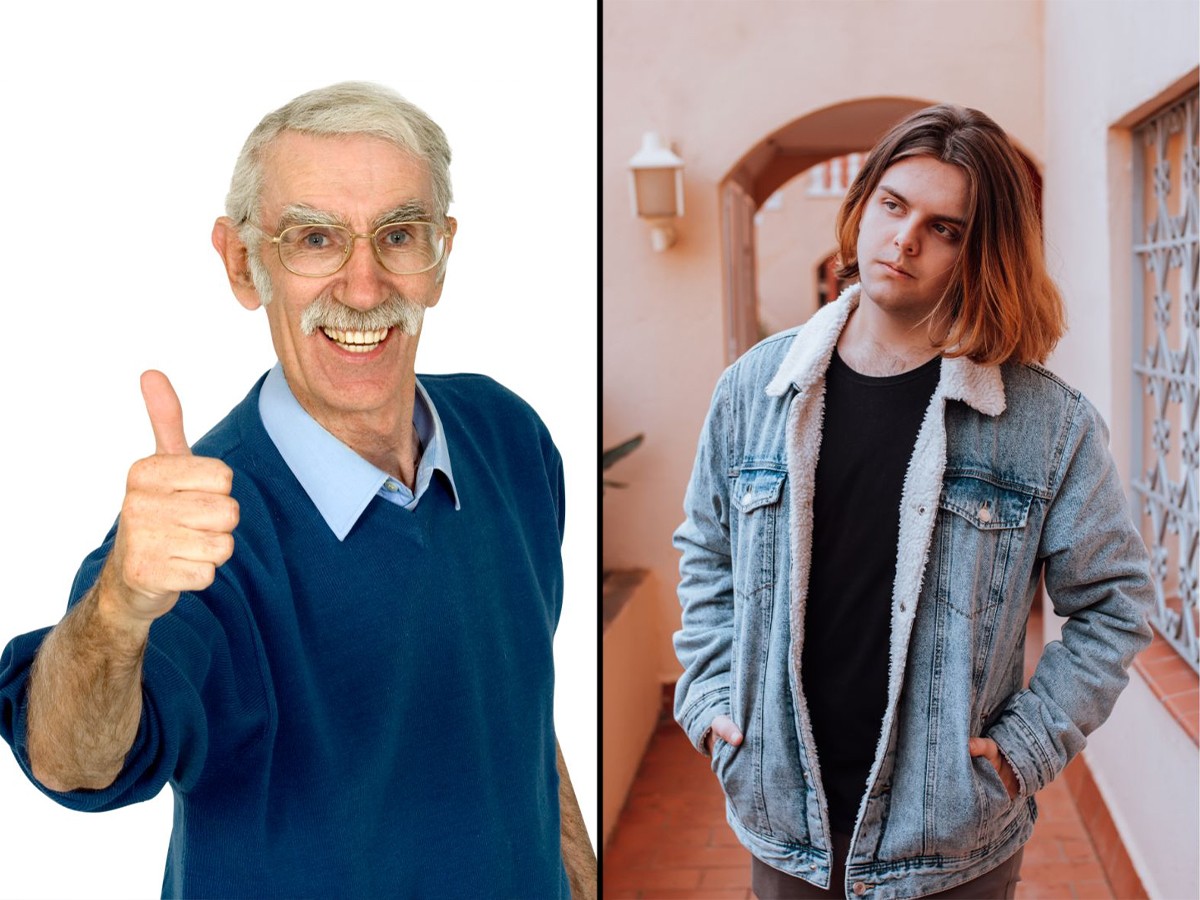
  • Boomers think these 7 habits make them polite but younger generations are begging them to stop
    Photo credit: Images via Canva – Photos by Latino Life and mariashipakina – Boomer and Gen Z

    There is nothing wrong with politeness and a particular point of view, unless, of course, your interpretation of kindness is different from everyone else’s. Case in point? Boomers and every other generation.

    What is it about Boomer energy that can just rub people the wrong way sometimes? It’s quite common for different age groups to have different needs and habits, and perhaps the Boomers you know may find 20% tips an absolute must, yet the concept of a service fee infuriating. Maybe they feel there is only one perfect way to load a dishwasher. Maybe job loyalty does have value. Whatever the topic, Boomers are likely to have a certain opinion about it that they feel is the best.

    Finding ways to communicate and connect are important dynamics to building community and bridging the generation gap, and sometimes understanding what Boomer actions bother the other generations can help start a dialogue. VegOut Magazine described seven habits that may seem thoughtful to Boomers, but are actually emotionally taxing to younger generations.

    Calling whenever they want

    Boomers largely grew up in an age of landline phones that often ran unexpectedly. Instead of the horror that Millennials experience from an unsolicited phone call, Boomers find them normal and inviting. A reach out to say “Hello!” means they care and are interested in your life.

    Younger generations feel it’s an uninvited threat. Where’s the heads up text? Nothing triggers anxiety like an unexpected ring.

    Solution: How about everyone just chill? Older people can learn to text first. Younger people can acknowledge they don’t have to answer the phone, and often don’t anyway.

    The unexpected visit

    Seth Meyers, comedy, uninvited, neighbors, visits, social norms, formality, traditional manners

    Boomers grew up in an age of the unannounced visit. There was a time when neighbors just rang a doorbell and offered up some extra muffins, freshly baked. Today, people guard their homes with intensity. A doorbell ring is terrifying, especially if pizza hasn’t been ordered.

    Solution: Boomers, just send a text first. It’s not that complicated. Younger generations, you can always hide in the closet and pretend you’re not home.

    Comments on personal appearance

    Into today’s world, unsolicited comments on someone’s appearance seem a bit risky. And yet, Boomers never seem afraid to comment on someone’s weight loss or ask questions like, “Why aren’t you smiling?” These questions and comments were once considered tools of connection. It showed interest and concern for the mental and physical health of friends and people in general.

    Younger people guard all aspects of “self” and “body image.” It’s dangerous territory leading toward hurt feelings and possible backlash.

    Solution: If you don’t have anything to say nice, don’t say it. Even if you do, probably don’t say it.

    Unsolicited advice

    unsolicited advice, hierarchy, mindset, communication, miscommunication, informality, mental health
    Unexpected advice. media0.giphy.com

    With age comes wisdom, yet sometimes nobody wants to hear it. Knowledge acquired over time and experience is valuable and should be passed on, but in certain contexts. Younger people often find unsolicited advice to be a rude personal attack, so be careful about offering a note no one asked for.

    Solution: I had a friend who used to always ask, “Do you want to hear my opinion?” before they shared it. It was a pretty amazing quality that gave me time to prepare for what might be coming. In the end, it’s best to get permission. Simple.

    Chain messages

    chain  mail, texting, emails, short-form content, emoji, digital native, culture, common ground
    Breaking chains. Image via Canva – Photo by Merydolla

    There’s nothing quite like the inspirational chain meme your grandma found. Especially when it was making the rounds eight months ago. Like everyone else, older people benefit from feeling connected. They’re just attempting to get in the digital meta. It’s easy to point out who’s out of the loop when you’re in it.

    Solution: Can we all cut one another some slack? Instead of attacks, reconnect and appreciate the meme or image you already saw months ago. Replying with, “Ha, that’s a good one” isn’t that much of a stretch, and it isn’t that much to ask when given an opportunity to share love instead of disdain. I have an aunt who gets concerned when those chain mails say, “Pass this on to 10 people…” I told her to send them my way, because I’m not afraid to dump them in the digital garbage.

    Lengthy conversations for business

    Boomers have worked networking and building relationships into their business model. A chat about what’s trending is a great way to ease into an important conversation. It’s a way to be polite and build-up camaraderie before the deal is done.

    Younger generations don’t want to waste time. A “thumbs up” emoji can be enough to get things going.

    Solution: Acumen took a look at getting generations to learn how to connect with one another. They found that “common ground” was crucial for networking. Younger people can work on patience and respecting the time offered by older generations, and Boomers can learn to fire a quick text instead of dragging every conversation into a “life lesson.”

    Checking and rechecking replies

    Boomers may not be totally confident in how the whole digital world works. It’s not uncommon to receive texts and emails asking, “Did you get that email…” or “Curious on your thoughts of the text I sent.” These follow-ups were designed to show interest and thoroughness. Younger people can just find them bothersome.

    Solution: Boomers can learn to not treat texting and emails like a personal journal. It’s okay to be brief and to the point. A short message doesn’t mean someone is being short with you. Speak with People suggested that younger generations can give Boomers the “benefit of the doubt.”

    The wrap up

    Everyone is trying to fit in the best they can. It can be difficult to adapt and move with the times. Some day, younger people will be a little out of touch with the next generation.

    Philosopher and theologian Martin Buber wrote, “All real living is meeting.” The more we can learn to help each other connect, the better. Learning to be curious about other people and their generation instead of dictating will build deeper and more mutual connections.

    This article originally appeared 1 year ago. It has been updated.

  • Only 17% of people can pass this 3-question IQ test on the first try. Can you?
    Photo credit: Canva – A woman writes on a chalkboard
    , ,

    Only 17% of people can pass this 3-question IQ test on the first try. Can you?

    Developed by a Yale professor, this simple test reveals a lot about how you think—and only 17% of people get it right.

    It’s been called the world’s shortest IQ test, and despite its apparent simplicity, only about 17% of people answer all three questions correctly on their first try. The Cognitive Reflection Test (CRT) isn’t about measuring knowledge; it’s about measuring how you think.

    The test was introduced in a 2005 paper in the Journal of Economic Perspectives by Yale professor Shane Frederick. It’s designed to test your ability to override a quick, intuitive gut reaction and engage in deeper, more analytical thought.

    Want to try it yourself?

    IQ test, cognitive reflection test, critical thinking, brain teasers, logic puzzles, psychology, System 1 thinking, problem solving
    Woman sits in front of her computer thinking Canva

    Here are the three questions:

    1. A bat and a ball together cost $1.10. The bat costs $1.00 more than the ball. How much does the ball cost?
    2. If it takes five machines five minutes to make five widgets, how long would it take 100 machines to make 100 widgets?
    3. In a lake, there is a patch of lily pads. Every day, the patch doubles in size. If it takes 48 days for the patch to cover the entire lake, how long would it take for the patch to cover half of the lake?

    The Answers and Why They’re So Tricky

    If you answered 10 cents, 100 minutes, and 24 days, you’re in the majority—and you’ve fallen for the trap. Those are the common intuitive answers. The correct answers are 5 cents, 5 minutes, and 47 days.

    IQ test, cognitive reflection test, critical thinking, brain teasers, logic puzzles, psychology, System 1 thinking, problem solving

    Woman proudly shows testy results Canva

    Here’s the breakdown:

    • The Bat and Ball: If the ball cost 10 cents, the bat (at $1.00 more) would cost $1.10, for a total of $1.20. The correct math shows the ball is 5 cents and the bat is $1.05.
    • The Widgets: The rate of production is one widget per machine every five minutes. Therefore, 100 machines can produce 100 widgets in the same five-minute timeframe.
    • The Lily Pads: Since the patch doubles in size every day, it must have been half its final size just one day before it covered the whole lake—on day 47.

    The Science of Your Brain

    IQ test, cognitive reflection test, critical thinking, brain teasers, logic puzzles, psychology, System 1 thinking, problem solving

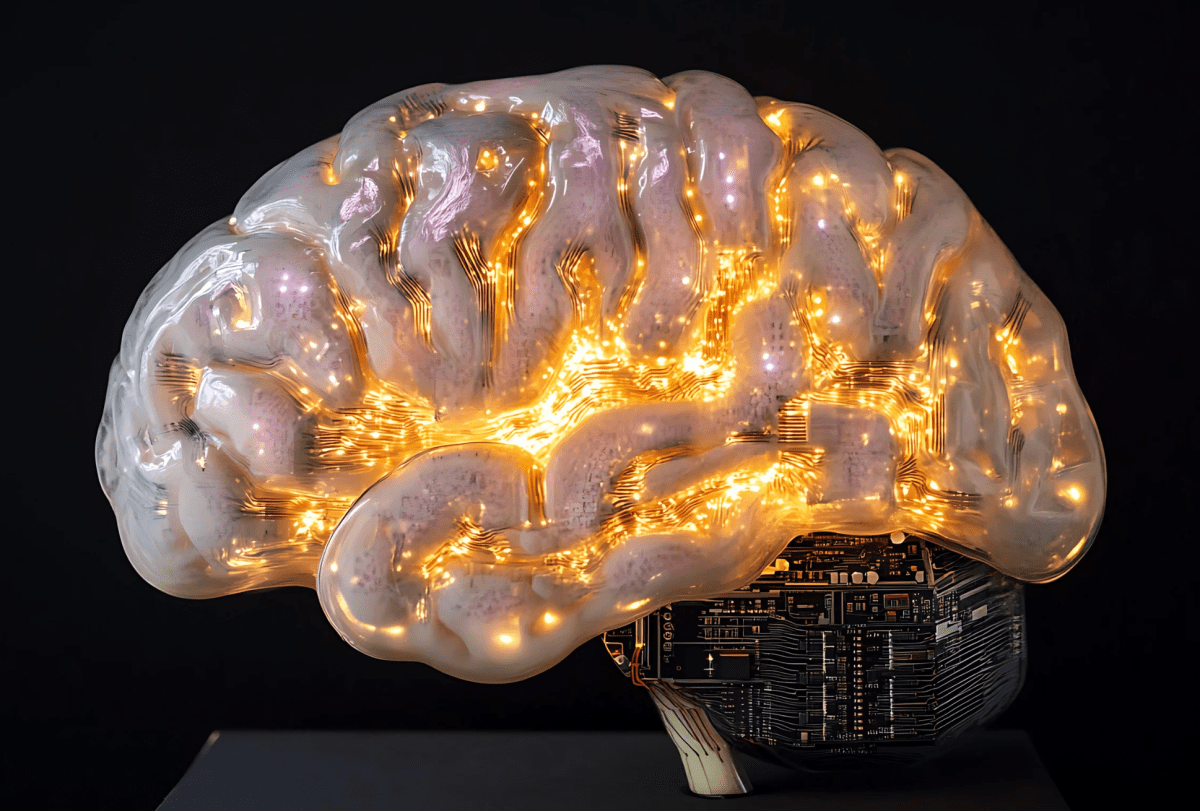
    An artistic representation of the brain Canva

    This test brilliantly illustrates the two modes of thinking identified by Nobel Prize-winning psychologist Daniel Kahneman. System 1 is our fast, automatic, intuitive thinking, which gives us the quick (but wrong) answers. System 2 is our slower, more deliberate, and analytical thinking, which is required to solve the puzzles correctly.

    As Frederick explains, the test measures how we make decisions based on instinct versus analysis. “System 1 thinkers respond spontaneously, often making mistakes, while System 2 thinkers engage in effortful thought processes,” he wrote.

    Frederick’s research found that those with stronger cognitive reflection skills (System 2 thinkers) tend to be more patient and willing to take calculated risks. His work aims to understand the real-world impact of our cognitive styles, noting, “Despite the diversity of phenomena related to IQ, few have attempted to understand—or even describe—its influences on judgment and decision making.”

    So, whether you passed the test or not, it offers a fascinating glimpse into the constant tug-of-war between gut reaction and careful thought that happens inside our brains every day.

    This article originally appeared earlier this year.

    This article originally appeared [time-difference] ago. It has been updated.

  • Woman documents her nephew’s late night culinary quests as the viral ‘Midnight Chef’
    Photo credit: @midnightchef_amir on Instagram – Amir Jackson's late night cooking is going viral.
    ,

    Woman documents her nephew’s late night culinary quests as the viral ‘Midnight Chef’

    A 15-year-old cooking late night snacks is inspiring the Internet.

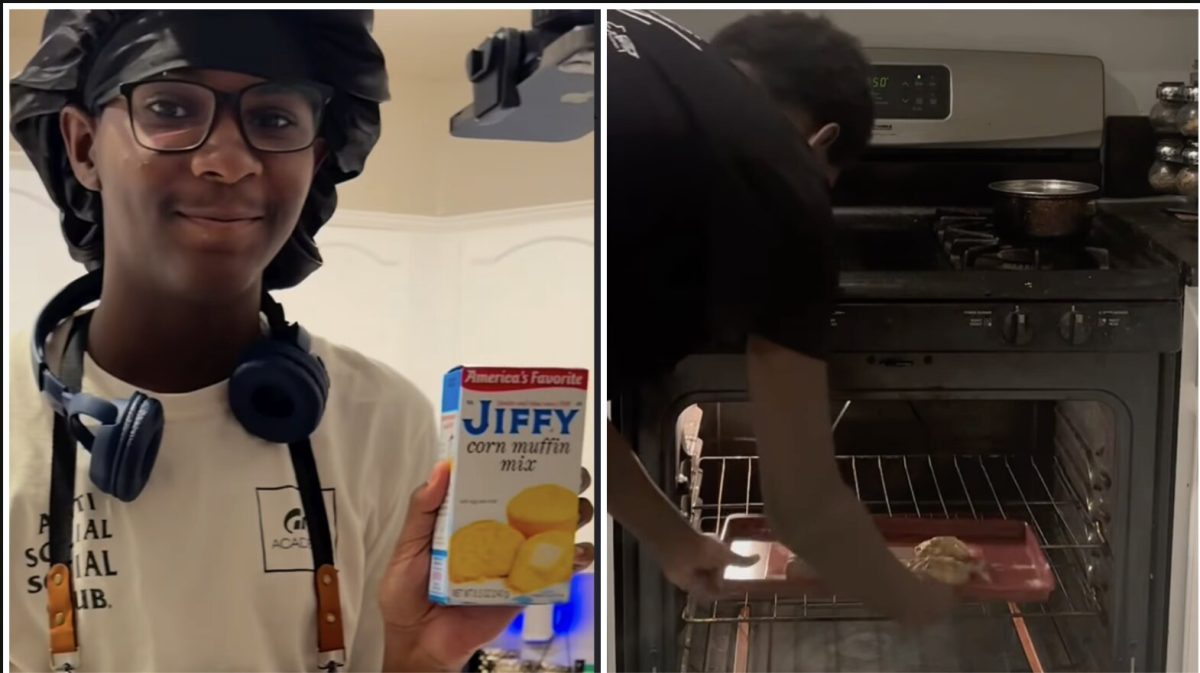
    One night in Apple Valley, California, Morgan Graham rose in the middle of the night. A smell had woken her up. It was pleasant, but at 11:28 p.m. she wasn’t expecting to smell delicious cooking. She went down into the kitchen to see her 15-year-old nephew, Amir Jackson, baking cookies.

    This was the first of several viral videos of Graham’s nephew cooking up a storm late at night. Jackson, who has been staying with his aunt during the summer, is taking advantage of her kitchen to whip up some sumptuous snacks.

    Birth of a Midnight Chef

    Nearly every night, Graham wakes up around midnight to the smell of cookies, cornbread, tacos, or whatever her nephew wants to prepare.

    “I don’t care,” said Graham in the initial video. “He’s very responsible. He’s not gonna burn the house down, so therefore, cook whatever you want.”

    Graham further explained in the video that Jackson looks at recipes daily. He also rummages through her pantry during the day to search for ingredients for his nightly cooking fest. 

    “In his world, he’s having the time of his life. In my world, I just want to stop waking up close to midnight to the smell of food,” Graham joked.

    Graham’s videos featuring her nephew have racked up millions of views on TikTok and Instagram. The commenters soon bestowed the nickname “Midnight Chef” upon Jackson, to general delight. In another video, Jackson explained he liked the peace and quiet of the night while preparing his dishes.

    “I was like, ‘Man, I could go for some cookies right now.’ I saw they had cookie dough, so I started just making them, just randomly,” Jackson told TODAY. “I was trying to make sure nobody was up. My thought process was just like, ‘Man, why not?’”

    Graham is encouraging her nephew to keep cooking even though it wakes her. In fact, Graham set up Jackson’s own Midnight Chef Instagram page for him to post his latest recipes.

    “I just want to experiment while I still got the chance to experiment. I’ll maybe like branch into different fields,” said Jackson. “Explore what I can do while I still got time to.”

    Why do we indulge in late night snacking?

    Jackson’s popularity has brought up a commonly asked question: Why do we crave food randomly in the middle of the night?

    Well, there’s actually a bit of science behind it. Turns out that late night snacking is a result of our circadian rhythm system. As part of our now-defunct survival mechanism, our ancestors would eat large meals at night to store energy in times of famine. This is also why most midnight snackers crave foods higher in fat, salt, and sugar compared to what they’d usually eat during the day. While there’s nothing inherently wrong with late night snacking, it could curb certain health goals if a person is trying to trim down.

    If you find yourself getting up in the middle of the night with a hankering for a snack, it may be worth taking a peek at Jackson’s videos. Who knows what kind of late night cooking it can inspire? Perhaps you’ll become a Midnight Chef yourself.

Explore More Culture Stories

Internet

Woman documents her nephew’s late night culinary quests as the viral ‘Midnight Chef’

Fashion

European Union enforces ban on destroying unsold fast-fashion clothing by major companies

Film & TV

European Broadcasting Union offers guide to reduce sexualizing camera angles of Olympic women athletes

Culture

The summer concert state rankings: Which states pack more festivals, shows, and tours in 2026