This post is part of a series from students in the Master of Arts in Social Design program at Maryland Institute College of Art, which focuses on how design can reimagine solutions to world challenges. For the next eight weeks, MASD students will each share their personal thesis journey. Follow the series at good.is/MASD.


The last six months have been a relatively short, yet immersive, transplantation from undergraduate educations in sociology and anthropology into the world of social design, i.e. design for social change. Along the way, we’ve picked up on a few buzzwords, some more intuitively understandable than others: innovation, design thinking, human-centered, empathy, impact, multidisciplinary, with-not-for, transdisciplinary, ideate, prototype, transparency, iterative and, our personal favorite, cultural entrepreneurship.
But what do these words actually mean? Sure, they seem incredibly powerful at first glance, but what happens when you take an objective step back and run a fine-toothed comb through them? Without a clear and concise rubric attaching these words to metrics and outcomes, they simply become vague and empty terms left open to interpretation.
For example, transparency of our work is valued in our program, but how much and what kind of information does each project need to share, and with whom, in order to qualify as transparent? Or do we just get to label our work as transparent because it’s a word we’ve chosen to describe social design? Even if we do find ways to measure transparency, we have to then make sure that we’re all using the same ruler. Because through common metrics we can then share, discuss, debate, and improve not just our individual work but also the social design field as a whole. Then how do we do this for empathy? Impact? With-not-for?
So let’s begin to do this. Social design is at a critical point; it’s still in its formative years, which is why moving beyond criticism and into pragmatic solutions is so important. Our thesis work is focusing on what this pragmatic next step could look like. Since we can’t create an entire methodology alone, much less by May, we’re focusing specifically on the research aspect of the social design process. We’re looking heavily at the practices of social science and social work to inform our ideas. We’re beginning to develop a model for research practices that can then hopefully be used in both the educational and praxis applications of social design.
The ultimate goal for our work is not to just hand off a toolkit for research, but to contribute to a critical discourse on the trajectory of social design. We want people who agree with our ideas to help us build them out and those who disagree to be critical and provide alternatives. We want there to be a space for this to happen. Hannah Arendt put it eloquently when she said, “opinions are formed in a process of open discussion and debate and where no opportunity for the forming of opinions exists, there may be moods… but no opinion.”
In the interest of the future of social design, it’s time for us to put down the Post-it notes and the screen-printed t-shirts. It’s time to start creating a solid foundation and framework for social design to build upon and within. If we begin to do this, then we can start to more clearly connect the dots between concept and reality, between the words we use to describe our work and what they actually mean.
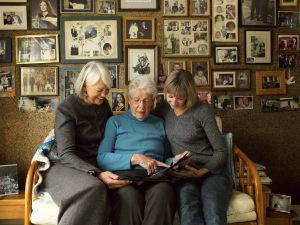
Image courtesy of Cinnamon Janzer


  • Man’s dog suddenly becomes protective of his wife, Internet clocks the reason right away
    Dogs have impressive observational powers.Photo credit: Canva

    Reddit user Girlfriendhatesmefor’s three-year-old pitbull, Otis, had recently become overprotective of his wife. So he asked the online community if they knew what might be wrong with the dog.

    “A week or two ago, my wife got some sort of stomach bug,” the Reddit user wrote under the subreddit /r/dogs. “She was really nauseous and ill for about a week. Otis is very in tune with her emotions (we once got in a fight and she was upset, I swear he was staring daggers at me lol) and during this time didn’t even want to leave her to go on walks. We thought it was adorable!”

    His wife soon felt better, butthe dog’s behavior didn’t change.

    pregnancy signs, dogs and pregnancy, pitbull behavior, pet intuition, dog overprotection, Reddit stories, viral Reddit, dog instincts, canine emotions, dog owner tips
    Otis knew before they did. Canva

    Girlfriendhatesmefor began to fear that Otis’ behavior may be an early sign of an aggression issue or an indication that the dog was hurt or sick.

    So he threw a question out to fellow Reddit users: “Has anyone else’s dog suddenly developed attachment/aggression issues? Any and all advice appreciated, even if it’s that we’re being paranoid!”

    The most popular response to his thread was by ZZBC.

    Any chance your wife is pregnant?

    ZZBC | Reddit

    The potential news hit Girlfriendhatesmefor like a ton of bricks. A few days later, Girlfriendhatesmefor posted an update and ZZBC was right!

    “The wifey is pregnant!” the father-to-be wrote. “Otis is still being overprotective but it all makes sense now! Thanks for all the advice and kind words! Sorry for the delayed reply, I didn’t check back until just now!”

    Redditors responded with similar experiences.

    Anecdotal I know but I swear my dog knew I was pregnant before I was. He was super clingy (more than normal) and was always resting his head on my belly.

    realityisworse | Reddit

    So why do dogs get overprotective when someone is pregnant?

    Jeff Werber, PhD, president and chief veterinarian of the Century Veterinary Group in Los Angeles, told Health.com that “dogs can also smell the hormonal changes going on in a woman’s body at that time.” He added the dog may “not understand that this new scent of your skin and breath is caused by a developing baby, but they will know that something is different with you—which might cause them to be more curious or attentive.”

    The big lesson here is to listen to your pets and to ask questions when their behavior abruptly changes. They may be trying to tell you something, and the news may be life-changing.

    This article originally appeared last year.

  • Throughout history, women have stood up and fought to break down barriers imposed on them from stereotypes and societal expectations. The trailblazers in these photos made history and redefined what a woman could be. In doing so, they paved the way for future generations to stand up and continue to fight for equality.

  • ,

    Why mass shootings spawn conspiracy theories

    Mass shootings and conspiracy theories have a long history.

    While conspiracy theories are not limited to any topic, there is one type of event that seems particularly likely to spark them: mass shootings, typically defined as attacks in which a shooter kills at least four other people.

    When one person kills many others in a single incident, particularly when it seems random, people naturally seek out answers for why the tragedy happened. After all, if a mass shooting is random, anyone can be a target.

    Pointing to some nefarious plan by a powerful group – such as the government – can be more comforting than the idea that the attack was the result of a disturbed or mentally ill individual who obtained a firearm legally.


Explore More Articles Stories

Articles

Man’s dog suddenly becomes protective of his wife, Internet clocks the reason right away

Articles

14 images of badass women who destroyed stereotypes and inspired future generations

Articles

Why mass shootings spawn conspiracy theories

Articles

11 hilarious posts describe the everyday struggles of being a woman