
On January 22, 2010, after less than eight months, Conan O’Brien ended his run as host of The Tonight Show—a headline-generating saga built on executive maneuvering, press statements, media punchlines, and a whole lot of frustration for the comedy legend. He earned loads of support and goodwill in the months that followed, including a particularly moving—and hilarious—gift from Robin Williams, whom O’Brien considered “the best talk show guest in the world.”

But before we get to that, let’s set the stage by unpacking the talk-show drama. O’Brien had hosted his version of Late Night from 1993 to 2009, and he’d already been named Jay Leno’s Tonight Show successor back in 2004. NBC initially gave Leno a new program, The Jay Leno Show, at an earlier time slot, but they decided to move him back to 11:35 p.m., which would require bumping O’Brien a half-hour later. Refusing to take part in this experiment, O’Brien agreed to an exit deal with the network, and Leno resuming his old Tonight Show duties—until the latter passed the baton to Jimmy Fallon in 2014. After staging a 30-date comedy tour, O’Brien created a brand new TBS show, Conan, which ran for 11 seasons starting in late 2010.

Even though his career clearly survived just fine, the experience was still rattling for O’Brien, who considered hosting The Tonight Show a lifelong dream. As he recalled years later, Williams’ kind but unexpected gesture helped lift his spirits.

“I was lucky enough to have some great interactions with Robin Williams before he passed [in 2014],” O’Brien recalled in a 2024 episode of his podcast Conan O’Brien Needs a Friend. “And one of the most memorable examples to me of his kindness is when I went through my whole Tonight Show debacle. Finally, the show is done, and I don’t know if I have a career anymore. What am I going to do next?…I’m lying on the floor in the living room of my house, and the phone rings. I pick it up, and it’s Robin Williams.”

O’Brien, unsure how Williams even got his phone number, was surprised but delighted. “I’ll never forget—he goes, ‘How are you holding up, chief?’ I said, ‘Oh, Robin, thanks so much for calling.’ He said, ‘Listen, you’re gonna be fine. You’re gonna be great. I know you like to ride bikes.’ Because he was really into bicycling…’Go down to the bike shop down in Santa Monica. I want you to go down there. I’ve set up a bike for you.’ I said, ‘What?’ He said, ‘No, no, no. Just head down there. Ride around, and you’ll feel better.’…He said, ‘I told them to paint it in all these crazy Irish colors.’”

O’Brien also told the bike story on Conan during a tribute segment following Williams’ death, saying the gift exemplified both his “generosity” and “amazing spirit of fun.”

“[It] was the most absurd bicycle you’ve ever seen,” he said. “It was bright orange and bright green, and it had shamrocks on it…I didn’t know him well enough to justify this kind of [gesture]…so I called him up and said, ‘Robin, I’m floored by this bike.’ All he would say is, ‘Well, I know you love to ride and you could use it.’ He went, ‘Does it look ridiculous? Does it really look ridiculous?’ I said, “Yeah, it looks ridiculous.’ He went, ‘Good. Do you really look stupid riding it?’ I said, ‘Yeah, I’m gonna look really stupid.’ He’s like, ‘Well, that’s good then!’”

“We know now that he had his battles,” O’Brien added, “and I think it’s particularly courageous for someone to be that generous of spirit in the face of that kind of depression. Such a lovely, special man.”

There are tons of stories out there about Robin Williams enriching people’s lives—from the time he bonded with a grieving gorilla named Koko to his fleeting but life-changing interaction with a struggling stand-up comedian after she bombed onstage. “[A]s the tears came anyway, she looked up and lo and behold, there was Robin Williams,” wrote Cecily Knobler for Upworthy. “She stuttered, ‘You. Are. One of my favorites. Ever.’ He looked at her, his blue eyes warmly crinkling and said, ‘You were amazing.’ It hadn’t been true. But the fact that he would go out of his way to make this total stranger’s awful night into one of her best at that time, was just the kind of person Robin was.”

  • Woman documents her nephew’s late night culinary quests as the viral ‘Midnight Chef’
    Photo credit: @midnightchef_amir on InstagramAmir Jackson's late night cooking is going viral.
    ,

    Woman documents her nephew’s late night culinary quests as the viral ‘Midnight Chef’

    A 15-year-old cooking late night snacks is inspiring the Internet.

    One night in Apple Valley, California, Morgan Graham rose in the middle of the night. A smell had woken her up. It was pleasant, but at 11:28 p.m. she wasn’t expecting to smell delicious cooking. She went down into the kitchen to see her 15-year-old nephew, Amir Jackson, baking cookies.

    This was the first of several viral videos of Graham’s nephew cooking up a storm late at night. Jackson, who has been staying with his aunt during the summer, is taking advantage of her kitchen to whip up some sumptuous snacks.

    Birth of a Midnight Chef

    Nearly every night, Graham wakes up around midnight to the smell of cookies, cornbread, tacos, or whatever her nephew wants to prepare.

    “I don’t care,” said Graham in the initial video. “He’s very responsible. He’s not gonna burn the house down, so therefore, cook whatever you want.”

    Graham further explained in the video that Jackson looks at recipes daily. He also rummages through her pantry during the day to search for ingredients for his nightly cooking fest. 

    “In his world, he’s having the time of his life. In my world, I just want to stop waking up close to midnight to the smell of food,” Graham joked.

    Graham’s videos featuring her nephew have racked up millions of views on TikTok and Instagram. The commenters soon bestowed the nickname “Midnight Chef” upon Jackson, to general delight. In another video, Jackson explained he liked the peace and quiet of the night while preparing his dishes.

    “I was like, ‘Man, I could go for some cookies right now.’ I saw they had cookie dough, so I started just making them, just randomly,” Jackson told TODAY. “I was trying to make sure nobody was up. My thought process was just like, ‘Man, why not?’”

    Graham is encouraging her nephew to keep cooking even though it wakes her. In fact, Graham set up Jackson’s own Midnight Chef Instagram page for him to post his latest recipes.

    “I just want to experiment while I still got the chance to experiment. I’ll maybe like branch into different fields,” said Jackson. “Explore what I can do while I still got time to.”

    Why do we indulge in late night snacking?

    Jackson’s popularity has brought up a commonly asked question: Why do we crave food randomly in the middle of the night?

    Well, there’s actually a bit of science behind it. Turns out that late night snacking is a result of our circadian rhythm system. As part of our now-defunct survival mechanism, our ancestors would eat large meals at night to store energy in times of famine. This is also why most midnight snackers crave foods higher in fat, salt, and sugar compared to what they’d usually eat during the day. While there’s nothing inherently wrong with late night snacking, it could curb certain health goals if a person is trying to trim down.

    If you find yourself getting up in the middle of the night with a hankering for a snack, it may be worth taking a peek at Jackson’s videos. Who knows what kind of late night cooking it can inspire? Perhaps you’ll become a Midnight Chef yourself.

  • European Union enforces ban on destroying unsold fast-fashion clothing by major companies
    Photo credit: CanvaThe European Union hopes to reduce fast-fashion waste.

    A new rule adopted by the European Union is intended to reduce landfill waste while holding major clothing manufacturers accountable.

    Starting July 19, the EU prohibits large companies from destroying unsold clothing, accessories, and shoes under the Ecodesign for Sustainable Products Regulation (ESPR). The regulations will expand to cover medium-sized companies in 2030.

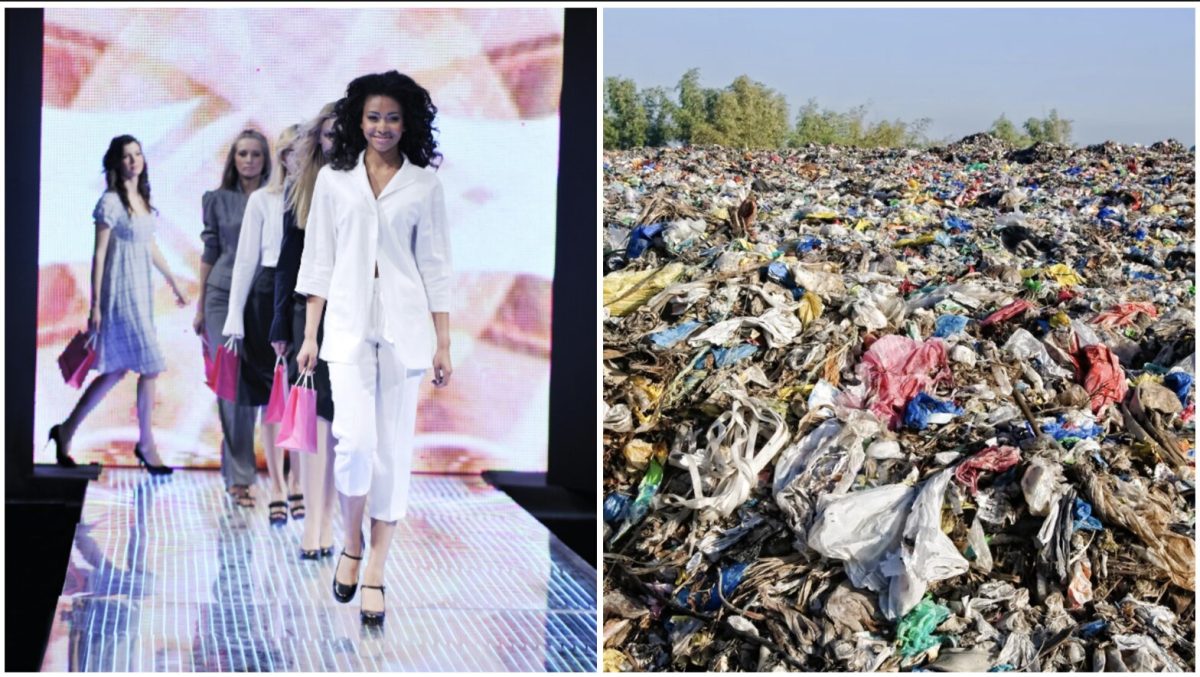
    Fast fashion has become a major environmental concern. As retailers rapidly cycle through trends, unsold clothing often ends up in landfills or is destroyed to make room for new inventory. Many garments are made from synthetic fibers that can release greenhouse gases as they break down and shed microplastics that may contaminate soil and waterways.

    What’s the ban’s purpose?

    The ban is intended to reduce the amount of unsold clothing that large manufacturers dispose of. According to the European Environment Agency, between 264,000 and 594,000 tonnes of unused textiles are destroyed across Europe each year.

    Instead of destroying unsold clothing, companies will need to find other ways to keep those products in use. That could mean selling excess inventory at a discount, donating it to charities or social enterprises, or preparing it for reuse through repair, refurbishment, or remanufacturing. When those options aren’t feasible, the materials can be recycled.

    While the regulation is primarily focused on reducing the fashion industry’s environmental impact, the EU also hopes it will strengthen the economy by encouraging more sustainable business practices. The ban incentivizes companies to design products that are more resource-efficient, durable, reusable, and easier to repair or recycle. In turn, consumers should benefit from higher-quality products that last longer and generate less waste.

    Companies may destroy unsold clothing and footwear only in limited circumstances, such as when the items are damaged, unsafe, counterfeit, infringe intellectual property rights, or have been rejected by charitable organizations. Businesses relying on these exemptions must provide supporting documentation, such as test results or other records, to justify the destruction. Even then, they must follow the EU’s waste hierarchy, which prioritizes reuse and recycling over disposal. Companies are also required to publish annual reports detailing the unsold products they have discarded.

    National authorities will enforce the ban and may impose fines on companies that violate its requirements, including failing to maintain records for at least five years to support inspections. To help reduce the administrative burden, businesses may use existing customs and logistics codes when reporting the products they discard.

    Why recycling isn’t enough

    Recycling clothing can be a complicated and labor-intensive process. It often involves separating fabrics, dyes, synthetic fibers, and natural textile materials before they can be reused. That’s not to say it isn’t worthwhile. Instead of ending up in a landfill, recycled textiles can be turned into new clothing, home insulation, carpet padding, and other products.

    Still, recycling isn’t a cure-all. The EU hopes the new ban will encourage companies to keep usable clothing in circulation for as long as possible through resale, donation, reuse, or refurbishment before recycling becomes necessary. In doing so, the regulation aims to create a more circular economy rather than allowing piles of unused clothing to continue growing.

    This movement hopes to encourage clothing manufacturers to produce higher-quality products and reshape the industry as a whole. Making clothing from higher-grade materials with durable stitching that’s easier to repair can help reduce waste. While critics argue that doing so could reduce the number of garments sold each year, many say better-made clothing is worth the higher price—especially if consumers end up buying fewer replacement items over time.

    What can you do with old clothing?

    There are plenty of things you can do with old clothing around your home. If an item is too damaged to donate, its fabric can be repurposed for crafts or used as cleaning rags. And if you’re handy with a needle, there are countless ways to upcycle old clothes into new outfits, accessories, or other useful items with a little inspiration from the Internet.

    Giant corporations and everyday people alike can do their best to make the most of the materials they have, helping save money and reduce waste.

  • European Broadcasting Union offers guide to reduce sexualizing camera angles of Olympic women athletes
    Photo credit: CanvaA new guide has been introduced on how to respectfully broadcast woman athletes.

    Being an athlete is tough, especially if you’re an Olympian. They sacrifice their time and bodies in order to achieve peak physical condition. There is also the mental pressure to compete against the best. The last thing they should worry about is being objectified and sexualized online. 

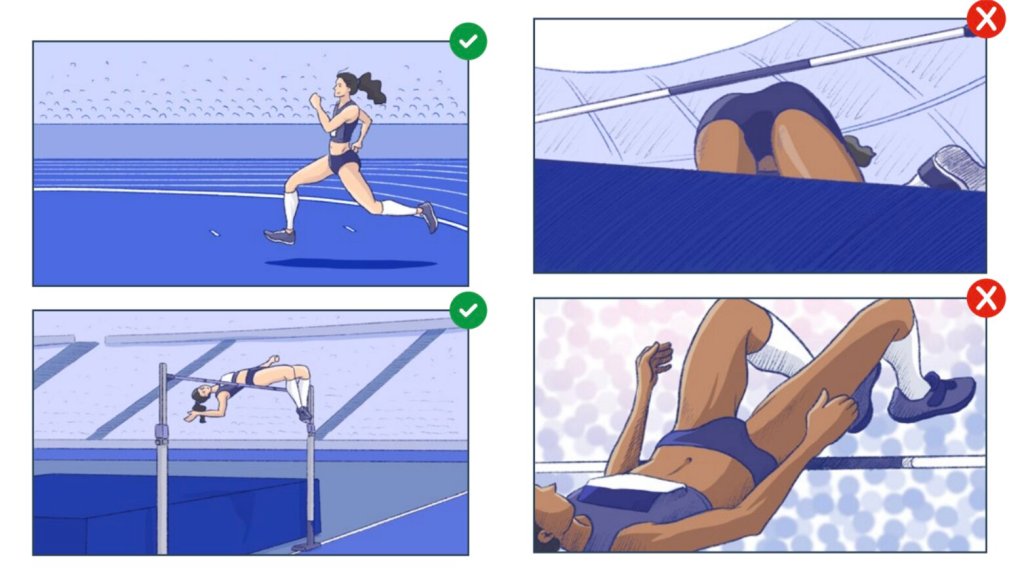
    With this in mind, the European Broadcasting Union wants to help. They offered a booklet to broadcasters titled Raising the Bar: Guidelines for respectful media coverage in women’s athletics. The 23-page guide shows how camera placement choices and editing could potentially compromise an athlete. It also offers broadcasters guidelines for how to set up camera shots and show slow-motion replays that won’t sexualize or present athletes in undignified poses. 

    athletes, infographic, olympians, guide
    Screenshot

    Focusing on the sport, reducing harassment

    These guidelines come as multiple stories about women athletes being harassed online have surfaced. Many misogynistic posts about athletes have come from slow motion footage focused on certain parts of the athlete’s body. 

    “The sexualization of women athletes through selective camera angles and editing choices continues to be a significant concern across many sports broadcasts,” wrote Glen Killane, executive director of EBU Sport in the booklet. “Lingering shots on bodies, low-angle cameras that capture revealing views, and excessive slow-motion replays that serve no technical or storytelling purpose are among the issues observed in the media coverage of women’s athletics competitions today.”

    These new broadcast guidelines and suggestions are backed by Serbian long jumper Ivana Španović, British Olympic pole vaulter Holly Bradshaw, and Croatian high jumper Blanka Vlašić. Vlašić has spoken out regarding the equal visibility of women’s sports. Bradshaw has spoken out against the discomfort and sexualization of Olympic women athletes due to their tight-fitting uniforms.

    “I first-hand have received social media abuse and witnessed inappropriate videos online of myself and colleagues when slow motion content of us competing is captured,” wrote Bradshaw in the guide. “Athletes want to enjoy themselves doing the sport they love without feeling uncomfortable or anxious about the footage being shown live. Many athletes, myself included, have been in competitive scenarios where they are more focused on the cameras instead of their own performance.”

    What the guide provides

    The guide provides visual aids for broadcasters along with insights from the athletes to explain why certain shots would be preferred. Broadcasters are requested to avoid tight shots from the back of athletes. They’re also asked to avoid low camera angles from underneath. They recommend shots above the pelvis or ones that don’t linger onto commonly sexualized areas of the body. They recommend wider shots so the audience can see the technical ability being displayed by the athlete. Overall, the point is to focus on the athletic performance rather than close-ups of the athlete.

    Currently, there is no enforcement of these guidelines or penalties if a sports broadcast doesn’t adhere to them. However, there is value in knowing which broadcasts will focus on the athletic contests rather than an athlete’s appearance. This will help the competitors focus on how they do rather than how they look when the cameras are on.

Explore More Culture Stories

Internet

Woman documents her nephew’s late night culinary quests as the viral ‘Midnight Chef’

Fashion

European Union enforces ban on destroying unsold fast-fashion clothing by major companies

Film & TV

European Broadcasting Union offers guide to reduce sexualizing camera angles of Olympic women athletes

Culture

The summer concert state rankings: Which states pack more festivals, shows, and tours in 2026