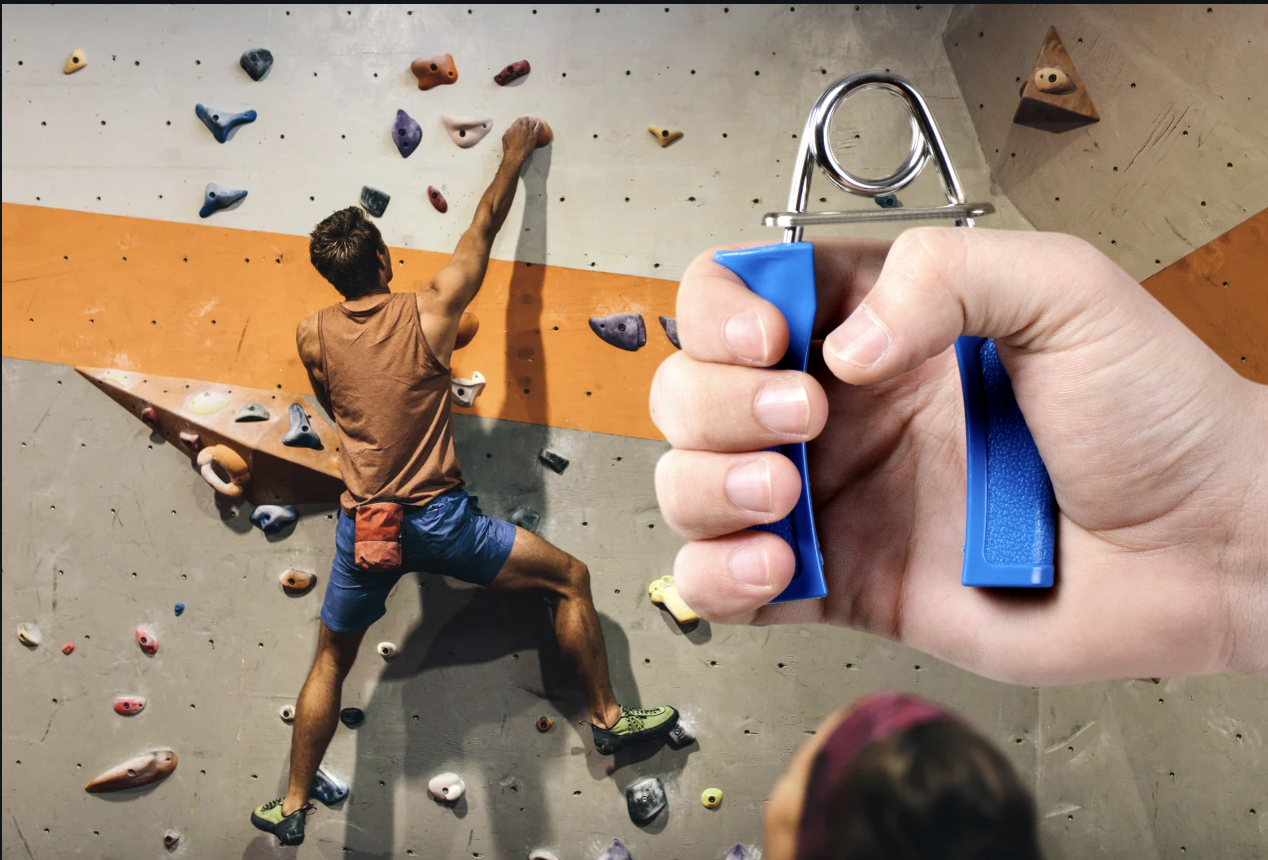
We’re all trying to make the most out of our time on Earth. We watch our diets, exercise, and have our doctors test us in various ways in order to maximize our potential lifespans. However, there is one consistently accurate gauge that could determine whether you’re going to live to see 100: grip strength.

That’s right, in a day and age in which people spend small fortunes to test blood, submit to imaging scans, and use state-of-the-art technology to measure and extend their lifespan, one of the best metrics is to just hold and squeeze a tennis ball as hard as you can for as long as you can. In a 44-year-long study, the participants had their grip strength measured initially at ages 56 through 68 years old at the start, and had their grip strength measured routinely throughout the study. The participants who reached the 100-year age mark were 2.5 times likely to have the highest third grip strength measured in the overall study.

It might sound silly, but a strong and consistent grip is a good layman’s measurement of health. As we age, we lose muscle and bone mass, so maintaining a strong grip helps indicate how much weaker a person has become over time. If there is something interfering with your stamina and blood flow, such as high blood pressure or Type 2 diabetes, a person could find maintaining a strong grip more difficult than a person who is healthier.

Dr. Guillaume Paréa, professor of medicine at McMaster University, believes a simple handshake from his patient can tell him a lot about his health. “Weaker handshakes where fingers struggle to close completely around my hand, or where hand muscles are emaciated, are red flags,” he said to the BBC.

Joshua Davidson, a researcher of strength and conditioning at the University of Derby in England, believes that a simple at-home test with a tennis ball could be a good marker to gauge your health. “All you need is any object that you can grasp and can be deformed without causing pain or discomfort,” he told the BBC. “Simply squeeze it for as long as you can before your grip fatigues. Being able to maintain a maximal squeeze on something like a tennis ball for 15 to 30 seconds would be a good standard to strive for.”

It should be stressed that this is just one of several tests of a person’s health. A person could have an iron-clad grip but still have an underlying, unnoticed health issue that could be picked up by a more technologically advanced test. The purpose of the tennis ball test is just a day-to-day measurement, and to alert yourself to schedule a doctor’s visit if something appears to be off.

But if you do try to squeeze a tennis ball and you can’t keep a steady squeeze on it for 15 seconds, it might be a sign that something needs to be addressed. It could be as simple as exercising more regularly or making changes to your diet. However, all of that should be determined through more thorough testing and in consultation with your doctor.

A weaker grip isn’t just an indicator of vitality in physical health either. The National Library of Medicine has a study that suggests that a weaker grip can also be a red flag for depression and anxiety. If you’re experiencing a weak grip and you’re physically healthy, it might be worth checking to see if you have other depressive symptoms and get the appropriate support.

This tells us that the phrase “get a grip” means more than handling a situation; it also means handling your overall health for longevity’s sake.
  • ER doctor and mom sets the record straight for parents of kids with e-bikes and e-scooters
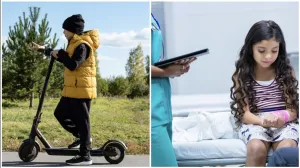
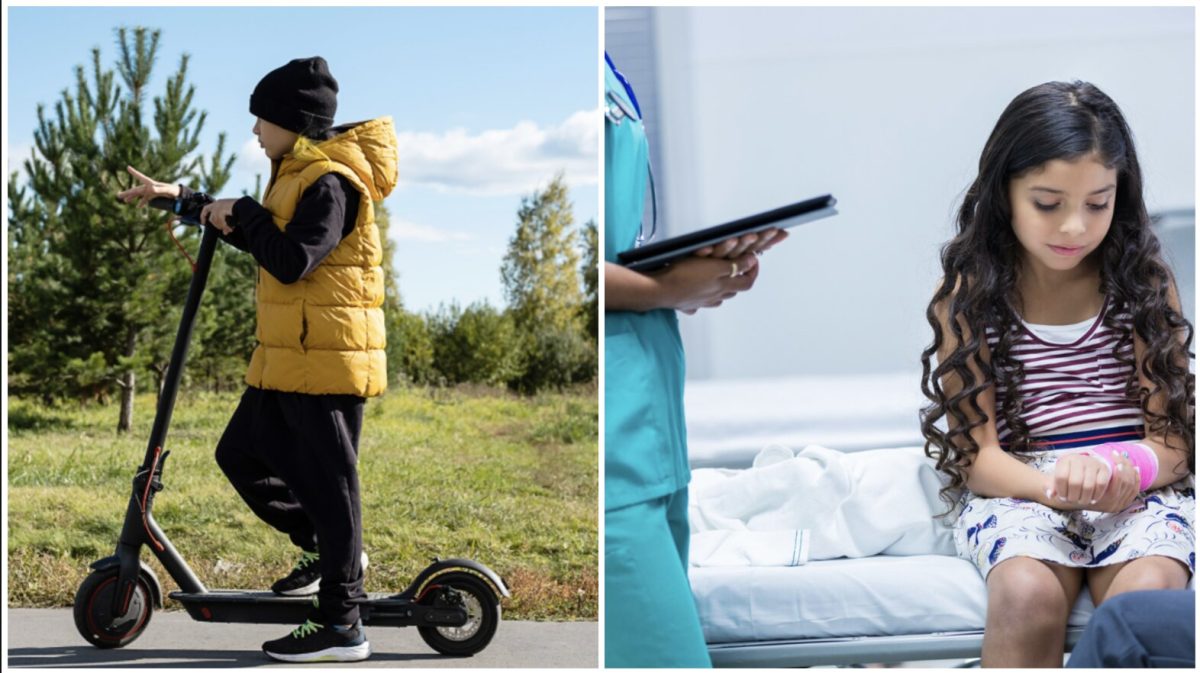
    Photo credit: CanvaA boy rides an e-scooter, left, while a girl is examined in an emergency room.

    An emergency room doctor and fellow mom has been noticing a troubling trend: Many parents are giving their kids something more powerful than bicycles to get around the neighborhood. As a result, she’s seeing more children come into the ER with injuries sustained in e-bike and e-scooter crashes. She recently went online with a plea to parents and young riders.

    Dr. Meghan Elizabeth Beach Martin, known online as Dr. Beachgem, posted a video in her scrubs discussing her concerns after seeing so many children come into the hospital with e-bike injuries during the summer months. She’s worried that too many kids and parents don’t understand the proper safety precautions. As a mother herself, she even questions why children are allowed to ride these devices at all.

    In the video, the doctor explains that some e-bikes can reach speeds of up to 28 mph. She says that if an e-bike goes any faster than that, it’s technically classified as a motorcycle. At those speeds, she regularly sees children with traumatic injuries and broken bones after hitting bumps, cracks in the road, or other vehicles. Many of them aren’t wearing helmets or protective pads, and some are even riding barefoot, making their injuries even more severe. Martin’s video has gained traction on Reddit and elsewhere online.

    E-bikes and e-scooters, examined

    Martin isn’t the only professional seeing a growing problem. The American College of Surgeons reports that there are more than 20,000 e-bike-related injuries each year. Meanwhile, a University of California, San Francisco study found that e-bike injuries doubled annually from 2017 to 2022. The same study found that e-scooter injuries increased by 45% each year during the same period.

    Before riding an e-bike, it’s important to follow proper safety procedures. Make sure you and your child understand your area’s laws regarding e-bikes, including any minimum age requirements. Always wear a helmet and other protective gear when riding. Consider choosing an e-bike with safety features such as motor-interrupt brake levers and disc brakes. These are just a few of the many safety tips experts recommend.

    The U.S. Consumer Product Safety Commission has similar safety tips for e-scooter riders. Wearing a helmet is one of its top recommendations, along with taking other basic precautions. The agency also recommends checking the brakes before riding and slowing down for bumps, cracks, and other road hazards.

    The vast majority of e-scooters and e-bikes are designed for only one rider, so avoid doubling up. Although laws vary by state and locality, wearing more protective gear is always the safer choice. Riders should also review local e-bike and e-scooter laws to make sure they are operating the vehicles safely and legally.

    A little research goes a long way toward making sure you and your children can ride safely. It’s also important for parents to understand that many e-bikes and e-scooters can travel at speeds that make them very different from a traditional bicycle. The last thing you want is for you or your child to become another emergency room statistic.

  • 22-year-old gives out toothy smiles by providing free 3D-printed dentures to those in need
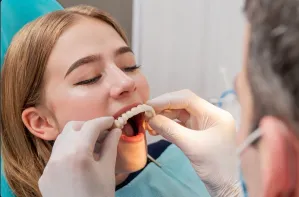
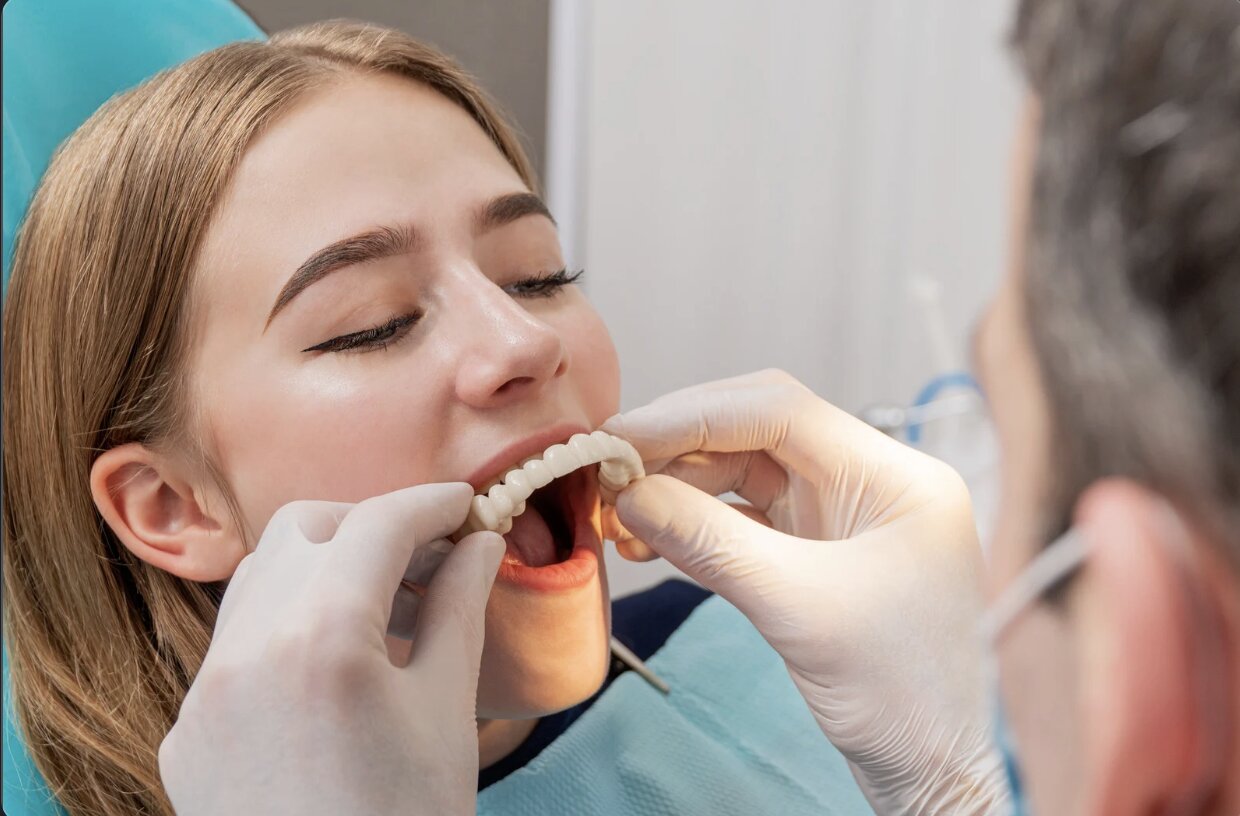
    Photo credit: Canva3D printing can help dental patients.

    Much like anything else, the cost of dental care has risen as need grows. A report from the American Dental Association found that, in 2024, dental spending grew by $7 billion from 2023. A young engineer is making a difference, though. He has helped put a smile back on the faces of folks in need by providing free dentures made with 3D printers.

    Connor Gibson isn’t a dentist or even an expert on 3D printers. He’s a Tennessee community college student who wants to help people. While studying engineering at Walters State Community College, Gibson volunteered with Remote Area Medical (RAM). RAM is a nonprofit that provides mobile clinics offering free medical, vision, and dental care through volunteers. 

    An issue that bites

    A common issue the clinics found was that many people needed dentures. The cost of dentures can be very pricey, ranging from $452 dollars to over $6,500 depending on the patient’s needs and their insurance coverage. Another issue was availability. Even if a patient could afford dentures, it could take weeks or even months before they could be delivered. 

    But Gibson had an idea. He thought that if he could 3D print pairs of dentures, it would save money and time. After all, having a 3D printer on-site would allow the dentures to be made within hours rather than weeks. A patient could get a free set of dentures the same day as their visit.

    Great idea…but how?

    There was a setback: Gibson had no experience in dentistry or 3D printing at all. In spite of his inexperience, Gibson used his engineering and design skills to teach himself how to use a 3D printer. He also got dental experts to teach him how to make dentures the old fashioned way. This way, he was sure to accurately recreate every detail via 3D printing. After taking an impression, Gibson was then able to design specific dentures per patient.

    “Honestly, if you told me three years ago this is what I would be doing, I would have called you crazy,” Gibson said to CNN. “I made it my mission and studied up like I was doing a test, studying up on videos and documents — anything I could find on how to make a denture using this specific software and how to 3D print it.”

    After Gibson successfully completed a pair of 3D-printed dentures for the first time, he knew it was something special. Seeing the tears of joy on the patient’s face was enough to confirm he was doing the right thing.

    “That first delivery was really a huge eureka moment,” Gibson said. “To see that raw, human emotion and just know that I played a change in this person’s life… it’s very humbling, and I’m beyond blessed.”

    Gibson has since been helping RAM develop more denture mobile clinics that can quickly develop dentures for patients who drop in.

    How to find low-cost dental care near you

    If you or someone you know needs low-cost to free dental care, there are options. In addition to Medicare, Medicaid, and CHIP, you can find local and state programs online. You can also dial 2-1-1 for information.

    Another option dental schools and dental hygiene schools that provide supervised, low-cost care from their students.

  • Student with severe facial burns from a frat house fire healed through new innovative treatment
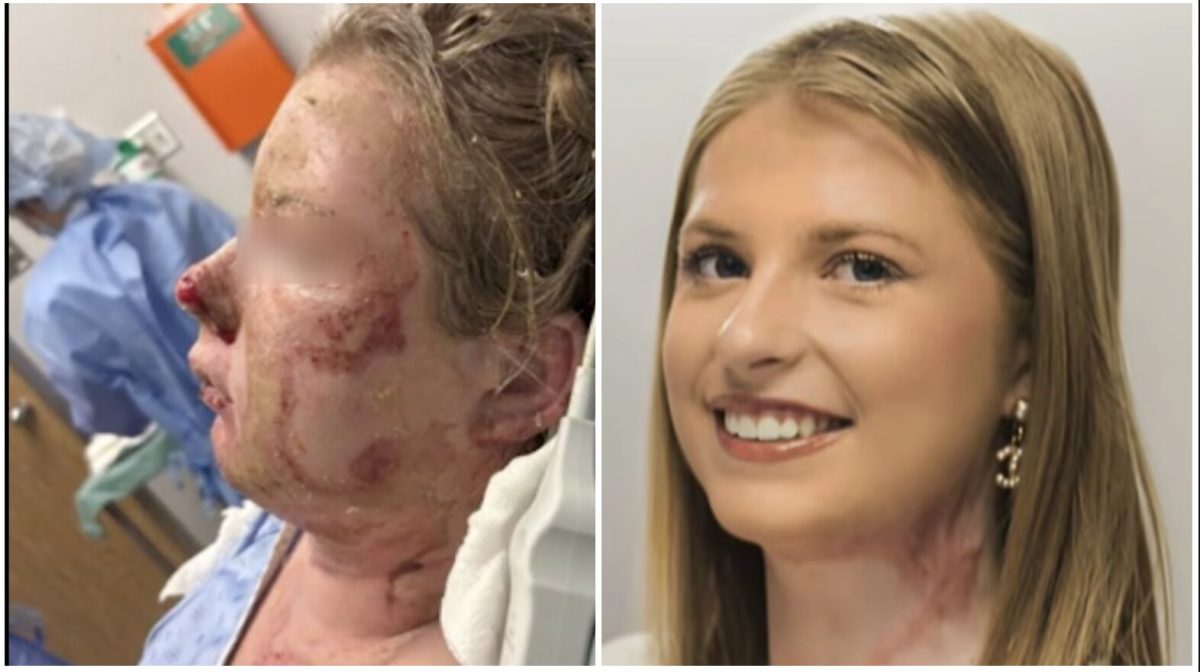
    Photo credit: Hamilton Health SciencesExosomes helped heal severe facial burns with less scarring.
    ,

    Student with severe facial burns from a frat house fire healed through new innovative treatment

    Exosomes could change how we treat various maladies and disease.

    A university student who suffered severe facial burns has remarkably healed thanks to what is being called a world-first biological treatment.

    On December 2, 2025, 18-year-old Kaitlyn Jeffrey was caught in a fire at the Pi Kappa Alpha frat house at Western University in Canada. The fire was caused after rubbing alcohol had been thrown onto a lit torch. Kaitlyn was one of the five people rushed to the hospital for injuries. She suffered serious burns after her face and hair had been set ablaze.

    A new treatment

    Usually, treatment for such burns would require a skin graft, but the burn unit at Hamilton Health Services wanted to try something different. While skin grafting is helpful, the end result isn’t always ideal. Skin grafting can be a slow process that ends with scarring and often a patch-like appearance on the patient.

    “My vision for Kaitlin was to avoid skin graft surgery to her face and neck at any cost,” said Dr. Marc Jeschke, medical director of the hospital’s regional burn program and vice-president of research and innovation at HHS. “You can do the best graft on the planet, but you won’t return the skin to normal.”

    With Kaitlyn’s and her family’s permission, Dr. Jeschke sent an urgent application to Health Canada for a new type of treatment. After Health Canada approved, the doctors proceeded to give Kaitlyn an exosome treatment for her facial burns. The results were a rousing success.

    What are exosomes?

    Exosomes, or extracellular vesicles (EcVs), are present in almost all cells, tissues, and body fluids. They’re tiny vesicles released naturally by nearly all types of cells, carrying proteins, lipids, and genetic material. They essentially carry these “packages” of material and send signals from one cell to another to regulate their behavior. They’re not only being tested for medical applications like this one, but are a part of a skin care trend as well. While exosomes had been studied for burn research, they haven’t been tested on humans before.

    One trillion exosomes were collected and injected into Kaitlyn’s injured areas over the course of two treatments. This helped her cells coordinate in rapidly healing and repairing her facial tissue. The treatments also significantly reduced inflammation. 

    Astounding healing and new possibilities

    After she had healed, Katilyn was amazed and grateful at the result.

    “It’s honestly a miracle,” she said. “Being injured in the fire has also had a deep impact on my mental health, and it’s something I’m continuing to deal with. But having such good results, particularly to my face, is helping me move forward.”

    Exosomes are still being researched for other potential medicinal applications. They are being tested to see how well they could modulate immune responses and deliver biomarkers. This could help combat cardiovascular disease, neurological disorders, and cancer among other ailments. Time and research will tell whether exosomes can help those patients like they helped Kaitlyn.

Explore More Care Stories

Care

22-year-old gives out toothy smiles by providing free 3D-printed dentures to those in need

Care

Student with severe facial burns from a frat house fire healed through new innovative treatment

Care

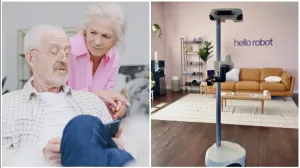
A dementia patient and his wife got their lives back thanks to a ‘coat rack-like’ robot

Health

Who are hospital ethics consultants, and why should you care?